admin
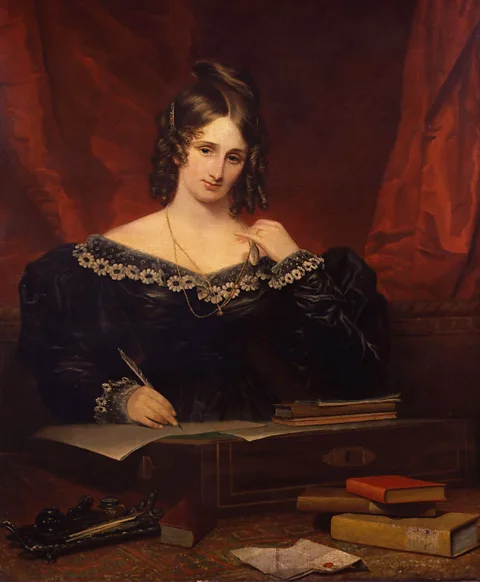
The premiere of Guillermo del Toro’s highly anticipated adaptation of Frankenstein at the 2025 Venice Film Festival has once again thrust Mary Shelley’s 1818 masterpiece into the global spotlight, proving that the "Modern Prometheus" remains as vital to the 21st century as it was to the 19th. Starring Oscar Isaac as the ambitious Victor Frankenstein and Jacob Elordi as his tragic creation, del Toro’s film represents the culmination of a 30-year passion project for the Academy Award-winning director. This latest cinematic iteration arrives at a time when society is grappling with the rapid advancement of artificial intelligence and biotechnology, themes that find their primal origin in a story written by an 18-year-old woman during a rain-soaked summer more than 200 years ago. Shelley’s novel, originally published anonymously, has transcended the boundaries of Gothic horror to become a foundational text of science fiction and a permanent fixture in the lexicon of human anxiety regarding the ethics of creation.

The Genesis of a Myth: The Chronology of 1816
The origins of Frankenstein are inextricably linked to the environmental and social upheavals of the early 19th century. In April 1815, the eruption of Mount Tambora in the Dutch East Indies—the most powerful volcanic eruption in recorded history—injected massive amounts of ash into the atmosphere. The resulting "Year Without a Summer" in 1816 caused global temperatures to plummet, leading to crop failures, famine, and persistent, gloomy rains across Europe. It was against this dismal backdrop that a group of literary titans gathered at the Villa Diodati on the shores of Lake Geneva.
The party included Lord Byron, his physician John Polidori, the poet Percy Bysshe Shelley, and Mary Wollstonecraft Godwin. Confined indoors by the inclement weather, Byron proposed a contest: each member of the group would write a ghost story. While Byron and Shelley eventually moved on to other projects, Mary Godwin was haunted by a "waking dream" of a pale student of unhallowed arts kneeling beside the thing he had put together. This vision formed the nucleus of the novel she would complete over the following nine months. Published in 1818, the book was initially met with mixed reviews, with some critics appalled by its "horrific" content, yet it quickly captured the public imagination, leading to an 1823 stage adaptation that cemented the story’s status as a popular sensation.

The Scientific Context: Galvanism and the Vitalist Debate
Mary Shelley’s narrative was not merely a product of imagination but a sophisticated engagement with the cutting-edge science of her era. The early 1800s represented a transitional period where the boundaries between "natural philosophy" and what we now recognize as "science" were still being defined. Indeed, the word "scientist" was not even coined until 1833 by William Whewell. Shelley was deeply influenced by the "Vitalist Debate," a public and often heated controversy between surgeons John Abernethy and William Lawrence regarding the nature of the "life force."
Abernethy argued that life was a distinct substance added to the body, akin to electricity, while Lawrence (who was Percy Shelley’s physician) argued that life was simply the result of the body’s physical organization. This debate was fueled by the experiments of Luigi Galvani, who in the late 18th century demonstrated that electric currents could cause the muscles of dead frogs to twitch—a phenomenon known as "Galvanism." His nephew, Giovanni Aldini, took these experiments further in 1803, attempting to "reanimate" the corpse of an executed murderer, George Forster, at Newgate Prison in London. Witnesses reported the body’s jaw quivering and one eye opening. Shelley’s novel took these macabre realities and asked the ultimate ethical question: if science could bestow life, should it?

From Literature to Iconography: The Cinematic Evolution
While Mary Shelley provided the intellectual and emotional framework of the story, the visual identity of "the monster" was largely forged by the medium of film. The 19th-century stage plays had already begun to simplify the narrative, often turning the articulate, self-educated creature of the novel into a mute, stumbling brute. However, it was James Whale’s 1931 film for Universal Pictures that created the definitive archetype.
Starring Boris Karloff, the 1931 Frankenstein introduced the flat-headed, bolt-necked visage designed by makeup artist Jack Pierce. This version also popularized the "mad scientist" trope, complete with a laboratory filled with sparking electrical equipment and the iconic, if unscripted, cry of "It’s alive!" This cinematic legacy, while ensuring the story’s immortality, also created a persistent cultural misconception: the conflation of the creator’s name with the creature. Today, "Frankenstein" is frequently used to refer to the monster, a linguistic shift that reflects the creature’s status as a mirror of its creator’s hubris.

The "Franken-Lexicon" and Modern Scientific Anxiety
The enduring power of Shelley’s parable is evidenced by its permeation into modern terminology. The prefix "Franken-" has become a universal shorthand for any scientific endeavor perceived as unnatural or dangerously transgressive.
- Frankenfoods: A term popularized in the 1990s to describe genetically modified (GM) crops, reflecting public distrust of corporate intervention in the food chain.
- Franken-AI: In the current era of Large Language Models and autonomous systems, the novel is frequently cited by tech ethicists. The "alignment problem"—the challenge of ensuring AI goals match human values—is essentially the Victor Frankenstein dilemma: the creator losing control over a sentient or semi-sentient entity.
- Medical Ethics: The novel continues to inform debates on stem-cell research, cloning, and organ transplantation, serving as a cautionary tale for the "God complex" in clinical settings.
According to data from the Open Syllabus Project, Frankenstein is one of the most frequently assigned novels in university curricula worldwide, taught not only in literature departments but also in courses on engineering, ethics, and the history of science.

Reclaiming the Creature: Modern Interpretations and Official Responses
In recent decades, there has been a concerted effort by scholars and artists to move beyond the "movie monster" image and return to the creature’s humanity as depicted in Shelley’s text. In the novel, the creature is highly intelligent, teaching himself to read by observing a family and studying Milton’s Paradise Lost, Plutarch’s Lives, and Goethe’s The Sorrows of Young Werther. He is a "tabula rasa" driven to violence only after being rejected by his father-figure and society.
Fiona Sampson, a prominent biographer of Mary Shelley, notes that the story is fundamentally about the "anxiety of modernity" and the responsibilities we owe to what we bring into the world. This sentiment was echoed by Guillermo del Toro during the production of his 2025 film. Del Toro has described his version as a "familial tragedy," focusing on the "lineage of pain" passed from creator to creation. In a statement to Variety, del Toro remarked, "Frankenstein is a song of the human experience… it gives voice to the voiceless and presence to the invisible." This interpretation aligns with modern social justice readings of the text, which see the creature as an allegory for the marginalized, the refugee, or any individual deemed "monstrous" by a prejudiced society.

Impact and Implications: A Permanent Mirror for Humanity
The legacy of Frankenstein shows no signs of waning. Its influence extends from the heavy metal lyrics of Metallica to the political rhetoric used to describe "uncontrollable" bureaucracies. As a piece of intellectual property, it is one of the most adapted works in history, with over 100 films and countless television series, comic books, and video games bearing its DNA.
The broader implication of the novel’s continued relevance is the realization that human nature has not yet caught up with human ingenuity. We remain a species capable of extraordinary technological leaps but often lack the moral foresight to manage the consequences. Mary Shelley’s "hideous progeny" continues to prosper because the questions she raised in 1816 remain unanswered. Whether the "creature" is a biological entity, a digital intelligence, or a social movement, the responsibility of the creator to the created remains the central ethical pivot of the modern age. As we look toward a future defined by synthetic biology and artificial consciousness, Frankenstein serves as both a roadmap and a warning, reminding us that while it is a marvel to infuse "a spark of being into the lifeless thing," the true challenge lies in what happens the morning after.