admin
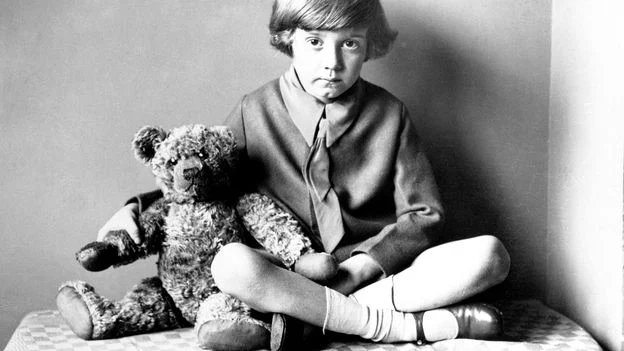
The publication of AA Milne’s first Winnie-the-Pooh book in October 1926 marked the birth of a literary phenomenon that would transcend generations, languages, and cultures. For a century, children and adults alike have found solace in the gentle adventures of a "bear of very little brain" and his companions in the Hundred Acre Wood. However, behind the whimsical prose and E.H. Shepard’s iconic illustrations lies a complex narrative of a father-son relationship strained by the weight of public expectation. Christopher Robin Milne, the real-life inspiration for the boy in the stories, spent much of his adult life grappling with a legacy that he frequently described as a burden, famously stating that he often felt the urge to "run away" whenever the subject of Pooh was raised.
The Genesis of the Hundred Acre Wood
The world of Winnie-the-Pooh was not a fabrication of pure fantasy but an embellishment of the domestic life of the Milne family at Cotchford Farm in East Sussex. AA Milne, already a successful playwright and contributor to the humor magazine Punch, began writing poems for his son, Christopher Robin, in the early 1920s. These were first collected in When We Were Very Young (1924), followed by the definitive prose collection Winnie-the-Pooh in 1926.
The characters were almost entirely derived from Christopher’s nursery. The original teddy bear, a Farnell Alpha bear purchased at Harrods for Christopher’s first birthday, was initially named Edward. The name "Winnie" was later adopted from a Canadian black bear named Winnipeg, which the young Christopher often visited at the London Zoo, while "Pooh" was the name of a swan they encountered on holiday. Other characters, including Piglet, Eeyore, Kanga, Roo, and Tigger, were based on various stuffed animals gifted to the boy by parents and friends. Only Owl and Rabbit were inventions of the author’s imagination, added to round out the social dynamics of the forest.
The setting itself, the Hundred Acre Wood, was a direct map of Ashdown Forest, where the Milnes spent their weekends. Locations such as the "Poohsticks" Bridge, the Five Hundred Acre Wood, and the "Galleon’s Lap" (Gill’s Lap) remain pilgrimage sites for fans today, grounding the fiction in a very specific, tangible English landscape.
A Childhood in the Public Eye
While the books depicted an idyllic, perpetual summer of play between a boy and his bear, the reality for Christopher Robin Milne was markedly different. Born in 1920, Christopher was raised in an era where upper-middle-class British parents often maintained a formal distance from their children. In a 1971 interview with the BBC’s Woman’s Hour, Christopher reflected on the "nanny-dominated" nature of his early years.
"Both my parents were fairly remote up to the age of about nine," he explained. "I only saw them at particular periods during the day." The emotional core of his childhood was his nanny, Olive Rand, rather than the father who was immortalizing him in literature. Christopher noted that his father’s writing was not necessarily an act of parental bonding. "He wasn’t concerned with me. He was writing for himself," Christopher said, suggesting that the books were a creative exercise for the author rather than a gift for the child.
As the books achieved global success, the real Christopher Robin was drafted into promotional duties. He was photographed with his bear, recorded audio versions of the poems, and became a household name before he had reached adolescence. This early exposure created a public persona that Christopher felt he could never live up to or escape.
The Chronology of a Literary Phenomenon
To understand the scale of the Pooh legacy, one must look at the timeline of its expansion:
- 1921: Christopher Robin receives a teddy bear for his first birthday.
- 1924: When We Were Very Young is published, featuring the first appearance of the boy and the bear in verse.
- 1926: Winnie-the-Pooh is published in October, introducing the core cast of characters.
- 1927: Now We Are Six is released.
- 1928: The House at Pooh Corner concludes the series, featuring the introduction of Tigger and the poignant final chapter where Christopher Robin prepares to go to boarding school.
- 1930s: Christopher Robin attends boarding school, where he begins to experience bullying related to his fictional namesake.
- 1940s: Christopher serves in the Middle East and Italy during World War II. Upon his return, he struggles to find his own identity in the professional world.
- 1951: Christopher and his wife, Lesley de Sélincourt, move to Dartmouth to open the Harbour Bookshop, seeking a life away from the London spotlight.
- 1961: Walt Disney Productions licenses the film rights to Winnie-the-Pooh, beginning a new era of global commercialization.
- 1974: Christopher publishes his memoir, The Enchanted Places, detailing his complex feelings toward his father’s work.
- 1996: Christopher Robin Milne dies at the age of 75.
The Psychological Toll of "Empty Fame"
The transition from a celebrated child muse to an adult seeking a career was fraught with difficulty for Christopher Milne. In his 1974 memoir, The Enchanted Places, he expressed a deep-seated resentment toward his father’s literary success. He wrote that it seemed as though his father had "filched from me my good name and left me with nothing but the empty fame of being his son."
This sense of exploitation was compounded by the difficulties Christopher faced at boarding school. Classmates would often mock him by reciting the poems his father had written, particularly "Vespers," which depicted a young Christopher Robin saying his evening prayers. The vulnerability of his childhood, laid bare for the world to read, became a target for ridicule.

As an adult, Christopher found that employers often viewed him as a curiosity rather than a candidate. He felt that the fictional Christopher Robin refused to die, casting a shadow over every personal achievement. This led to a period of estrangement from his parents. His mother, Daphne, reportedly did not speak to him for the last 15 years of her life, partly due to the way he characterized his upbringing in his writings.
Supporting Data: The Pooh Economy
Despite the personal toll on the Milne family, the commercial success of Winnie-the-Pooh is nearly unparalleled in children’s literature. By the time of AA Milne’s death in 1956, the books had sold over seven million copies. Following the Disney acquisition in 1961, the franchise exploded.
Current estimates suggest that Winnie-the-Pooh is one of the highest-grossing media franchises in history, often rivaling Mickey Mouse and Star Wars. Retail sales of Pooh-related merchandise have frequently exceeded $5 billion annually. The original toys—Pooh, Eeyore, Piglet, Kanga, and Tigger—are now housed in the New York Public Library, where they remain one of the institution’s most popular attractions, drawing thousands of visitors each year.
The literary estate also remains robust. The books have been translated into over 50 languages, including a 1958 Latin version, Winnie ille Pu, which became the first foreign-language book to appear on the New York Times Bestseller List.
Official Responses and Biographical Analysis
Biographers have often sought to reconcile the image of AA Milne as a distant father with the warmth of his writing. Ann Thwaite, who wrote the definitive biography of AA Milne, suggested in 2002 that the author’s "heart remained buttoned up." She argued that Milne used his writing to communicate the affection he was unable to express in person.
Christopher himself eventually arrived at a similar conclusion. Toward the end of his life, he acknowledged that the books were perhaps his father’s way of bridging the emotional gap between them. He observed that because his father was a creative writer who "was not able to play with his small son," his "longing sought and found satisfaction in another direction—he wrote about him instead."
This analysis suggests that the Winnie-the-Pooh stories were not an act of exploitation, but a surrogate for the intimacy that the social norms of the 1920s and Milne’s own temperament prevented. The character of Eeyore, with his persistent gloom, was seen by Christopher as a manifestation of his father’s own hidden sadnesses.
Broader Impact and Implications
The legacy of Christopher Robin Milne serves as a cautionary tale in the age of "sharenting" and the public commodification of childhood. His struggle highlights the tension between a creator’s right to draw from their life and a child’s right to a private identity.
However, the legacy also has a positive environmental impact. In 1979, Christopher returned to Ashdown Forest to support the local council in purchasing the woods to ensure their preservation. His involvement helped protect the landscape from development, ensuring that the "Hundred Acre Wood" remains a sanctuary for wildlife and a public space for future generations.
As the centenary of the first book approaches, the enduring appeal of Winnie-the-Pooh lies in its simplicity and its focus on the "small" things in life—friendship, honey, and the quiet joy of doing "nothing." While the real Christopher Robin may have spent years running away from the bear, his eventual reconciliation with his father’s work allowed the world to celebrate the stories without the shadow of family discord. In the end, Christopher Robin Milne accepted that while he could never escape the boy in the book, he could at least find peace with the man who wrote it.