admin
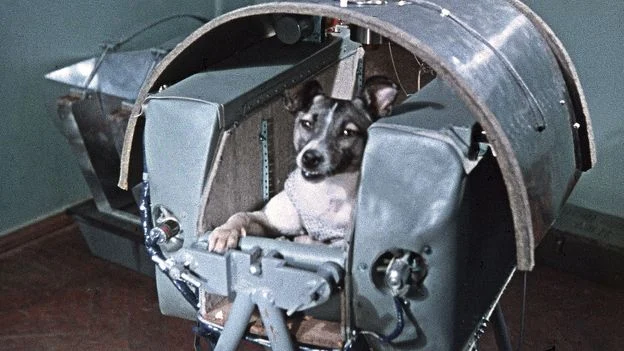
On November 3, 1957, the Soviet Union achieved a milestone that would forever alter the course of human history and the ethics of scientific discovery. From the Baikonur Cosmodrome in Kazakhstan, a small, part-terrier mongrel named Laika was launched into Earth’s orbit aboard Sputnik 2. While she became the first living creature to orbit the planet, her mission was defined by a somber reality: it was a one-way journey. The technology to return a spacecraft safely through the Earth’s atmosphere did not yet exist, rendering Laika a "passenger of necessity" in a geopolitical race for technological supremacy.
The Political and Scientific Genesis of Sputnik 2
The mission of Sputnik 2 was born more from political theater than gradual scientific progression. Following the immense success of Sputnik 1 on October 4, 1957—the world’s first artificial satellite—Soviet Premier Nikita Khrushchev sought to capitalize on the momentum. With the 40th anniversary of the Bolshevik Revolution approaching on November 7, Khrushchev demanded a "space spectacular" to humiliate the United States and demonstrate the superiority of Soviet engineering.
Sergei Korolev, the "Chief Designer" of the Soviet space program, was given less than four weeks to design and build a craft capable of carrying a biological payload. This truncated timeline meant that many safety systems and recovery mechanisms were bypassed. The R-7 Semyorka rocket, originally designed as an intercontinental ballistic missile (ICBM), was the only vehicle capable of such a feat. However, the pressurized cabin for the dog had to be built from scratch in a matter of days. This rush to meet a political deadline directly contributed to the technical failures that would ultimately lead to Laika’s premature death in orbit.
Criteria for a Canine Cosmonaut: Why Moscow’s Strays Were Chosen
The decision to use dogs rather than primates—the preferred subjects of American researchers—was rooted in the Russian scientific tradition. Soviet physiologists, heavily influenced by the Nobel Prize-winning work of Ivan Pavlov, had an extensive understanding of canine circulatory and nervous systems. Pavlov’s research provided a framework for how dogs responded to external stimuli, making them predictable subjects for high-stress environments.
Furthermore, Soviet scientists, led by Vladimir Yazdovsky, specifically targeted female stray dogs from the streets of Moscow. The rationale was twofold: strays were believed to possess superior stamina and the ability to endure extreme cold and hunger compared to pampered pedigree animals. Females were chosen because they were physically smaller and, crucially, because the design of the waste-collection suits was simpler for females, who did not need to lift a leg to urinate.
Laika, originally named Kudryavka (Little Curly), was selected for her placid temperament. Weighing approximately six kilograms (13 pounds) and estimated to be about three years old, she demonstrated remarkable patience during the grueling training sessions. Viktor Yazdovsky, the son of the lead scientist, recalled decades later how his father brought Laika home to play with his children shortly before the launch, wanting her to experience the warmth of a home before her final mission.
Training and Technical Preparation
The preparation for Sputnik 2 was an exercise in endurance. To acclimate the dogs to the cramped quarters of the pressurized capsule, they were kept in progressively smaller cages for periods of up to 20 days. This confinement caused many of the animals to stop urinating or defecating, requiring the use of laxatives and intensive monitoring.

The dogs were also subjected to:
- Centrifuges: To simulate the G-forces of a rocket launch.
- Vibration Tables: To mimic the intense shaking of the R-7 booster.
- High-Decibel Noise Simulators: To prepare them for the roar of the engines.
- Atmospheric Pressure Chambers: To test their respiratory response to changing cabin pressures.
Laika’s capsule was equipped with a CO2-absorbing device, an oxygen generator, and an automated feeding system that provided a gelatinous high-nutrient food. She was restrained by a harness that allowed her to stand, sit, or lie down, but prevented her from turning around.
The Reality of the Mission: Data and Telemetry
Sputnik 2 launched successfully at 02:30 UTC on November 3, 1957. Telemetry data transmitted back to Earth provided the first-ever insights into how a living organism responded to the rigors of spaceflight. During the launch, Laika’s pulse rate tripled, jumping from a resting rate of 103 beats per minute to over 240 beats per minute. Her respiratory rate increased nearly fourfold.
Once the craft reached orbit and weightlessness took effect, it took Laika three hours for her pulse to return to pre-launch levels—three times longer than it had during ground-based centrifuge tests. This indicated the profound stress the animal was under.
For decades, the Soviet government maintained that Laika survived for several days in orbit, eventually passing away painlessly after consuming a final, poisoned meal designed to euthanize her. However, in 2002, at the World Space Congress in Houston, Dr. Dimitri Malashenkov of the Institute for Biological Problems in Moscow revealed the grim truth. Due to a failure in the thermal control system and the loss of some heat shielding during the separation of the rocket’s core, the cabin temperature rapidly climbed to 40 degrees Celsius (104 degrees Fahrenheit). Laika died between five and seven hours into the flight from a combination of extreme overheating and stress.
A Chronology of Early Soviet Biological Spaceflights
The flight of Laika was part of a broader, more complex timeline of animal testing that spanned over a decade:
- 1951–1952: The USSR conducts suborbital flights with dogs like Dezik and Tsygan, who reached the edge of space and returned safely.
- November 3, 1957: Laika becomes the first living creature to reach Earth orbit aboard Sputnik 2.
- July 1960: A launch failure of a Vostok prototype results in the deaths of dogs Bars and Lisichka.
- August 19, 1960: Belka and Strelka become the first living creatures to orbit the Earth and return safely. They were accompanied by 40 mice, two rats, and several plants.
- March 1961: Chernushka and Zvezdochka complete successful single-orbit missions, paving the final way for human flight.
- April 12, 1961: Yuri Gagarin becomes the first human in space.
International Outrage and Ethical Shifts
The announcement that Laika would not return triggered a wave of international condemnation that caught the Soviet Union by surprise. In the United Kingdom, the National Canine Defence League (now Dogs Trust) called for a minute of silence, while the Royal Society for the Prevention of Cruelty to Animals (RSPCA) received thousands of protest letters. In New York, dog owners picketed the United Nations building.
The backlash highlighted a cultural divide in the perception of the Space Race. While the Soviets viewed the mission as a necessary sacrifice for the advancement of science and the glory of the state, many in the West saw it as a cruel exploitation of a defenseless animal.

This outcry had a lasting impact on subsequent missions. Soviet engineers were pressured to prioritize recovery systems, leading to the successful return of Belka and Strelka in 1960. The ethical debate surrounding Laika also contributed to the eventual development of international standards for the treatment of animals in scientific research, though space programs continued to use animals for decades.
Analysis: Was the Sacrifice Necessary?
From a purely technical standpoint, Sputnik 2 proved that a living organism could survive the launch into orbit and endure prolonged weightlessness. This was a critical question that needed an answer before a human could be risked. The telemetry data regarding Laika’s cardiac and respiratory functions provided the foundational biological "proof of concept" for the Vostok program.
However, the necessity of her death remains a point of contention. Oleg Gazenko, one of the lead scientists who trained Laika, expressed profound regret in 1998: "Work with animals is a source of suffering to all of us. We treat them like babies who cannot speak. The more time passes, the more I’m sorry about it. We did not learn enough from the mission to justify the death of the dog."
Because the mission was rushed to meet Khrushchev’s political deadline, much of the scientific potential was squandered. Had the scientists been given more time to develop a return capsule, Laika might have survived, and the biological data collected would have been far more comprehensive.
Legacy and Commemoration
Laika remains one of the most recognizable icons of the 20th century. Her image has appeared on stamps, in literature, and in film, symbolizing both the ambition and the ruthlessness of the Cold War era. In 2008, the Russian government unveiled a monument to her near the military research facility in Moscow that prepared her for flight. The monument features a bronze dog standing atop a stylized rocket that transitions into a human hand.
While Yuri Gagarin is celebrated as the hero who conquered space, Laika is remembered as the silent martyr who made his journey possible. Her story serves as a reminder of the ethical complexities of progress and the high price often paid by those who have no choice in their participation in history. The lessons learned from her short, tragic flight continue to resonate in the modern era of space exploration, where the safety of the crew—biological or human—is now the paramount concern.