admin
admin
The concept of nourishment, often perceived as a fundamental human right, is increasingly understood as a political battleground, with terms like "food justice" and "food apartheid" entering mainstream discourse to describe profound systemic inequalities. What begins as an individual’s personal journey of understanding often transforms into a dedicated pursuit of dismantling these deeply entrenched disparities, particularly in underserved communities. This shift in perspective underscores that access to healthy, affordable food is not merely a matter of individual choice, but a complex web of economic, social, and racial structures.
The stark realities of food inequity were vividly illuminated for one educator during her tenure at the Coretta Scott King Young Women’s Leadership Academy in Atlanta. This predominantly Black, single-gender public school, established the same year she joined the teaching staff, served students primarily from neighborhoods grappling with the city’s highest rates of poverty and crime. These same communities, as highlighted by a 2023 study from Megan Winkler and her colleagues at Emory University’s Rollins School of Public Health, consistently experience elevated levels of food insecurity and significantly limited access to fresh, healthy food options. This academic corroboration reinforces anecdotal observations and personal accounts from residents of these areas.
The Genesis of Awareness: From Kitchen to Classroom
The initial understanding of food’s role, for many, is shaped by early experiences, such as learning about community building through shared meals in a grandmother’s kitchen. However, the inherent political dimensions of food systems often remain obscured until confronted by undeniable disparities. For the aforementioned educator, this confrontation occurred when she moved away from her small East Texas hometown, revealing urgent, immediate inequalities. Her most concrete lessons, surprisingly, came from her eleven- and twelve-year-old students in Atlanta.
A pivotal moment unfolded during an informal gathering where the educator hosted a few students for dinner after a grocery store trip. As they conversed around the dining table, the students articulated a profound observation that would irrevocably alter her life’s trajectory. They pointed out the stark difference in food quality and variety available in her neighborhood, less than five miles away, compared to their own. Their questions were incisive: "Why does your neighborhood have the nice grocery stores?" and "Why do you have so many more kinds of fruits and vegetables than we do?" Their critiques were equally sharp: "It’s like they don’t care if we have options?" and "How are we supposed to eat healthy if everything around us is unhealthy?" These candid observations, shared on a typical school night, sparked a collective musing on the true meaning of health, confidence, nourishment, and societal inclusion. This interaction moved the discussion beyond mere nutritional intake to the broader implications of dignity and belonging.
Academic Pursuit and Unveiling Structural Roots
The students’ questions and critiques served as guideposts for the educator’s subsequent academic pursuits. Returning to graduate school to study anthropology, she became deeply engaged in understanding urban dynamics and how macro-level forces profoundly shape the daily realities of individuals and families, like those of her former students. This academic journey included an internship at the Johns Hopkins Center for Health Disparities Solutions, where she investigated the intricate relationship between residential segregation and health outcomes. Further mentorship from sociologists specializing in urban design and inequities solidified her understanding: her students’ observations were not isolated incidents but symptomatic of widespread systemic issues.
Research consistently demonstrates that predominantly Black urban neighborhoods across the U.S., irrespective of income levels, possess fewer food resources compared to their white counterparts. This systemic lack of provisioning has severe long-term health consequences. Such environments are often termed "obesogenic," characterized by limited access to fresh produce and full-service grocery stores, coupled with a dearth of sidewalks and green spaces. These factors significantly increase the risk for chronic conditions such as obesity, type 2 diabetes, and hypertension. When communities find it easier to access fast-food chains and liquor stores than fresh food markets, the choices individuals make about their diet are inevitably influenced, often leading to less healthy outcomes. For instance, the Atlanta middle school students could reach a corner store with reinforced security bars or a fast-food establishment in the same amount of time it would take the educator to access one of her four preferred grocery stores. This disparity in accessibility, compounded by parents often working long, low-wage hours, further limits the time and resources available for healthy food shopping.
Defining Food Apartheid: Beyond Food Deserts
The pervasive nature of these structural problems has led activists and scholars to adopt the term "food apartheid," a powerful descriptor for the system of racialized inequality embedded in food access. This term compels a broader perspective, urging a critical examination of how various systems are deliberately constructed to disadvantage specific consumers based on their race and geographic location. Unlike the term "food desert," which often implies a natural or accidental scarcity, "food apartheid" highlights intentional design and historical policies that have created and perpetuated these disparities.
Karen Washington, a prominent food justice activist and co-founder of Black Urban Growers (BUGs), articulates this distinction plainly. She states that food apartheid "looks at the whole system, along with race, geography, faith, and economics." She emphasizes that invoking "food apartheid" immediately "gets to the root cause of some of the problems around the food system," inherently encompassing issues of hunger and poverty. More critically, it prompts a deeper inquiry: "What are some of the social inequities that you see, and what are you doing to erase some of the injustices?" This fundamental question lies at the very core of the food justice movement, a collective endeavor dedicated to exposing and rectifying the profound inequalities that shape our global food landscape.
The Myth of Individual Choice vs. Systemic Barriers
A common misconception attributes unhealthy eating patterns in low-income and minority communities to poor individual choices or a lack of personal responsibility. However, a deeper analysis, informed by real-world observations, decisively challenges this narrative. The educator’s experiences further illustrate this point: while working as a babysitter for wealthy, predominantly white families in the Washington, D.C. area during graduate school, she observed a consistent preference among these children for McDonald’s. Despite their parents often acquiescing to these requests, these children were rarely depicted as "poster children" of the childhood obesity epidemic or "imagined victims" of the fast-food industry. They, unlike her former students in Atlanta, simply had a wider array of choices available to them.
This crucial distinction reveals that there is nothing inherently different about the dietary preferences children would make if given equitable opportunities. The primary differentiator is the constrained landscape of choices available to certain communities. For the Atlanta students, healthy grocery stores were geographically distant, their parents frequently worked demanding overtime hours in low-wage positions, and fast food often presented itself as the most affordable and convenient option. These structural realities, rather than individual inclination, effectively funneled them toward less healthy food options. This evidence strongly refutes the myth that poor people and people of color are inherently more inclined towards unhealthy foods, instead underscoring the powerful influence of socio-economic and environmental structures.
A Movement Emerges: The History of Food Justice
While gaining significant traction and support over the past quarter-century, the origins of the food justice movement are arguably much older, deeply rooted in the fight for civil rights and community self-determination. Early foundational experiments include the Black Panther Party’s Free Breakfast for Children program, launched in 1969, which provided nutritious meals to thousands of children daily, directly addressing childhood hunger and food insecurity in underserved communities. Another pivotal precursor was Fannie Lou Hamer’s Freedom Farms Collective in Sunflower County, Mississippi, established in the 1960s. This initiative sought to empower Black sharecroppers through cooperative farming, providing economic independence and control over their food supply in a deeply segregated and oppressive environment. These pioneering efforts demonstrated a clear understanding of food as a tool for liberation and social change.
In 2010, the first comprehensive book on the subject, "Food Justice," by Robert Gottlieb, co-founder of the Urban and Environmental Policy Institute at Occidental College, and Anupama Joshi, co-founder of the National Farm to School Network, formally characterized food justice. They defined it as "ensuring that the benefits and risks of where, what, and how food is grown and produced, transported and distributed, and accessed and eaten are shared fairly." This definition inherently promotes a sense of shared fate, serving as a powerful counter-narrative to the dominant perception of food consumption that excessively emphasizes individual choice. Gottlieb and Joshi’s framework mandates a shift in the distribution of benefits and risks, ensuring that the "blessings and burdens" of the food system are more equitably shared across all segments of society. Numerous organizations and researchers have since expanded upon this approach, consistently diagnosing the systemic problems in the food system as a direct consequence of prioritizing corporate profits over human well-being, while simultaneously working to provide direct aid and improve access for impacted communities.
Grassroots Action and Community-Led Solutions
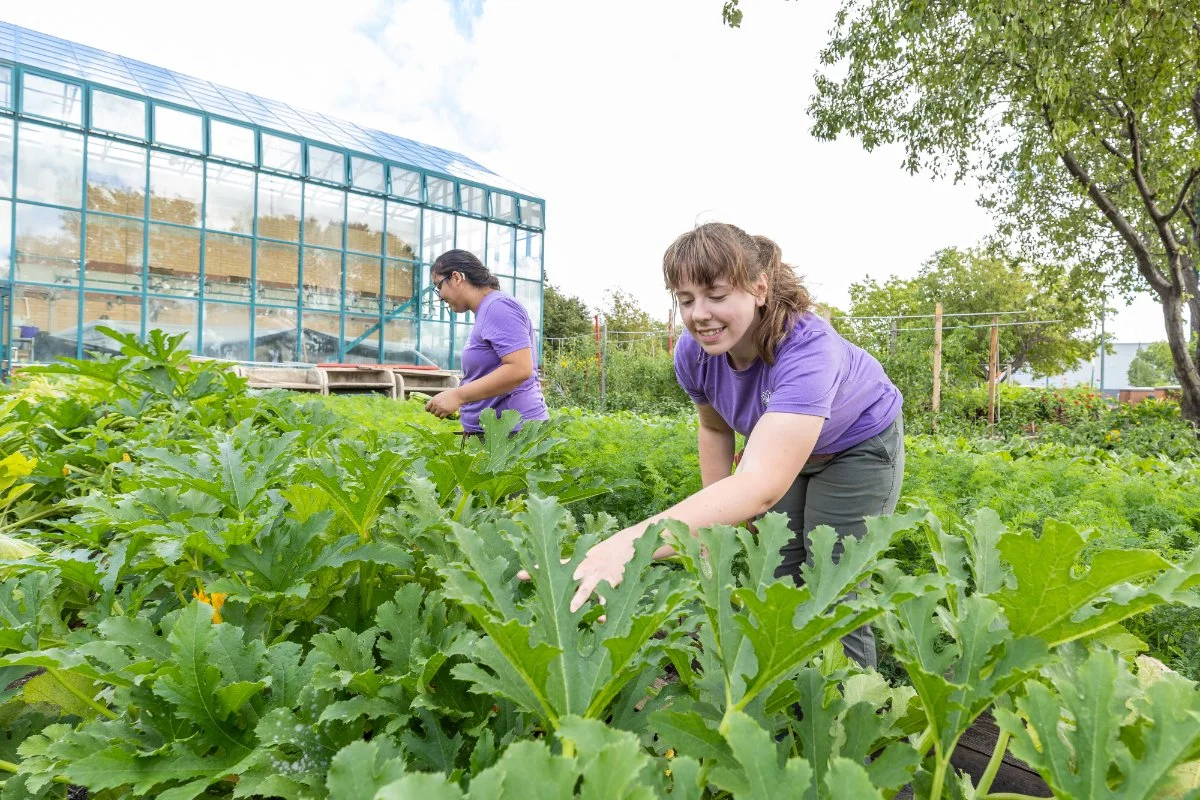
For over fifteen years, the tangible impact of the food justice movement has been evident through myriad grassroots initiatives. In Washington, D.C., for example, The Green Scheme has established community gardens within housing projects, empowering residents to cultivate their own food and foster self-sufficiency. A compelling anecdote from this initiative describes residents pooling resources, with one individual often gathering remaining produce to create large pots of soup to share, particularly during times of financial strain. In Atlanta, the Southwest Atlanta Growers Cooperative (SWAG), founded by a group of Black farmers, works diligently to increase the availability of fresh produce in southwest Atlanta, directly countering the food access challenges in the area. These examples are replicated across the country, where countless individuals and organizations have proactively taken action, refusing to passively await changes in food environments. Instead, they are actively transforming their communities from the ground up, demonstrating resilience and commitment to localized food sovereignty.
Mainstreaming the Movement: Opportunities and Challenges
What began as a collection of localized, grassroots efforts rooted in principles of community control over food systems has now firmly entered the mainstream. This expansion signifies a broader recognition of the problem, attracting more listeners, more attention, and consequently, more opportunities to address the inequalities that the movement so urgently seeks to eradicate. The mainstreaming of food justice brings increased awareness, potential for greater funding, and the capacity to influence policy at higher levels.
However, this increased visibility also carries inherent risks, notably the potential for co-optation. The most radical, transformative components of the movement – those that directly challenge fundamental power structures and economic priorities – risk being sidelined. This can occur either due to pragmatic considerations (prioritizing initiatives that are more likely to secure funding from traditional sources) or simply discomfort with the movement’s more revolutionary demands. For the early architects and enduring champions of food justice, food has always been inherently political. Therefore, food justice itself represents a direct affront to unfair systems, demanding not just incremental improvements, but fundamental shifts in power and resource distribution. The ongoing challenge for the movement is to maintain its radical core and systemic critique while navigating the complexities and opportunities presented by its growing mainstream acceptance.