admin
admin
Across the diverse landscapes of the Japanese archipelago, the rugged highlands of the Philippines, the savannas of Guyana, and the volcanic islands of Hawaii, two seemingly disparate practices—tattooing and fermentation—share a profound and ancient kinship. While modern observers might view tattoos as aesthetic choices and fermentation as a culinary technique, for many Indigenous cultures, these are twin technologies of transformation. They represent the intentional reshaping of raw materials—the human skin and the fruits of the earth—into vessels of identity, ancestry, and communal continuity. These practices are not merely decorative or functional; they are embodied languages that communicate a relationship with the land, the spiritual realm, and the generational passage of knowledge. In these cultural contexts, the act of inscribing ink and the process of brewing drink operate as parallel rituals that bind the individual to the collective and the present to the ancestral past.
The Hearth as a Cosmological Center: The Ainu of Northern Japan
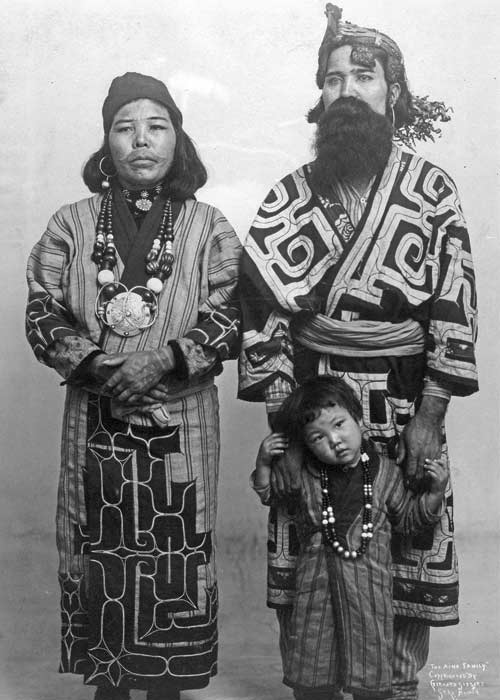
For the Ainu, the Indigenous people of Hokkaido, Sakhalin, and the Kuril Islands, the domestic hearth (unji) served as the physical and spiritual anchor of the community. It was here that the intersection of tattooing and fermentation was most visible. Historically, Ainu society was organized around the veneration of kamuy (divine beings), with Kamuy Fuchi, the goddess of the hearth, overseeing all domestic labor. Both brewing and tattooing were considered sacred duties performed by women under her watchful eye.
The Ainu tattooing process, known as sinuye, involved using a ritual knife (makiri) to make incisions into which soot was rubbed. This pigment was not a random byproduct; it was meticulously collected from the underside of earthenware pots used for brewing and cooking over the hearth fire. By using soot born from the fire of Kamuy Fuchi, the tattooed woman literally wore the essence of the hearth on her skin. These markings, particularly the prominent mouth tattoos, were believed to repel malevolent spirits and were a prerequisite for a woman’s entry into the afterlife.
Parallel to this, the production of tonoto—a fermented beverage made from rice or millet—was a strictly female-led ritual. The fermentation process was seen as a living transformation that required prayers and spiritual purity. The beer was used in the iyomante (bear sending) ceremony and other major rituals to appease the kamuy. The suppression of these practices began in earnest during the late 19th century under the Japanese Meiji government’s colonial policies. The 1899 Hokkaido Aborigine Protection Act sought to forcibly assimilate the Ainu, banning tattooing and traditional brewing. Today, the revival of these practices serves as a critical medium for Ainu cultural reclamation, moving beyond the trauma of forced assimilation to restore the link between the hearth and the body.
Chemical Transitions and Social Identity: The Kalinga of the Philippines
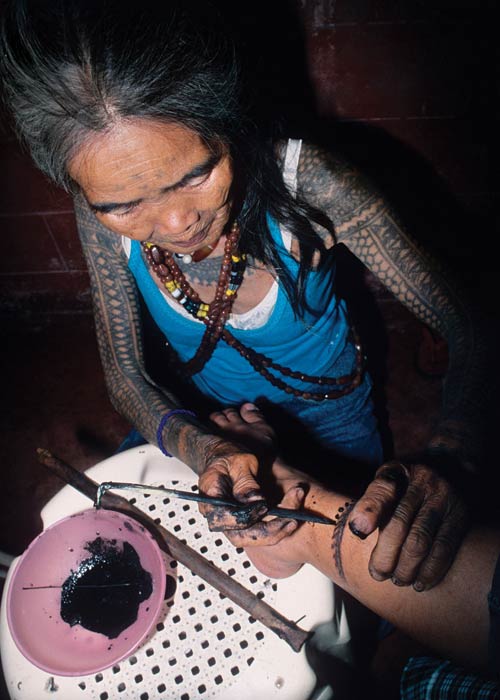
In the Cordillera Central mountains of Luzon, the Kalinga people have maintained the tradition of batok, or hand-tapped tattooing, for centuries. While the Ainu link was through the hearth’s soot, the Kalinga tradition reveals a more direct chemical intersection between ink and fermentation. Historically, the pigment used by a mambatok (tattoo artist) was composed of soot mixed with water or, in specific regions, sugarcane juice.
When sugarcane juice is utilized as a carrier for the soot, the high sugar content and the presence of wild yeasts in the environment often trigger a spontaneous fermentation process before or during the application. This subtle chemical shift alters the consistency and biological profile of the ink. Although the permanency of the tattoo is a result of the pigment being trapped in the dermis, the use of a fermenting medium underscores the cultural logic that the ink itself is a "living" substance.
The social weight of these markings is immense. For Kalinga men, batok was historically a "merit" system, with specific patterns such as the bikking (chest tattoo) earned through acts of bravery in protection of the village. For women, tattoos like the pongo (arm tattoos) were symbols of beauty and maturity. Master tattooist Apo Whang-od Oggay, who at over 100 years old remains a global icon of the craft, has passed these techniques to a new generation, including her grandniece Grace Palicas. This revival occurs alongside the continued importance of fermented beverages like tapuy (rice wine) and baya (sugarcane wine), which remain essential for pusipus (healing rituals) and community celebrations. In the Kalinga world, the rhythmic tap of the tattoo needle and the bubbling of the fermentation jar both signal the arrival of a transformed social state.
Brewing Charms and the Sting of the Bee: The Makushi of Guyana
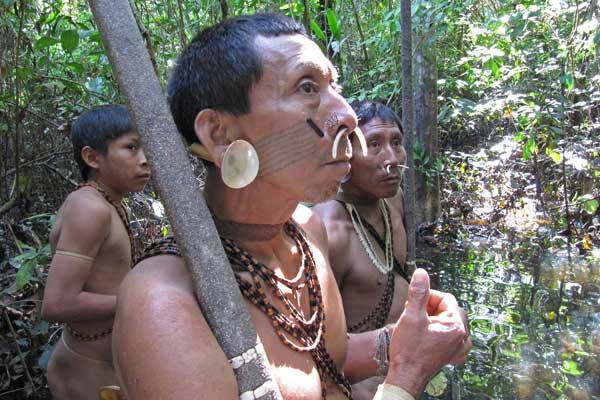
In the Guiana Shield region of South America, the Makushi people demonstrate an even more overt functional connection between tattooing and fermentation. Here, tattoos were historically applied as kansku—physical charms designed to influence the outcome of the fermentation process. The Makushi are masters of cassava fermentation, producing a complex, mold-and-yeast-fermented beer known as parakari.
The production of parakari is a multi-stage labor-intensive process involving the baking of cassava bread, its inoculation with specific molds, and a secondary fermentation in leaf-lined baskets. To ensure the success of this delicate biological transformation, Makushi women bore tattoos on their arms and jaws. These markings often featured motifs of stinging or sweet-producing insects, such as bees or scorpions. The logic was sympathetic: the tattoo would "gift" the woman the ability to produce a brew with the perfect "sting" (yekî)—a term that in the Makushi language refers simultaneously to the sharp taste of a well-fermented beverage and the state of intoxication itself.
Anthropological research by Dr. Lars Krutak highlights that these tattoos were more than just symbolic; they were requirements for social agency. A woman without the proper markings was often deemed spiritually or technically unfit to serve fermented drinks to hunters or elders. While missionary influence in the 20th century led to a decline in kansku, the cultural memory remains. The Makushi example illustrates a world where the skin is a blueprint for the kitchen, and the quality of the drink is inseparable from the history inscribed on the brewer’s body.
Epistemologies of Continuity: Hawaii and the Concept of Hāloa
In Native Hawaiian culture, the relationship between kākau (tattooing) and the fermentation of poi (taro) is rooted in a shared genealogy. Hawaiian epistemology does not separate the human from the botanical; instead, both are seen as descendants of the same ancestral line.
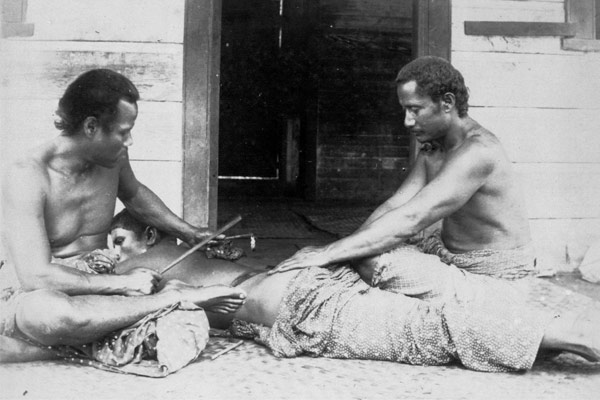
Dr. Lindsay Malu Kido, a scholar of Indigenous body sovereignty, points to the story of Hāloa to explain this connection. In Hawaiian cosmogony, the first Hāloa was a stillborn child who, when buried, grew into the first kalo (taro) plant. The second Hāloa was the first human. Thus, the taro plant is the "elder brother" of the Hawaiian people. When Hawaiians ferment kalo into poi, they are not just processing food; they are engaging in an act of kinship and care for an ancestor.
The practice of kākau mirrors this. The patterns tapped into the skin are often genealogical records, mapping a person’s responsibility to their ’ohana (family) and ’āina (land). To be tattooed is to carry one’s ancestors on the skin; to eat fermented poi is to ingest the essence of an ancestor. Both are acts of maintaining "body sovereignty"—a term used to describe the reclamation of Indigenous physical and cultural space against colonial frameworks that once labeled these practices as "primitive" or "unclean."
Contemporary Implications and the Modern Craft Landscape
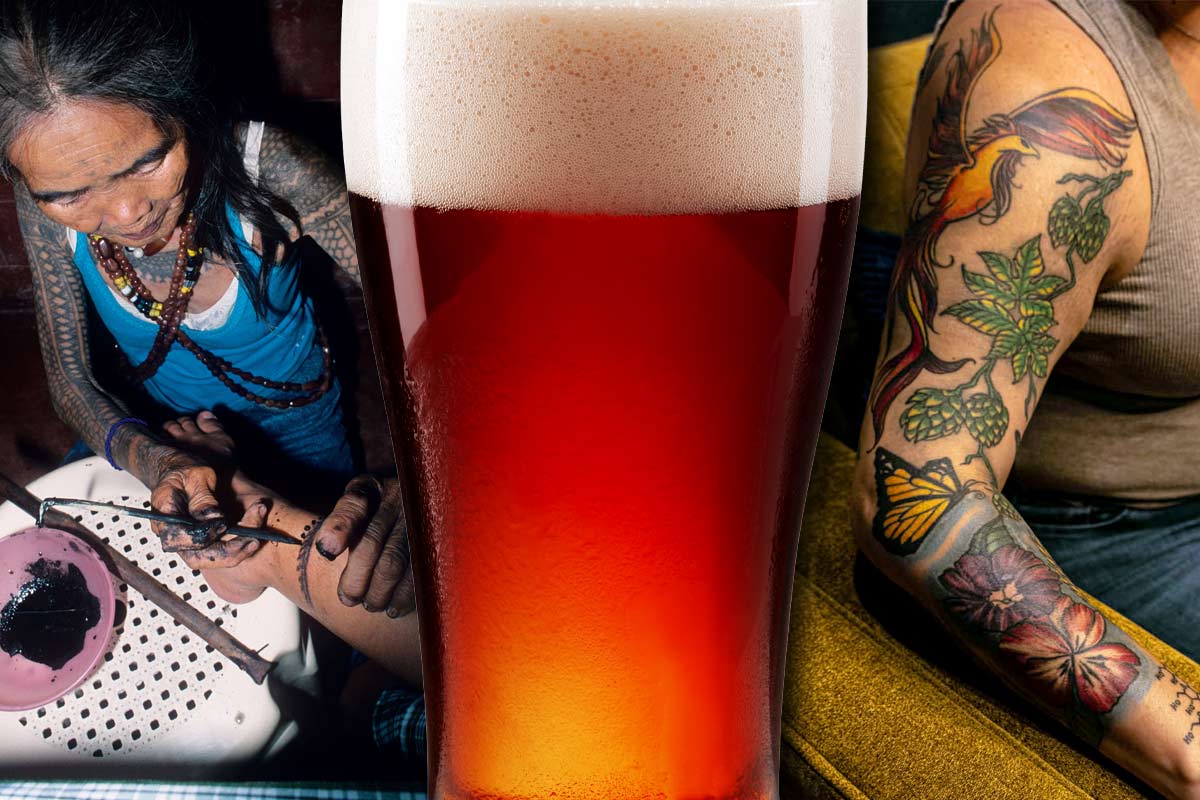
The historical and Indigenous intersections of ink and drink find a modern, albeit different, resonance in the contemporary craft brewing industry. Today, the "brewer’s tattoo" has become a hallmark of the trade, though its function has shifted from ancestral protocol to personal narrative and professional identity.
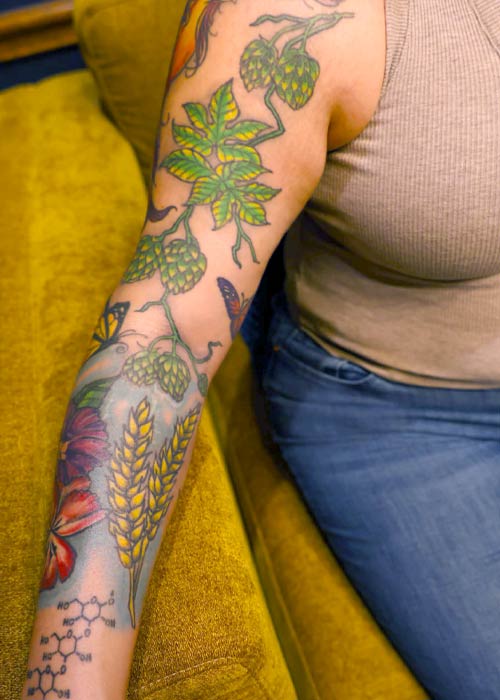
Data from the craft brewing sector suggests a high correlation between artisanal fermentation and tattoo culture. For many modern brewers, the decision to ink scientific formulas for yeast (such as Saccharomyces cerevisiae), hop bines, or chemical structures of alpha acids on their bodies is a way of marking their devotion to a craft that, like tattooing, requires precision, patience, and a respect for transformation.
However, for some, the connection remains deeply spiritual or transformative on a personal level. Sandra Murphy, owner of Murphy’s Law Brewery in Texas, utilized tattooing as a means of processing grief and marking a career transition following the loss of her daughter. Her sleeve, featuring yeast cell walls and water motifs, represents a "rebirth" through the medium of brewing. Similarly, Rachael Engel of Sound2Summit Brewery describes her tattoos as integral to her journey of self-actualization and identity. In these modern contexts, while the specific Indigenous cosmologies may not be present, the underlying logic remains: the body and the ferment are both sites where internal change is made visible to the world.
Conclusion: The Traces of Transformation
The intersection of tattooing and fermentation across global cultures reveals a fundamental human desire to mark the passage of time and the acquisition of knowledge. Whether it is the Ainu woman using hearth soot to honor a goddess, the Kalinga elder using sugarcane ink to mark bravery, or the Makushi brewer using charms to ensure a "sting," these practices prove that the human body and the food we consume are never merely biological. They are cultural texts.
In a globalized world, the study of these "technologies of continuity" offers a vital perspective on how communities maintain their roots. Fermentation and tattooing both require a surrender to a process—a period of waiting for the ink to heal or the sugars to convert. They are slow arts in a fast world. By examining these shared grammars of transformation, we gain a deeper understanding of how identity is brewed, inscribed, and carried forward through the ages. Ink marks the body and fermentation marks the food, but together, they mark the enduring spirit of human culture.