admin
admin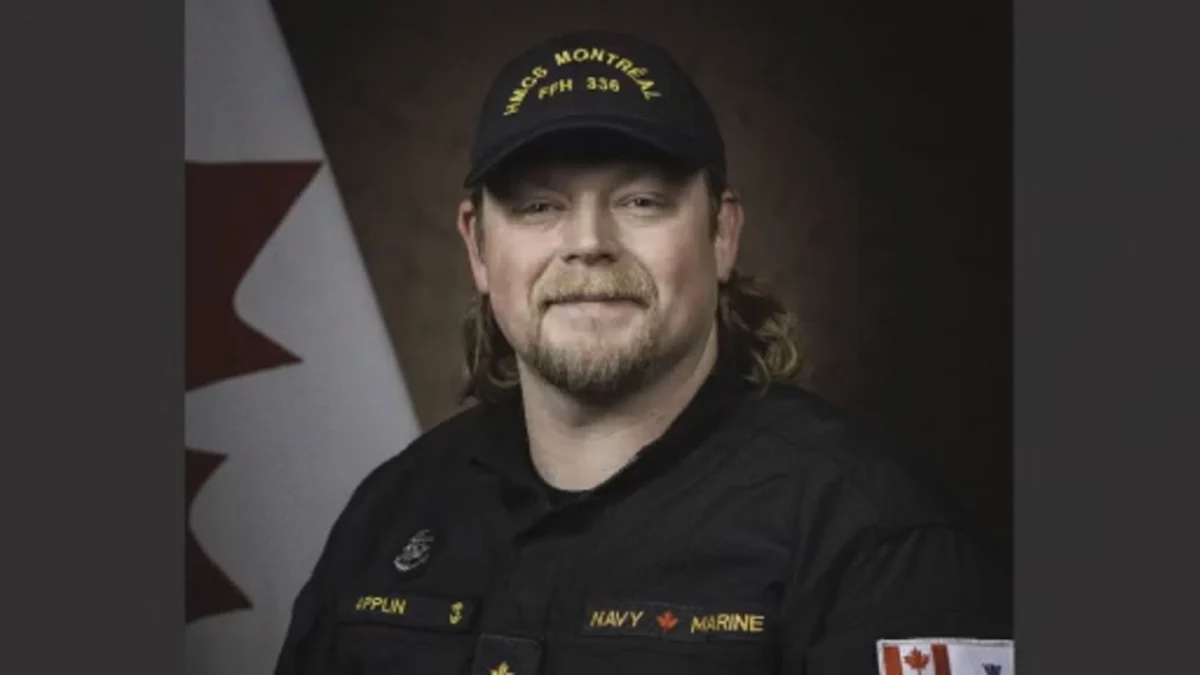
More than a year after a tragic capsizing incident in Halifax’s Bedford Basin claimed the life of Petty Officer 2nd Class Gregory Applin, two Royal Canadian Navy (RCN) sailors have been formally charged by the Canadian Forces Military Police (CFMP). The charges, laid under the National Defence Act and reflecting the gravity of the circumstances, include criminal negligence causing bodily harm, dangerous operation of a conveyance causing death, and negligent performance of military duties. This development marks a significant turn in a case that has deeply affected the RCN and underscored the inherent risks and profound responsibilities associated with military service.
A Night of Tragedy in Bedford Basin
The incident unfolded on the evening of January 24, 2025, a date etched into the memory of the RCN. Petty Officer 2nd Class Gregory Applin, a respected 38-year-old sailor with 19 years of dedicated service, had recently returned from a demanding deployment to the Indo-Pacific region. On that fateful night, Applin was engaged in what began as routine naval operations following sea trials aboard HMCS Montreal. The vessel had been conducting exercises in the Halifax area, a common practice for maintaining operational readiness and evaluating ship systems.
After the completion of the sea trials, a 24-foot-long Rigid Hull Inflatable Boat (RHIB) was dispatched to transport crew members from HMCS Montreal to the Mill Cove Jetty, approximately a mile away. RHIBs are versatile, high-speed craft frequently used by navies worldwide for tasks such as personnel transfer, boarding operations, and patrol duties. Their design, featuring a rigid hull combined with inflatable tubes, offers stability and speed, but their open-deck nature also exposes occupants to environmental elements and inherent risks, particularly during night operations or in challenging conditions.
Once the initial contingent of crew members had been safely disembarked at the jetty, Petty Officer Applin and another sailor, identified as the coxswain from the Naval Fleet School (Atlantic), embarked on the RHIB to return to the main dockyard. This return journey, estimated to take a mere 10 minutes under normal conditions, was reportedly characterized by relatively calm seas, with waves less than a metre in height, as later recounted by Commodore Jacob French, commander of the Canadian Fleet Atlantic, shortly after the incident. Despite these seemingly benign conditions, disaster struck. The RHIB collided with a mooring buoy in the Bedford Basin, an expansive, deep-water inlet adjacent to Halifax Harbour, known for its mix of naval and commercial traffic. The impact caused the vessel to overturn and capsize, violently throwing both sailors into the frigid waters.

The coxswain, despite the shock and immediate danger of being submerged, was unable to reach the RHIB’s onboard radio, which would have been the standard protocol for distress communication. Demonstrating quick thinking under extreme duress, he managed to use his personal cellphone to dial 911. This urgent call triggered a rapid response from the Joint Rescue Coordination Centre (JRCC), a critical component of Canada’s search and rescue system, which promptly deployed a rescue boat to the scene. Both sailors were eventually pulled from the water and received immediate medical attention from paramedics. Tragically, despite these efforts, Petty Officer 2nd Class Gregory Applin succumbed to his injuries in hospital, leaving behind a legacy of service and a grieving family and naval community.
The Investigation and Formal Charges
In the aftermath of Applin’s death, the Canadian Forces Military Police (CFMP) launched a comprehensive and meticulous investigation into the circumstances surrounding the capsizing. Such investigations are standard procedure for serious incidents within the Canadian Armed Forces (CAF), aiming to uncover facts, establish accountability, and inform future preventative measures. For over a year, CFMP investigators gathered evidence, interviewed witnesses, and analyzed technical data related to the RHIB’s operation and maintenance, as well as the environmental conditions at the time.
On Wednesday, following the conclusion of their extensive inquiry, the CFMP announced that charges had been laid against two individuals. Master Sailor (MS) David Terry, who was serving aboard HMCS Montreal at the time of the alleged offences, faces one count of criminal negligence causing bodily harm and one count of negligent performance of military duties. These charges fall under the purview of the National Defence Act, the legislative framework governing the conduct and discipline of CAF members. Criminal negligence, in a legal context, implies a marked and substantial departure from the standard of care that a reasonable person would observe in the same circumstances, showing a wanton or reckless disregard for the lives or safety of others.
The second individual charged is Sailor First Class (S1) Alexandre Garrison, who was attached to the Naval Fleet School (Atlantic) at the time of the alleged offences. Garrison faces one count of dangerous operation of a conveyance causing death and one count of negligent performance of military duties. Dangerous operation of a conveyance, under the Criminal Code of Canada (which elements can be incorporated into military justice for similar offences), refers to operating a vessel in a manner dangerous to the public, having regard to all the circumstances, including the nature and condition of the place, the weather, visibility, and the use of the conveyance. The charge of negligent performance of military duties is specific to the military justice system, holding service members accountable for failing to uphold their professional responsibilities and standards of care inherent to their roles.
The Military Justice System and Accountability

The decision to lay charges under the National Defence Act signifies that the accused will be tried within the military justice system, rather than the civilian courts. This system, distinct from the civilian judicial process, is designed to maintain discipline, efficiency, and morale within the armed forces. It operates through courts martial, which are judicial bodies composed of military judges and sometimes panels of officers, depending on the severity of the charges. The penalties can range from reprimands and fines to imprisonment and dismissal from the service.
The RCN’s leadership has acknowledged the profound impact of these charges. In a joint statement, Vice-Admiral Angus Topshee, Commander of the Royal Canadian Navy, and Chief Petty Officer First Class Pascal Harel, the Command Chief, conveyed the gravity of the situation. "This is difficult news for all of us," their statement read, acknowledging the collective grief and concern within the naval community. They emphasized the "challenging realities of our service," highlighting that naval operations frequently occur in demanding and high-stakes environments where errors can indeed have fatal consequences.
Crucially, the leadership stressed the imperative of accountability within the RCN. "We must be accountable for our actions and our inactions," the statement affirmed, underscoring a fundamental principle of military service. While committing to a "fair, independent and impartial process to determine the outcome of these charges," they also reminded the community that "those accused deserve every opportunity to defend themselves." This balance between upholding justice and ensuring due process for the accused is a cornerstone of any robust legal system, including the military’s.
Furthermore, Topshee and Harel wisely acknowledged the complex nature of such incidents, stating, "We are also extremely mindful that an incident like this almost never results from a single cause or single error, and it is most likely the outcome of a combination of factors." This perspective is critical, suggesting that investigations often reveal systemic issues, training deficiencies, equipment limitations, or a confluence of human and environmental factors rather than merely individual failings. This broader understanding can lead to more comprehensive safety improvements across the fleet. They concluded by reiterating the RCN’s expectations for all members: to uphold standards, foster a culture of accountability, and crucially, "to look out for one another, speak up when we see risks, and take actions to prevent harm." This proactive approach to safety and mutual support is vital in preventing future tragedies.
Broader Implications and the Path Forward
The charges laid in Petty Officer Applin’s death carry significant implications for the Royal Canadian Navy. Beyond the immediate legal proceedings, the incident and subsequent investigation will undoubtedly prompt further reviews of safety protocols, training methodologies, and operational procedures for RHIBs and other small craft. Naval operations, particularly those involving high-speed vessels and night navigation, inherently carry risks. The RCN continually strives to mitigate these risks through rigorous training, adherence to standard operating procedures, and investment in safety equipment. However, every incident, especially one resulting in a fatality, serves as a stark reminder of the constant need for vigilance and adaptation.

This case also shines a light on the psychological and emotional toll such events take on the naval community. The loss of a shipmate, particularly under circumstances that lead to criminal charges against fellow sailors, can create complex dynamics within units and across the service. The emphasis on supporting mental health and providing resources to those affected – from the families of the deceased to the accused and their colleagues – becomes paramount.
For Petty Officer Applin’s family, who have endured over a year of grief and uncertainty, these charges represent a step towards closure, albeit a painful one. The Canadian Forces, in their news release, reiterated the family’s wish for privacy as they continue to mourn their loss. This respect for their privacy is essential as the legal process unfolds.
As the case moves forward into potential prosecution, the CFMP has stated that no further information on details or evidence relating to the case will be provided to protect the integrity of future judicial proceedings and decisions. This standard practice in legal matters ensures that the trial process remains untainted by public commentary or premature disclosure of evidence, allowing for a fair and impartial determination of guilt or innocence. The ultimate outcome of these charges will not only determine the fate of Master Sailor Terry and Sailor First Class Garrison but will also serve as a crucial precedent, reinforcing the RCN’s commitment to safety, accountability, and justice within its ranks. The Royal Canadian Navy, while mourning the loss of a dedicated sailor, is committed to learning from this tragedy to enhance the safety and well-being of all its personnel.