admin
admin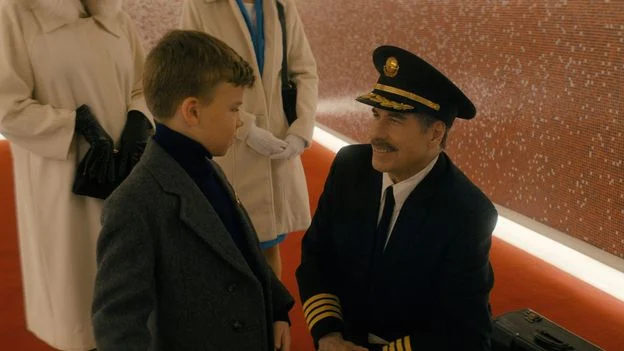
The 77th Cannes Film Festival became a focal point for Hollywood nostalgia and industry debate this past Saturday as John Travolta, a cornerstone of American cinema for five decades, unveiled his directorial debut, Propeller One-Way Night Coach. The screening, held at the prestigious Grand Théâtre Lumière, was preceded by a high-profile ceremony where the 72-year-old actor was presented with an honorary Palme d’Or, recognizing a career that has spanned from the disco era of the 1970s to the independent film resurgence of the 1990s. While the event was marked by emotional tributes and multiple standing ovations, the film itself has ignited a conversation regarding the growing trend of A-list actors utilizing their industry leverage to produce highly personal, often experimental passion projects that challenge traditional narrative structures.
The Premiere and Honorary Recognition
Thierry Frémaux, the director of the Cannes Film Festival, introduced the screening with a defense of the "actor-director" archetype. Frémaux posited that films directed by established actors possess a unique quality, often characterized by intimacy and a distinct cinematic vocabulary that differs from career directors. He described Travolta’s work as "personal and full of ideas of cinema," a sentiment that reflected the festival’s decision to make Propeller One-Way Night Coach the first official selection for this year’s lineup.
The evening served as a retrospective of Travolta’s impact on the medium. Before the lights dimmed for the feature, the audience was presented with a comprehensive montage of his most iconic roles, including Danny Zuko in Grease, Tony Manero in Saturday Night Fever, and Vincent Vega in Pulp Fiction. Upon receiving the honorary Palme d’Or, Travolta expressed profound gratitude, stating that the recognition was "beyond the Oscar" in its significance to his legacy. The actor received four separate standing ovations throughout the night, underscoring his enduring popularity among international cinephiles and industry peers.
Analysis of Propeller One-Way Night Coach
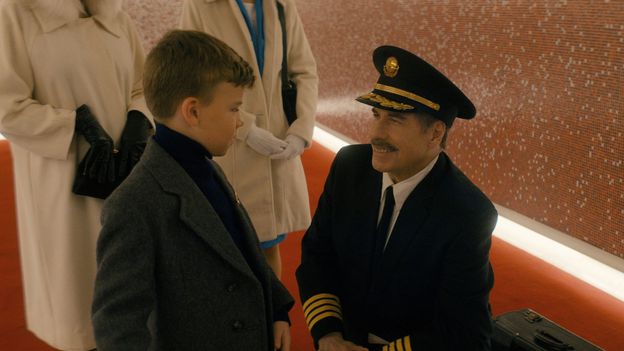
Propeller One-Way Night Coach is an autobiographical endeavor that draws directly from Travolta’s personal history and his well-documented lifelong passion for aviation. The film is based on a children’s novel of the same name that Travolta authored in 1997. Set in 1962, the narrative follows an eight-year-old boy—a surrogate for the young Travolta—as he embarks on a multi-city flight across the United States with his mother.
Technically and structurally, the film deviates from standard feature-length conventions. With a runtime of only 61 minutes, it occupies a space between a medium-length feature and a traditional short film. Rather than relying on dialogue-driven scenes or complex dramatic arcs, Travolta utilizes a near-constant voiceover narration, which he performed himself. This stylistic choice has been described by early viewers as a "filmed memoir" or a "cinematic poem" rather than a traditional narrative drama. The cinematography focuses heavily on the aesthetics of the 1960s "Golden Age" of flight, emphasizing the wonder of early commercial aviation through a lens of childhood innocence.
Critical Divergence and Industry Reception
Despite the warm reception for Travolta the individual, the film has faced a polarized critical landscape. One prominent critic from The Wrap labeled the project a "disaster," citing its lack of traditional dramatic tension and its reliance on sentimentality. Others have questioned whether the film would have secured a spot at a Tier-1 festival like Cannes if it were not for the star power of its creator.
This divergence highlights a recurring phenomenon in the festival circuit: the "star-led passion project." Critics often argue that these films are indulged by festival organizers in exchange for the "red carpet glamour" that A-list stars provide. This year’s Cannes festival, which featured fewer major studio blockbusters than in previous years, arguably benefited from the media attention generated by Travolta’s presence.
However, some defenders of the film suggest that its "amateurish" qualities—a term used by some to describe its non-professional narrative flow—are actually a form of vulnerability. They argue that seeing a global icon express himself through a medium he is still mastering offers a rare, unvarnished look at the artist’s psyche.
The Chronology of an Actor-Director Trend
Travolta’s transition to the director’s chair at age 72 is the latest entry in a long history of actors moving behind the camera. This transition generally falls into two categories: the career shift and the singular passion project.
The Career Shift
Historically, figures like Charlie Chaplin, Orson Welles, and Clint Eastwood successfully transitioned from acting to directing, eventually becoming more recognized for their work behind the lens. In the modern era, Greta Gerwig and Jordan Peele have followed this path, moving from indie acting roles to becoming Academy Award-nominated directors who define current cinematic trends.
The Singular Passion Project
Travolta’s Propeller One-Way Night Coach appears to align more closely with the "passion project" category. This involves established stars who use their wealth and influence to fund films that are often too niche or experimental for major studios. Recent examples cited by industry analysts include:
- Ryan Gosling’s Lost River (2014): Premiering at Cannes to mixed reviews, this surrealist drama was Gosling’s directorial debut. Despite the star’s status, the film saw limited commercial success, and Gosling has not directed a feature since.
- Chris Pine’s Poolman (2023): Shown at the Toronto International Film Festival, this detective comedy received overwhelmingly negative reviews and struggled to find a foothold in the theatrical market.
- Kevin Costner’s Horizon: An American Saga (2024): A self-financed multi-part Western epic. While Costner has directed successfully in the past (notably Dances with Wolves), the lukewarm reception to Horizon at Cannes and Venice led to significant changes in its distribution strategy.
Supporting Data: The Economics of the Passion Project
The financial backing for Propeller One-Way Night Coach reflects the shifting landscape of film production. While many actor-led projects struggle to find theatrical distribution, the rise of streaming platforms has provided a new outlet for these works.
Apple TV+ has acquired the global distribution rights for Travolta’s film, with a scheduled release date of May 29. For streaming services, the value of such a film lies less in box-office returns and more in "subscriber prestige" and the ability to market a project headlined by a recognizable name.
Data from the last five years indicates that films directed by A-list actors often see a 30-40% higher initial viewership on streaming platforms compared to similar indie projects directed by unknowns, regardless of critical scores. This "star-equity" allows platforms like Apple, Netflix, and Amazon to take risks on experimental formats like Travolta’s 61-minute memoir.
Broader Impact and Cultural Implications
The premiere of Propeller One-Way Night Coach raises important questions about the future of film festivals and the definition of "cinema." As the industry continues to grapple with the dominance of franchises and sequels, festivals like Cannes serve as the last bastion for original, if sometimes flawed, artistic expressions.
The inclusion of Travolta’s film suggests a tactical move by festival organizers to maintain relevance. By honoring a legend and screening his personal work, the festival ensures high engagement from both traditional media and social media platforms. For Travolta, the project represents a completion of a creative circle—taking a story he wrote nearly 30 years ago and bringing it to life using the resources his long career provided.
Furthermore, the film’s focus on 1962—a pivotal year in American history and aviation—taps into a broader cultural trend of "mid-century nostalgia." This period is often romanticized in modern media as a time of optimism and technological wonder, contrasting with the more cynical tone of contemporary cinema.
Conclusion and Future Outlook
While Propeller One-Way Night Coach may not achieve the critical consensus required for a traditional awards-season run, its premiere at Cannes marks a significant milestone in John Travolta’s career. It serves as a testament to the power of star leverage in the modern film economy and the willingness of international festivals to indulge the personal visions of Hollywood’s elite.
As the film prepares for its global debut on Apple TV+ on May 29, the industry will be watching to see if Travolta’s name is enough to draw an audience to a non-traditional, 61-minute autobiographical narrative. Regardless of the final viewer metrics, the event at Cannes has solidified the film’s place in the ongoing dialogue regarding the intersection of celebrity, artistic freedom, and the evolving nature of cinematic storytelling.
The honorary Palme d’Or remains the definitive takeaway for Travolta, a symbol of a career that has survived the volatility of Hollywood for half a century. Whether this marks the beginning of a new chapter for him as a director or remains a singular, "unique" tribute to his past remains to be seen. What is certain is that the "actor-director" phenomenon continues to be one of the most polarizing and fascinating elements of the global film festival circuit.