admin
admin
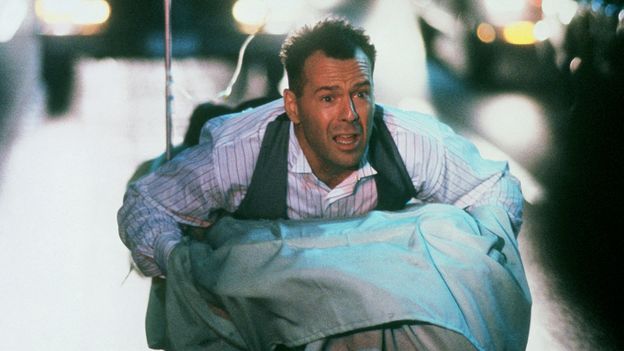
When Hudson Hawk arrived in theaters in May 1991, it was positioned as the definitive summer blockbuster, a vehicle designed to solidify Bruce Willis’s transition from a television star to a global cinematic icon. However, the film quickly became a cautionary tale of Hollywood excess, suffering a critical drubbing and a commercial failure that earned it a permanent place in the annals of "box-office bombs." In the decades since its release, the narrative surrounding Hudson Hawk has shifted from one of catastrophic failure to a nuanced appreciation of its eccentricities, leading to its current status as a misunderstood cult classic.
The Genesis of a Passion Project: From the Bar to the Big Screen
The origins of Hudson Hawk are rooted in the early 1980s, long before Bruce Willis became a household name. In 1980, Willis was working as a bartender and a struggling actor in New York City when he formed a friendship with musician Robert Kraft. During this period, Kraft shared a song he had written about a fictional cat burglar named Hudson Hawk. Willis was immediately captivated by the concept, famously declaring that the song was the basis for a feature film and promising that they would eventually produce it together.
This ambition remained dormant as Willis’s career ascended. Between 1985 and 1989, his role in the ABC series Moonlighting established his persona as a charming, wisecracking lead. This success was followed by the 1988 release of Die Hard, which redefined the action genre and catapulted Willis to the top of the Hollywood A-list. Armed with newfound industry leverage, Willis revisited the Hudson Hawk concept. He approached Joel Silver, the powerhouse producer behind Die Hard and Lethal Weapon, who agreed to produce the project as a high-budget heist comedy.
A Chronology of Production Instability
The production of Hudson Hawk is frequently cited as one of the most disorganized in modern film history. While the initial script by Steven de Souza—the writer behind Die Hard—was a straightforward heist caper, the project began to mutate as more voices entered the creative process. Michael Lehmann, fresh off the success of the dark comedy Heathers, was hired to direct, and he brought in screenwriter Daniel Waters to polish the script.
The resulting creative environment was one of fundamental misalignment. De Souza’s sensibilities were rooted in traditional action, while Waters aimed to parody the very genre the film occupied. This tension was exacerbated by the significant influence Willis and Silver exerted over the set. Reports from the production in Rome and Budapest indicate a "too many cooks" scenario, where script changes were made daily, and scenes were improvised on the fly.
Key disruptions during the filming process included:
- Casting Transitions: The original lead actress, Maruschka Detmers, was forced to withdraw due to debilitating back pain and was replaced mid-production by Andie MacDowell.
- Staffing Turnover: The film’s cinematographer was dismissed following a series of confrontations with producer Joel Silver.
- Budgetary Bloat: Initially greenlit with a budget of approximately $40 million, the production costs swelled to an estimated $60 million to $65 million—equivalent to over $130 million in 2024 currency—due to delays, set reconstructions, and the logistical challenges of filming in Europe.
- Logistical Failures: The production moved from Rome to Budapest to film a sequence originally set in Moscow, only for the sequence to be cut from the script. Furthermore, a general strike in Budapest hampered filming efforts, leading actor Richard E. Grant to describe the production in his diaries as a "one-way ticket out of my mind."
Financial Fallout and Critical Reception
The commercial performance of Hudson Hawk was a significant disappointment for TriStar Pictures. Upon its release, the film grossed only $17.2 million at the domestic box office, failing to recoup even its production budget, let alone the substantial marketing costs. The disconnect between the film’s marketing—which pitched it as a standard Bruce Willis action flick—and the actual content—a surreal, musical-infused slapstick comedy—is often cited as a primary reason for its failure to find an audience.
Critics were notoriously harsh. Peter Travers, writing for Rolling Stone, described the experience of watching the film as "unspeakably awful," suggesting it could make an audience "a little crazy." The film swept the 1991 Golden Raspberry (Razzie) Awards, winning for Worst Picture, Worst Director, and Worst Screenplay.
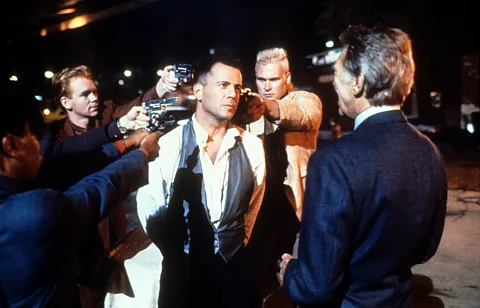
The plot, which involves a cat burglar forced by a shadowy corporation to steal Leonardo da Vinci artifacts to power an alchemy machine that turns lead into gold, was viewed by many contemporary reviewers as incoherent. The film’s tone—which included choreographed heist sequences set to the song "Swinging on a Star"—puzzled audiences who expected the grit of Die Hard.
Supporting Data: The 1991 Box Office Landscape
To understand the magnitude of Hudson Hawk’s failure, it is necessary to examine the competitive landscape of 1991. The year was dominated by films that leaned into established genre tropes or high-concept drama:
- Terminator 2: Judgment Day: $204.8 million (Domestic)
- Robin Hood: Prince of Thieves: $165.5 million (Domestic)
- Beauty and the Beast: $145.9 million (Domestic)
- The Silence of the Lambs: $130.7 million (Domestic)
Hudson Hawk’s domestic total of $17.2 million placed it far below its peers. Interestingly, Richard E. Grant, who played one of the villains in Hudson Hawk, had to decline the role of the Sheriff of Nottingham in Robin Hood: Prince of Thieves due to the scheduling overruns of Willis’s project. The role eventually went to Alan Rickman, who won a BAFTA for his performance, highlighting the opportunity cost associated with the Hudson Hawk production.
Official Responses and Participant Reflections
In the years following the release, the primary participants have offered varied perspectives on the film’s legacy. Richard E. Grant has remained consistently critical, famously rebuffing fans of the film by labeling it "a steaming pile of donkey droppings." Conversely, director Michael Lehmann has acknowledged the film’s flaws while defending its experimental nature, noting that the production lacked the "adults in the room" necessary to rein in the competing creative impulses.
Bruce Willis, whose career survived the blowback through subsequent hits like Pulp Fiction and The Sixth Sense, has maintained a level of affection for the project. Reports from 2022, following Willis’s retirement from acting due to a diagnosis of aphasia, suggest that he and co-creator Robert Kraft recently revisited the film. Their consensus was a quiet vindication, with both reportedly agreeing that the film was "not that bad" and possessed a unique charm that had been overlooked during the media frenzy of the early 90s.
Broader Impact and the Rise of Cult Status
The transition of Hudson Hawk from a "turkey" to a cult classic is a phenomenon often seen in films that are ahead of their time or too eccentric for mainstream sensibilities. Modern critics and film historians, such as David Hughes, author of The Unmaking of Hudson Hawk, argue that the film was a victim of "blood in the water" journalism. Hughes suggests that the media’s focus on the behind-the-scenes chaos predisposed critics to hate the final product.
The film is now praised for several elements that were originally criticized:
- Originality: In an era of sequels and franchise intellectual property, Hudson Hawk stands out as a high-budget original concept that took immense creative risks.
- Meta-Humor: The film’s self-awareness and parody of action tropes preceded the "meta" trend that would become popular in the late 1990s and 2000s.
- Technical Ambition: Despite the chaos, the film features high-quality practical stunts and elaborate set designs that hold up better than the early CGI of its contemporaries.
The cult following is bolstered by a younger generation of cinephiles who view the film without the baggage of its 1991 production gossip. For these viewers, Hudson Hawk is an "anarchic, making-it-up-as-they-go-along" experience that offers a refreshing alternative to the formulaic nature of modern blockbusters.
Analysis of Implications for Modern Cinema
The legacy of Hudson Hawk serves as a permanent case study for film studios regarding the risks of "star-driven" productions. It demonstrated that even the most bankable stars cannot always overcome a fractured creative vision or a marketing campaign that misidentifies its target audience. However, it also proves that commercial and critical failure is not always the final word on a film’s cultural value.
The enduring interest in the film—culminating in the publication of David Hughes’s investigative book 35 years later—suggests that there is a lasting appetite for "glorious shambles." As the film industry continues to grapple with the balance between commercial safety and creative risk, Hudson Hawk remains a vibrant, if messy, reminder of what happens when Hollywood allows a star’s "holy writ" to guide a $60 million experiment. Whether viewed as a disaster or a masterpiece of the absurd, its place in cinematic history is secure, not as a failure of imagination, but as an excess of it.