admin
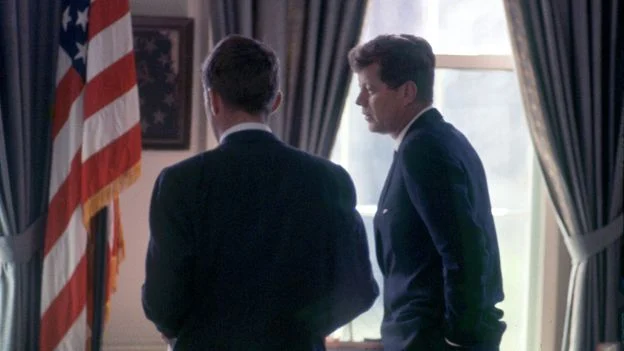
The fourteen days between October 14 and October 28, 1962, represent the closest the human race has ever come to self-annihilation. During this period, the United States and the Soviet Union engaged in a nuclear standoff that tested the limits of cold-war brinkmanship, intelligence gathering, and executive temperament. While history often remembers the crisis as a series of grand televised gestures and military maneuvers, internal accounts from the BBC and declassified intelligence reveals that the resolution was as much a product of psychological warfare, expert statesmanship by President John F. Kennedy and his brother Robert, and a series of improbable coincidences in a Washington D.C. bar.
The Genesis of a Global Crisis: Operation Anadyr
The crisis began in the shadows of the Caribbean summer. Under a plan codenamed Operation Anadyr, the Soviet Union commenced a massive, covert logistics operation. Throughout the summer of 1962, more than 40,000 Soviet soldiers, technicians, and engineers arrived at the Cuban port of Havana. To the outside world, these men were "agricultural specialists" and "tourists." In reality, they were the vanguard of a nuclear deployment designed to tip the strategic balance of the Cold War.
For the Soviet Premier Nikita Khrushchev, placing medium-range ballistic missiles (MRBMs) in Cuba served two primary purposes: protecting the nascent communist government of Fidel Castro from another U.S.-backed invasion—following the failed Bay of Pigs operation in 1961—and closing the "missile gap" by placing American cities within range of Soviet warheads, countering the U.S. presence of Jupiter missiles in Turkey and Italy.
October 14: The Eye of the U-2
The illusion of agricultural aid shattered on October 14, 1962, when a U.S. Air Force U-2 spy plane, piloted by Major Richard Heyser, flew over western Cuba. The high-altitude photographs captured unmistakable signatures of Soviet military engineering. Arthur Lundahl, then the head of the CIA’s National Photographic Interpretation Center, described the moment of realization to the BBC in 1992. Upon examining the viewfinders, the intelligence community confirmed the presence of Soviet SS-4 medium-range ballistic missiles.
The discovery sent shockwaves through the American intelligence apparatus. Robert McNamara, the U.S. Secretary of Defense at the time, later reflected on the skepticism that had preceded the find. The U.S. military had previously investigated nearly 5,000 erroneous reports of missiles. The prevailing wisdom among "wise political authorities" was that the Soviets would never take such a suicidal risk. The photographic evidence proved that rationality was a fragile metric in the Cold War.
The Excomm Deliberations and the Poker Game in the Oval Office
President Kennedy immediately convened the Executive Committee of the National Security Council (Excomm), a body of top-level advisors tasked with formulating a response. The group was deeply divided. The Joint Chiefs of Staff and "hawks" within the cabinet pushed for an immediate preemptive airstrike followed by a full-scale invasion of Cuba. Kennedy, however, feared that such an escalation would trigger a Soviet retaliatory strike on West Berlin or a general nuclear exchange.
While the world remained unaware of the unfolding drama, Kennedy engaged in a high-stakes "poker game" with Soviet leadership. On October 18, Kennedy met with Soviet Foreign Minister Andrei Gromyko in the Oval Office. According to Viktor Sukhodrev, Gromyko’s translator, the atmosphere was civil but agonizingly tense. Kennedy sat in his customary rocking chair, the aerial photographs of the missile sites tucked away in a desk drawer just inches from his hand.
Kennedy never opened the drawer. He never mentioned the word "missile." Instead, he reiterated his September 4 warning that the introduction of offensive weapons would lead to "gravest consequences." Gromyko, following Moscow’s script, insisted that Soviet aid was purely defensive. It was a dialogue of illusion where both men knew the truth, yet neither was ready to reveal their hand, knowing that the first move toward transparency could also be the first move toward war.

A Timeline of the Fourteen Days that Shook the World
To understand the velocity of the crisis, one must look at the rapid escalation of events following the discovery:
- October 14: U-2 flight captures photos of missile sites in San Cristobal.
- October 16: JFK is briefed on the findings; Excomm is formed.
- October 18: Meeting with Foreign Minister Gromyko; Kennedy maintains the secret.
- October 22: Kennedy delivers a televised address to the nation, revealing the missiles and announcing a naval "quarantine" (a term chosen because "blockade" was legally an act of war).
- October 24: The quarantine goes into effect. Soviet ships approaching the line stop or turn back, but work on the missile sites in Cuba continues.
- October 25: Adlai Stevenson confronts the Soviets at the UN, showing the aerial photos.
- October 27: "Black Saturday." A U-2 plane is shot down over Cuba, killing pilot Rudolf Anderson. A Soviet submarine is nearly forced to surface by U.S. depth charges, unaware the sub carries a nuclear torpedo.
- October 28: Khrushchev announces the removal of the missiles.
The Barroom Incident: How a Misunderstanding Averted Disaster
While the naval quarantine provided a physical buffer, the psychological breakthrough that led to the Soviet climb-down was influenced by a bizarre incident in a Washington D.C. bar. On the night of October 24, Anatoly Gorsky, an undercover KGB agent posing as a Tass news correspondent, was drinking at the National Press Club.
Gorsky struck up a conversation with the bartender, Johnny Prokoff, a Russian emigre. Prokoff shared a piece of gossip he had overheard from two journalists, Warren Rogers and Robert Donovan of the New York Herald Tribune. Prokoff claimed the journalists were preparing to fly to Miami to join an invasion force that would strike Cuba the next morning.
In reality, the journalists were merely discussing contingency plans. However, Gorsky took the information as a confirmed military intelligence leak and rushed to the Soviet embassy. His message to Moscow suggested that a U.S. invasion was imminent—potentially within hours. This "intelligence," though based on a bartender’s misunderstanding, added immense pressure on Khrushchev. The Soviet Premier realized the situation was spinning out of his control and that the U.S. was prepared to move beyond a quarantine.
The Roles of the Kennedy Brothers and the British Perspective
The resolution of the crisis is often credited to the "statesmanship of the Kennedys." Robert Kennedy, serving as Attorney General, acted as the President’s primary emissary, conducting secret meetings with Soviet Ambassador Anatoly Dobrynin. It was during these meetings that a "quid pro quo" was established: the U.S. would publicly pledge never to invade Cuba, and privately, they would remove U.S. Jupiter missiles from Turkey at a later date.
Harold Macmillan, the British Prime Minister at the time, observed that the Kennedys possessed two vital qualities: the ability to see the opponent’s point of view and a refusal to be paralyzed by the horror of nuclear war. Macmillan noted that the Kennedys understood Khrushchev needed a "way out" that allowed him to reorganize his position within the Kremlin without appearing to have suffered a total defeat. By providing Khrushchev with the "no-invasion" pledge, the Kennedys gave the Soviet leader the political cover he needed to retreat.
Legacy and Implications: The Birth of Crisis Management
The Cuban Missile Crisis fundamentally changed the nature of international relations. The most immediate result was the realization that communication between the two superpowers was dangerously slow. In 1963, the "Hotline"—a direct teletype link between Moscow and Washington—was established to ensure that future leaders would not have to rely on overheard barroom conversations or delayed telegrams.
Furthermore, the crisis led to the Limited Test Ban Treaty of 1963, the first major step toward nuclear arms control. For the Kennedy administration, it was a moment of supreme validation, proving that "flexible response" and calculated diplomacy were more effective than the previous doctrine of "massive retaliation."
The events of October 1962 serve as a permanent case study in executive decision-making. The crisis demonstrated that in the nuclear age, the greatest threat is not necessarily the malice of an opponent, but the potential for miscalculation, the fog of war, and the loss of control over the escalatory ladder. As Dean Rusk, the U.S. Secretary of State, famously remarked when Soviet ships turned away from the quarantine line: "We’re eyeball to eyeball, and I think the other fellow just blinked." However, the history of those 14 days suggests that it was not just a blink, but a coordinated effort by both sides to step back from an abyss that neither truly wished to enter.