admin
The 1990s in the United Kingdom represented a pivotal cultural intersection where music, fashion, art, and nightlife converged into a singular, chaotic energy. This era, often characterized as the final "analogue" decade before the digital revolution of the 21st century, is now the subject of a comprehensive new exhibition at Tate Britain. Titled "The 90s: Art and Fashion," the exhibition seeks to deconstruct the myths of the decade while highlighting the genuine innovations that redefined British identity on the world stage.

Curated by Edward Enninful, the former editor-in-chief of British Vogue and a central figure in 1990s media, the exhibition moves beyond mere nostalgia. It examines the decade as a period of profound structural change within the creative industries. Enninful, who became the fashion editor of the influential i-D magazine at the age of 18, brings a firsthand perspective to the curation, arguing that the 1990s were defined by a breakdown of traditional hierarchies. According to Enninful, the era allowed voices that had previously been marginalized to occupy central roles in the cultural narrative, creating a DIY ethos that permeated everything from underground rave culture to high-concept gallery art.
The Socio-Economic Backdrop of a Creative Explosion
To understand the creative output of the 1990s, one must consider the socio-political climate of the United Kingdom at the time. The decade opened under the shadow of a significant recession in the early 1990s, which followed the hyper-materialism of the 1980s. This economic downturn, paradoxically, fueled a DIY movement. Low rents in neglected urban areas, particularly in East London districts like Hoxton and Shoreditch, allowed artists, designers, and musicians to establish studios and clubs in spaces that would later become prohibitively expensive.

By the mid-1990s, the "Cool Britannia" phenomenon began to take shape, a movement bolstered by the 1997 landslide victory of Tony Blair’s New Labour party. This era saw the British government actively branding the nation as a global creative hub. However, the Tate Britain exhibition suggests that the most authentic creative energy of the decade existed outside of this official branding, in the "hot-mess" energy of nightclubs, independent magazines, and experimental art spaces.
A New Realism: The Visual Language of the 90s
One of the most significant shifts highlighted in the exhibition is the move away from the polished, airbrushed aesthetics of the 1980s toward a gritty, unfiltered realism. This transition is perhaps best exemplified by the work of photographer Corinne Day. Her 1992 shoot for The Face magazine, titled "England’s Dreaming," featured model Rosemary Ferguson and helped define a new aesthetic often labeled "heroin chic" by the mainstream media, though curators argue it was more about a "new realism."

Helen Little, curator of contemporary British art at Tate Britain, notes that this style was characterized by natural lighting, minimal retouching, and a documentary-style approach to friendship and youth. This aesthetic was not merely a fashion choice but a reaction against the artificiality of the previous decade. It was poetic, androgynous, and resolutely grounded in the reality of British life.
Similarly, the work of Juergen Teller provided an intimate, often raw look at the icons of the era. His 1998 portrait "Young Pink Kate," featuring a 24-year-old Kate Moss with pink hair, captures a moment of "exuberant intimacy." Moss herself has described the image as her most authentic portrait because it lacked the artifice of a professional hair and makeup team. This "unmediated" approach to celebrity became a hallmark of 1990s visual culture.

The Subversion of High Fashion
While photographers were stripping back the layers of artifice, British fashion designers were pushing the boundaries of theatricality and subversion. Alexander McQueen, who emerged as the "enfant terrible" of the fashion world, utilized the runway as a site for performance art. His Autumn/Winter 1998 collection, inspired by the martyrdom of Joan of Arc, remains a landmark moment in fashion history.
McQueen’s work was symptomatic of a broader trend where fashion was used to explore themes of conquest, persecution, beauty, and brutality. His designs were not merely commercial products but were deeply entwined with the art and nightlife scenes of the time. The exhibition highlights how McQueen and his contemporaries challenged the traditional boundaries of their discipline, collaborating with artists and musicians to create immersive cultural experiences.

The Sound of the Underground: Jungle and Club Culture
The 1990s were also defined by a radical evolution in electronic music. In the early part of the decade, the UK rave scene gave birth to Jungle, a fast-paced genre that blended breakbeats with reggae and dancehall influences. A focal point for this movement was the Metalheadz Sunday Sessions at the Blue Note in Hoxton Square, helmed by DJ and producer Goldie.
Photographer Eddie Otchere, whose work is featured in the exhibition, captured the "irrepressible spirit" of these nights. At the time, Hoxton was a desolate district, far from the gentrified tech hub it is today. The club culture of the 90s acted as a laboratory for social and creative experimentation. Goldie’s vision was to "incubate a scene" that pushed jungle culture into the future, creating a community of producers and artists who operated outside the mainstream music industry.

This spirit of hedonism was not limited to the underground. Dave Swindells, the nightlife editor for Time Out magazine, documented the "raucous and riotous" atmosphere of nights like Kinky Gerlinky. These events celebrated performative dressing and introduced vogueing balls to the London West End, bridging the gap between LGBTQ+ subcultures and the broader nightlife scene.
Sexual Politics and the New British Art
The 1990s saw a significant shift in how sexual politics and identity were explored in the fine arts. While the "Young British Artists" (YBAs) like Damien Hirst and Tracey Emin garnered headlines for their irreverent and often brash approach, other artists were forging a more minimal yet equally impactful path.

Steve McQueen, who would later become an Academy Award-winning director, emerged in this period with works like Bear (1993). In this black-and-white short film, McQueen and Vernon Douglas engage in a physical struggle that blurs the lines between aggression and tenderness. The work challenged spectators to confront dynamics of Black masculinity, strength, and sexuality. McQueen’s success, including his 1999 Turner Prize win, signaled a broadening of the British art canon to include more diverse perspectives and experimental mediums.
Regional Identities and the "Ladette" Culture
While much of the cultural narrative of the 90s is centered on London, the Tate Britain exhibition also acknowledges the creative energy occurring across the UK. Photographer Mischa Haller’s series Not Going Home (1998) captured scenes of nightlife in Cardiff, showing young women at 6:15 am. These images provided a counter-narrative to the "ladette" label frequently used by tabloid newspapers to shame young women for their participation in drinking and party culture.

Haller’s work celebrates the "in-between moments" of the decade—the time between the club closing and the morning commute. It depicts a generation that felt an "individual freedom" and a desire to live entirely in the moment. This sentiment was echoed in the "boy racer" culture of the Midlands, documented by Elaine Constantine in her Burn Up series (1997). Constantine, who shared an enthusiasm for customized cars, likened the spontaneous car meets in Northampton parking lots to the energy of a rave—an independent, word-of-mouth movement that belonged entirely to the youth.
Legacy and the Transition to the Digital Age
As the decade drew to a close, the "pre-millennial tension" was palpable. The 1990s were the "last hurrah" of a world before the algorithm. Cultural movements were still incubated in physical spaces—clubs, record shops, and independent galleries—allowing them to develop organically before being absorbed by the mainstream.

Edward Enninful notes that the influence of the 1990s is still unfolding across British culture. The breakdown of hierarchies that began in the 90s paved the way for the multi-disciplinary nature of modern creative work. Today’s designers, who often act as musicians, filmmakers, and activists, are the direct descendants of the 90s DIY ethos.
Broader Impact and Analysis
The Tate Britain exhibition serves as a critical reassessment of a decade that is often reduced to Britpop and "Cool Britannia" clichés. By focusing on the intersection of art and fashion, the exhibition highlights how the 1990s fundamentally changed the business of culture. The "outsider energy" of the decade’s early years eventually became a major export for the UK, with the creative industries now contributing over £120 billion annually to the British economy.

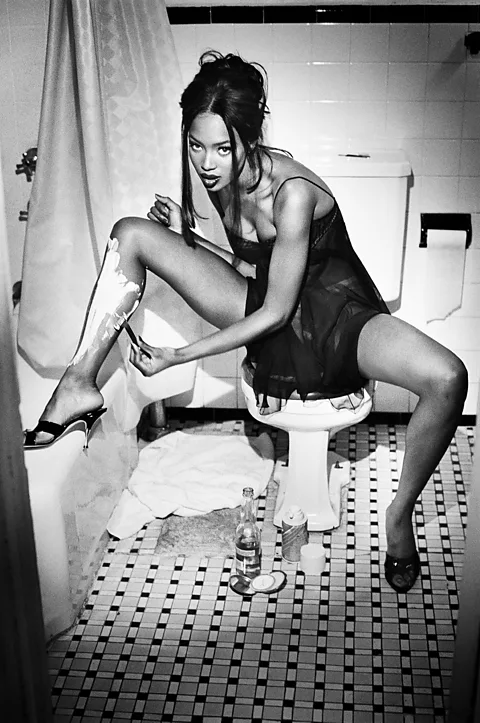
Furthermore, the 90s established a blueprint for cultural diversity that the industry is still working to fully realize. The decade saw the rise of global icons like Naomi Campbell, whose 1994 album cover for Babywoman (shot by Ellen von Unwerth) showcased a multifaceted, glamorous, and humorous femininity that challenged traditional gender roles.
Ultimately, "The 90s: Art and Fashion" suggests that the decade’s most enduring legacy is its spirit of risk-taking. In a modern era where creative output is often optimized for social media engagement and algorithmic reach, the "thrilling and chaotic" energy of the 90s serves as a reminder of the power of spontaneous, unfiltered creativity. As the exhibition demonstrates, the 1990s were not just a period of hedonism, but a serious undertaking in the pursuit of a more inclusive and adventurous future.