admin
admin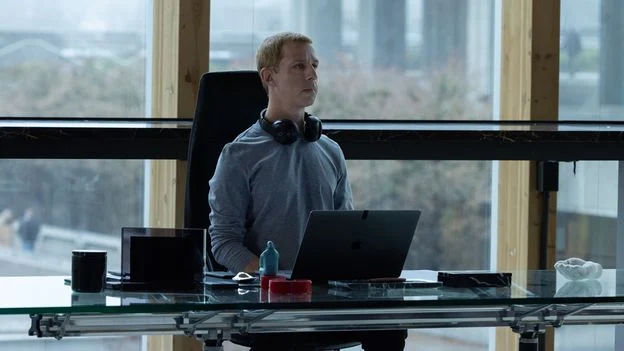
The cinematic landscape of 2026 has been increasingly defined by the "industrialist epic," a subgenre of biopics and dramas focusing on the titans of Silicon Valley and the immense power they wield over global discourse. The latest entry into this canon is The Social Reckoning, a film that serves as a spiritual and thematic successor to the 2010 Academy Award-winning drama The Social Network. While the earlier film, directed by David Fincher and written by Aaron Sorkin, focused on the fractious origins of Facebook within the dorm rooms of Harvard, The Social Reckoning shifts its gaze to the internal rot of a global behemoth. Directed and written by Sorkin, the film attempts to dramatize the real-world events surrounding the 2021 "Facebook Files" leak, focusing on the collaboration between an investigative journalist and a high-level whistleblower.
Set for a wide release on 9 October 2026, the film arrives at a time when public scrutiny of social media platforms has never been higher. However, despite the gravity of its subject matter—ranging from the radicalization of users to the mental health of adolescents—The Social Reckoning has met with a lukewarm critical reception. Reviewers have noted that while the film provides a sober look at the data and internal mechanics of Meta (formerly Facebook), it lacks the propulsive energy and high-stakes tension that made its predecessor a cultural phenomenon. With Jeremy Strong stepping into the role of Mark Zuckerberg and Mikey Madison portraying whistleblower Frances Haugen, the film is a study in corporate inertia rather than a high-octane thriller.
A Narrative of Whistleblowing and Journalistic Persistence
The Social Reckoning follows two primary narrative strands that eventually converge, though they never physically intersect. The first strand focuses on Jeff Horwitz, portrayed by Jeremy Allen White, an investigative reporter for The Wall Street Journal. In 2019, Horwitz transfers to the paper’s San Francisco bureau with the explicit goal of penetrating the opaque wall of secrecy surrounding Facebook’s corporate headquarters. His initial efforts are met with silence and "no comments" from the company’s PR department, a sequence Sorkin uses to illustrate the difficulty of reporting on a company that controls the very flow of information.
The momentum shifts when Horwitz makes contact with Frances Haugen, played by Mikey Madison. Haugen, a data scientist who worked in Facebook’s Civic Integrity department, becomes the film’s moral compass. Through a series of clandestine meetings, Haugen provides Horwitz with thousands of pages of internal documents. These documents, which formed the basis of the real-world "Facebook Files," reveal that the company was aware of the negative impacts its platforms had on society but chose to prioritize growth and engagement over safety.
The second narrative strand follows Mark Zuckerberg, played by Jeremy Strong, as he prepares for a high-stakes Senate hearing. Unlike Jesse Eisenberg’s portrayal in 2010, which depicted Zuckerberg as a fast-talking, petulant genius, Strong’s Zuckerberg is a "dead-eyed" and detached executive. The film spends significant time in rehearsal rooms where advisors attempt to "humanize" the CEO, teaching him how to blink naturally and respond to questioning without appearing robotic. This strand serves as a satirical look at the art of corporate testimony but, as critics have noted, it lacks the emotional weight or character development needed to make Zuckerberg a compelling antagonist.
Chronology of the Real-World Events
To understand the scope of The Social Reckoning, it is necessary to examine the timeline of the events it dramatizes. The film is rooted in a period of intense volatility for the tech industry:
- 2019: Jeff Horwitz begins his deep-dive investigation into Facebook’s internal policies, specifically looking at how the platform’s algorithms favor controversial and polarizing content.
- Late 2020: Frances Haugen joins the Civic Integrity team at Facebook. Following the 2020 U.S. Election, she grows disillusioned after the company dissolves the unit, which she believed was essential for protecting democratic processes.
- May 2021: Haugen leaves Facebook, but not before copying tens of thousands of pages of internal research and memos.
- September 2021: The Wall Street Journal begins publishing "The Facebook Files," a series of articles based on Haugen’s documents. The reports reveal that Facebook knew Instagram was "toxic" for teen girls and that the platform was being used by human traffickers and cartels in developing nations.
- October 2021: Frances Haugen reveals her identity on 60 Minutes and subsequently testifies before the U.S. Senate Committee on Commerce, Science, and Transportation.
- 2026: The Social Reckoning is released, attempting to contextualize these events within the broader history of social media’s impact on the 21st century.
Supporting Data and Internal Research
The film’s most harrowing moments come from the presentation of actual data uncovered during the investigation. Sorkin utilizes his signature dialogue-heavy style to relay statistics that were, in reality, part of Facebook’s own secret internal research. One of the most significant data points highlighted in the film is that 32% of teenage girls who felt "bad about their bodies" reported that using Instagram made them feel worse.

Furthermore, the film dramatizes the "Engagement-Based Ranking" (EBR) system. Internal memos depicted in the movie show that Facebook’s 2018 algorithm change, intended to foster "meaningful social interactions," actually had the opposite effect. The data showed that the algorithm promoted "angry" reactions over "likes" because anger drove more time on the site. In the film, Haugen explains to Horwitz that the company’s internal researchers found that "misinformation, toxicity, and violent content are inordinately prevalent" among the most-shared posts, yet the company was hesitant to make changes that might decrease user engagement.
Analysis of Implications and Corporate Response
The title of the film, The Social Reckoning, suggests a definitive moment of accountability. However, the film’s conclusion reflects a more complicated reality. While the 2021 leaks led to global headlines and a rebranding of the company to Meta, the systemic issues regarding data privacy and algorithmic transparency remain largely unresolved in the eyes of regulators.
In response to the real-world events depicted in the film, Meta has consistently maintained that the leaked documents were used to create a "false narrative" about the company’s motives. A spokesperson for the company in 2021 stated, "At the heart of these stories is a premise which is false: that we conduct research and then systematically ignore it if the findings are inconvenient for the company." The film briefly touches on this defense, showing Zuckerberg’s advisors framing the research as "exploratory" and "not definitive," a tactic used to shield the company from legal liability.
The broader implication of the film—and the history it portrays—is the inherent conflict between a fiduciary duty to shareholders and a moral duty to the public. Sorkin’s screenplay posits that as long as growth is the primary metric for success in Silicon Valley, safety and integrity will always be secondary concerns.
Critical Comparison and the Tech-Film Trend
The Social Reckoning does not exist in a vacuum. It is part of a 2026 wave of cinema focusing on the personalities behind the platforms. Other notable releases this year include Digger, Alejandro G. Iñárritu’s surrealist take on a tech mogul starring Tom Cruise; Musk, a four-hour documentary by Alex Gibney; and Artificial, Luca Guadagnino’s stylized exploration of Sam Altman’s rise in the AI sector.
Compared to these works, The Social Reckoning is seen as the most traditional and, perhaps, the most constrained. By sticking closely to the facts of the Horwitz-Haugen collaboration, Sorkin avoids the "gonzo" energy of Digger or the aesthetic flair of Artificial. However, this adherence to the "procedural" format has led to criticisms that the film feels more like a televised reenactment than a cinematic event. The lack of physical danger or traditional "thriller" tropes—such as car chases or direct threats—makes the film a cerebral experience that may not resonate with audiences accustomed to the high-stakes drama of The Social Network.
Conclusion: A Muted Finale for a Global Crisis
Ultimately, The Social Reckoning serves as a reminder of the limitations of the "whistleblower drama" in an era of trillion-dollar corporations. The film ends not with a "giant-killing" victory, but with the reality of continued corporate dominance. Zuckerberg remains one of the wealthiest individuals on the planet, and the platforms in question continue to host billions of users.
While Sorkin’s trademark banter and the "dead-eyed" precision of Jeremy Strong’s performance provide moments of interest, the film struggles to find a climax for a story that, in the real world, is still being written. The Social Reckoning is a sober, factual, and well-acted piece of cinema, but it serves more as a historical record than a call to action. For viewers seeking an understanding of the data behind the headlines, it is an informative 112 minutes; for those seeking the visceral thrill of a reckoning, the film may leave them still waiting for a true resolution.