admin
admin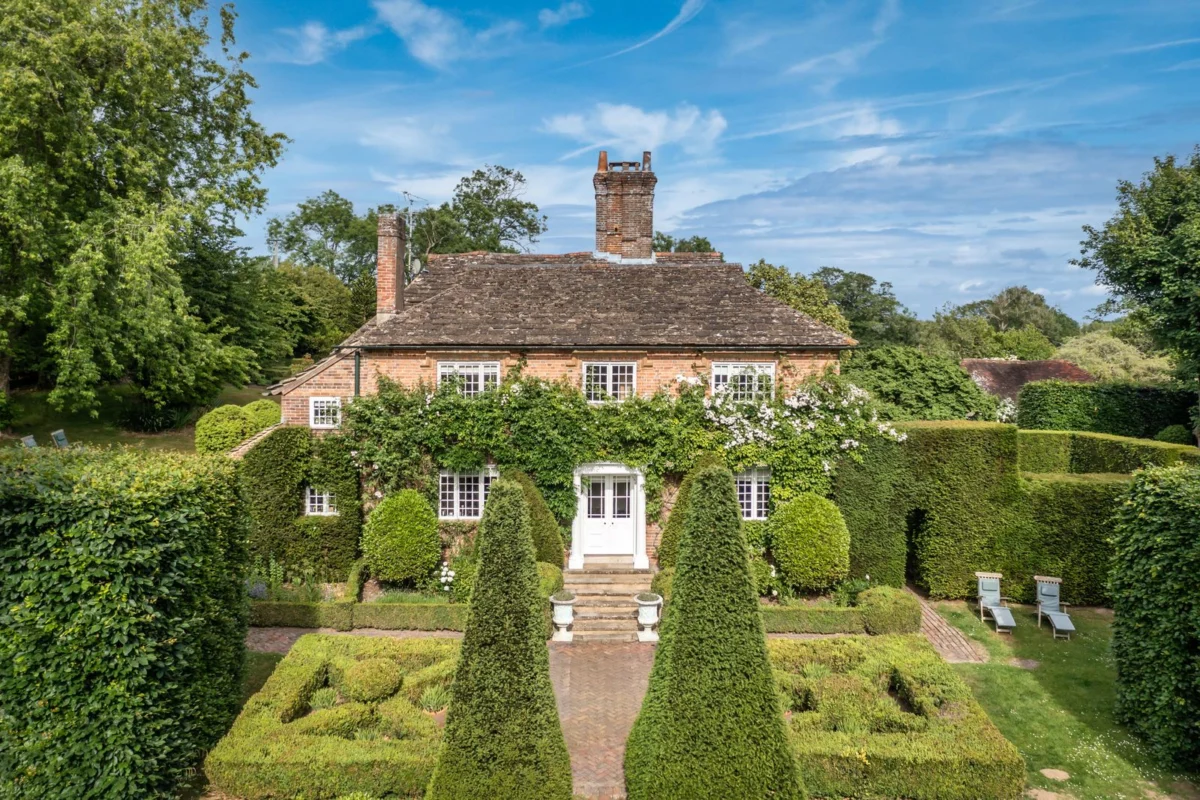
For the first time in its more than five-century history, the Old House in Staplefield, West Sussex, a property imbued with a rich tapestry of British royal and cultural heritage, is being publicly offered for sale. This distinguished estate, once the cherished country retreat of Antony Armstrong-Jones, the 1st Earl of Snowdon, and during their marriage, Her Royal Highness Princess Margaret, carries an asking price of £3,950,000. Spanning 4,195 square feet within the main residence, featuring six bedrooms and four-and-a-half bathrooms, and set within 5.52 acres of meticulously cultivated gardens and grounds, the Old House represents a unique opportunity to acquire a significant piece of the United Kingdom’s private architectural and social history.
A Storied History: From Tudor Origins to Royal Residency
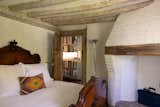
Dating back to 1481, the Old House stands as a living chronicle of architectural evolution. Over more than five centuries, it has been meticulously shaped and expanded, retaining elements from each significant period of its existence. Within its walls, one can discover the robust oak beams and grand fireplaces characteristic of the Tudor era, alongside the refined paneling and elegant bay windows introduced during the Georgian period. These historical layers are complemented by thoughtful alterations undertaken by the current owners over the past two decades, ensuring modern comfort while preserving the estate’s intrinsic character. The property’s location within the historic Nymans estate further anchors it in a legacy of horticultural excellence and artistic vision, originally conceived by the German-born financier and passionate gardener, Ludwig Messel, who transformed Nymans into a renowned Arts and Crafts landscape after acquiring it in 1890.
The Old House’s most prominent chapter began in 1958, when Ludwig Messel’s grandson, the celebrated stage designer Oliver Messel, bestowed the property upon his nephew, Antony Armstrong-Jones, shortly before his marriage to Princess Margaret in 1960. Armstrong-Jones, already familiar with the estate from childhood visits, recalled it as a place of "Marie Antoinette-like make-believe," a sentiment that hints at the whimsical and private world he would later cultivate there. At the time of the gift, the house, though charming, was in a state of considerable neglect, described as having a crumbling roof and lacking basic amenities such as electricity and even a toilet. Over the ensuing decades, Lord Snowdon, with his innovative vision and practical ingenuity, embarked on a comprehensive transformation, converting the once-dilapidated structure into a vibrant country retreat. This project was not merely a renovation; it was an act of personal expression, crafting a sanctuary away from the intense public scrutiny that perpetually shadowed Princess Margaret and their unconventional marriage. The need for such a private haven was paramount for the royal couple, whose relationship often navigated the challenging waters of public expectation and personal desire.
A Hub for Post-War Society and Culture
By the mid-1960s, the Old House had blossomed into a celebrated social nexus, becoming an integral part of Britain’s vibrant post-war cultural circuit. Weekends at the estate were legendary, drawing an extraordinary cross-section of influential figures from the arts, entertainment, aristocracy, and beyond. The guest list reads like a who’s who of the era: iconic comedian Peter Sellers, esteemed actor Sir John Mills, prima ballerina Dame Margot Fonteyn, fashion icon Bianca Jagger, financier Sir Evelyn de Rothschild, provocative theatre critic Kenneth Tynan, visionary designer Issey Miyake, and acclaimed author Edna O’Brien, alongside various members of the royal family.
These gatherings were characterized by an atmosphere of relaxed conviviality, where the rigid protocols of London society were often set aside. Guests, arriving from the capital in their gleaming Aston Martins and Bentleys, would partake in weekends filled with stimulating conversation, lively house parties, and plentiful cocktails. The lore surrounding these memorable events was so pervasive and evocative that it later served as a direct inspiration for an episode of Netflix’s critically acclaimed series, The Crown, further cementing the Old House’s place in popular cultural memory as a site of both intimate royal life and broader societal shifts. This period underscores the property’s significance not just as a private dwelling but as a stage for the unfolding drama of a transformative decade in British history.
Snowdon’s Enduring Design Legacy

Lord Snowdon, a man of remarkable creativity and a celebrated photographer and designer, left an indelible mark on the Old House, infusing it with his distinctive "imagination and playful eye for design." His personal touches are evident throughout the property, blending seamlessly with its ancient framework. He introduced elegant bow windows to the Georgian wing, a design choice reportedly inspired by similar architectural features he admired on Charles Street in Brighton. Inside, the open-plan kitchen features a raised gallery stage level, a testament to his innovative approach to living spaces and perhaps an echo of his theatrical background.
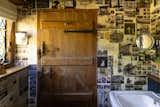
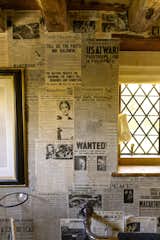
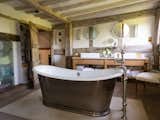
One of the most fascinating and personal remnants of Snowdon’s tenure is an upstairs bathroom, which survives largely as he left it. Its walls are a unique collage, meticulously lined with original newspaper cuttings chronicling royal scandals, society intrigue, and major historical events from the early twentieth century. These journalistic snippets are interspersed with intimate family photographs and personal mementos, creating a living archive that offers an unparalleled glimpse into the private world and interests of its former royal occupant. Elsewhere, Snowdon’s former photographic darkroom, a space central to his professional life, has been thoughtfully converted into a tranquil library, reflecting the evolution of the house’s utility over time.
Beyond the main house, Snowdon’s creative spirit extended to the sprawling grounds. Hidden within the lush landscape is a whimsical folly, a charming architectural embellishment that incorporates a balcony salvaged from Ascot Racecourse’s Royal Box during refurbishment works in the 1960s. This quirky detail perfectly encapsulates Snowdon’s knack for repurposing and his unconventional approach to design, blending high society history with an element of playful surprise. Perhaps his most ambitious landscape project, however, was the creation of the estate’s picturesque lake. What Snowdon reportedly expected to be a single weekend’s excavation turned into a winter-long undertaking due to the challenging heavy Sussex clay, requiring the concerted effort of a dozen workers. This grand endeavor ultimately became one of the defining features of the estate, enhancing its natural beauty and providing a serene focal point. The lake’s significance was further underscored by a formal ceremony in which Queen Elizabeth The Queen Mother herself presided over the opening of its stepping stones, accompanied by the Bishop of Horsham, adding another layer of royal provenance to this remarkable property.
The Estate: Interiors and Grounds
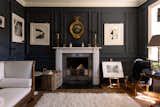
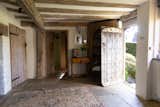
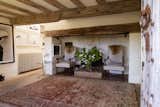
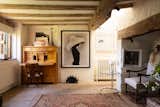
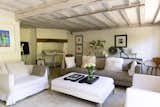
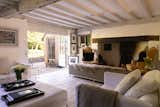
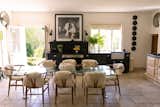
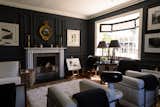
The principal residence, a substantial 4,195 square feet, offers a sophisticated blend of historical charm and modern liveability. Behind its imposing oak front door, the entrance hall has been thoughtfully opened up to reveal original Tudor windows, exposed timbers, and a captivating gallery above, while concealed skylights ensure an abundance of natural light. The main living spaces are designed for both grand entertaining and comfortable family life, including a spacious double reception room that offers picturesque views across the manicured gardens, and a paneled Georgian sitting room exuding classic elegance. The heart of the home, the family kitchen, is centered around a traditional Aga cooker, embodying country living, and opens directly onto sun-drenched terraces that command breathtaking vistas across the grounds and Snowdon’s iconic lake beyond.
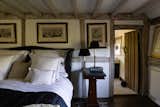
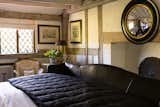
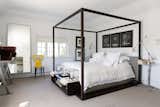
The main house boasts six generously proportioned bedrooms and four-and-a-half well-appointed bathrooms. Four of these bedrooms, along with three bathrooms and a convenient dressing room, are located on the first floor, providing ample space for family and guests. Two additional bedrooms and another bathroom occupy the second floor, offering further private accommodation.
Beyond the main dwelling, the 5.52-acre estate is a world unto itself, dotted with a collection of versatile standalone structures. A separate, approximately 800-square-foot pool house provides ideal guest accommodation, featuring two bedrooms, two en suite bathrooms, a comfortable living room, and its own kitchen, offering complete privacy and independence. The grounds also host a garden office, perfect for remote work or creative pursuits, and a library housed in what was once Snowdon’s photographic darkroom, filled with character. Practical amenities include a tractor shed and various stores. Adding to the estate’s unique charm are a traditional vardo (Romani wagon) and a structure whimsically identified on the floor plan as "The Dolls’ House," hinting at the playful spirit that permeates the property.
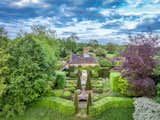
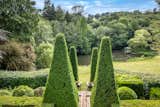
The exterior landscape is a masterpiece of design, featuring formal gardens with intricate planting schemes, tranquil water features, and a gentle rill that meanders towards the lake. A series of charming bridges and stepping stones invite exploration, leading to a serene island pavilion, an idyllic spot for reflection or intimate gatherings. This comprehensive layout ensures both expansive beauty and functional spaces, catering to a diverse range of needs and activities within a truly historic setting.
A Rare Opportunity in the Luxury Market
The public listing of the Old House marks an extraordinary moment in the UK’s luxury real estate market. Despite its unparalleled provenance and historical significance, the property has never before been publicly marketed. Following Lord Snowdon’s private sale of the estate in 2003, and its subsequent off-market acquisition by the current owners in 2005, this represents the very first opportunity for the wider market to acquire one of the United Kingdom’s most historically significant private homes.
In a market often driven by contemporary amenities and prime locations, properties like the Old House stand apart, offering an intangible value derived from their deep historical roots and celebrity connections. Real estate experts note that homes with such direct links to the British Royal Family and prominent cultural figures command a significant premium, attracting a discerning class of buyers who prioritize heritage, prestige, and a unique narrative over mere square footage. The sale of the Old House is not just a transaction; it is an offering of a tangible piece of British heritage, an opportunity to become a custodian of a home that has witnessed centuries of history and played host to a vibrant chapter of royal and cultural life. Potential buyers are likely to be international and domestic high-net-worth individuals, patrons of history, or those seeking a truly unique country estate that combines privacy with an extraordinary legacy. The implications extend beyond a simple property sale, touching upon the ongoing fascination with the monarchy, the preservation of historic estates, and the enduring appeal of homes that offer a tangible connection to pivotal moments and personalities in national history.