admin
admin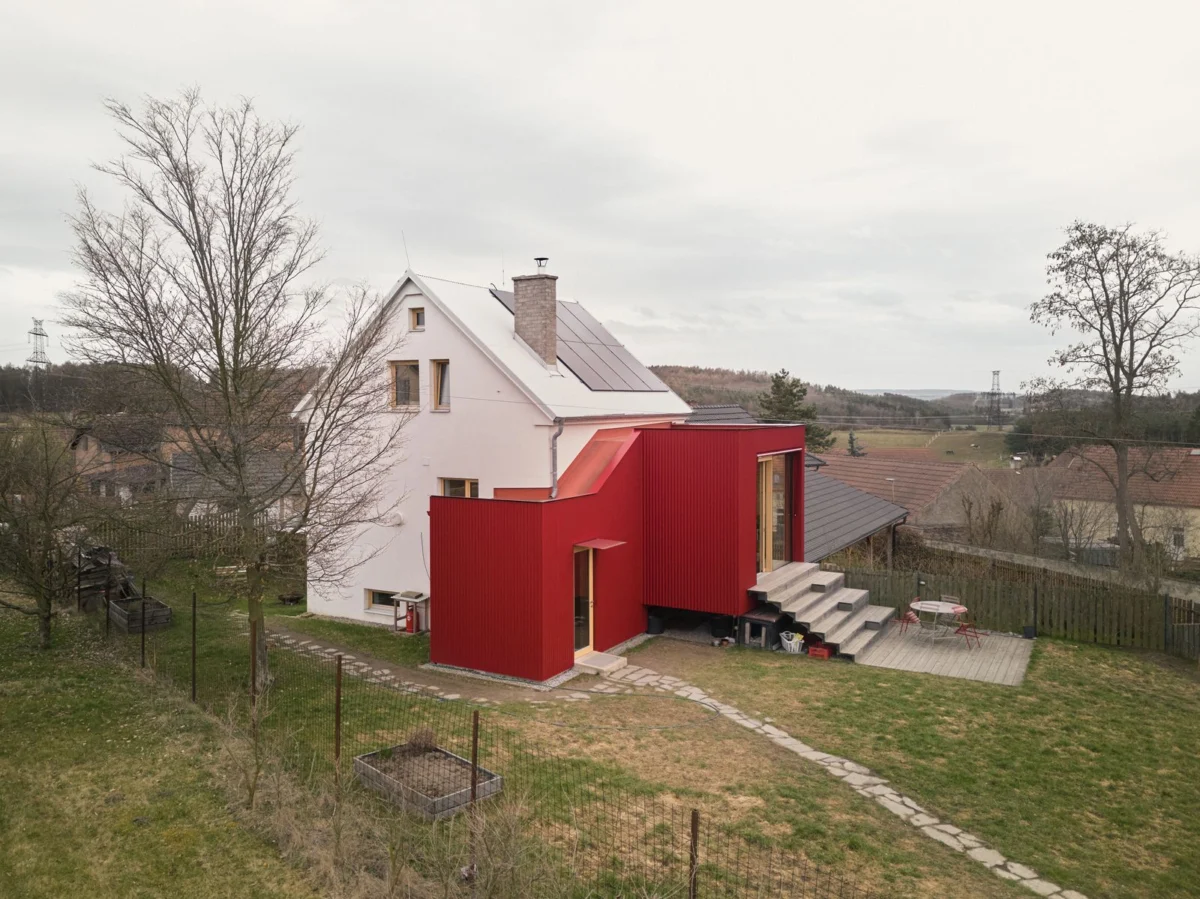
In 2017, Zuzana Fuhrmannova and her partner, Tomas Binder, embarked on a unique housing venture, moving into a small, approximately 1,146-square-foot weekend cabin in Nechanín, a tranquil village nestled in the Czech Republic’s Central Bohemian region, roughly 25 miles south of Prague. The arrangement, struck with the property owner, deviated significantly from conventional rental agreements: instead of monetary rent, the couple committed to undertaking partial renovations of the dwelling. This innovative approach to securing housing not only provided a suitable home for Zuzana, a property manager who balanced her professional life with the demands of raising her then two young sons from a previous marriage, but also highlighted a growing trend of creative solutions in a challenging real estate market. The story of their journey, now several years in the making, offers valuable insights into alternative living models that address affordability and property maintenance.
The Landscape of Czech Housing in 2017
The decision by Fuhrmannova and Binder to pursue such an unconventional agreement was largely shaped by the prevailing conditions of the Czech housing market in the mid-to-late 2010s. By 2017, the Czech Republic, particularly its capital Prague and surrounding regions, was experiencing a significant surge in real estate prices. Driven by robust economic growth, low interest rates, and a limited supply of new housing, both purchase and rental costs had been climbing steadily. Data from the Czech Statistical Office and various real estate agencies indicated that average apartment prices in Prague had increased by over 10% year-on-year in 2017, with similar pressures felt in the commuter belt of the Central Bohemian region. This created a particularly challenging environment for families seeking spacious, affordable, and child-friendly accommodation.
For many, including Zuzana Fuhrmannova, who sought a comfortable environment for her sons, traditional rental options often presented a dilemma: properties large enough for a growing family were frequently beyond budget, especially when balancing proximity to work and access to nature. The Central Bohemian region, with its picturesque villages like Nechanín, offered a compelling compromise, blending rural tranquility with reasonable commuting distances to Prague. However, even in these areas, suitable family homes often commanded premium prices or were in high demand. This economic backdrop fostered an environment where both property owners and prospective tenants became more open to unconventional agreements.
The Quest for a Family Home
Zuzana Fuhrmannova’s search for a home began with specific criteria. As a property manager who regularly worked from home, typically once a week, she required a space that could accommodate both her professional needs and the lively energy of two young children. Her priority was a safe, spacious environment with outdoor access, a feature often lacking in urban apartments. "I was looking for a place where my boys could truly grow, with a garden, fresh air, and enough room for everyone without feeling cramped," Zuzana reportedly shared with acquaintances at the time, underscoring her desire for a holistic living environment.
Her search was not through conventional real estate listings, which often proved too expensive or restrictive. Instead, fate intervened through an acquaintance who was aware of a weekend cabin in Nechanín. These types of properties, often built as recreational retreats during the communist era or later, frequently sit unused for long periods or require significant modernization to become year-round residences. The Nechanín cabin, with its modest 1,146 square feet, fit this description. While small by some standards for a family, its detached nature and potential for expansion or garden development offered the crucial elements Zuzana sought.
The initial contact with the owner, facilitated by the acquaintance, marked the beginning of an unconventional negotiation. The owner, reportedly an individual with other primary residences and limited time or capital for extensive renovations, was receptive to Zuzana and Tomas’s proposal. This willingness to consider an alternative to standard monetary rent proved pivotal.
The Barter Agreement: Renovation for Residency
The core of the agreement centered on a "partial renovation" in exchange for rent. This arrangement is a form of barter, where services (renovation labor and potentially material costs) are exchanged for the right to inhabit a property. While not entirely unprecedented, such agreements are rare in formal real estate markets and often require careful structuring to ensure fairness and legal compliance.
For Zuzana and Tomas, the benefits were immediate and tangible: access to a family home without the burden of monthly rental payments, freeing up capital that would otherwise be allocated to rent for necessary living expenses or even renovation materials. Furthermore, the ability to personally renovate the space allowed them to tailor it precisely to their family’s needs and aesthetic preferences, fostering a deeper sense of ownership and investment in their living environment, despite not owning the title.
From the homeowner’s perspective, the agreement presented an opportunity to have their property significantly upgraded without direct financial outlay. Weekend cabins, especially older ones, often suffer from deferred maintenance. Engaging tenants who are committed to improving the property ensures its value is preserved or enhanced, potentially making it more marketable in the future. The homeowner also gained reliable tenants who, having invested their time and effort into the property, were likely to treat it with exceptional care. Sources close to the agreement indicated that the owner viewed this as a pragmatic solution to a property that required substantial attention but for which they lacked the immediate resources.
Key considerations in such a barter agreement typically include:
- Scope of Work: A detailed outline of what renovations are expected, the standards to which they should be completed, and who covers material costs.
- Timeline: Agreed-upon phases or deadlines for major renovation milestones.
- Valuation: An estimated monetary value of the renovation work compared to the market rental rate, ensuring a balanced exchange.
- Termination Clauses: Provisions for what happens if the agreement needs to end prematurely, either due to the tenants moving out or the owner needing the property back.
- Legal Formalization: While informal agreements can occur, legal experts strongly advise formalizing such arrangements in a written contract to protect both parties. It is understood that Zuzana and Tomas, given Zuzana’s professional background in property management, ensured a comprehensive agreement was drafted.
A Chronology of Transformation
Upon moving into the Nechanín cabin in late 2017, Zuzana and Tomas faced the immediate task of assessing the property’s condition and prioritizing renovation efforts. The cabin, likely built several decades prior, required substantial modernization to transition from a seasonal retreat to a comfortable year-round family home.
Late 2017 – Early 2018: Foundation and Functionality
The initial phase focused on essential infrastructure and habitability. This would have included ensuring reliable plumbing and electrical systems, perhaps upgrading the heating system (common for older cabins to have inefficient heating), and improving insulation for winter comfort. Work might have started with critical repairs to the roof or exterior to prevent water ingress. Interior work likely began with creating functional kitchen and bathroom spaces, which are often rudimentary in older weekend cabins. The family adapted to living amidst ongoing construction, a testament to their dedication.
Mid 2018 – 2020: Interior Modernization and Customization
As the basic infrastructure became sound, the focus shifted to interior aesthetics and family-specific needs. This phase would have involved plastering, painting, laying new flooring, and installing built-in storage solutions. Zuzana’s vision for a child-friendly home would have guided decisions on room layouts and material choices. The 1,146 square feet would have been optimized to create distinct living, dining, and sleeping areas, perhaps involving minor reconfigurations of internal walls. The garden, too, would have seen attention, transformed from an unkempt plot into a safe play area for the boys.
2021 – 2023: Refinements and Enhancements
With the core renovations complete, subsequent years likely involved refinements and additions that enhanced comfort and functionality. This could include building a terrace, developing specific garden features, or undertaking energy efficiency upgrades such as new windows or additional insulation. The goal was to not only make the house habitable but truly a home that reflected their personalities and supported their lifestyle. By this point, the initial "partial renovation" had evolved into a comprehensive upgrade that significantly elevated the property’s standard.
2024 – 2026: Living and Maintaining
By the time of this article’s publication in September 2026, Zuzana, Tomas, and the boys would have enjoyed several years of settled life in their renovated home. The cycle of major renovation would have transitioned into routine maintenance, allowing the family to fully reap the benefits of their labor. The cabin, once a dormant weekend escape, now stands as a vibrant family residence, a living testament to a successful barter agreement.
Supporting Data and Market Insights
The Fuhrmannova-Binder case illustrates a valuable alternative within the broader housing market. To understand its significance, consider some relevant data:
- Rental Price Trends (2017-2026): According to data from real estate portals and analyses by institutions like Deloitte, average rental prices in the Central Bohemian region continued to rise significantly post-2017. By 2023, rental prices across the Czech Republic had increased by an average of 30-40% compared to 2017 levels, with some areas seeing even steeper rises. For a property of similar size and quality, a conventional rental in Nechanín could easily command between 15,000 to 25,000 CZK (approximately €600-€1,000) per month by 2026, depending on its condition and amenities.
- Renovation Costs: The cost of renovating a 1,146 sq ft property in the Czech Republic can vary wildly, but a comprehensive partial renovation involving plumbing, electrical, insulation, interior finishes, and kitchen/bathroom upgrades could easily range from 500,000 CZK to 1,500,000 CZK (approximately €20,000-€60,000) or more, depending on the extent and quality of materials. Zuzana and Tomas’s "sweat equity" alone, combined with potentially covering some material costs, would represent a substantial investment equivalent to years of rent.
- Work-From-Home Trends: While Zuzana worked from home only once a week in 2017, the global pandemic of 2020-2021 drastically accelerated remote work adoption. By 2026, hybrid work models are common, making rural and semi-rural locations with good internet connectivity even more desirable for families like theirs. The foresight to secure a spacious home outside the city proved prescient.
Expert Perspectives and Broader Implications
The story of the Nechanín cabin resonates with real estate experts and legal professionals who observe evolving housing trends.
Legal Perspective: Attorney Jan Novák, specializing in property law in Prague, commented on such agreements (hypothetically, based on common practices): "While informal arrangements between private parties can work, any significant barter agreement involving property renovation should be meticulously documented. A comprehensive contract outlining the scope of work, material costs, timelines, valuation of labor, and clear clauses for dispute resolution and termination is paramount. This protects both the tenant’s investment of time and resources, and the homeowner’s asset." He emphasized that without such legal safeguards, either party could face significant challenges if disagreements arise.
Real Estate Analyst’s View: Dr. Eva Králová, a real estate market analyst, noted: "The Fuhrmannova-Binder case is an excellent example of how individuals creatively navigate housing affordability challenges. In markets with high demand and limited supply, we see an increase in alternative models – rent-to-own schemes, co-housing, and indeed, ‘renovation for rent’ agreements. These arrangements can foster a deeper connection between tenants and their living spaces, leading to better property maintenance and more stable tenancies. They represent a win-win, especially for homeowners who lack the capital or time for property upkeep and for tenants seeking affordable entry into quality housing." She suggested that while these models are unlikely to become mainstream due to their complexity, they offer a vital niche solution.
Social and Economic Impact: Beyond individual benefits, such agreements contribute to the broader community. The renovation work likely involved local tradespeople for specialized tasks or procurement of materials from local suppliers, indirectly supporting the local economy of Nechanín and surrounding areas. Furthermore, stable, invested tenants contribute to the social fabric of a village, fostering community engagement and stability.
The Long-Term Perspective and Lessons Learned
As of 2026, nearly a decade after the initial agreement, the Fuhrmannova-Binder family’s journey in Nechanín stands as a success story. The cabin, once a modest weekend retreat, has been transformed into a modern, comfortable, and cherished family home. The boys have grown up with the benefits of rural living, space to play, and a stable environment. Zuzana and Tomas have cultivated a home that reflects their efforts and vision, achieving a quality of life that might have been unattainable through traditional rental means.
Their experience offers several key lessons:
- The Power of Informal Networks: The discovery of the cabin through an acquaintance highlights the enduring value of personal connections in finding unique opportunities.
- Flexibility and Openness: Both the tenants and the homeowner demonstrated a willingness to step outside conventional norms, leading to a mutually beneficial outcome.
- Value of Sweat Equity: The investment of personal labor ("sweat equity") can be a powerful currency, unlocking access to resources that might otherwise be financially out of reach.
- Importance of Clear Agreements: While the relationship may begin informally, formalizing the terms of a renovation-for-rent agreement is crucial for long-term success and dispute prevention.
- Sustainable Living: This model encourages tenants to invest in the property’s long-term health and sustainability, fostering a sense of responsibility and care that benefits the environment and the property itself.
The Nechanín cabin is more than just a house; it is a testament to ingenuity, collaboration, and the pursuit of a better quality of life through unconventional means. In a world grappling with housing affordability and property maintenance challenges, stories like Zuzana Fuhrmannova and Tomas Binder’s offer a compelling vision for alternative paths forward, proving that sometimes, the best solutions emerge when traditional rules are thoughtfully rewritten.