admin
admin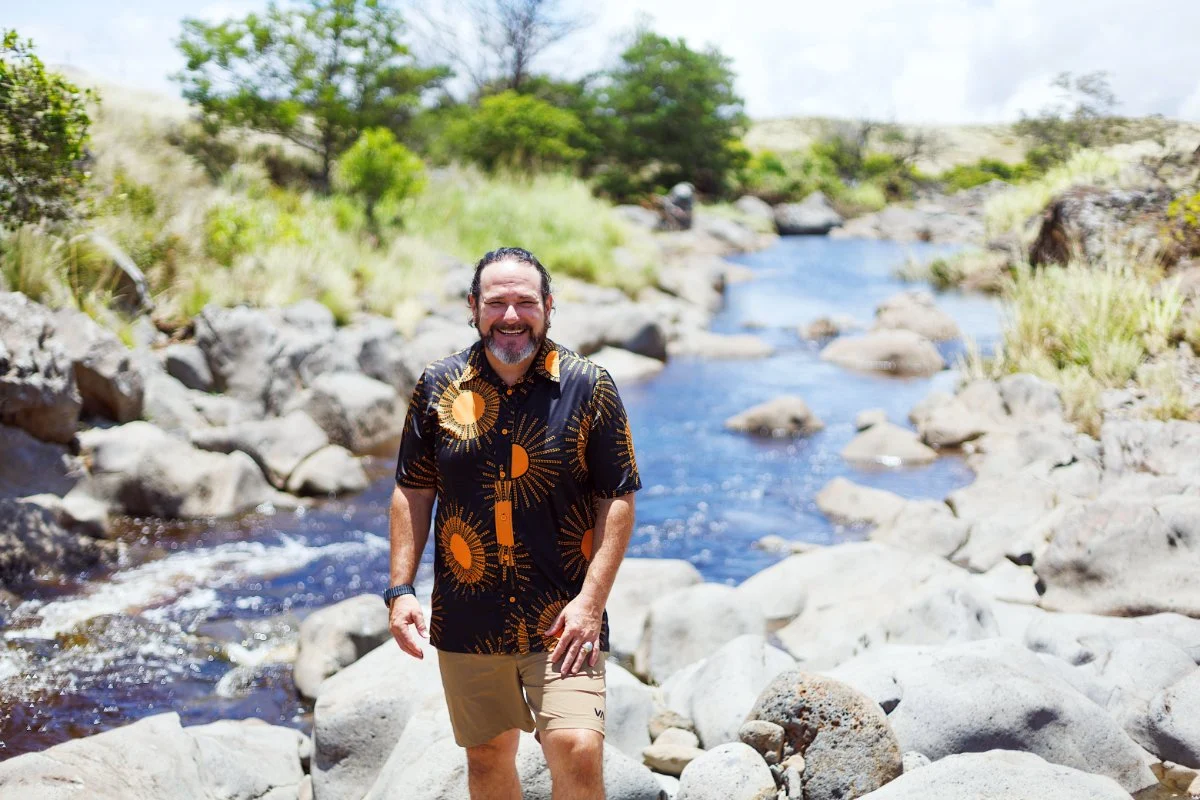
For Kamanamaikalani Beamer, the profound love and unwavering commitment to the land, or ʻāina, serve as a potent force capable of revitalizing Native Hawaiians’ intrinsic connection to place, community, and the continuum of generations—those who came before and those yet to arrive. This philosophy has guided his multifaceted career, culminating in his recent appointment as Dean of the University of Hawaiʻi at Mānoa’s Hawaiʻinuiākea School of Hawaiian Knowledge, the nation’s sole Indigenous-serving college within a Carnegie R1 research university. Beamer, an ʻŌiwi scholar, aloha ʻāina practitioner, farmer, and author, has dedicated his life to exploring Native Hawaiian governance, food systems, and water resource management, advocating for a future where Indigenous wisdom informs just and regenerative practices. His journey reflects a deep personal connection to his heritage, shaped by family legacy, pivotal community struggles, and a relentless pursuit of environmental and cultural justice.
Early Life and Cultural Foundations
Kamanamaikalani Beamer’s foundational understanding of his culture was instilled early, primarily through the stories and teachings, or moʻolelo, of his grandmother, Winona Kapua Ilohia Manonokalani Desha Beamer. Born into a distinguished lineage of musicians, storytellers, and cultural practitioners, Beamer’s family held a prominent place in Hawaiian cultural preservation. His great-grandmother, Helen Desha Beamer, was a prolific composer, and his grandmother, a revered kumu hula (master hula teacher), championed the Hawaiian language, ʻŌlelo Hawaiʻi, alongside her father and uncle, both renowned orators. This legacy extended to his father, Kapono, and Uncle Keola Beamer, who profoundly shaped contemporary Hawaiian music with their compositions, or mele.
Growing up, Beamer was immersed in a generation actively rediscovering traditional Hawaiian food systems. He learned about loʻi kalo (irrigated taro terraces) and the profound significance of Hāloa, the first taro plant and revered ancestor of the Hawaiian people. Poi, the staple food at the heart of Hawaiian life, was understood as central to their existence, though the lived experience of cultivating it with his own hands would come later. Despite a self-described rebellious youth following his parents’ divorce, his grandmother remained a constant, guiding presence. She took him across Hawaiʻi Island, introducing him to kūpuna (community elders) and sacred sites like Kīlauea volcano, home to the deity Tūtū Pele. These experiences, though seemingly informal at the time, were a profound education, revealing a culture under immense pressure and a grandmother fiercely dedicated to its protection. Her unwavering strength, grace, and aloha (love, compassion) became a bedrock for Beamer’s own principles.
An Awakening to ʻĀina: The Waiʻāhole Water Struggle
A pivotal moment in Beamer’s awakening to the deep meaning of ʻāina (land, that which feeds us) occurred during his high school years. He recalls a visit from Uncle Calvin Hoe, a local māhiʻai (farmer), who spoke about the escalating struggle over water in Waiʻāhole, on windward Oʻahu. For over a century, the Waiʻāhole Ditch system, a remnant of Hawaiʻi’s sugar plantation era, had siphoned approximately 27 million gallons of water daily from the lush Koʻolau Mountains. This water was diverted to Oʻahu’s arid central plains to irrigate sugar cane, leaving traditional loʻi kalo and communities downstream parched.
Uncle Calvin’s words resonated deeply with the young Beamer: in ancient times, society maintained balance through distinct roles—aliʻi (leaders), koa (warriors), māhiʻai. However, in the contemporary struggle, a farmer "actually gotta be one warrior AND one aliʻi, because you gotta fight and lead, and be able to influence and move people in politics." This insight underscored the complex intersection of culture, agriculture, and political power, a theme that would define Beamer’s future work.
Personal Journeys and a Call to Action
Beamer’s path to activism was not linear. Football initially led him to college in Kansas, a stark cultural contrast to his island home. During this time, he maintained contact with a close-knit group of friends playing at colleges across the continent, sharing their observations of the Waiʻāhole struggle. They vowed to return home after college to kōkua (support) the movement. Tragically, one of his best friends died by suicide, a loss that profoundly impacted Beamer and opened his eyes to the devastating mental health crisis affecting too many young Native Hawaiians. This personal tragedy, coupled with a knee injury that ended his football career, prompted a reevaluation of his direction.
He transferred to Occidental College in California to study philosophy, where another challenge solidified his commitment to his heritage. When he attempted to fulfill his foreign language requirement with ʻŌlelo Hawaiʻi, he was told it did not qualify. Beamer confronted the institution, asserting his Indigenous right to study his mother tongue, which he argued was forcibly suppressed by English. This experience, alongside his philosophical studies of truth, identity, ethics, and justice, highlighted the hypocrisy of his own language being deemed unworthy. Around this time, a friend introduced him to the story of George Helm, whose courageous fight against the U.S. military’s bombing of Kahoʻolawe in the 1970s galvanized the modern Hawaiian sovereignty movement. Helm’s connection to ʻāina, explained by his friend, convinced Beamer that his place was back home in Hawaiʻi.
Healing Through ʻĀina: Restoration and the Concept of Waiwai
Returning to Hawaiʻi, Beamer found solace and purpose in restoring loʻi kalo and immersing himself in māhiʻai culture. He joined a vibrant community, including Uncle Calvin Hoe’s children, who were engaged in the arduous work of clearing overgrown ʻāina, hauling stones by hand, and learning to kuʻi-kalo—pounding steamed taro into poi. This hands-on restoration of ancestral food systems proved incredibly healing and liberating. His deepening connection to ʻāina and burgeoning activism even found expression in music, leading to an album with his band, "Live from the Loʻi," which captured his evolving understanding of the world.
Through his work in the loʻi, Beamer realized that growing kalo was merely one facet of a much larger, interconnected system. Hawaiian kōpuna did not compartmentalize water from farming, farming from governance, or governance from culture; these were all integral expressions of a holistic relationship. This realization became the guiding principle for his life’s work.
This profound understanding culminated in his book, "Waiwai: Water and the Future of Hawaiʻi." Beamer explains that "wai" means water, and its reduplication, "waiwai," translates to "wealth" in Hawaiian thought because water directly brings prosperity. Adequate water enables food cultivation, which in turn fosters thriving families and communities. Thus, wai is not merely a resource; it is the fundamental basis of self-determination.
The Historical Context of Water and Land in Hawaiʻi
Traditional Hawaiian society was meticulously organized through ahupuaʻa, land divisions that naturally followed watersheds from the mountains to the sea. Within this system, rainfall in the mountains flowed through streams into loʻi kalo, sustaining agriculture, and further into fishponds (loko iʻa), reefs, and the ocean. Water was the lifeblood, connecting every component of the ecosystem, with the health of one intrinsically linked to the health of the next. Given their existence on some of the world’s most isolated islands, Hawaiians developed one of the most sophisticated food systems globally, seamlessly integrating irrigation with aquaculture on an extraordinary scale. Historical records indicate that the islands’ hundreds of loko iʻa alone produced over 2 million pounds of fish annually, and research suggests these agroecological systems sustained a population of hundreds of thousands. Communities possessed intimate knowledge of their land, reefs, and forests, practicing adaptive management by understanding when to harvest and when to allow resources to replenish.
However, these harmonious relationships underwent a drastic transformation with the assertion of Western political and economic systems. Large-scale sugar cultivation became a dominant force, leading to the diversion of hundreds of millions of gallons of water daily from nearly every major watershed across the islands. Streams that had sustained Native communities for generations were redirected, and water increasingly became a commodity to be owned, controlled, and moved, rather than a public trust. This tension is explored in Beamer’s book, "No Mākou Ka Mana: Liberating the Nation," which examines how aliʻi grappled with balancing industrial development for modern amenities with protecting ancestral values. The illegal overthrow of the Hawaiian Kingdom in 1893 tragically interrupted this delicate work, leaving a complex legacy of land and water rights disputes that Hawaiʻi continues to address.

The Waiʻāhole struggle, which Beamer witnessed firsthand, reached its climax as Hawaiʻi’s sugar industry declined. Powerful landowners sought to maintain these diversions for new developments like golf courses and resorts, rather than restoring stream flows. Years of tenacious organizing and legal challenges by farmers, community advocates, and environmental groups culminated in the Hawaiʻi Supreme Court’s landmark 2000 Waiʻāhole ruling. This pivotal decision unequivocally reaffirmed that water is a public trust, not a private commodity, and that the state bears an affirmative duty to protect it. Despite this ruling, the remnants of immense water diversions from the plantation era can still be found across Hawaiʻi’s major watersheds today.
Stewardship in Action: The Water Commission and the "One Wai" Philosophy
Years after the Waiʻāhole decision, Beamer was asked to serve on the Hawaiʻi Commission on Water Resource Management (CWRM), a body established under the 1987 State Water Code to steward Hawaiʻi’s water resources. Recognizing the commission’s inconsistent history in upholding the public trust, Beamer accepted the appointment as an opportunity to put his principles into practice. He faced commissioners with vastly different worldviews, underscoring that restoring streams required more than just making a logical argument; it demanded bridging differences and effectively swaying people. He learned to articulate historical injustices, community needs, and fiduciary duties in ways that resonated, fostering unlikely alliances that led to collaborative stream restoration efforts.
During his eight-year tenure on the commission, Beamer was instrumental in restoring flows to 45 streams across the islands. Witnessing parts of ʻĪao Stream on Maui flow freely again after nearly 150 years was profoundly healing, a powerful reminder that "streams are the veins of life for our communities. They recharge aquifers, revive customary practices, and let kids hang rope swings again." However, the most lasting impact for Beamer was hearing from the farmers and communities whose families had fought for generations for justice. He describes helping alleviate even a small part of that intergenerational burden as one of the most beautiful experiences of his life, reinforcing his conviction that "restoring water is also restoring our connection to place, community, those who came before us, and those who’ll come after us."
This experience further deepened his understanding of waiwai, or wealth. Beamer realized that modern society had fragmented its approach to water, siloing groundwater, surface water, stormwater, and wastewater into separate discussions and governance structures. Yet, for Hawaiians, there is only "one wai." The kōpuna understood that true prosperity stemmed from keeping wealth in circulation. Just as a healthy wai system replenishes communities with every cycle, a healthy economy should do the same, rather than extracting from them.
The Red Hill Crisis: A Defining Moment for Water Sovereignty
The Red Hill crisis served as the ultimate test of Beamer’s belief in the public trust doctrine and the interconnectedness of water and well-being. For years, he and many others—Native Hawaiian leaders, scientists, community advocates, and even members of the Water Commission—had warned about the Navy’s massive fuel storage facility, built into the hills above Pearl Harbor, with tanks capable of holding 187 million gallons of fuel positioned approximately 100 feet above Oʻahu’s primary aquifer.
In 2021, these dire warnings materialized. A leak from the facility contaminated the Navy’s drinking water system, sickening thousands of families and impacting their homes and schools. This crisis, Beamer notes, unified an unprecedented coalition: Native Hawaiians, military spouses, scientists, and islanders from every background, all bound by a collective responsibility to protect their water. This groundswell of "aloha ʻāina"—a deep love and commitment to the land—ultimately forced the permanent closure of Red Hill and the removal of nearly 90 percent of its fuel. While this was a monumental victory, accountability has progressed slowly. Families continue to fight for compensation, and regulators press the Navy to treat contaminated groundwater and address historical spills that predate the 2021 incident. Beamer has unequivocally described Red Hill as "the most egregious assault on a public trust resource in the history of Hawaiʻi."
The stakes of the Red Hill crisis extend far beyond drinking water for the nearly 400,000 people dependent on that aquifer. Poisoning the source impacts everything downstream, illustrating why food sovereignty, cultural sovereignty, and water sovereignty are inextricably linked. Loss of control over water equates to losing the ability to feed oneself, and when food systems collapse, language, ceremony, stories, and the intricate web of relationships that define a culture also erode.
Reimagining Hawaiian Foodways and Economic Resilience
This connection is particularly urgent in contemporary Hawaiʻi, which imports roughly 85 percent of its food. The COVID-19 pandemic, coupled with increasing frequencies of wildfires, flooding, and more intense hurricanes, has starkly exposed the profound vulnerability of this dependency. Hawaiʻi has become increasingly disconnected from the resilient systems that once sustained its islands. Compounding this, Native Hawaiians continue to experience disproportionately high rates of food insecurity and diet-related diseases, a consequence of traditional diets giving way to packaged, processed foods and commodities like Spam becoming household staples.
Beamer advocates for recovering the principles that once made Hawaiʻi’s food systems so resilient. This involves promoting healthy watersheds, fostering thriving local agriculture, and cultivating circular food and economic systems that keep food, wealth, and decision-making rooted within communities. It also necessitates a fundamental shift in how "waste" is perceived. Hawaiʻi imports vast quantities of fertilizer and animal feed while simultaneously generating enormous amounts of food waste from hotels, restaurants, and households. Even industries not traditionally aligned with sustainable practices often produce byproducts that could be cycled back into local agriculture, echoing the ancestral circular economy understood by Hawaiian kōpuna. Rebuilding such a system, Beamer emphasizes, requires political will—a form of governance that incentivizes repair, reuse, and local resilience over extraction and disposal.
Cultivating Future Leaders: The Hawaiʻinuiākea School of Hawaiian Knowledge
Beamer’s own work has evolved to reflect this holistic vision. What began with restoring streams has expanded to cultivating leaders capable of advocating for these principles in government, legal systems, and public policy. He has taught at the University of Hawaiʻi’s Hawaiʻinuiākea School of Hawaiian Knowledge and the William S. Richardson School of Law, actively working to integrate Indigenous knowledge into contemporary law and governance.
In July, his commitment culminated in his appointment as Dean of Hawaiʻinuiākea. As the country’s only college of Indigenous knowledge within a major research university, Beamer envisions the institution as having an academic responsibility that transcends Hawaiʻi’s borders. Its mission is to prepare Indigenous students globally to uphold their own knowledge systems as they assume leadership roles, while simultaneously fostering research that strengthens communities intellectually, culturally, and economically. This vision also inspired the creation of the Piʻo Summit, an annual gathering where Indigenous peoples from Hawaiʻi, Aotearoa (New Zealand), North America, and across the Pacific can strengthen relationships and engage in mutual learning. Bringing together leaders like Justice Joe Williams, the first Māori appointed to the New Zealand Supreme Court, with other Indigenous scholars and practitioners, underscores the shared nature of the challenges—and solutions—related to land, law, and sovereignty across Native communities worldwide.
In a global era grappling with climate change, industrial extractive systems, and the rise of authoritarianism, Beamer hopes Hawaiʻinuiākea can play a vital role in speaking truth to power, offering reason, and sustaining hope for Indigenous peoples and all who care for Mother Earth. Mentoring students, watching them discover their purpose and return to better their communities, is a tremendous honor and a constant reminder of the work’s importance. He sees them as perpetuating the knowledge entrusted to them by their ancestors. As a father raising his own keiki (children) to know their place and their kōpuna, Beamer affirms that this personal journey has made him a better human.
Ultimately, his work circles back to the core meaning of ʻāina. While often simply translated as "land," its literal meaning is "that which feeds us." This deeper interpretation conveys a profound idea of reciprocity: we care for the ʻāina, and the ʻāina, in turn, cares for us. It is an interdependence that guides daily life. Forgetting this fundamental relationship transforms land and water into mere commodities. Remembering it, however, initiates the rebuilding of the conditions that allow communities—and cultures—to thrive in a truly sustainable and self-determined manner.