admin
admin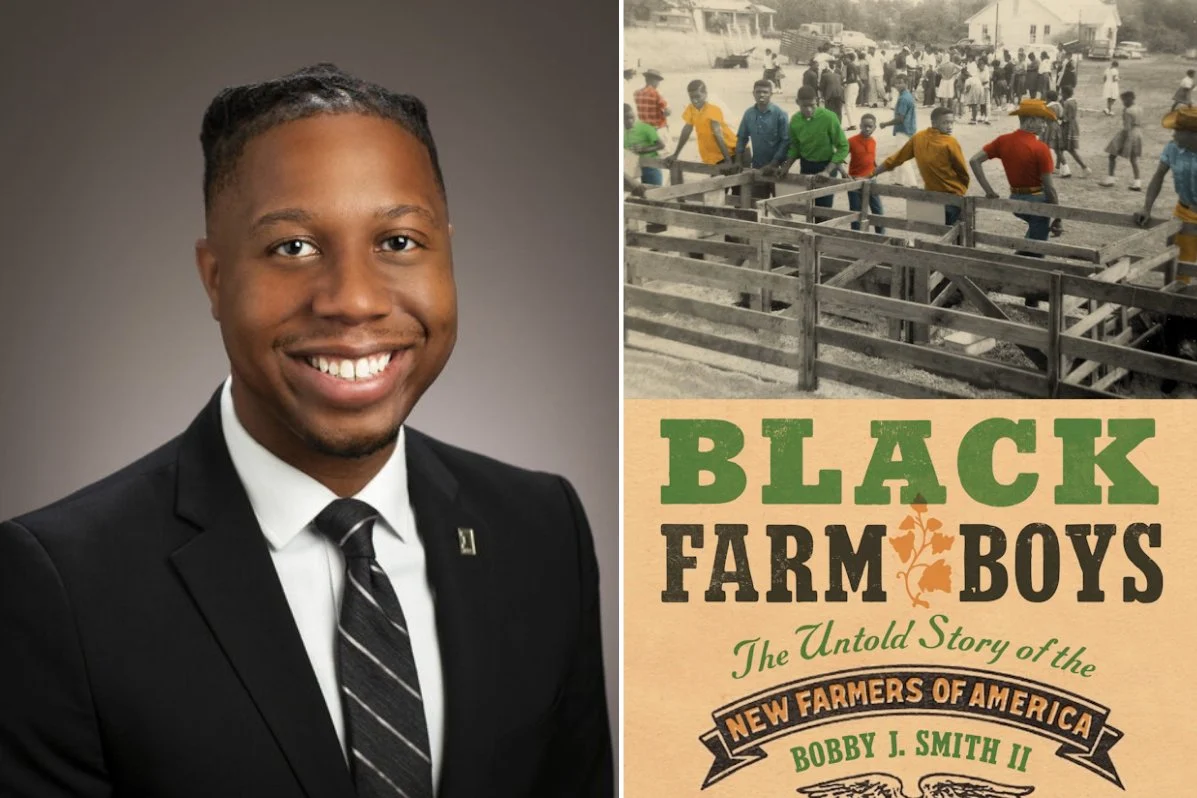
The titles, it turned out, were the only two ever written about the New Farmers of America (NFA)—the nation’s first organization for youth studying vocational agriculture at Black segregated public high schools across the South and up the East Coast to New Jersey. This stark historical silence recently prompted Bobby J. Smith, a distinguished sociologist with a background in agricultural economics and a faculty member in the Department of African American Studies at the University of Illinois Urbana-Champaign, to embark on a monumental task: to write the definitive scholarly account of this pivotal yet largely forgotten organization. His newly released book, Black Farm Boys: The Untold Story of the New Farmers of America, promises to rectify a significant oversight in American history, shedding light on a powerful movement that shaped generations of Black youth.
The Genesis of an Untold Story
Smith’s journey into the history of the NFA began with a profound sense of astonishment. Despite his extensive academic background and personal connection to Black agricultural heritage, he had never encountered mention of an organization that, at its peak, boasted an annual membership of 55,000 rural Black boys across 18 states. "I was amazed at how big the organization was and the fact that no [scholarly] book had ever been written about it," Smith recalled from his office. "That’s when I knew it was time for me to write one." This intellectual void underscored a broader systemic neglect in mainstream historical narratives, particularly concerning the organized efforts and achievements of Black communities during the Jim Crow era. The NFA, operating within a deeply segregated landscape, cultivated leadership, technical skills, and a profound sense of community among its young members, creating a legacy that deserves its rightful place in American history.
A Brotherhood Forged in Segregation
Founded nationally in 1935, the NFA was far more than a vocational club; it was a vibrant brotherhood designed to empower Black male youths. The organization was structured around thousands of chapters, each meticulously linked to vocational agriculture programs within Black-only high schools. These schools, often under-resourced but vital community hubs, provided the institutional framework for NFA’s extensive activities. Teachers served not only as instructors but also as dedicated chapter advisors and mentors, fostering an environment where young Black men could thrive. Smith emphasizes that the NFA functioned as a grassroots, bottom-up movement, empowering its members to step into genuine leadership roles.
NFA members actively organized their own community banquets, state fairs, and national conventions. These events were not merely social gatherings but critical platforms for showcasing agricultural achievements, fostering competition, and building professional networks. A testament to their ambition and reach, NFA members even attended the iconic 1939-40 New York World’s Fair, an extraordinary opportunity for them to learn about global agricultural innovations and connect with a wider world. Beyond formal events, summer camps provided immersive learning experiences in topics such as conservation, forestry, and agriscience. These camps also built camaraderie through outdoor activities like crabbing, boating, and swimming, reinforcing the strong bonds of brotherhood. "These boys not only went to high school together, they grew up together," Smith noted, highlighting the deep, enduring relationships forged within the NFA.
Historical Context: Jim Crow, Land Loss, and the Great Migration
To fully appreciate the radical nature and profound significance of the NFA, it is crucial to understand the turbulent socio-political landscape of its formation. The NFA emerged during the first wave of the Great Migration (roughly 1910-1940), a period when millions of Black Americans fled the South, driven by rampant racial terror—including widespread lynching—and the promise of better economic opportunities in Northern and Midwestern cities. Simultaneously, this was an era of devastating land loss for Black farmers across the South. Systemic discrimination, denial of credit, predatory lending practices, and outright violence systematically dispossessed Black families of their land, eroding a foundational source of economic independence and cultural heritage. From a peak of over 14% of all U.S. farms operated by Black farmers in 1910, this figure plummeted dramatically in subsequent decades.
Against this backdrop of displacement, oppression, and economic disenfranchisement, the NFA offered a counter-narrative of hope and self-determination. It presented agriculture not as a vestige of enslavement or an inescapable cycle of poverty, but as an emancipatory path—a means for Black youth to uplift themselves, their families, and their communities. By encouraging young Black men to invest in and innovate within the agricultural sector, the NFA directly challenged the prevailing forces that sought to marginalize them. It instilled a vision of agency and leadership, positioning agriculture as a tool for economic development and community resilience, rather than a symbol of historical grievance.
Pioneers of Agricultural Empowerment: NFA’s Vision and Impact
The "Black farm boys," as participants proudly called themselves, did not merely aspire to remain on the farm; they were encouraged to envision broader roles within the agricultural industry. Smith’s research reveals that NFA alumni became leaders across every facet of the sector. They pursued careers as soil scientists, agricultural teachers, economists, engineers, veterinarians, and dairy or meat scientists. Many found employment with state departments of Agriculture, became farm credit agents, or even rose to positions as university chancellors. Crucially, the NFA also served as a vital pipeline for a generation of cooperative extension agents, who played a critical role in disseminating agricultural knowledge and best practices to rural Black communities.
This pipeline was meticulously constructed, with roots tracing back to the establishment of Black land-grant institutions. The Second Morrill Act of 1890 mandated the creation of separate land-grant colleges for Black students in states where segregation was practiced, addressing the exclusion of Black Americans from existing land-grant universities. These 1890 institutions, such as Prairie View A&M in Texas, Alabama A&M, and North Carolina A&T, became intellectual and practical hubs for agricultural education within the Black community. They trained the teachers who led NFA chapters and provided the advanced education that many NFA alumni pursued. This network of dedicated educators and institutions fostered a deep commitment to agricultural advancement and community uplift, demonstrating a self-reliant approach to development in the face of systemic barriers.
Roots in Black Land-Grant Institutions: A Movement Takes Hold
While the NFA was formally established as a national organization in 1935, its foundational ideas and practices had been germinating for decades, emerging from the mid-1920s and tracing back even further to the 1870s. Smith’s book argues that the NFA was the culmination of a larger "Black youth farm movement." This movement arose in response to the concerted efforts to push Black people off their land and away from farming, often through discriminatory policies and racial violence. Alongside the NFA, organizations like Negro 4-H clubs played a similar role, working to counter the pervasive narrative that agriculture was an undesirable profession for Black people. Instead, these groups actively encouraged rural Black communities to stay in, invest in, and ultimately become leaders within their agricultural communities.
By 1935, the momentum behind these localized efforts had grown sufficiently to necessitate a national organization. The NFA was thus created to mobilize resources, standardize programs, and strengthen networks across the diverse Black agricultural landscape. Each participating state established an NFA association, typically headquartered at its local Black land-grant institution. Texas, for instance, boasted the largest association with over 1,000 chapters, anchored at Prairie View A&M University—the alma mater of Bobby J. Smith himself. Even states without a Black land-grant institution, like New Jersey, still participated, with its smaller association headquartered at a high school in Bordentown, demonstrating the widespread commitment to this cause.
The Traumatic End: NFA’s Merger with FFA
The NFA’s remarkable 30-year journey concluded in 1965, when it was absorbed by the predominantly white Future Farmers of America (FFA). This "traumatic end," as Smith describes it, occurred in the wake of the landmark Civil Rights Act of 1964, which legally mandated desegregation across American society. While ostensibly a move towards integration and equality, the merger raised complex questions about the preservation of distinct Black leadership, identity, and programmatic approaches within agricultural education.
For many NFA members and leaders, the merger represented a painful loss. The NFA had developed a unique pedagogical and cultural framework tailored to the specific needs and aspirations of Black youth within a segregated society. It had fostered a sense of self-reliance, cultural pride, and Black-led innovation. The FFA, while a respected organization, had historically operated within a different social and cultural context. The absorption meant the dissolution of NFA’s distinct national leadership, its specific programmatic emphases, and its unique emblem—the boll weevil, a symbol of resilience and overcoming adversity. While the intent of the merger was to create a single, unified organization free from racial segregation, critics and historians (including Smith) argue that it often resulted in the assimilation of NFA members into a pre-existing white organizational culture, rather than a truly equitable integration that valued and preserved the NFA’s rich heritage. The specific contributions and history of the NFA subsequently faded from widespread recognition within the larger FFA structure, contributing to the historical oversight that Smith’s book now addresses.
Reclaiming the Narrative: Shifting Perspectives on Black Agriculture
A core argument of Smith’s book is the imperative for a narrative shift away from agriculture "as an oppressive facet of Black existence." Smith, who comes from a family of Black farmers and studied agriculture at a Black college, experienced a different understanding of agriculture—one informed by the lives and perspectives of Black people and Black professors. He challenges the prevailing academic and public discourse that often exclusively associates Black agricultural history with enslavement, sharecropping, and land confiscation.
While acknowledging the undeniable hardships and injustices, Smith passionately argues for the recognition of "the other side of the story"—where agriculture was a source of strength, community building, and economic self-sufficiency for Black people. He points to the NFA as a prime example of how Black communities leveraged agriculture not just for survival, but for professional advancement and social uplift. The NFA’s focus on producing agricultural professionals—soil scientists, veterinarians, extension agents—demonstrates a proactive engagement with the scientific and economic dimensions of agriculture, far beyond mere subsistence farming. "For me, there’s a need for a narrative shift, because even in the discipline of Black studies that I currently teach in, we still don’t recognize this other side of the story," Smith stated. His work aims to provide "more airtime to the emancipatory aspects of our Black people’s historical and contemporary relationships to agriculture." This reclamation of narrative is crucial for a complete and nuanced understanding of American history and the multifaceted contributions of Black Americans.
Echoes of Mentorship: Personal Impact and Lasting Legacy
The personal dimension of the NFA’s legacy is powerfully illustrated by Smith’s own story. His book begins with a poignant quote from Dr. Alfred L. Parks, his beloved mentor and former college professor at Prairie View A&M. Smith first encountered Dr. Parks during a summer program designed to attract high school students to agricultural studies—a program that directly echoed the NFA’s mission to inspire young Black men. "It changed my entire trajectory," Smith recalled. "The moment I met Dr. Parks, I knew I wanted to be like him when I grew up." This anecdote underscores the profound, intergenerational impact of Black agricultural mentorship and the enduring power of role models in shaping career paths and life aspirations. Dr. Parks, himself a product of the educational ecosystem that nurtured the NFA, embodied the professional excellence and commitment to community uplift that the organization sought to cultivate.
The NFA’s lessons extend far beyond individual career paths. Its emphasis on youth leadership, community organization, and agricultural innovation holds significant relevance for today’s organizers and communities. In an era marked by renewed interest in food justice, sustainable agriculture, and economic empowerment for marginalized groups, the NFA provides a historical blueprint for self-directed development. It reminds us that even in the face of systemic oppression, organized efforts to educate, train, and empower youth can yield transformative results, fostering resilience and charting new pathways for progress.
The Path Forward: Preserving and Learning from NFA’s History
Bobby J. Smith’s Black Farm Boys is more than a historical account; it is an act of historical justice. By meticulously documenting the NFA’s history, Smith not only fills a glaring gap in scholarly literature but also restores a vital chapter to the broader narrative of American progress and perseverance. The book serves as a powerful reminder of the ingenuity, resilience, and organizational capacity of Black communities during an era of profound segregation and discrimination.
In a contemporary context where discussions about racial equity, land ownership, and access to resources in agriculture continue to be pressing, the NFA’s story offers invaluable insights. It highlights the importance of culturally relevant education, community-led initiatives, and the critical role of mentorship in fostering leadership. The legacy of the New Farmers of America is a testament to the fact that even in the most challenging circumstances, a vision of empowerment, coupled with dedicated effort, can cultivate generations of leaders who not only transform their own lives but also contribute profoundly to the fabric of their nation. Smith’s work ensures that the "Black farm boys" and their extraordinary contributions will no longer remain an untold story.