admin
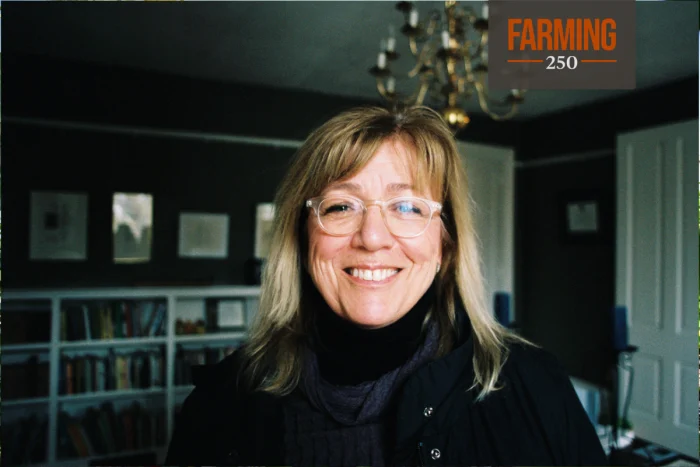
Mary Berry, a tireless advocate for sustainable agriculture and vibrant rural communities, stands at the confluence of personal history and a profound national challenge. Her journey, deeply rooted in the fertile soils of Henry County, Kentucky, embodies a commitment to agrarian principles passed down through generations, now manifesting in the impactful work of The Berry Center. Through this non-profit, she champions human-scale farming, regional food economies, and the preservation of rural culture, offering replicable models for communities nationwide grappling with the decline of traditional agriculture.
A Legacy Rooted in the Land: Mary Berry’s Early Life and Farming Journey
Born into a family whose identity was inextricably linked to the land, Mary Berry’s formative years were spent on her parents’ subsistence farm in Kentucky. This was not merely a place of residence but a living classroom where the rhythms of nature dictated daily life. Crop rotation was a fundamental practice, ensuring soil health and productivity without external inputs. Fertilization came naturally from animal manure, enriching the earth in a closed-loop system. Plowing was performed by draft horses, a testament to a time when human and animal power, rather than fossil fuels, shaped the agricultural landscape. This upbringing instilled in Mary a deep understanding of ecological balance and the intrinsic value of working in harmony with the land.
After earning her degree from the University of Kentucky in 1981, Mary returned to the family farm, embarking on a full-time agricultural career. Her hands-on experience was remarkably diverse, encompassing the cultivation of tobacco, the raising of dairy and beef cows, pastured poultry, and organic vegetables. This diversification was not just a business strategy but a reflection of the integrated, resilient farming systems she had learned to value. Her entrepreneurial spirit extended beyond her own farm; in 1990, her husband, Steve Smith, pioneered the state’s first Community Supported Agriculture (CSA) program. This innovative model, which connects consumers directly to local farmers through advance subscriptions, provided a crucial lifeline for small-scale operations, fostering community engagement and ensuring fresh, seasonal produce for local families. The establishment of Kentucky’s first CSA underscored a proactive approach to building alternative food systems long before such concepts gained widespread recognition.
The Unsettling Transformation: The Decline of Kentucky’s Agricultural Landscape
Mary Berry, much like her revered father, Wendell Berry, has long lamented the precipitous decline of small-scale agriculture in Kentucky. This erosion of traditional farming practices and livelihoods accelerated dramatically following the termination of the federal tobacco price support and quota program in 2004. For decades, this program had served as a bedrock for Kentucky’s rural economy, offering stability to thousands of small and medium-sized family farms. Instituted during the Great Depression, the program provided price guarantees and supply controls, ensuring a relatively stable income for tobacco growers. At its peak, tobacco was Kentucky’s leading cash crop, supporting an estimated 60,000 farm families directly and many more indirectly through related industries.
The program’s end, driven by declining domestic tobacco consumption and growing public health concerns, pulled the economic rug out from under countless rural households. Farmers, many of whom had cultivated tobacco for generations, suddenly faced an uncertain future without the reliable income and market access the quotas had provided. Data from the Kentucky Department of Agriculture illustrates the stark impact: the number of tobacco farms in Kentucky plummeted from over 60,000 in the early 1990s to fewer than 5,000 by 2010. The economic vacuum left by tobacco’s decline proved difficult to fill. While efforts were made to encourage diversification into other crops like vegetables, fruits, and industrial hemp, these initiatives often lacked the necessary market infrastructure, processing facilities, and distribution networks to effectively support a large-scale transition. Many small farmers, lacking capital and market connections, struggled to adapt to new production models, leading to widespread farm closures and an exodus from agriculture. This period underscored a critical vulnerability in rural economies reliant on a single commodity and highlighted the systemic failures in providing adequate support for transitions.
Wendell Berry’s Enduring Vision: A Half-Century of The Unsettling of America
The intellectual and philosophical backbone for Mary Berry’s work is undeniably her father, Wendell Berry, a celebrated poet, essayist, and farmer whose agrarian philosophy has influenced generations. His seminal 1977 book, The Unsettling of America: Culture & Agriculture, stands as a prophetic critique of industrial farming and a passionate defense of agrarian culture and a deep, responsible connection to the land. In it, Wendell Berry articulates the dangers inherent in an agricultural system driven by scale, specialization, and extraction, warning that such practices inevitably lead to ecological degradation, social disintegration, and a profound alienation from the sources of our sustenance. He advocates for a "culture of agriculture" rooted in stewardship, community, and the inherent value of small-scale, diversified farming.
As The Unsettling of America approaches its 50th anniversary next year (2027), its relevance has only intensified. To mark this significant milestone, Mary Berry has embarked on a national tour, engaging with food system leaders across the country. Through these dialogues, she explores the enduring impact of her father’s work, collecting perspectives on how the book has shaped their understanding of agriculture, economy, and community. These reflections will be compiled into a forthcoming video podcast, set for release early next year, serving as a powerful testament to the book’s continuing influence on contemporary movements for sustainable food and land use. The timing of this initiative holds a poignant significance: an interview conducted by Civil Eats with Mary Berry over Zoom in late August 2026, exploring her perspectives on farming 250 years after America’s founding, took place less than a week before her father, Wendell Berry, passed away on August 31, 2026. This timing underscores the immediate and profound legacy Mary is dedicated to carrying forward.
The Berry Center: Cultivating Solutions from the Ground Up
In 2011, driven by a desire to translate her family’s agrarian philosophy into tangible action, Mary Berry established The Berry Center. Based in New Castle, Kentucky, the nonprofit organization is dedicated to putting Wendell Berry’s extensive writings to practical use "for the land and the people of Henry County—but with replicable programs that can be used anywhere." This dual mission reflects a deep commitment to local context while recognizing the universal applicability of their principles.
The Center’s initiatives are diverse yet interconnected, each designed to foster a more resilient, equitable, and ecological food system:

-
The Archive of The Berry Center: This vital resource serves as a repository for the extensive writings of Wendell Berry, his uncle John M. Berry, and his grandfather, John W. Berry. By preserving this rich intellectual legacy, the archive provides invaluable insights into generations of agrarian thought, environmental ethics, and cultural commentary. It acts as a cornerstone for research and education, ensuring that these foundational ideas remain accessible to future generations of scholars, farmers, and activists.
-
The Farm and Forest Institute: This program offers comprehensive, holistic, and human-scale farming classes. Unlike conventional agricultural education that often emphasizes industrial models, the Institute focuses on practical skills and ecological principles relevant to small and mid-sized operations. Coursework covers sustainable livestock management, diversified crop production, agroforestry, soil health, and direct marketing strategies. By empowering new and transitioning farmers with the knowledge and tools for ecological stewardship and economic viability, the Institute is cultivating a new generation of land-based practitioners.
-
Our Home Place Meat: This cooperative stands as a direct response to the market access challenges faced by small-to-midsize grass-fed beef cattle farmers. Many independent farmers struggle to compete with large industrial processors and reach consumers beyond local farmers’ markets. Our Home Place Meat addresses this by aggregating products from multiple local farms, handling processing, and facilitating connections to regional markets, including restaurants, institutions, and individual consumers. This cooperative model not only provides fair prices and stable markets for farmers but also ensures consumers have access to high-quality, ethically raised, grass-fed beef, strengthening the regional food economy and promoting sustainable land management practices. The success of Our Home Place Meat demonstrates a powerful alternative to the concentrated power of industrial meatpacking, highlighting the potential for cooperative efforts to create equitable value chains.
The Berry Center’s emphasis on "replicable programs" is crucial. While deeply rooted in Henry County, their models for land stewardship, farmer education, and market development are designed to be adaptable. This approach offers a blueprint for other communities seeking to revitalize their rural economies and foster sustainable agriculture, underscoring the universal appeal of their practical solutions.
Challenging the Industrial Paradigm: A Call for a Regenerative Food System
Mary Berry is an unequivocal critic of industrial, large-scale farming, directly challenging the prevailing narrative that such systems are necessary to feed a growing global population efficiently and affordably. Her response is direct and uncompromising: "It’s completely wrong. It’s wrong-headed, and it has been from the start. You can’t feed people by destroying the world. That’s crazy." She views industrial agriculture as being in its "death throes," a system that "makes no sense whatsoever by any standard" because it fundamentally serves an economy that systematically "destroys the land and the people."
Her critique is grounded in a deep understanding of the ecological and social costs of industrial practices. Industrial agriculture, with its reliance on monocultures, synthetic fertilizers, chemical pesticides, and large machinery, contributes significantly to soil degradation, water pollution, biodiversity loss, and greenhouse gas emissions. Furthermore, it often disempowers small farmers, concentrates wealth in the hands of a few corporations, and contributes to rural depopulation. The argument that industrial farming is necessary to feed the masses often overlooks issues such as food waste (an estimated 30-40% of food in the U.S. is wasted annually), the caloric inefficiency of animal feed production, and the potential for diversified, localized food systems to be more resilient and equitable. Mary Berry champions diversified farming, recalling the practices of her youth, where multiple crops and livestock species coexisted, creating ecological stability and economic resilience. She notes that during the lead-up to the end of the tobacco program, significant efforts were made to encourage farmers to diversify into vegetable production and other enterprises. However, a critical failure was the lack of infrastructure—processing facilities, distribution networks, and supportive policies—that would allow farmers to transition without having to "do everything themselves." This infrastructural gap remains a significant barrier to the widespread adoption of sustainable, diversified agriculture.
Reclaiming Rural America: Beyond the "Sacrifice Zone" Narrative
A core tenet of Mary Berry’s work revolves around the fundamental question of whether rural America is "worth saving." She observes that many people dismiss rural communities, treating them "like a colony or a sacrifice zone." This dismissive attitude often stems from a lack of understanding and deeply ingrained misconceptions. There’s a pervasive idea, she notes, that any farmer still operating in a place like Henry County, Kentucky, must be "privileged in some way, or they must be subsidized in some way, or they’re rich." This perception stands in stark contrast to the reality: "We’re dealing with pretty young farmers who have all bought farms, who are all struggling."
Berry articulates an understanding of the complex socio-political dynamics at play, acknowledging that many farmers, irrespective of their political leanings, feel "left behind, taken for granted, or looked down on." The economic shifts, particularly the abrupt end of the tobacco program, stripped away the foundational economy that sustained these communities, leading to feelings of betrayal and abandonment. She emphasizes that even her own experience as a "successful entrepreneurial farmer"—a path she shared with her husband—was insufficient to stem the tide of rural decline. The prevailing "culture of competition instead of cooperation" further exacerbates these challenges, hindering collective solutions. Yet, Mary Berry holds onto a vision of what rural America can be. She recalls a time when, even if not perfect, there was a greater sense of fairness and stability. "When people are fairly treated for the good work that they do—that the quality matters, and they’re fairly paid, and there’s some stability from year to year to year—I have seen the greatest kindnesses and generosity across the board." This vision of a fair, cooperative, and respected rural America is what she and The Berry Center strive to restore.
A Resilient Hope: Forging a Path Forward
Despite the formidable challenges she identifies, Mary Berry remains steadfastly optimistic about the future of farming and rural life. "Hope comes pretty easily to me," she asserts, attributing much of this resilience to the tangible work and observable progress at The Berry Center. Her optimism is not born of naivete but from the direct experience of seeing improvements when efforts are scaled appropriately. "If you keep the scale right, you can see improvements," she explains, highlighting the efficacy of human-scale, community-focused interventions over grand, centralized schemes.
The Berry Center’s initiatives, from educating new farmers through the Farm and Forest Institute to creating viable market channels with Our Home Place Meat, exemplify this philosophy of achievable, localized change. These programs demonstrate that viable alternatives to industrial agriculture exist and that rural communities can thrive when empowered with appropriate resources, knowledge, and infrastructure. By fostering cooperation, valuing skilled labor, and building resilient local food systems, The Berry Center is not merely preserving a nostalgic past but actively constructing a hopeful future. Mary Berry’s work serves as a powerful reminder that the revitalization of rural America and the transformation of our food system are not just economic imperatives but cultural and ecological necessities, achievable one small, human-scaled improvement at a time.