admin
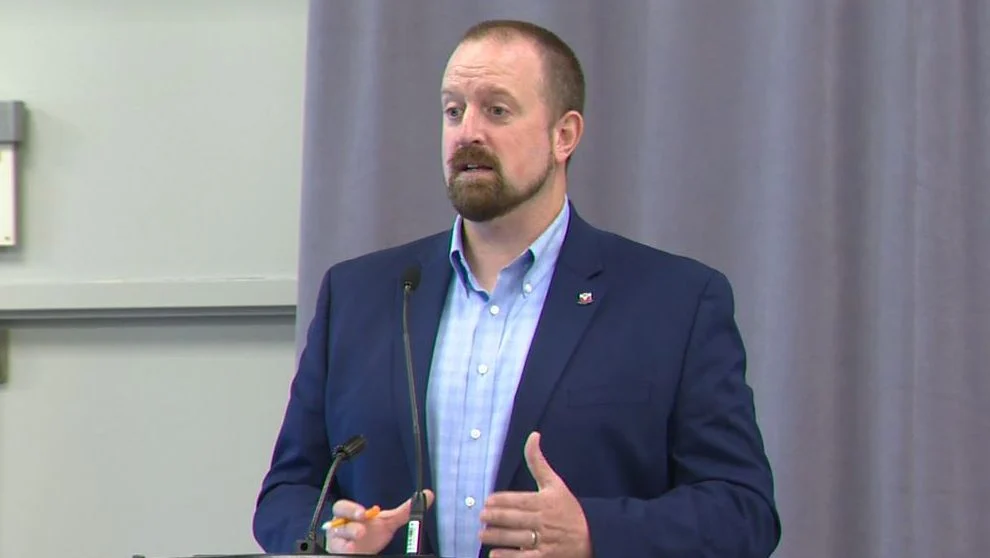
Halifax, N.S. – The Nova Scotia New Democratic Party (NDP) has taken decisive action, removing MLA Paul Wozney from his position as party whip following a contentious social media post that suggested emulating "France-style riots" in response to government legislation. The post, which has since been deleted, drew immediate and sharp condemnation from the Progressive Conservative (PC) Caucus, escalating concerns about the nature of political discourse and the boundaries of protest advocacy within the province.
The controversy ignited after Wozney, a prominent voice within the NDP and a former teacher, published a statement on social media calling for aggressive civil disobedience. His exact words, which quickly circulated before being removed, were: “Don’t leave it to the courts. Learn from France. Own the streets. Shut the government down. Grind the province/country to a halt and force government to abandon illegal legislation in the present. It’s the only direct line to worker justice.” This provocative statement was made in the context of ongoing discussions surrounding a remedy for Bill 148, the Public Services Sustainability (2015) Act, which had earlier this year been ruled unconstitutional by the Nova Scotia Supreme Court.
The Genesis of the Controversy: Bill 148 and Worker Rights
To fully comprehend the gravity of Wozney’s remarks, it is essential to delve into the historical context of Bill 148. Passed by the then-Liberal government in 2015, the Public Services Sustainability Act, commonly known as the wage restraint bill, imposed a three-year wage freeze followed by a modest 1% increase over the subsequent two years for approximately 75,000 public sector employees across Nova Scotia. This legislation, enacted under the guise of fiscal responsibility and sustainability, was vehemently opposed by a coalition of public sector unions, including teachers, nurses, and other provincial employees. Unions argued that the bill unilaterally stripped away their collective bargaining rights, effectively circumventing the negotiation process and undermining the fundamental principles of free and fair collective agreements.
The legal challenge against Bill 148 was a protracted and arduous battle. Spearheaded by various labour organizations, including the Nova Scotia Government and General Employees Union (NSGEU) and the Nova Scotia Teachers Union (NSTU), the case argued that the legislation violated Charter rights, specifically Section 2(d) concerning freedom of association. After years of legal proceedings, the Nova Scotia Supreme Court, in a landmark decision earlier in 2026, sided with the unions, declaring Bill 148 unconstitutional. Justice Ann Derrick ruled that the provincial government failed to engage in meaningful consultation with unions before imposing the wage package, thereby infringing upon the constitutional right to collective bargaining. This ruling was a significant victory for public sector workers and a rebuke to the government’s legislative overreach.

Following the court’s decision, the current PC government was tasked with determining an appropriate remedy for the years of suppressed wages and violated rights. These discussions, which were highly sensitive and carried significant financial implications for the province, formed the backdrop against which Wozney’s incendiary social media post emerged. His call to "shut the government down" and "grind the province/country to a halt" was a direct response to what he perceived as an inadequate or unjust resolution being pursued by the government regarding the Bill 148 remedy.
The "France-Style Riots" Analogy: A Global Context
Wozney’s reference to "France-style riots" immediately conjured images of the intense social unrest that has frequently gripped France, particularly in recent years. While the original article briefly mentions "poor school conditions and the rising cost of living," the scale and nature of these protests are far more complex and often violent. In France, widespread demonstrations, often involving hundreds of thousands of participants, have become a recurring feature of the political landscape.
Recent examples include the "Yellow Vest" (Gilets Jaunes) movement that began in late 2018, initially protesting fuel tax increases but quickly evolving into a broader anti-government movement against social inequality and President Emmanuel Macron’s policies. These protests, which continued for months, saw significant clashes with police, widespread property damage, looting, and numerous arrests. The economic impact was substantial, with retailers reporting billions of euros in losses.
More recently, France has been rocked by protests against pension reforms, which raised the retirement age from 62 to 64. These demonstrations, peaking in early 2023, also led to mass arrests (over 2,500 people detained during a single week of unrest), widespread strikes that crippled public transport and services, and instances of arson and vandalism in major cities like Paris, Marseille, and Lyon. The protests were characterized by barricades, burning bins, and confrontations between demonstrators and riot police. The sheer scale of disruption, the economic cost, and the level of violence associated with these movements made Wozney’s analogy particularly alarming to many.
The Progressive Conservative Caucus’s Swift Condemnation

The PC Caucus wasted no time in condemning Wozney’s remarks, interpreting them as a direct incitement to violence and lawlessness. PC MLA Damian Stoilov issued a scathing news release, stating: “Paul Wozney is saying if Nova Scotians disagree on something, they should mimic riots in France where thousands of shops were looted and buildings burned to the ground.” Stoilov further emphasized the destructive and dangerous nature of such a call, arguing that it was a profound dereliction of duty for an elected official to advocate for such extreme measures.
The PC Caucus called for immediate and severe disciplinary action against Wozney, highlighting the responsibility of MLAs to uphold peace and order, and to foster constructive, democratic dialogue rather than advocating for civil unrest. They asserted that Wozney’s words crossed a fundamental line in Canadian political discourse, which traditionally values peaceful protest within the bounds of law.
NDP Leader Claudia Chender’s Response and Wozney’s Removal
In the face of mounting pressure, NDP Leader Claudia Chender responded swiftly and decisively. On Wednesday, October 21, 2026, Chender released a statement acknowledging the seriousness of the situation and outlining the party’s stance. She unequivocally denounced violence or any suggestion of violence in civic life, labeling Wozney’s words as "careless."
Chender confirmed that Paul Wozney "acknowledges the harm that he has caused" and "understands that there are consequences to his words." As a direct result of these consequences, she announced Wozney’s immediate removal as the NDP whip. The role of the whip in a parliamentary system is crucial; they are responsible for ensuring party discipline, maintaining attendance, and communicating the party line on legislative matters. Removal from this position signifies a loss of trust and a significant demotion within the party hierarchy, indicating the NDP’s commitment to distancing itself from the controversial remarks.
Chender’s statement also reaffirmed the party’s commitment to democratic principles: "Respectful, peaceful protest and civic engagement are essential parts of a healthy democracy and strengthen our province. Nova Scotians have proven that we can stay true to these values and speak up about our differences and frustrations while taking care of each other and holding governments accountable." This emphasized the NDP’s distinction between legitimate, peaceful forms of dissent and any advocacy for destructive or violent actions.

Reactions from Other Stakeholders and Broader Implications
While specific new statements from public sector unions or political analysts were not immediately available, the logical inferences regarding their reactions are significant. Labour federations and individual unions, while staunch advocates for worker rights and frequently engaging in protests, have historically maintained a commitment to peaceful and lawful forms of industrial action and civil disobedience in Canada. They would likely distance themselves from any suggestion of violent "France-style riots," understanding that such rhetoric could undermine the legitimacy of their cause and alienate public support. Their focus remains on legal challenges, collective bargaining, and organized, non-violent demonstrations.
Political analysts would likely view this incident as a critical test for the NDP leadership and a reflection of the challenges posed by social media in modern politics. The immediate and widespread dissemination of Wozney’s words demonstrates how quickly an individual politician’s statement can escalate into a provincial controversy, forcing party leaders to react with urgency. The incident highlights the delicate balance between robust advocacy for constituents and the need for responsible, measured communication, especially for elected officials. For the NDP, a party traditionally aligned with labour movements and social justice, the incident creates a potential image problem, requiring them to reinforce their commitment to democratic and non-violent means of achieving worker justice.
The implications extend beyond party politics, touching upon the broader health of Nova Scotia’s democratic discourse. The debate over the Bill 148 remedy remains a contentious issue, symbolizing the ongoing tension between government fiscal policy and the rights of public sector workers. Wozney’s remarks, while quickly condemned and disciplined, introduce an unsettling element into this discourse, raising questions about the acceptable limits of protest rhetoric. It underscores the responsibility of all political actors to foster an environment where disagreements, however profound, are resolved through democratic processes and respectful engagement, rather than through calls for civil unrest and violence.
Conclusion: A Call for Measured Discourse
Paul Wozney’s removal as NDP whip marks a significant moment in Nova Scotia’s political landscape, underscoring the serious consequences that can arise from careless or inflammatory rhetoric, particularly from elected officials. The incident serves as a stark reminder of the fine line between passionate advocacy and the incitement of unrest. While peaceful protest is a cornerstone of Canadian democracy, calls for actions mirroring the destructive "France-style riots" cross a boundary that no mainstream political party can endorse. The NDP’s swift disciplinary action, coupled with Leader Claudia Chender’s reaffirmation of democratic values, sends a clear message that while the struggle for worker justice and accountability remains paramount, the methods employed must always adhere to the principles of peace, respect, and lawful engagement. The ongoing discussions around Bill 148’s remedy will now proceed under the shadow of this controversy, demanding an even greater commitment to measured and constructive dialogue from all parties involved.