admin
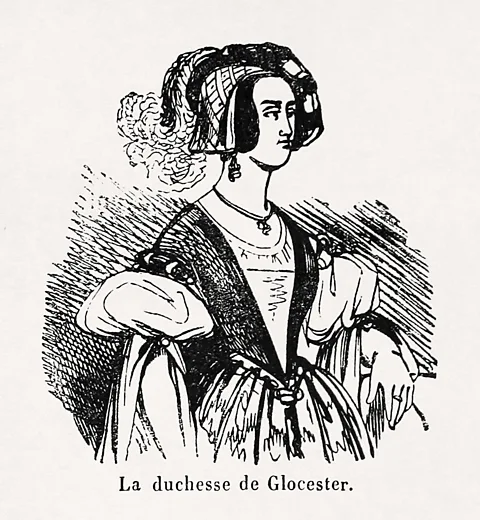
In the mid-15th century, the English court was a theater of high-stakes power plays, shifting loyalties, and the looming shadow of a succession crisis. At the heart of this turbulence stood Eleanor Cobham, Duchess of Gloucester, a woman whose trajectory from a lady-in-waiting to the second-highest-ranking woman in the kingdom remains one of the most dramatic narratives in British history. Her eventual conviction in 1441 for necromancy, heresy, and treasonable witchcraft did more than just dismantle her personal life; it fundamentally altered the political landscape of the House of Lancaster and served as a precursor to the dynastic bloodshed known as the Wars of the Roses. Today, the release of Philippa Gregory’s historical novel, Royal Witch, has reignited the debate over whether the Duchess was a predatory occultist or a victim of a meticulously orchestrated political character assassination.
The Political Climate of 1441
To understand the fall of Eleanor Cobham, one must first understand the precarious state of the English monarchy under King Henry VI. Crowned as an infant, Henry VI reached his majority as a pious, intellectually fragile, and childless ruler. His perceived weakness created a power vacuum filled by two competing factions: the one led by his uncle, Humphrey, Duke of Gloucester, and the other by the Duke’s rival, Cardinal Henry Beaufort.
Humphrey was the heir presumptive to the throne. As his wife, Eleanor Cobham was positioned as the "Queen-in-waiting." However, Eleanor was a polarizing figure. Having begun her career as a lady-in-waiting to Jacqueline, Countess of Hainault—Humphrey’s first wife—she eventually supplanted her mistress, marrying the Duke in 1428. Her ascent was viewed by many in the traditional nobility as the work of an unscrupulous social climber. Her ostentatious displays of wealth and her influence over the Duke made her an easy target for those looking to undermine Humphrey’s standing at court.

The Chronology of a Scandal
The downfall of the Duchess was not an overnight occurrence but a calculated legal siege that began in the summer of 1441.
July 1441: The Arrests Begin
The first move was made against the Duchess’s associates. Roger Bolingbroke, a renowned scholar and personal physician to the Duke of Gloucester, and Thomas Southwell, a canon of St. Stephen’s Chapel, were arrested. They were accused of using astrology and necromancy to predict the King’s death. Bolingbroke was paraded through London on a raised platform, surrounded by his "magical instruments," to recant his findings before the public.
August 1441: Eleanor’s Flight
Sensing the walls closing in, Eleanor fled to sanctuary at Westminster Abbey. However, the charges against her were escalated from simple heresy to treasonable witchcraft. She was accused of commissioning Bolingbroke and Southwell to cast a horoscope that predicted the King would suffer a fatal illness.
September–October 1441: The Trial
Eleanor was brought before an ecclesiastical commission headed by the bishops of London, Lincoln, and Norwich. She faced 18 specific charges. While she denied the more serious accusations of treason and necromancy, she made a tactical admission that would prove fatal: she confessed to obtaining "love potions" and fertility charms from Margery Jourdemayne, a woman known as the "Witch of Eye."

November 1441: Public Penance and Sentencing
The Duchess was found guilty. Her marriage to Humphrey was forcibly dissolved on the grounds that she had used magic to induce his love. She was sentenced to a grueling public penance and life imprisonment. On November 13, 15, and 17, she was forced to walk barefoot through the streets of London, dressed in a simple white chemise and carrying a heavy wax taper, stopping at various churches to acknowledge her sins before jeering crowds.
1441–1452: Captivity and Death
Eleanor was shuffled between various remote fortresses, including Chester Castle, Kenilworth, and finally Peel Castle on the Isle of Man. She remained in custody until her death in 1452, never seeing her husband again.
The Charges: Science vs. Sorcery
The 18 charges leveled against Eleanor Cobham provide a window into the 15th-century intersection of science, religion, and the law. In the late Middle Ages, the line between "natural magic" (such as astrology and herbalism) and "black magic" (necromancy and demonic invocation) was often thin and subject to political interpretation.
- Astrological Treason: Predicting the death of a monarch was a capital offense. In a time when the King’s health was synonymous with the state’s stability, "foreknowledge" was often equated with "intent" to cause harm.
- The Wax Image: One of the most damning allegations was that the group had created a wax effigy of Henry VI. It was claimed that as the wax was slowly melted before a fire, the King’s physical strength would similarly wither.
- Necromancy: The summoning of spirits to gain hidden knowledge. This charge served to alienate Eleanor from the Church, branding her a heretic.
- Love Magic: By admitting to the use of potions from Margery Jourdemayne, Eleanor unwittingly provided the legal grounds to invalidate her royal marriage, stripping her of her titles and protection.
Analysis: Victim or Instigator?
Modern historians remain divided on Eleanor’s culpability. Dr. Euan Roger, a principal records specialist at the National Archives, suggests that the Duchess was likely a "weak spot" exploited by her husband’s political enemies. "The allegations are a smear campaign," Roger argues. He posits that her interest in the occult was likely driven by a desperate, personal desire to conceive a child, rather than a plot to assassinate the King.

In contrast, Philippa Gregory’s portrayal in Royal Witch challenges the "passive victim" trope. Gregory argues that Eleanor was a woman of immense agency who understood the power dynamics of the court. "I don’t think anybody would have moved against her without really, really convincing evidence," Gregory states, noting that Roger Bolingbroke never withdrew his confession despite the likelihood of torture. From this perspective, Eleanor was a high-stakes gambler who used every tool at her disposal—including the forbidden arts—to secure her future.
The truth likely lies in the middle. While the use of astrology was common among the nobility of the era, Eleanor’s specific inquiries into the King’s longevity provided Cardinal Beaufort with the perfect legal weapon. By destroying Eleanor, Beaufort successfully neutralized the Duke of Gloucester, whose influence never recovered from the scandal.
Broader Impact and Historical Implications
The trial of Eleanor Cobham was not merely a localized scandal; it set a series of legal and political precedents that would echo through English history for over a century.
The Precedent for Anne Boleyn
The legal maneuvers used to dissolve Eleanor’s marriage and convict her of treason based on "occult" evidence provided a blueprint for future monarchs. Most notably, nearly a century later, Henry VIII’s advisors would look to the Cobham case when constructing the charges of adultery and witchcraft against Anne Boleyn. The trial established that the personal conduct of a royal consort could be treated as a matter of national security and high treason.

The Weakening of the Lancastrian Line
The disgrace of the Duke of Gloucester fundamentally weakened the House of Lancaster. With Humphrey sidelined and eventually dying under suspicious circumstances in 1447, the path was cleared for Richard, Duke of York, to assert his own claim to the throne. The vacuum of power and the loss of the King’s most senior advisor accelerated the descent into the Wars of the Roses.
Social and Legal Shifts
The case marked a turning point in how the English legal system handled witchcraft. Prior to 1441, witchcraft was largely an ecclesiastical matter. The Cobham trial helped shift it into the realm of secular common law, particularly when it intersected with the interests of the Crown. It reinforced the idea that the "supernatural" was a valid area for state surveillance and prosecution.
Conclusion
The story of Eleanor Cobham remains a compelling study of ambition and the fragility of power. Whether she was a "scheming satanist" or a "political pawn," her life reflects the brutal realities of medieval gender politics. In an era where women were denied direct political office, Eleanor sought influence through her marriage and, allegedly, through the stars. Her fall serves as a reminder that in the high-stakes game of the 15th-century court, even those closest to the throne were only one accusation away from the dungeon. As the Duchess of Gloucester walked barefoot through the streets of London in 1441, she was not just performing penance; she was witnessing the beginning of the end for the Lancastrian dynasty.