admin
admin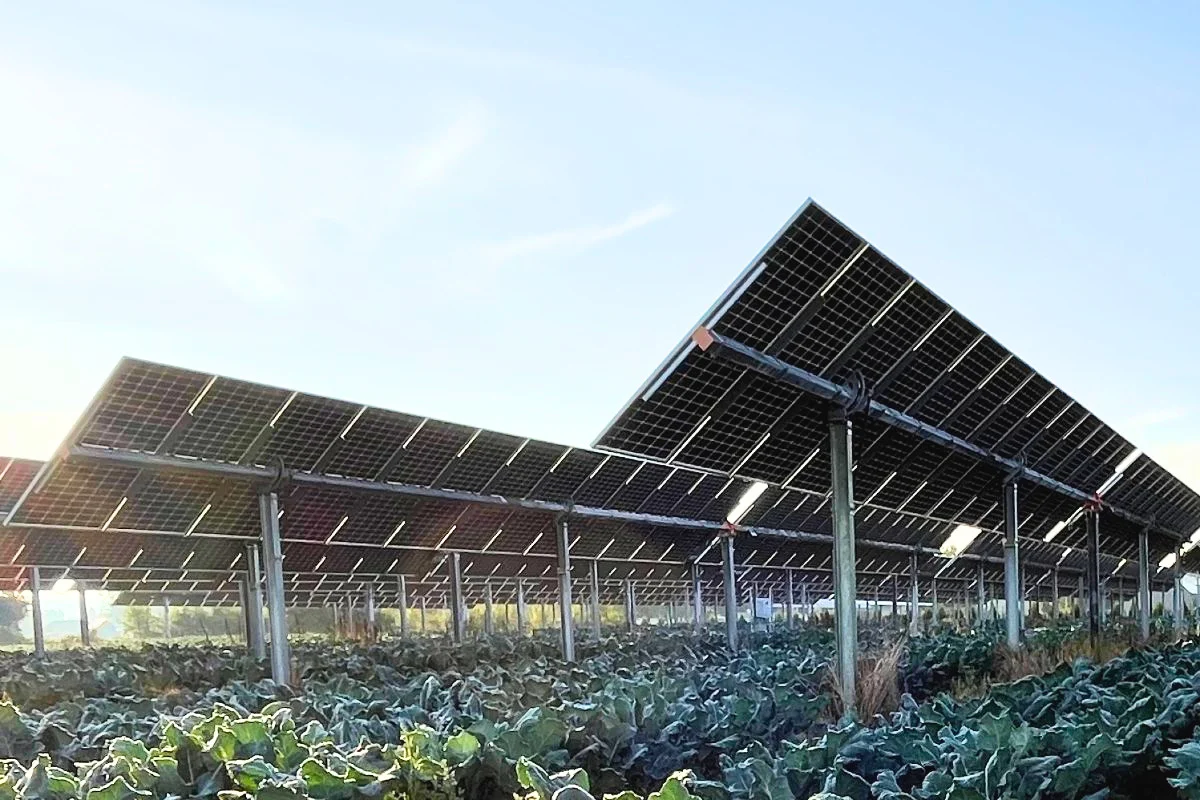
The rapid expansion of utility-scale solar energy infrastructure across the United States, a critical component in the nation’s strategy to combat climate change, is increasingly intersecting with, and often displacing, productive agricultural land. While offering immense promise for renewable energy generation, current development practices frequently result in the conversion of valuable farmland into sites that neglect the underlying soil and agricultural potential. This paradigm, however, is not inevitable; a growing body of research and successful projects demonstrates that by integrating agronomic principles and practices, solar installations can coexist and even thrive with agriculture, fostering a truly sustainable energy and food future.
The Unseen Costs Beneath the Panels: Land Degradation and Lost Potential
From a casual glance, a newly established utility-scale solar array might appear meticulously managed, bordered by a neat perimeter fence and a vegetative buffer. However, a closer inspection often reveals a starkly different reality on the ground: deeply compacted soil, sparse and often weedy ground cover, and seed mixes that have failed to establish uniformly. In many instances, this land, once productive farmland, is no longer being actively farmed or stewarded, rendering it agriculturally dormant and ecologically impoverished. This prevalent neglect of the land beneath the panels represents a significant concern for anyone invested in the optimal utilization of America’s finite agricultural resources.
Emily Cole, a distinguished soil scientist and Senior Scientist at American Farmland Trust, has dedicated her career to understanding this critical intersection of farming and solar energy. Her extensive research, often predating the widespread recognition of "agrivoltaics," has consistently highlighted a costly and widespread tendency within the solar industry to overlook the ecological health and agricultural potential of the land occupied by solar arrays. This oversight leads not only to environmental degradation but also to missed opportunities for economic diversification and enhanced community relations.
The scale of this issue is substantial. In 2025 alone, the U.S. added nearly 27 gigawatts of utility-scale solar capacity, according to data from the Federal Energy Regulatory Commission (FERC). Each gigawatt of solar capacity typically requires thousands of acres of land, predominantly in rural areas, much of which was previously, and remains, highly farmable. The U.S. Department of Agriculture’s Economic Research Service (USDA ERS) has identified solar development as a rapidly accelerating driver of farmland conversion. Given that a significant portion of this development occurs on land leased from farming families, the long-term management of these sites will profoundly influence their agricultural viability for generations to come. The current trajectory risks a future where vast tracts of land are effectively taken out of agricultural production, potentially permanently, if not managed correctly.
A Growing Imperative: The Rise of Utility-Scale Solar and Farmland Pressures
The imperative to transition to renewable energy sources like solar is undeniable, driven by the escalating climate crisis and global commitments to decarbonization. The United States has set ambitious goals for clean energy deployment, leading to a dramatic acceleration in solar infrastructure development over the past decade. This growth has been fueled by technological advancements, decreasing costs, and supportive federal and state policies. However, this rapid expansion has also brought into sharper focus the complex challenge of land use, particularly in a nation where agricultural land is already under immense pressure.

Historically, U.S. farmland has faced threats from urban sprawl, industrial development, and infrastructure projects. Data from American Farmland Trust indicates that between 2001 and 2016, nearly 11 million acres of agricultural land were lost or fragmented across the contiguous U.S., equating to roughly 2,000 acres per day. While solar conversion currently represents a smaller fraction of this overall loss compared to housing or commercial development, its exponential growth trajectory means it is rapidly becoming a significant factor. Farmers, facing increasingly volatile markets, rising input costs, and an aging population (the average age of a U.S. farmer is approaching 60), often find solar lease payments an attractive and stable source of income, providing a financial lifeline that helps keep their operations viable. This economic reality makes the careful management of solar sites even more critical, ensuring that short-term financial gains do not result in long-term agricultural losses.
The concept of "Smart Solar," championed by organizations like the American Farmland Trust, emerged precisely to address this tension. It advocates for solar development that prioritizes the protection of farmland and natural resources, ensuring that renewable energy goals are met without compromising the nation’s agricultural capacity or environmental health.
Agrivoltaics: A Symbiotic Solution for Energy and Agriculture
The solution to this conflict lies in adopting an integrated approach, known as agrivoltaics, where solar energy generation and agricultural production coexist on the same land. Rather than treating the land beneath solar panels as a mere surface to stabilize, solar developers must recognize and manage it as a dynamic, working agricultural system. This necessitates proactive engagement with agricultural expertise, specifically from agronomists—experts in crop production and soil health—from the earliest stages of project development.
When land under large-scale solar projects is managed holistically, treating it as a system of interconnected soil, plants, and water, the benefits are multi-faceted and compounding. Soil health improves, enhancing its capacity to retain water and nutrients. Robust, reliable plant communities thrive, supporting local ecosystems. Furthermore, agrivoltaics opens avenues for generating additional income for current landowners or operators through crops or livestock grazing. For farmers who no longer wish to actively farm, or for aspiring new and beginning farmers, these sites can offer relatively affordable access to land, circumventing the increasingly difficult challenge of land acquisition in conventional agriculture.
Beyond direct agricultural benefits, agrivoltaics significantly enhances community support for solar projects. A recent survey highlighted that rural Americans are considerably more supportive of solar developments when these projects demonstrably deliver agricultural benefits to their regions. Specifically, projects incorporating farming or grazing around solar installations garnered 14 percent more support among rural populations, while native plantings beneath panels boosted approval by approximately 17 percent. This increased community trust is invaluable, often translating into faster permitting processes, reduced local opposition, and smoother project operations throughout their lifespan.
The environmental gains extend to increased biodiversity, improved pollinator habitats, and enhanced carbon sequestration in healthier soils. These benefits ripple outwards, positively impacting neighboring agricultural fields and contributing to broader ecological resilience. Crucially, even on sites not actively farmed, good agronomic management preserves the land’s farmability for future generations, maintaining a vital option for the nation’s food security.

The Agronomist’s Crucial Role: From Site Assessment to Long-Term Stewardship
The current detrimental cycle often begins with heavy construction equipment compacting soil across solar sites, sometimes to depths that require years, if not decades, to recover naturally. Subsequent application of generic seed mixes frequently fails due to compacted soil’s poor water infiltration, leading to uneven germination and shallow root penetration. The land is then minimally maintained, perhaps mowed only when mandated, with failed areas reseeded without addressing the root cause. This approach sets the land up for ecological failure, making it unsuitable for effective grazing or cropping.
To break this cycle, integrating agronomists into the project development process is paramount. A soil scientist conducting a thorough site assessment before construction can identify areas most susceptible to compaction, recommend strategies for protecting topsoil, and implement preventative measures that avert costly post-construction remediation. Agronomists can design multi-functional vegetation plans, incorporating native pollinator habitats, perennial forage crops, or cover crops that enhance soil health, reduce erosion, and mitigate stormwater runoff. They can also select appropriate seed mixes tailored to support specific grazing systems, fulfilling commitments made to local authorities.
Several developers have already embraced this proactive approach. Doral Renewables, which operates one of the largest solar installations in the country, has embedded agronomic management into its projects, including rigorous soil health monitoring, structured farmer partnerships, and meticulous vegetation plans. Similarly, Hyperion Systems, a pioneer in agrivoltaic projects, develops installations in close collaboration with the farmers who own the land, exemplified by their partnership with Joe Czajkowski Farm in Hadley, Massachusetts, where sweet corn and broccoli thrive beneath solar arrays. These examples demonstrate that such integrated management leads to reliably established vegetation, significant additional income for farm operators, and land that is actively managed rather than abandoned. Unfortunately, these forward-thinking developers remain in the minority.
Navigating the Policy Landscape: From Guidance to Mandates
The disparity between successful agrivoltaic projects and the industry norm is not due to a lack of scientific understanding or available guidance. Agrivoltaics research is rapidly advancing, providing robust evidence for its effectiveness and benefits. In 2024, the U.S. Department of Agriculture’s Natural Resources Conservation Service (NRCS) published comprehensive Conservation Guidance for Utility-Scale Solar Projects, addressing critical aspects such as soil health, compaction, vegetation management, grazing, and decommissioning. This framework provides a clear roadmap for sustainable solar development. However, critically, developers are not currently obligated to adhere to it.
A transformative shift in the solar industry’s approach to land stewardship would require developers, lenders, and project owners to internalize the responsibility for the land’s health throughout the project’s entire lifecycle. While some may adopt this mindset voluntarily, widespread change will likely necessitate policy interventions. This conversation is not new within federal circles; it has, however, stalled. USDA and Department of Energy (DOE) staff have briefed congressional committees on the intricate issues of agriculture, farmland, and solar development. Legislative proposals have been drafted, and relevant provisions have appeared in Farm Bill discussions. Yet, none have successfully crossed the legislative finish line, underscoring the immediate importance of state and local policies.

Communities, particularly at the county level where most solar projects receive approval, possess significant leverage to demand higher standards. Before groundbreaking, local planning boards can establish stringent conditions for project approval. These could include mandatory soil health plans, dedicated funds for the eventual decommissioning and removal of the solar array, and explicit requirements that the land must be restored to farmable condition once the panels are retired. Such local ordinances provide the vital nexus where solar energy goals meet sound agronomic principles.
At American Farmland Trust, the "Smart Solar Principles" offer a robust framework designed to guide policymakers and developers in advancing solar energy while simultaneously protecting valuable farmland and ensuring its long-term farmability. The organization’s advocacy is rooted in a preventive vision: avoiding a future where, in two decades, we confront degraded soils and squandered agricultural potential, left to wonder why the insights of an agronomist were not heeded.
Broader Implications: Food Security, Rural Economies, and Environmental Stewardship
The implications of adopting or neglecting agronomic management in solar development extend far beyond individual project sites. At a national level, the unchecked conversion and degradation of farmland by solar infrastructure pose a long-term threat to food security. As the global population grows and climate change impacts agricultural productivity, preserving and enhancing the health of productive land becomes paramount. Agrivoltaics offers a pathway to expand renewable energy capacity without diminishing the agricultural land base necessary to feed the nation.
Economically, well-managed agrivoltaic sites can revitalize rural economies. Instead of replacing agricultural jobs with a limited number of operational roles, they can create opportunities for diversified farming, specialized grazing operations, and ecological restoration work. Lease payments, when combined with continued agricultural income, provide a more resilient economic foundation for farming families and rural communities. This contrasts sharply with conventional solar developments that can lead to a net loss of agricultural employment and disconnect communities from their farming heritage.
Environmentally, agrivoltaics contributes to a more holistic approach to climate change mitigation. Beyond clean energy generation, healthier soils sequester more carbon, enhancing the land’s role as a carbon sink. Integrated vegetation management supports local biodiversity, providing critical habitats for pollinators, birds, and other wildlife that are often displaced by monoculture agriculture or neglected industrial sites. Improved water management reduces runoff and soil erosion, protecting water quality in surrounding areas.
In conclusion, the narrative around utility-scale solar development must evolve. It is no longer acceptable to view solar installations as isolated energy factories separate from the land they occupy. The current gap between best practices and common practice represents a critical policy and industry challenge. By mandating agronomic integration, supporting agrivoltaics research, and empowering local communities to set stringent land stewardship conditions, the United States can ensure that its pursuit of clean energy simultaneously strengthens its agricultural foundation. Developers who have already embraced the land beneath their panels as a living, dynamic system are demonstrating that a different, healthier, and more productive story is not only possible but imperative for a truly sustainable future.