admin
admin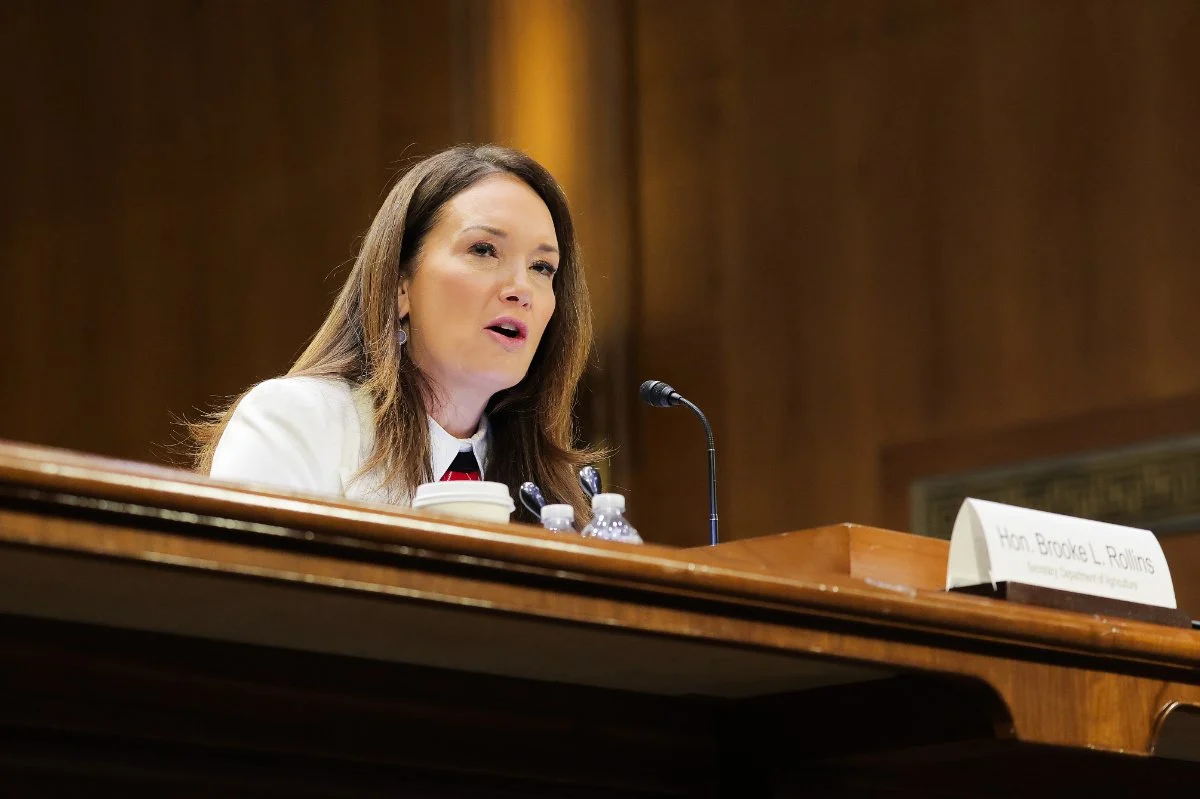
May 14, 2026 – In a move that significantly escalates tensions within the U.S. Department of Agriculture (USDA), a group of federal employees, backed by a major labor union, filed a federal lawsuit on Wednesday against Secretary of Agriculture Brooke Rollins. The complaint, lodged in a district court for the Northern District of California, accuses Secretary Rollins of an "escalating pattern of subjecting all USDA employees to proselytizing Christian messaging," which the plaintiffs contend constitutes a clear violation of the First Amendment’s Establishment Clause.
The lawsuit comes amidst a period of intense upheaval for the USDA, as Rollins’ leadership team pushes forward with controversial reorganization plans that threaten thousands of employee jobs and services. The convergence of these two major controversies—allegations of religious coercion and widespread structural changes—paints a picture of an agency in turmoil, with its leadership at odds with a significant portion of its career workforce.
The Genesis of the Legal Challenge: An "Escalating Pattern"
The complaint details a series of official agency communications from Secretary Rollins that plaintiffs argue increasingly crossed the line from general holiday greetings to explicit endorsements of Christian theology. Initially, messages sent earlier in 2025 reportedly contained non-denominational references to "God." However, the tone shifted noticeably by the end of the year.
A Christmas email, according to the lawsuit, stated: "when God gave us the greatest gift possible, the gift of his Son and our Savior Jesus Christ." This was followed by an even more pronounced Christian message in an Easter email, which proclaimed: "He is risen indeed! Today we celebrate the greatest story ever told, the foundation of our faith, and the abiding hope of all mankind. Like the very first disciples to encounter our risen Lord in the Upper Room almost two thousand years ago, this Easter let us too be alive with hope, full of Paschal joy, and confident in the mission each of us has been called for."
Plaintiffs argue that these messages, disseminated through official USDA channels, not only promoted Christian beliefs but also used language that implicitly assumed all staff shared these beliefs. Crucially, the lawsuit highlights that Rollins sent no comparable messages acknowledging holidays celebrated by other religions, reinforcing the perception of favoritism towards Christianity.
The National Federation of Federal Employees (NFFE), a labor union representing 19,000 USDA employees, joined seven individual employees in filing the action. Their collective aim, as stated in the complaint, is to "vindicate their constitutional right to be free from the government imposition of religion and to stop the Secretary from further pressure and intimidation—and other USDA employees who may be afraid to come forward." This sentiment underscores a broader concern about workplace environment and the perceived chilling effect on employees who do not share the Secretary’s religious views.
Secretary Rollins’ Unyielding Stance
In a swift and unapologetic response, Secretary Rollins shared a news article about the lawsuit on her official X (formerly Twitter) account. Her caption, "It’s just another opportunity to remind everyone: He is Risen," signaled a defiant posture and a clear intent not to back down from her communication style. This public statement, coming immediately after the lawsuit’s filing, suggests a deeply held personal conviction that she views as separate from or compatible with her official duties, a stance that is likely to be central to her legal defense.
Legal experts familiar with First Amendment cases involving government officials note that the Establishment Clause prohibits government endorsement of religion, even if the official believes they are acting on personal conviction. The key distinction often lies in whether the communication is perceived as coming from the individual in their private capacity or from the governmental office they hold. The use of official agency communication channels for these messages is a critical element in the plaintiffs’ argument.
The Constitutional Context: Separation of Church and State
At the heart of this lawsuit lies the First Amendment of the U.S. Constitution, which states, "Congress shall make no law respecting an establishment of religion, or prohibiting the free exercise thereof." This "Establishment Clause" has been interpreted by the Supreme Court over decades to mean that the government cannot endorse or favor any religion, or religion over non-religion.
In the context of federal employment, this principle is particularly sensitive. Government workplaces are expected to be neutral environments, free from religious coercion or proselytization. Employees come from diverse religious and non-religious backgrounds, and official communications are generally expected to respect this diversity. While individuals are free to practice their religion, government officials, when acting in their official capacity, must refrain from actions that could be perceived as establishing or endorsing a particular faith.
Previous Supreme Court rulings, such as the Lemon v. Kurtzman test (though modified and reinterpreted in recent years, notably by Kennedy v. Bremerton School District), have guided courts in determining whether government actions violate the Establishment Clause. The core questions often revolve around whether the government’s action has a secular purpose, whether its primary effect is to advance or inhibit religion, and whether it fosters excessive entanglement between government and religion. The plaintiffs will likely argue that Rollins’ messages fail these tests, particularly by lacking a secular purpose and overtly advancing Christianity.
A Broader Crisis: The Intertwined Reorganization Saga
The religious messaging lawsuit is not an isolated incident but rather emerges from a period of significant friction between Secretary Rollins and the USDA workforce. Since her appointment, Rollins’ leadership team has been implementing a sweeping and controversial reorganization plan across multiple departments. This plan, which began to take shape earlier in 2025, has been met with fierce resistance from employees and their unions, and has drawn concern from members of Congress.
Timeline of Reorganization Announcements (Spring 2026):
- April 23, 2026: USDA announces advances in the reorganization and restructuring of the Research, Education, and Economics (REE) mission area. This involves relocating D.C.-based research staff to offices across the country.
- April 24, 2026: The reorganization is expanded to include the Food Safety and Inspection Service (FSIS), with food safety staff being required to relocate to new hubs, specifically mentioning Iowa and Georgia.
- April 30, 2026: USDA announces actions to better serve states, nutrition program recipients, and American taxpayers, which includes the relocation of D.C. employees working on nutrition programs.
These announcements indicate that thousands of USDA employees are being required to relocate or face the loss of their jobs. Unions representing these employees have strongly pushed back. The American Federation of Government Employees (AFGE), another major federal employee union, issued a press release on Thursday, May 15, warning that the USDA’s actions will severely undermine the agency’s operations. AFGE President Everett Kelley stated, "This is yet another attempt by this administration to undermine the professional and independent work of federal researchers, data scientists, and food safety inspectors that is clearly not valued or respected." He further urged Congress to "immediately intervene and halt this illegal and unapproved relocation."
Adding weight to Kelley’s concerns, unions have reported alarming statistics: at least three quarters of their members tapped for relocation have indicated they will not move. Such a mass exodus would inevitably lead to a critical loss of institutional knowledge and expertise, significantly impacting the USDA’s ability to fulfill its core missions. The agency’s responsibilities are vast, encompassing critical areas like food safety, agricultural research, nutrition assistance programs, and conservation efforts, all of which rely heavily on experienced staff.
Congressional Scrutiny and Broader Implications
The combined controversies have not gone unnoticed on Capitol Hill. Democrats in the Senate have already begun voicing concern about how potential staff losses from the reorganization could impact the agency’s ability to effectively serve farmers and the American public. Senator Amy Klobuchar (D-MN), for example, has been vocal about the implications for the REE mission area, which is vital for agricultural innovation and competitiveness. Data released earlier in the year, indicating that nearly 150 USDA county offices already lack conservation staff, further highlights the fragility of the agency’s human resources and the potential for devastating impacts from further attrition.
The lawsuit against Secretary Rollins and the ongoing reorganization represent a significant challenge to the USDA’s stability and operational integrity.
Potential Implications and Future Outlook:
- Legal Precedent: A ruling in favor of the employees could set a significant precedent regarding the boundaries of religious expression by high-ranking federal officials in their official capacities. It could lead to stricter guidelines for communication within government agencies.
- Employee Morale and Retention: The lawsuit, coupled with the reorganization, is likely to further damage employee morale and trust in leadership. This could exacerbate staffing issues, leading to a "brain drain" of experienced personnel.
- Operational Effectiveness: If a significant number of employees refuse to relocate, the USDA’s capacity to deliver essential services—from ensuring the safety of the nation’s food supply to conducting vital agricultural research and administering nutrition programs—could be severely compromised. This could have tangible impacts on public health, food security, and the agricultural economy.
- Political Fallout: The controversies could intensify political scrutiny of Secretary Rollins and the broader administration’s approach to federal agencies. It may prompt congressional hearings or even calls for her resignation, depending on the legal outcome and the extent of operational disruption.
- Cost and Efficiency: The reorganization itself, if poorly executed or resulting in mass resignations, could lead to significant costs associated with severance packages, new hiring, training, and potential inefficiencies during a transitional period.
- Separation of Powers: The unions’ call for Congress to intervene highlights the checks and balances inherent in the U.S. government, as legislative oversight could play a crucial role in mitigating the impacts of the reorganization.
As the legal proceedings unfold and the reorganization plans continue to be implemented, all eyes will be on the USDA. The outcome of the lawsuit and the success or failure of the agency’s restructuring will have profound implications not only for its thousands of employees but also for the American public who rely on its critical services. The battle over religious expression in the workplace, intertwined with a contentious overhaul of a vital government agency, underscores a broader struggle over the identity and mission of federal service.