admin
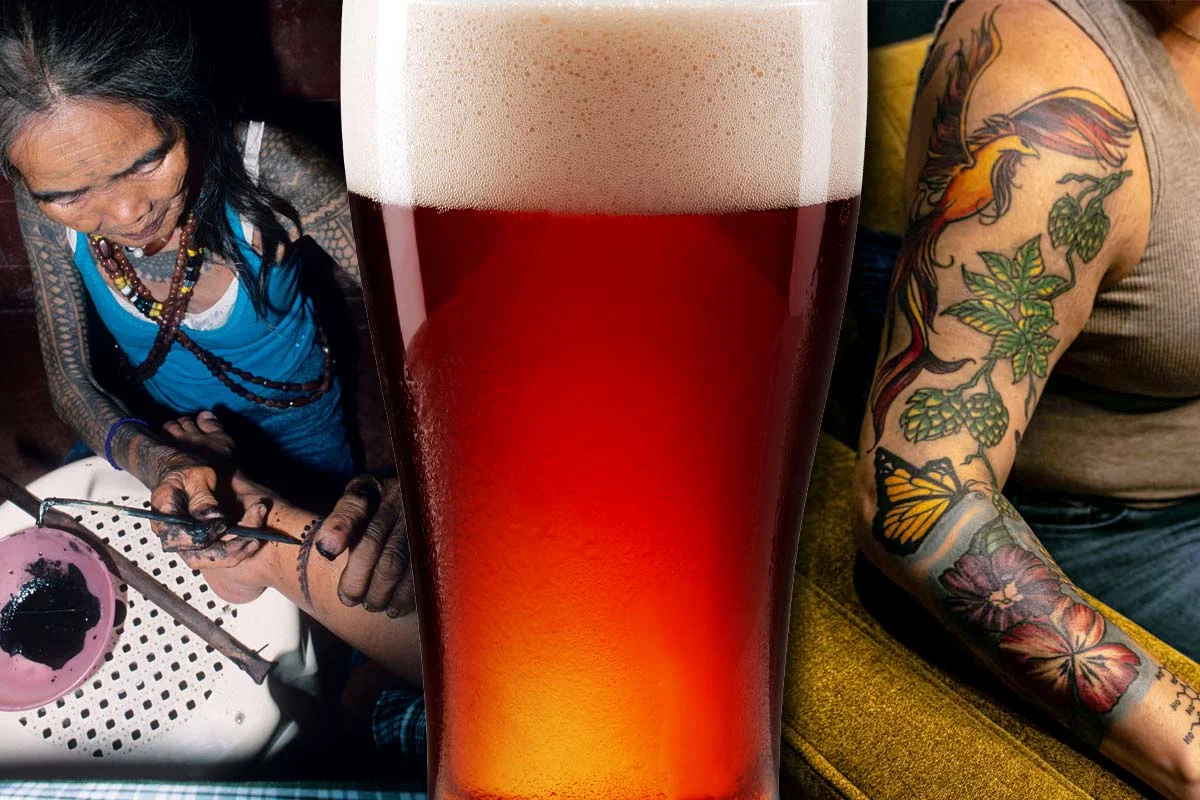
The intersection of tattooing and fermentation represents a profound, yet often overlooked, convergence of cultural technologies that have shaped human identity and community for millennia. While seemingly disparate, these two practices share a foundational grammar of transformation: one inscribes history and ancestry onto the skin, while the other preserves and nourishes the body through the controlled alteration of raw organic matter. Across the globe, from the subarctic regions of northern Japan to the tropical savannas of Guyana, these crafts have functioned as essential mechanisms for maintaining continuity with the land, the spiritual realm, and the ancestors. In many Indigenous contexts, ink and drink are not merely products of labor but are sacred conduits through which communities negotiate their place in the world.
Historical Foundations and the Chronology of Cultural Suppression
The historical timeline of tattooing and fermentation is marked by both ancient origins and a modern era of forced decline and subsequent revival. For centuries, these practices were central to the social fabric of Indigenous societies. However, the late 19th and early 20th centuries brought waves of colonial expansion and state-mandated assimilation policies that targeted these traditions.
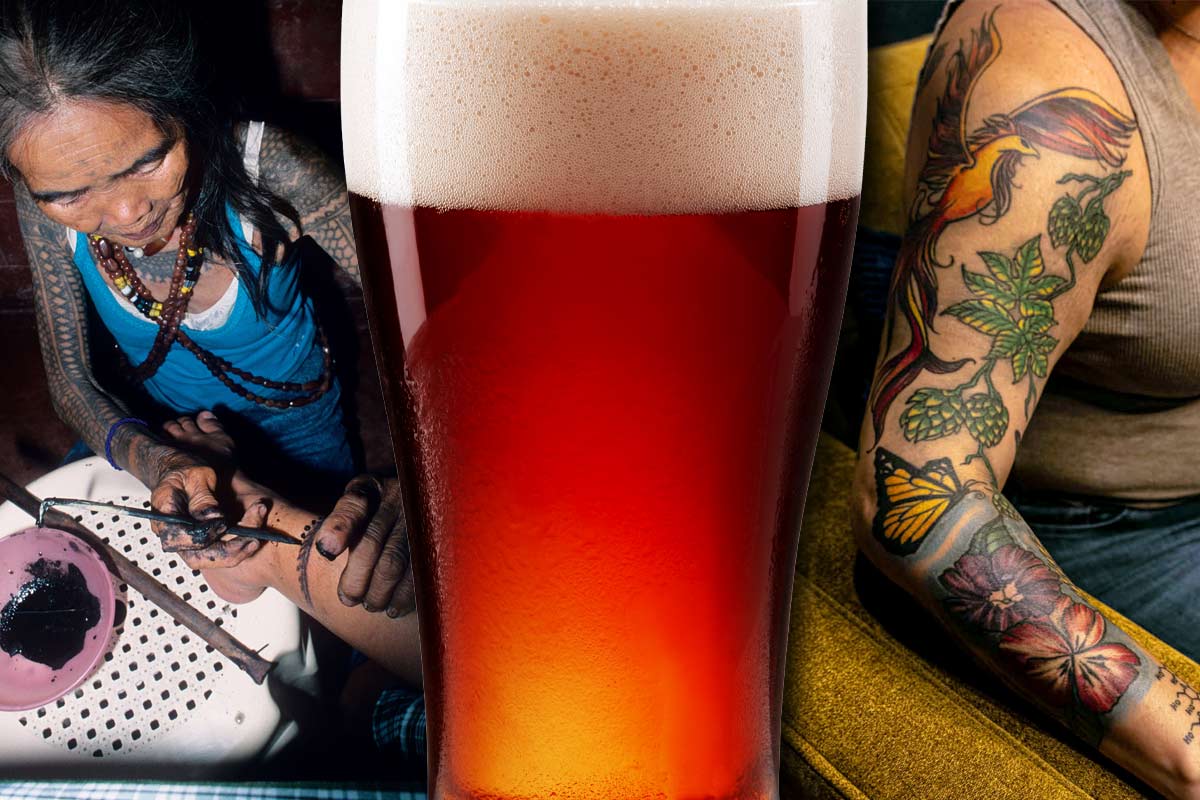
In 1899, the Japanese government enacted the Hokkaido Aborigine Protection Act, which effectively banned Ainu tattooing and sought to eradicate their traditional lifestyle. Similarly, in the Philippines and the Americas, missionary influence and colonial administrations often pathologized tattooing as "primitive" and restricted the production of traditional fermented beverages. Despite these systemic efforts at erasure, the mid-to-late 20th century saw a resurgence of interest in Indigenous sovereignty. By the early 21st century, a global movement toward cultural reclamation began to restore these practices to their rightful place in community life. Today, tattooing and fermentation are recognized not only as artisanal crafts but as acts of decolonization and resistance.
The Ainu of Northern Japan: The Hearth as a Sacred Nexus
For the Ainu people, the Indigenous inhabitants of Hokkaido, Sakhalin, and the Kuril Islands, the hearth (abe) serves as the physical and spiritual center of the home. This domestic space is the domain of Kamuy Fuchi, the hearth goddess, who oversees the most vital transformations in Ainu life. Historically, the connection between tattooing and fermentation among the Ainu was literal, facilitated by the very materials of the hearth.
Ainu women, who were the primary practitioners of both crafts, collected soot from the underside of earthenware cooking pots used for brewing and cooking. This soot was mixed with water and bark from the ash tree to create a deep, permanent pigment. The resulting tattoos, particularly the distinct markings around the lips and on the hands, were believed to provide protection against malevolent spirits and were required for a woman to enter the afterlife.
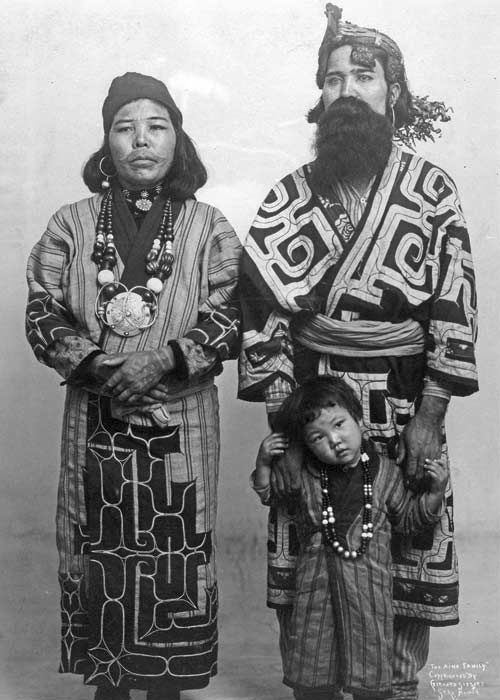
Simultaneously, the hearth was the site for the production of tonoto, a fermented beverage made from rice or millet. The brewing process was a highly ritualized task performed exclusively by women. The fermentation of tonoto was viewed as a living process under the protection of Kamuy Fuchi. When the brew was complete, it was offered to the kamuy (divine beings) during ceremonies. In this context, the soot on the skin and the drink in the bowl were both extensions of the hearth’s fire—one representing the internal nourishment of the community and the other an external shield of identity.
The Kalinga of the Philippines: Fermented Pigments and Social Status
In the rugged Cordillera mountain region of Luzon, the Kalinga people have maintained the tradition of batok, or hand-tapped tattooing, for generations. Here, the relationship between ink and fermentation manifests in the chemical composition of the pigment itself. Historically, Kalinga mambabatok (tattoo artists) utilized a mixture of soot and water, but in certain regions, sugarcane juice served as the primary carrier.
The inclusion of sugarcane juice introduced a biological element to the ink-making process. As the mixture rested, natural yeasts would begin to ferment the sugars, slightly altering the ink’s consistency and acidity. While the primary purpose of the ink was the permanent marking of the skin, the use of a fermentable medium highlighted the Kalinga’s deep integration of agricultural products into their ritual life.
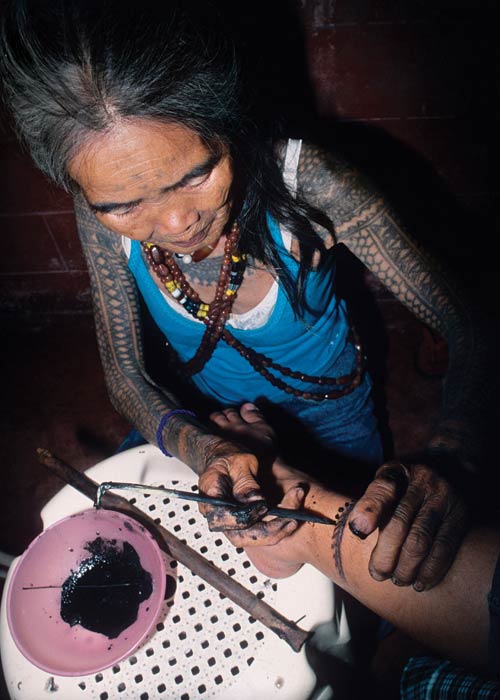
The tattoos themselves served as a complex social ledger. For men, batok was traditionally a mark of bravery, earned through success in warfare or headhunting—practices that have since transitioned into symbolic markers of leadership. For women, tattoos were considered "jewelry" of the highest order, signifying beauty and maturity. Master tattooist Whang-od Oggay, who at over 100 years old remains a global icon of the craft, has been instrumental in ensuring that the rhythmic tap of the gisi (tattooing tool) continues to echo in the village of Buscalan. The ritual space of tattooing is often accompanied by the consumption of tapuy (rice wine), further cementing the bond between the ink on the body and the fermented spirits that facilitate communal gathering.
The Makushi of Guyana: Tattoos as Charms for Fermentation
In the Guiana Shield of South America, the Makushi people demonstrate an even more direct functional link between tattooing and fermentation. Their culture is deeply rooted in the cultivation of cassava, which is processed into a variety of foods and beverages, most notably parakari. This complex cassava beer involves a dual fermentation process using both mold and yeast, a sophisticated biotechnological feat.
Anthropological records indicate that Makushi women historically received kansku markings—tattoos intended to act as charms to ensure the quality of their ferments. These tattoos were not merely decorative; they were believed to imbue the brewer with the spiritual capacity to produce a superior beverage. The motifs often depicted arthropods like bees or scorpions. The logic was sympathetic: a "bee" tattoo might ensure the drink was as sweet as honey, while a "scorpion" tattoo might give the brew a desirable "sting" or potency.
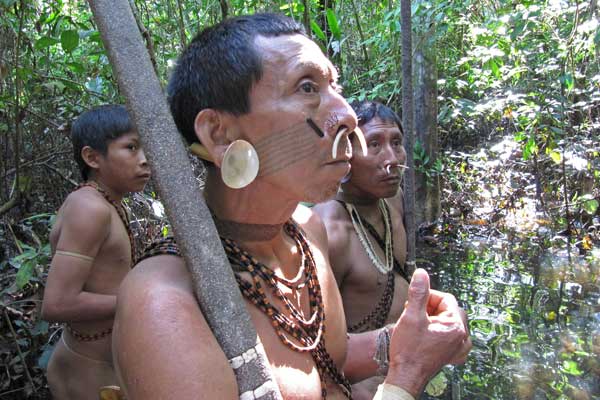
In the Makushi language, the word yekî possesses a dual meaning, referring both to the "sting" of an insect and the state of being intoxicated. According to Dr. Lars Krutak, a cultural anthropologist specializing in indigenous tattoos, these markings were so essential that a woman’s ability to serve a drink to a man was traditionally contingent upon her having the proper tattoos on her arms. This illustrates a world where the body’s markings were seen as active participants in the chemical and spiritual transformation of food.
Indigenous Epistemologies: Decolonization through Body Sovereignty
The parallels between tattooing and fermentation are perhaps best understood through the lens of Indigenous epistemology, particularly the concept of body sovereignty. In Hawaii, the practice of kākau (hand-tapped tattooing) is viewed as a way of inscribing one’s genealogy directly onto the skin. Dr. Lindsay Malu Kido, a scholar of Indigenous traditions, notes that these markings turn the body into a living record of ancestry.
This mirrors the Hawaiian relationship with poi, a fermented paste made from the taro plant (kalo). In Hawaiian cosmology, kalo is considered Hāloa, the elder brother of the Hawaiian people. Therefore, the act of fermenting and consuming kalo is an act of kinship and familial care. When viewed together, kākau and poi represent two sides of the same coin: one records the lineage externally, while the other sustains it internally.
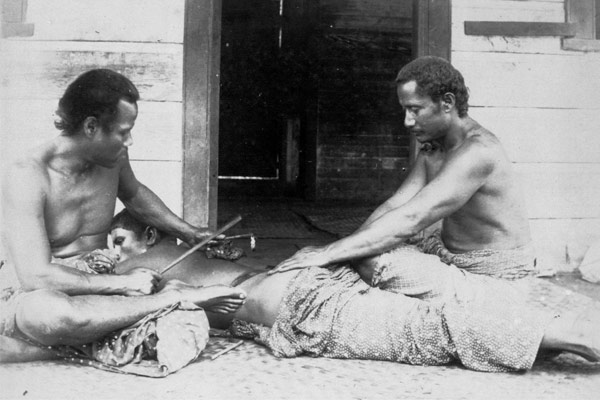
The revival of these practices in the 21st century is a significant political and cultural statement. "Reviving kākau is an act of decolonization," Dr. Kido asserts, "because it reclaims the body as a site of ancestry and authority." By returning to traditional methods of tattooing and fermentation, Indigenous communities are asserting their right to define their own identities outside of the frameworks imposed by colonial history.
Contemporary Implications: The Modern Craft Brewing Industry
In the modern era, the link between tattooing and fermentation has evolved from ancestral protocol to a prominent feature of the craft brewing subculture. For many contemporary brewers, tattoos serve as a visual manifestation of their dedication to the craft of transformation. While these modern applications lack the specific mythological requirements of Ainu or Makushi traditions, they retain the core concept of using ink to mark a life-altering relationship with fermentation.
Data from the craft beer industry suggests a high correlation between professional brewing and tattooing. For many in the field, these markings represent personal milestones, scientific pride, or emotional resilience.
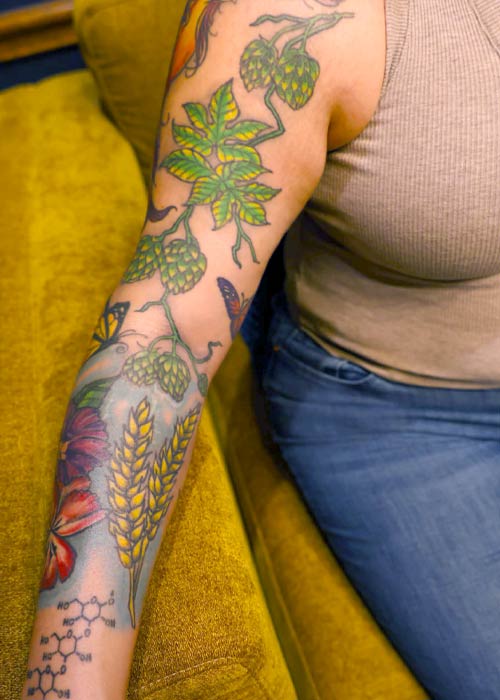
- Case Study: Sandra Murphy. After the loss of her daughter, Sandra Murphy, owner of Murphy’s Law Brewery in Texas, utilized both brewing and tattooing as tools for healing. Her sleeve tattoo incorporates the chemical formula for ale yeast cell walls alongside wheat, barley, and butterflies—a symbolic narrative of growth, transformation, and memory.
- Case Study: Rachael Engel. For Rachael Engel, a brewer at Sound2Summit Brewery in Washington, tattooing became a way to express her identity following her transition. Her "hop sleeve" represents a personal flourishing, mirroring the upward growth of a hop bine toward the light.
These contemporary examples demonstrate that even in a secular, industrialized context, the "shared grammar of transformation" remains potent. The tattoo becomes a permanent record of a professional and personal journey that is defined by the ephemeral, living process of fermentation.
Conclusion: Technologies of Continuity
The study of tattooing and fermentation across diverse cultures reveals that these practices are far more than mere hobbies or survival techniques. They are "technologies of continuity"—methods by which human beings bridge the gap between the past and the future. Whether it is the Ainu woman using hearth soot to honor a goddess, the Kalinga elder marking a warrior’s status, or the modern brewer tattooing a yeast strain onto their forearm, the impulse remains the same: to make the internal external and to give permanent form to the transformative cycles of life.
As global interest in traditional fermentation and ancestral tattooing continues to grow, these practices offer a roadmap for reclaiming identity in an increasingly homogenized world. They remind us that the most profound changes—whether on the skin or in the glass—require time, care, and a deep respect for the materials of the earth. Ink marks the body, and fermentation marks the food, but together, they mark the enduring spirit of human culture.