admin
admin
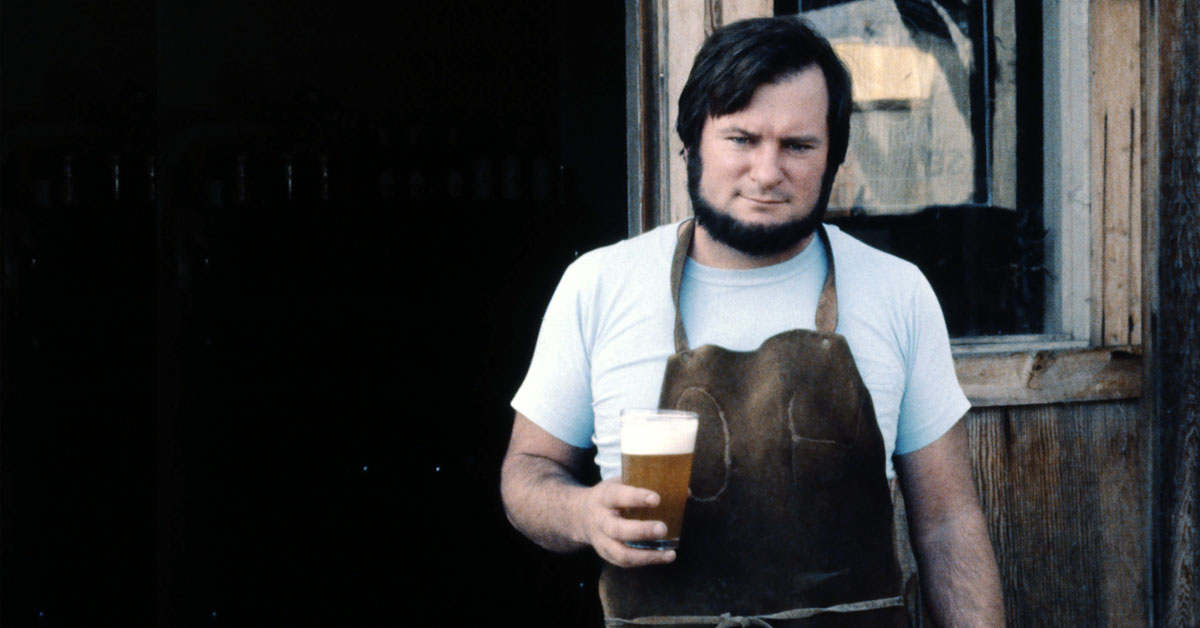
Jack McAuliffe, the visionary founder of New Albion Brewing Company and the man widely credited with sparking the modern American craft beer revolution, passed away in July at the age of 80. His death marks the end of an era for an industry that has grown from a single, makeshift warehouse operation in Sonoma, California, to a multi-billion-dollar economic engine comprising nearly 10,000 breweries across the United States. McAuliffe’s journey from a Navy technician with a taste for British ales to a pioneer of independent brewing serves as the definitive origin story for the global microbrewing phenomenon.
The American beer landscape of the 1970s was a desert of homogeneity. Following the repeal of Prohibition in 1933, the United States brewing industry underwent decades of intense consolidation. By the mid-1970s, the market was dominated by a handful of industrial giants producing nearly identical light lagers designed for mass-market appeal and long shelf lives. In this climate, the notion of a "small" brewery was not just a business risk; it was a concept that had effectively been erased from the American consciousness. McAuliffe, however, saw this lack of variety not as a market reality to be accepted, but as a vacuum to be filled.
The Scottish Influence and the Genesis of New Albion
The seeds of the craft beer movement were sown in the 1960s while McAuliffe was serving in the United States Navy. Stationed at a submarine base in Dunoon, Scotland, he was introduced to the rich, complex profiles of traditional British ales. Unlike the thin, fizzy lagers prevalent in his home country, the porters, stouts, and pale ales of the United Kingdom offered deep malt profiles and assertive hop bitterness. This exposure fundamentally altered his palate and his understanding of what beer could be.
Upon returning to California and settling in the San Francisco Bay Area, McAuliffe found himself unable to find the flavors he had grown to love abroad. Like many pioneers of the movement, he turned to homebrewing. In the early 1970s, homebrewing was a niche, technically illegal hobby (it would not be federally legalized until 1978). Working in a basement, McAuliffe applied his naval engineering skills to refine his techniques, eventually reaching a conclusion that would change the course of American culinary history: if he could not buy the beer he wanted, he would build a brewery to make it.
In 1976, McAuliffe partnered with Jane Zimmerman and Suzy Stern to launch New Albion Brewing Company. The venture was a study in resourcefulness and "bootstrap" entrepreneurship. With only a few thousand dollars in pooled capital, the trio rented a modest warehouse in Sonoma. Lacking the funds to purchase professional brewing equipment—which at the time was only manufactured for industrial-scale operations—McAuliffe leveraged his mechanical aptitude to build a brewery from scratch. He repurposed stainless steel dairy equipment and utilized 55-gallon Coca-Cola syrup drums as fermentation vessels. This DIY ethos became the blueprint for the thousands of "nanobreweries" that would follow decades later.
A Technical Revolution: The Rise of the Cascade Hop
New Albion was not merely significant for its size; it was revolutionary for its ingredients. At a time when industrial brewers used adjuncts like corn and rice to lighten the body and reduce the cost of beer, McAuliffe insisted on a "reinheitsgebot" style approach, using only malted barley, water, yeast, and hops.
Most notably, New Albion’s use of the Cascade hop variety set a new sensory standard for American beer. Developed by the USDA breeding program at Oregon State University and released in 1972, the Cascade hop was initially rejected by major brewers who found its intense floral, piney, and grapefruit-like aromas too pungent for mass-market lagers. McAuliffe embraced these characteristics, using Cascade hops to define his pale ale.
This decision had a direct lineage to the success of Sierra Nevada Brewing Company. Ken Grossman, the founder of Sierra Nevada, visited New Albion in the late 1970s and was inspired by McAuliffe’s model. When Sierra Nevada Pale Ale debuted in 1980, it featured the Cascade hop as its centerpiece. Today, the "West Coast Pale Ale" style, defined by that specific citrusy bitterness, remains one of the most popular and influential beer styles in the world.
Chronology of the Microbrewing Evolution
The timeline of McAuliffe’s influence reveals a rapid transformation of the American palate and economy:
- 1976: New Albion Brewing Company is founded in Sonoma, CA, becoming the first "microbrewery" in the U.S. since Prohibition.
- 1978: President Jimmy Carter signs H.R. 1337, which includes an amendment legalizing homebrewing at the federal level, expanding the talent pool for future commercial brewers.
- 1980: Inspired by New Albion, Ken Grossman opens Sierra Nevada Brewing in Chico, CA.
- 1982: Despite critical acclaim and a devoted local following, New Albion ceases operations due to financial constraints and a lack of distribution infrastructure.
- 1983: The equipment from New Albion is purchased by the founders of Hopland Brewery (later Mendocino Brewing Company), which becomes California’s first brewpub.
- 1984: Jim Koch founds the Boston Beer Company, bringing craft beer (Samuel Adams Boston Lager) to a national audience.
- 2024: The U.S. boasts over 9,800 craft breweries, contributing over $70 billion annually to the national economy.
Industry Impact and the "New Albion Model"
The closure of New Albion in 1982 is often viewed not as a failure, but as a successful proof of concept. McAuliffe demonstrated that a small-scale brewery could produce a superior product and find a market among consumers tired of industrial options. Jim Koch, co-founder of Boston Beer Company, noted that McAuliffe’s primary contribution was the destruction of the "impossible" barrier. Before New Albion, the capital requirements and regulatory hurdles were thought to be insurmountable for an individual. McAuliffe proved that with engineering ingenuity and a clear vision, a person could compete with the giants.
Beyond the liquid in the glass, McAuliffe pioneered the concept of "adaptive reuse." By transforming a shabby agricultural warehouse into a production facility, he established a precedent for the brewery as a tool for urban and rural revitalization. Today, the craft brewing industry is a leader in repurposing defunct factories, firestations, and schools, often serving as the "anchor tenant" that spurs economic development in neglected neighborhoods.
Personal Reflections and the "American Original"
Those who knew McAuliffe describe a man who was as complex as the stouts he brewed. Maureen Ogle, a prominent beer historian and author of Ambitious Brew, recalls McAuliffe as a brilliant, if sometimes prickly, iconoclast. "He did not suffer fools gladly," Ogle remarked, noting his razor-sharp wit and a personality that was "mostly bored by people" but deeply engaged with the mechanics of creation.
McAuliffe’s refusal to compromise on his vision, even when it led to the eventual dissolution of his company, cemented his status as a "brewer’s brewer." He was less interested in the marketing of the product than he was in the integrity of the process. This uncompromising nature is often cited as the "soul" of the craft movement—a preference for quality and character over pure profit maximization.
Data and Current Market Implications
The legacy Jack McAuliffe left behind is measurable in more than just sentiment. According to data from the Brewers Association, the craft brewing industry now accounts for roughly 13% of the total beer market by volume in the United States and nearly 25% by dollar value.
The "New Albion Model" of local, small-batch production has also become a major employer. The industry supports more than 400,000 jobs, including direct brewery employees and roles in agriculture, manufacturing, and distribution. The shift toward hop-forward beers, pioneered by McAuliffe’s use of Cascade hops, has also turned the United States into the world’s leading producer of aroma hops, with the Pacific Northwest (Washington, Oregon, and Idaho) dominating global supply.
Conclusion: A Lasting Roadmap
The death of Jack McAuliffe serves as a moment of reflection for an industry currently navigating post-pandemic economic shifts and changing consumer preferences. While the market has become increasingly crowded and competitive, the core principles McAuliffe established in 1976—resourcefulness, a commitment to flavor, and a willingness to "brew against the grain"—remain the bedrock of the craft identity.
McAuliffe’s life was a testament to the power of a single, well-executed idea. He did not just build a brewery; he built a roadmap that thousands of others would use to turn their own basement passions into viable professions. As the industry continues to evolve, the image of McAuliffe in a Sonoma warehouse, welding together Coca-Cola drums to create a better pint of ale, remains the North Star for independent brewers worldwide. The advice offered by those who carry his torch is simple: to honor his memory, one should support their local independent brewery and appreciate the diversity of flavor that was once thought impossible to achieve.