admin
admin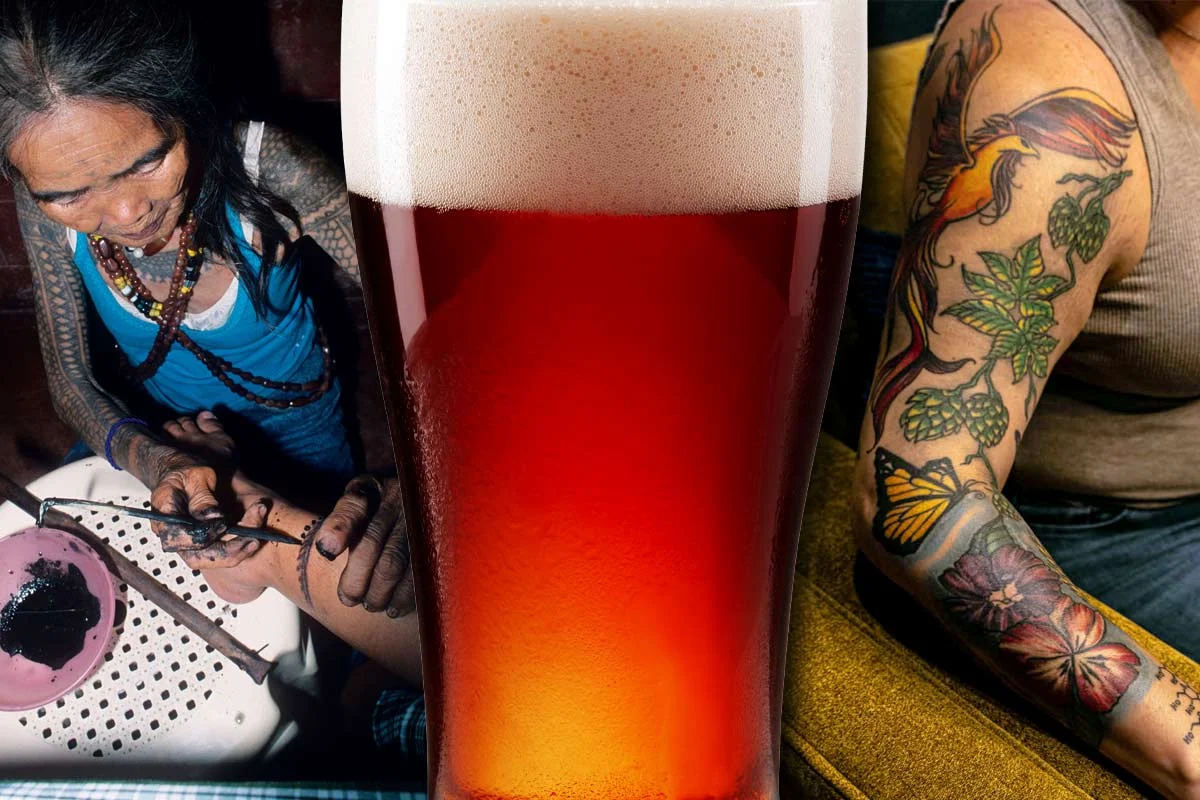
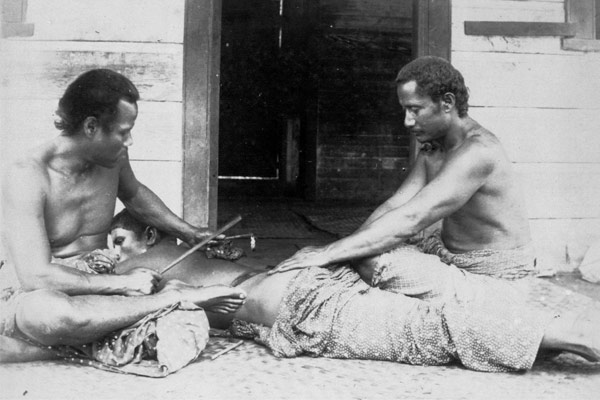
Across the global landscape of human history, tattooing and fermentation have existed as parallel practices of profound transformation, representing much more than aesthetic modification or food preservation. While seemingly disparate, these two crafts share a foundational kinship rooted in the manipulation of raw materials to produce something permanent, sacred, and communal. Tattooing inscribes identity, history, and spiritual protection onto the human canvas, while fermentation utilizes microbial life to nourish, intoxicate, and bind communities through shared ritual. Both practices serve as technologies of continuity, allowing societies to maintain a living dialogue with their land, their ancestors, and their future generations.
The Grammar of Transformation: A Shared Cultural Logic
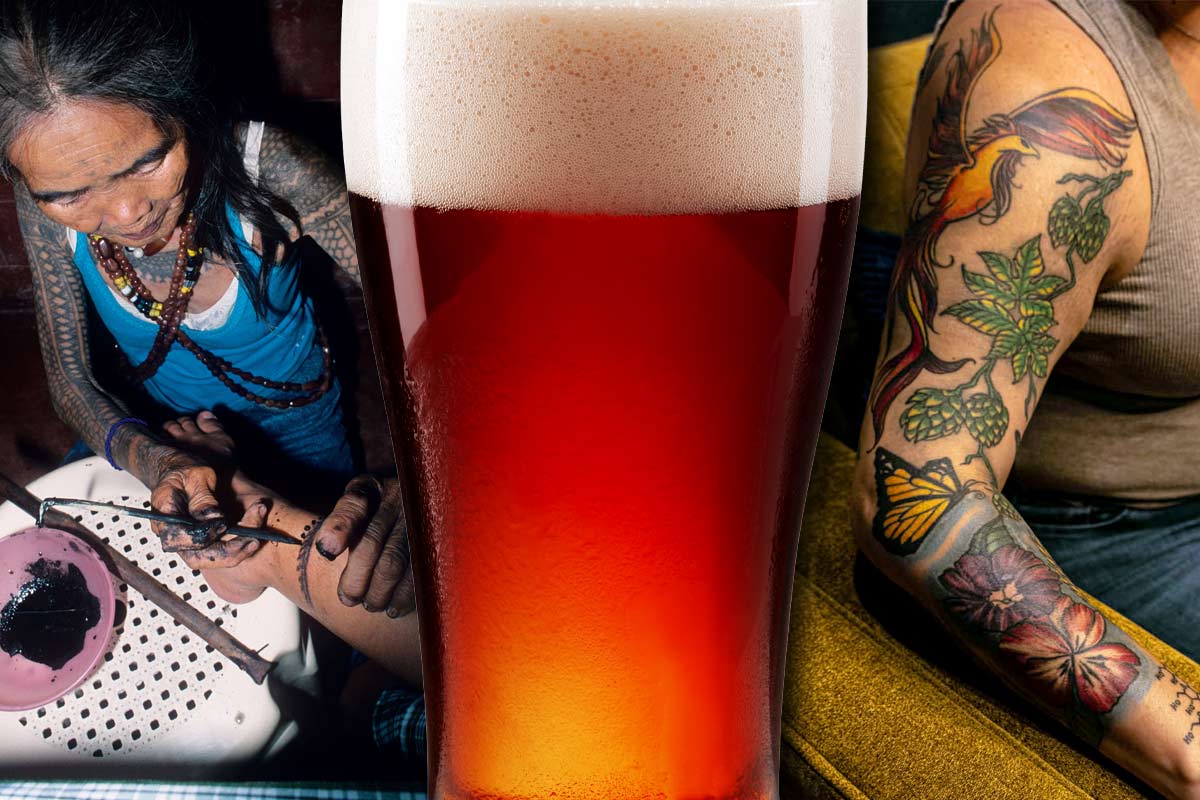
The relationship between "ink and drink" is not merely metaphorical; in many Indigenous cultures, the two are physically and cosmologically intertwined. In northern Japan, the Ainu people utilized soot from brewing vessels to create tattoo pigments, linking the act of fermentation directly to the skin. In the Philippines, the Kalinga used fermented sugarcane juice as a carrier for tattoo ink, while in the Amazonian basin, the Makushi applied tattoos as spiritual charms intended to influence the quality of their cassava beer.
These intersections suggest a shared grammar of transformation. In both tattooing and fermentation, a "raw" state—unmarked skin or raw starch—is subjected to a controlled process of change. This change is often mediated by a specialist, such as a master brewer or a traditional tattooist, and is governed by strict social and spiritual protocols. The resulting "product"—a tattooed body or a fermented beverage—functions as a vessel for cultural memory.
Historical Suppression and the Chronology of Survival
To understand the current state of these practices, one must examine the historical pressures that nearly erased them. For many Indigenous groups, the 19th and 20th centuries were marked by colonial policies designed to "civilize" and assimilate native populations, often by outlawing the very rituals that defined their identity.
In Japan, the Meiji government’s 1871 ban on Ainu tattooing was a pivotal moment in the suppression of Indigenous culture. This was followed by the 1899 Hokkaido Aborigine Protection Act, which further marginalized Ainu customs under the guise of welfare. Similarly, in the Philippines and Guyana, missionary influence during the colonial era labeled tattooing as "heathen" or "primitive," leading to a significant decline in these practices by the mid-20th century.
However, the late 20th and early 21st centuries have seen a global resurgence. The Ainu were officially recognized as an Indigenous people of Japan in 2019, sparking a renewed interest in traditional arts. In the Philippines, the rise of "heritage tourism" has centered around the Cordillera region, where the last traditional practitioners have become symbols of cultural resilience. This chronology of suppression followed by revival highlights the enduring power of ink and drink as tools of resistance and sovereignty.
The Ainu of Northern Japan: The Sacred Hearth
For the Ainu of Hokkaido, Sakhalin, and the Kuril Islands, the domestic hearth served as the physical and spiritual center of the universe. This space was governed by Kamuy Fuchi, the hearth goddess, an elder deity who offered protection to the household. Both tattooing and brewing were conducted under her watchful eye, making them inherently sacred acts.
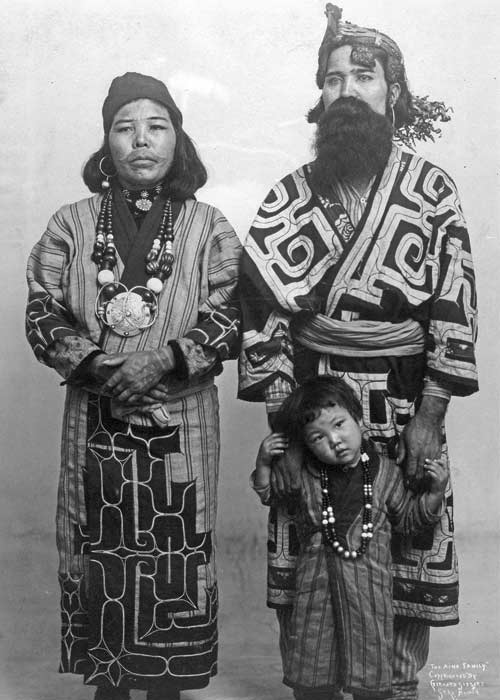
Ainu tattooing, or nuye, was a gendered practice performed by women on women. The process was arduous: a tattooing knife (makiri) was used to make small incisions, into which soot was rubbed. Crucially, this soot was collected from the bottom of earthenware pots used for cooking and brewing. By using the byproduct of the hearth to mark the body, the Ainu created a physical link between the individual and the divine fire of Kamuy Fuchi.
Parallel to this was the production of tonoto, a fermented beverage made from rice or millet. The brewing process was the exclusive domain of women, who would offer prayers to the kamuy (divine spirits) throughout the fermentation cycle. The drink was not intended for casual consumption but was a vital component of the iomante (spirit sending) ceremonies. In this context, both the tattoo and the beer served as mediators between the human and spirit worlds, sustained by the labor and spiritual authority of women.
The Kalinga of the Philippines: Chemistry and Prestige
In the rugged Cordillera mountains of Luzon, the Kalinga people developed batok, a hand-tapped tattoo tradition that serves as a social map of the wearer’s life. Historically, for men, tattoos were earned through acts of valor in warfare; for women, they were marks of beauty and maturity.
The intersection with fermentation in Kalinga culture is found in the chemical composition of the ink. Traditional mambatok (tattoo artists) used a mixture of soot and water, but in certain regions, sugarcane juice was utilized as a carrier. When sugarcane juice is mixed with soot and left to rest, a natural fermentation process begins, converting sugars into alcohol and acetic acid. While the primary function of the ink was pigmentation, the inclusion of a fermenting agent reflects a sophisticated understanding of organic chemistry and a desire to imbue the ink with the "life force" of the plant.
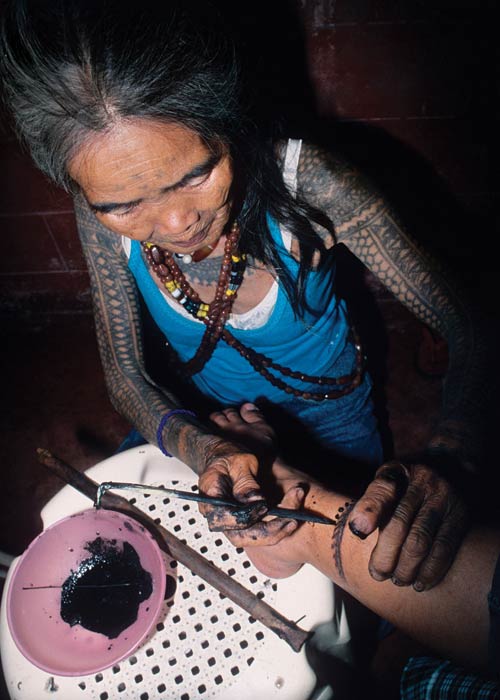
Apo Whang-od Oggay, who at over 100 years old is the most famous living mambatok, continues to use these traditional methods in the village of Buscalan. Her grand-niece, Grace Palicas, who is being trained to carry on the lineage, notes that while the social requirements for tattoos have shifted—moving from headhunting prestige to cultural pride—the physical process remains a ritual of transformation. The consumption of fermented beverages like tapuy (rice wine) remains a staple of the celebrations that often follow the completion of a major tattoo.
The Makushi of Guyana: Tattoos as Brewing Charms
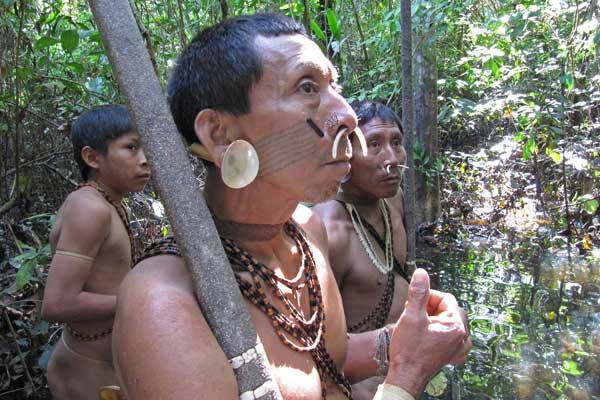
In the savannas of the Guiana Shield, the Makushi people illustrate perhaps the most direct functional link between tattooing and fermentation. Their staple food, cassava, requires complex processing to remove toxins and convert starches into sugars for brewing parakari, a potent cassava beer.
The Makushi practiced kansku, a form of tattooing where specific motifs were applied to the arms and jaws of women. These were not merely decorative; they were "brewing charms." The patterns often depicted stinging insects like bees or scorpions. The belief was that these tattoos would "sting" the brew, giving it a desired sharpness or "kick" (yekî). In the Makushi language, yekî also refers to the state of intoxication, further blurring the line between the physical mark on the skin and the physiological effect of the drink.
Dr. Lars Krutak, a cultural anthropologist who has studied these traditions extensively, notes that a woman’s ability to produce high-quality parakari was intrinsically linked to her tattoos. A woman without the proper markings was often deemed unfit to serve drinks to men during formal gatherings. Here, the tattoo acts as a certification of skill and a spiritual conduit that ensures the success of the fermentation process.
Hawaiian Epistemology: Genealogy and Body Sovereignty
In Hawaii, the practices of kākau (tattooing) and the fermentation of poi (taro) provide a framework for understanding Indigenous body sovereignty. Both are viewed through the lens of moʻokūʻauhau, or genealogy.
Taro, or kalo, is considered the elder brother of the Hawaiian people, stemming from the ancestral figure Hāloa. When Hawaiians ferment kalo to make poi, they are not just preparing food; they are engaging in an act of kinship. Similarly, kākau is a way of wearing one’s genealogy on the skin. Dr. Lindsay Malu Kido, a scholar of Indigenous body sovereignty, argues that the revival of these practices is an essential component of decolonization. By reclaiming the traditional methods of marking the body and nourishing the community, Native Hawaiians reassert their authority over their own physical and cultural identities, independent of Western moral frameworks.
Contemporary Echoes and the Craft Brewing Industry
The ancient link between ink and drink finds a modern, secular echo in the contemporary craft brewing industry. In taprooms and brewhouses across the world, tattoos are a ubiquitous part of the culture, serving as a visual language for brewers to express their dedication to the craft.
Data from the brewing industry suggests a high correlation between craft professionals and body art. For many, these tattoos are scientific or botanical in nature—featuring hop bines, yeast cells, or chemical formulas for alpha acids. However, for others, the tattoos represent deep personal transformations.
Sandra Murphy, owner of Murphy’s Law Brewery in Texas, utilized tattooing as a means of processing the loss of her daughter. Her "brewery sleeve" integrates the chemical structure of yeast cell walls with birth flowers and butterflies, symbolizing a journey from grief to a new identity as a brewer. Similarly, Rachael Engel of Sound2Summit Brewery notes that her hop-themed tattoos were a key part of her journey in realizing her identity as a transgender woman. In these modern contexts, the tattoo remains a tool for navigating change, much like the ritual markings of the Ainu or Kalinga.
Broader Impact and Implications
The study of these intersecting traditions offers a vital perspective on human resilience. The fact that tattooing and fermentation have survived centuries of suppression suggests that they fulfill a fundamental human need for connection and transformation.
From a sociological perspective, the "ink and drink" connection highlights the importance of "embodied knowledge"—skills and traditions that are not just learned intellectually but are lived through the body. Whether it is the rhythmic tap of a tattoo mallet or the careful monitoring of a fermenting mash, these practices require a sensory engagement that anchors the individual in their community.
In an increasingly digital and homogenized world, the resurgence of traditional tattooing and craft fermentation represents a move toward the "authentic" and the "local." These practices remind us that identity is something that is cultivated over time, through care, relationship to the land, and the willingness to undergo transformation. Ink marks the body and fermentation marks the food, but together, they mark the enduring spirit of human culture.