admin
admin
The craft beer industry, which underwent a foundational revolution during the 1980s and 1990s, has entered a new era of radical experimentation defined by the emergence of the smoothie sour. As the market reached a point of saturation over the last decade, with thousands of independent breweries competing for shelf space and tap handles, the necessity for differentiation became the primary driver of innovation. Brewers, once satisfied with perfecting the India Pale Ale (IPA) or the traditional Lager, began to explore the boundaries of fermentation by incorporating massive quantities of unfermented fruit purées, culinary adjuncts, and thickeners. This movement has given birth to the "smoothie sour," a style that challenges traditional definitions of beer while simultaneously expanding the demographic reach of the craft beverage sector.
The Evolutionary Context of Fruited Ales
The lineage of the smoothie sour can be traced back to traditional European souring methods, specifically the Gose of Leipzig and the Berliner Weisse. These styles utilized Lactobacillus to create a tart, refreshing profile, often tempered by a small addition of fruit syrup at the point of service. However, the American craft movement of the 2010s accelerated this concept. The initial "kettle sour" craze allowed breweries to produce acidic beers quickly, without the years-long wait required for barrel-aged wild ales.
By 2015, the "fruited sour" had become a staple in taprooms across the United States. As consumer palates grew accustomed to tartness, brewers began to push the "adjunct" envelope. The transition from a clear, slightly tart ale to a thick, opaque, fruit-laden "smoothie" was a response to a shifting consumer base that increasingly prioritized bold, recognizable flavors over the subtle nuances of malt and hops.
Case Studies in Innovation: From Pennsylvania to Texas
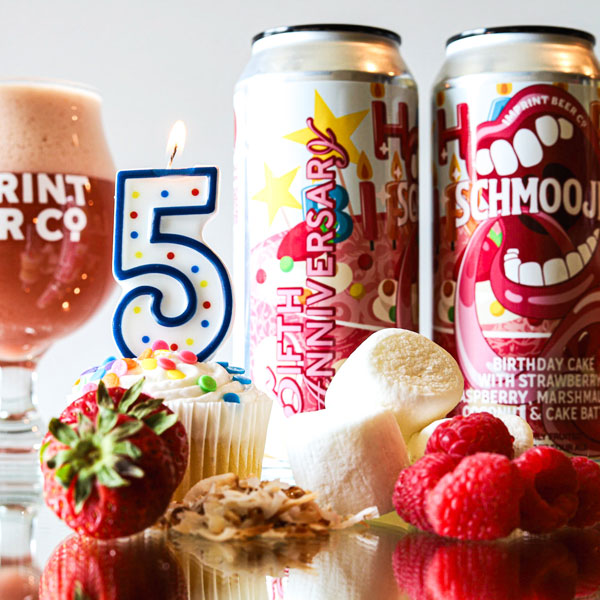
The development of the smoothie sour was not a centralized movement but rather a simultaneous evolution among several key pioneers. In Hatfield, Pennsylvania, Imprint Beer Company emerged as a significant figure in this specialized niche. According to co-founder and brewer Ryan Diehl, the brewery’s pivot toward the style occurred during a pivotal event that served as their "coming out party." The introduction of "Puffsicle"—a beer brewed with raspberry, blueberry, pineapple, and marshmallow—marked a departure from their standard portfolio.
The success of Puffsicle led to the creation of the "Schmoojee" line, which has since become a benchmark for the style. These beers frequently incorporate ingredients typically reserved for the pastry kitchen, such as cheesecake, white chocolate, and fudge. The production process at Imprint involves a dedicated eight- to 11-day fermentation period for the base beer before the addition of the souring agent and the intensive adjunct package. This methodical approach ensures that despite the high fruit content, the beverage maintains a consistent profile.
Similarly, in Dallas, Texas, 903 Brewers adopted the smoothie sour as a means of corporate reinvention. After six years of operation, owner Jeremy Roberts observed a significant shift in consumer behavior, noting the rapid rise of ready-to-drink (RTD) cocktails and flavored malt beverages. Industry data from the Brewers Association has long suggested that "beyond beer" categories—including hard seltzers and canned cocktails—have been siphoning off traditional beer drinkers. To counter this, 903 Brewers launched their "Slushy" line, beginning with a cherry limeade variant inspired by regional drive-in flavors. The market response was immediate, leading to more experimental offerings such as the "Blueberry Donut Slushy" and "Dad’s Day Out Slushy," the latter featuring edible glitter to emphasize the "fun" aspect of the brand.
Technical Sophistication and Safety Protocols
While smoothie sours are often dismissed by purists as "sweet bombs," the technical requirements for producing them are rigorous. Oozlefinch Beers & Blending in Fort Monroe, Virginia, has focused heavily on the science of mouthfeel and stability. Head brewer Logan Morris notes that the brewery uses specific yeast strains designed to produce lactic acid efficiently, and in some instances, charcoal is utilized as a thickening agent to achieve the desired viscosity.
One of the most critical advancements in the production of smoothie sours is the process of "back-sweetening" and pasteurization. Because these beers contain high amounts of residual sugars from fruit purées, they are prone to refermentation inside the can. If left untreated, the carbon dioxide produced by active yeast consuming the fruit sugars can cause cans to rupture or explode—a significant liability for small breweries. To mitigate this, Oozlefinch and other leaders in the space have invested in pasteurization equipment, which uses heat to kill any remaining yeast, ensuring the product is shelf-stable and safe for the consumer.
In Palmetto, Florida, Corporate Ladder Brewing has focused on the "sensory experience" of the style. Co-owners Blake Kleppe and James Herrholz emphasize a culinary-inspired approach, where ingredient sourcing is treated with the same gravity as hop selection in an IPA. Their "Dessert Station" series seeks to replicate specific flavor profiles, such as "Pumpkin Pie A La Mode" or "Laffy Taffy," through the precise conditioning of beer on tangerine, vanilla beans, and caramel.
Demographic Expansion and Market Implications
The rise of the smoothie sour represents more than just a change in flavor profiles; it signifies a strategic expansion of the craft beer audience. Industry analysts have noted that these fruit-forward, low-bitterness beverages appeal to consumers who traditionally avoid beer due to the flavor of hops or malt. By bridging the gap between the culinary world and the brewing world, breweries are tapping into a younger, more diverse demographic that values "Instagrammable" aesthetics and novel experiences.
The economic impact of these beers is also substantial. Smoothie sours often command premium price points—sometimes exceeding $25 per four-pack—due to the high cost of the fruit purées and the specialized labor involved. Furthermore, the release of these beers has become an "event" in itself. Devotees often travel significant distances or wait in long lines for limited-edition drops, creating a secondary market and driving brand loyalty in a way that traditional flagship beers rarely do.
The Global Network of Smoothie Sour Producers
The community of smoothie sour brewers is characterized by a high degree of collaboration, which participants describe as a "brotherhood" or "sisterhood." This network extends across the United States, including notable producers such as:
- Drekker Brewing Company (Fargo, ND): Known for their "Braaaaaaaains" and "Chonk" series, which helped define the heavy-viscosity fruit profile.
- Mortalis Brewing Company (Avon, NY): Famous for their "Hydra" series, which often features complex fruit combinations.
- 450 North Brewing Company (Columbus, IN): A pioneer in the "Slushy" movement that helped popularize the aesthetic of the style.
- The Answer Brewpub (Richmond, VA): Renowned for their "Joose" line, which utilizes high-quality fruit infusions.
These breweries frequently collaborate on recipes, sharing technical data regarding fruit ratios and stabilization methods. This collaborative spirit has helped the style evolve from a fleeting trend into a recognized, albeit unofficial, sub-category of the craft beer world.
Future Outlook and Industry Stability
As the smoothie sour enters its second decade of existence, it has moved past the "fad" stage to become a permanent fixture in the craft beer ecosystem. While critics continue to debate whether these beverages should technically be classified as "beer"—given that the fruit content sometimes rivals the malt content—the commercial reality is that they provide a vital revenue stream for small and independent breweries.
The focus for the future of the style appears to be on further refining stability and exploring even more complex flavor matrices. With the integration of advanced pasteurization and the sourcing of exotic fruits from around the globe, the smoothie sour is likely to continue its trajectory as a leading edge of brewing innovation.
For many in the industry, the debate over definitions is secondary to the goal of consumer satisfaction. As Blake Kleppe of Corporate Ladder Brewing suggests, the ultimate objective is to provide a wide variety of flavors that turn new drinkers on to the possibilities of fermented beverages. Whether through a traditional lager or a marshmallow-infused fruit slushy, the modern brewery’s mission has shifted toward inclusivity and the constant pursuit of the "new." In an increasingly competitive beverage market, the ability to adapt and "tinker" with the proverbial wall of ingredients may be the key to long-term survival for America’s small and independent brewers.