admin
The maritime industry has long been defined by a specific brand of maximalism, characterized by soaring multi-story atriums, neon-lit casinos, and the ornate, often theatrical interiors typical of mass-market cruise liners. However, a significant shift in nautical aesthetics has emerged over the last decade, led primarily by Viking’s commitment to Scandinavian modernism. By translating the "New Nordic" movement to the high seas, Viking has challenged the traditional spatial constraints of ship design, replacing oversized grandeur with light-filled spaces, pale woods, and a residential sense of calm that mirrors the comforts of a high-end home rather than a floating resort.
The Strategic Shift from River to Ocean Luxury
To understand the current design landscape of Viking’s fleet, it is necessary to examine the company’s trajectory. Founded in 1997 by Torstein Hagen, Viking initially revolutionized river cruising by offering a streamlined, culturally focused experience across Europe’s waterways. When the company announced its expansion into ocean cruising in 2013, the primary challenge was maintaining the intimacy of a river longship on a vessel nearly ten times the size.
The debut of the Viking Star in 2015 marked a turning point in maritime architecture. Unlike its competitors, which often utilize different designers for various public spaces, Viking employed a singular design vision across its entire fleet. This consistency was spearheaded by Richard Riveire, founding principal of Rottet Studio, who sought to eliminate the "visual noise" associated with traditional cruising. By 2024, Viking’s ocean fleet has grown to include more than ten sister ships, all adhering to a strict design DNA that prioritizes the "Thinking Person’s Cruise"—a demographic that values quietude, history, and understated elegance over traditional shipboard entertainment.

The Five Pillars of Viking’s Design Philosophy
The transition from a static visual style to a functional living environment is anchored by five underlying principles identified by Riveire and his team: residential modernism, nature, craft, heritage, and exploration. This framework allows the ships to maintain a cohesive identity while navigating diverse global environments, from the Mediterranean to the Antarctic.
Residential Modernism and the Cocoon Principle
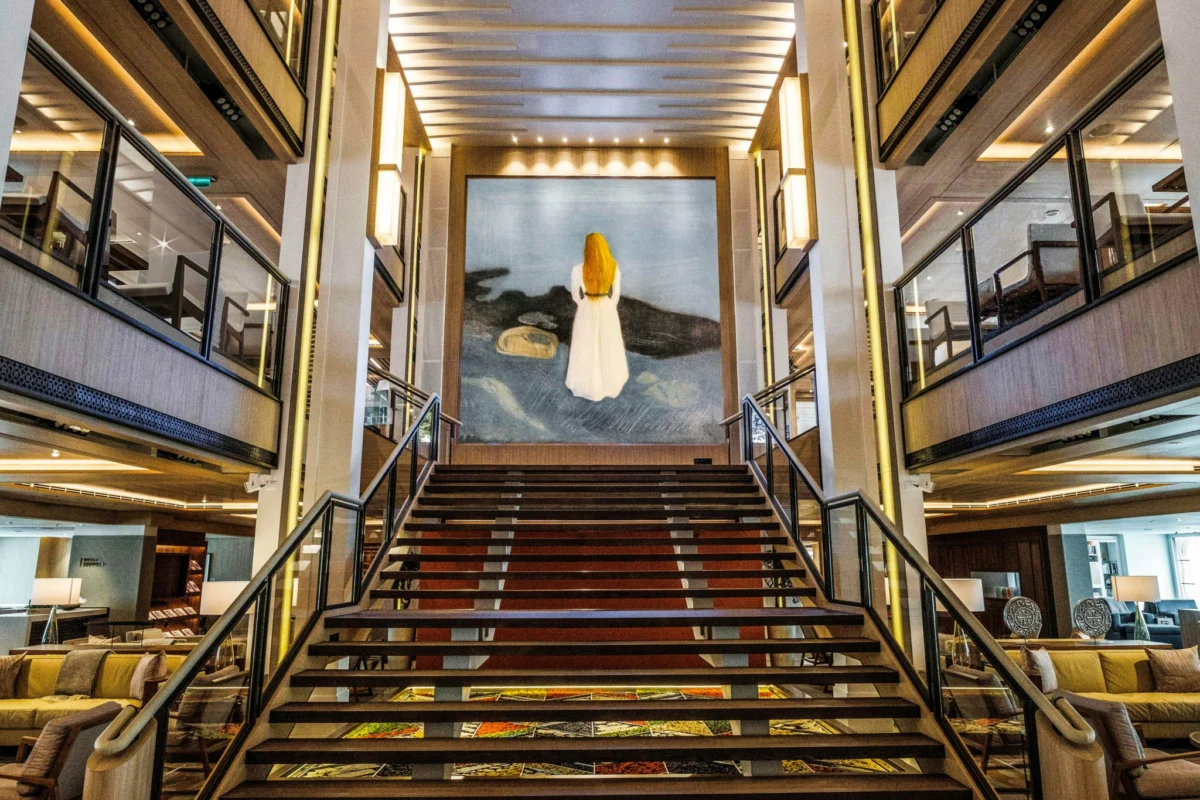
At the heart of the Viking experience is "residential modernism," an approach that treats ship cabins as staterooms and public areas as living rooms. Riveire describes this as a "house-within-a-house" concept, or the "cocoon" principle. In practice, this means avoiding the cavernous, cold feel of large maritime spaces. Instead, the design team uses furniture groupings, low-slung profiles, and carefully proportioned partitions to create intimate nooks even within large atriums. This approach ensures that the ship provides a serene environment that does not constantly compete for the passenger’s attention.

Integration of Nature and Biophilic Elements
Scandinavian design is inextricably linked to the natural world. On Viking ships, this manifests through biophilic design—the practice of connecting building occupants more closely to nature. The interiors utilize a palette of light birch and oak, natural stone, and woven textiles. Sensory details further enhance this connection; in public restrooms, guests may hear the subtle sound of birds chirping, while spa areas are decorated with birch tree branches and floor-to-ceiling forest wallpaper. This integration serves to blur the line between the interior luxury of the ship and the rugged landscapes of the destinations it visits.
Honoring Heritage and Craftsmanship
The "New Nordic" aesthetic is not merely a modern trend but a continuation of centuries of craftsmanship. Viking’s interiors serve as a gallery for regional heritage. This includes original works by celebrated Norwegian painter Edvard Munch located in the atrium stairwells, as well as textiles by Dutch designer Hella Jongerius. Functional objects also carry historical weight, such as the use of traditional Norwegian Marius blankets in staterooms—a reference to a geometric knitting pattern that has been a staple of Norwegian culture since the 1950s. By incorporating tabletop accessories by Finnish architect Alvar Aalto and woven leather lounge chairs, the ships pay homage to the "Golden Age" of Scandinavian design while remaining contemporary.

Engineering Calm: The Role of Acoustics and Hidden Technology
A significant component of the Scandinavian "calm" is the management of invisible factors: sound, temperature, and lighting. Designing for a ship presents unique acoustic challenges, as engines, stabilizers, and the movement of the sea create constant ambient noise. To achieve the sense of hygge (a Danish and Norwegian word for coziness and comfortable conviviality), the design team integrates sound-absorbing textile wall panels and acoustic carpet underlays throughout the public spaces.
Technology is treated with a "hidden in plain sight" philosophy. Rather than featuring prominent screens or complex interfaces, technology is tucked away into bespoke wood joinery. Stateroom bathrooms feature underfloor heating—a residential luxury rarely found on ships—and lighting controls are designed to be intuitive rather than high-tech. "In the Scandinavian tradition, design serves human comfort without demanding attention," Riveire notes. This subtle integration ensures that the functional aspects of the ship do not disrupt the visual flow of the Nordic aesthetic.

Framing the Global Landscape
One of the most complex tasks for maritime designers is managing natural light. Unlike a building on land, where the sun’s path is predictable, a ship is a moving platform where the sun’s direction and duration change constantly. During Arctic summers, the sun may never set, while in other regions, it may be harsh and direct.
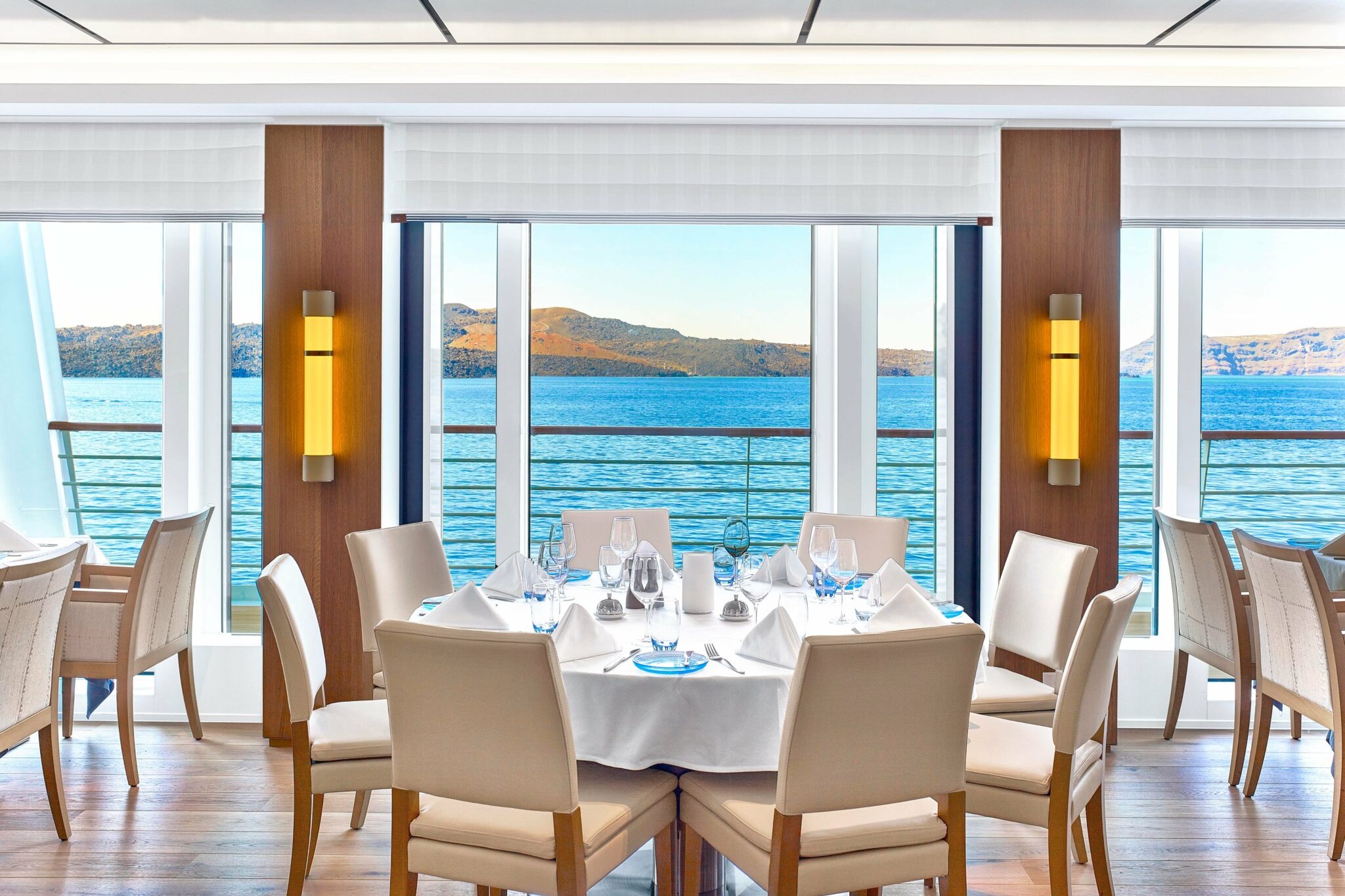
Viking addresses this through the extensive use of floor-to-ceiling windows and sculptural wood lattice ceilings, most notably in the "Wintergarden" lounge. These architectural openings are designed to turn the passing landscape—be it a Norwegian fjord, a European riverbank, or an Antarctic ice shelf—into a focal point. The landscape becomes an "ever-changing piece of art," reducing the need for aggressive interior decoration. To manage the variability of light, the ships employ a sophisticated system of architectural shades and curtains that adjust to maintain interior comfort and privacy without severing the connection to the world outside.

Data and Market Implications of the Minimalist Movement
The success of Viking’s design-led approach is reflected in its market performance and industry influence. According to industry data, Viking holds a significant share of the luxury small-ship market, with its ocean vessels typically carrying only 930 guests—a fraction of the 5,000+ passengers found on mega-ships. This smaller scale is essential for maintaining the integrity of the Scandinavian design language.
The "Viking Effect" has forced other luxury cruise lines to reconsider their interior strategies. Competitors such as the Ritz-Carlton Yacht Collection and Four Seasons Yachts have recently entered the market with designs that similarly emphasize "residential" luxury and "quiet luxury" (often referred to as "stealth wealth" in fashion and design circles). This shift suggests a broader trend in the travel industry where affluent consumers are moving away from overt displays of opulence in favor of authentic, craft-oriented, and intellectually stimulating environments.

The Nordic Spa: A Case Study in Cultural Authenticity
The ship’s spa facilities offer perhaps the most direct application of Nordic tradition. While most cruise ship spas focus on standard massage treatments, Viking’s Nordic Spa is centered on the centuries-old bathing ritual of alternating hot and cold environments. The facility includes a "Snow Grotto," where snowflakes drift from the ceiling, a cold plunge pool, and a thalassotherapy pool surrounded by slate and stone.
This area utilizes a restrained, minimalist material palette that emphasizes the elements of fire and ice. The use of sculptural driftwood and stone loungers reinforces the spa’s role as a serene retreat. By staying true to these cultural roots, the design provides a sense of place that is often missing from the homogenized "zen" aesthetics of international hotel spas.

Conclusion: The Future of the New Nordic Aesthetic at Sea
As Viking continues to expand its fleet, including the launch of its expedition ships, Viking Octantis and Viking Polaris, the "New Nordic" design philosophy remains the cornerstone of its brand identity. These newer vessels have pushed the boundaries of the aesthetic even further, incorporating "The Aula"—a stunning panoramic auditorium inspired by the University of Oslo’s great hall—and "The Finse Terrace," an outdoor lounge with recessed seating and "fire pits" designed for polar viewing.
The evolution of Scandinavian design on these vessels demonstrates that minimalism does not have to mean a lack of warmth or character. By focusing on materiality, heritage, and the human experience, Viking has created a new blueprint for maritime luxury. In an era of increasing digital noise and overstimulation, the success of these light-filled, quiet spaces suggests that the future of luxury travel lies in the ability to provide guests with a sense of clarity, connection to nature, and an enduring sense of calm.