admin
admin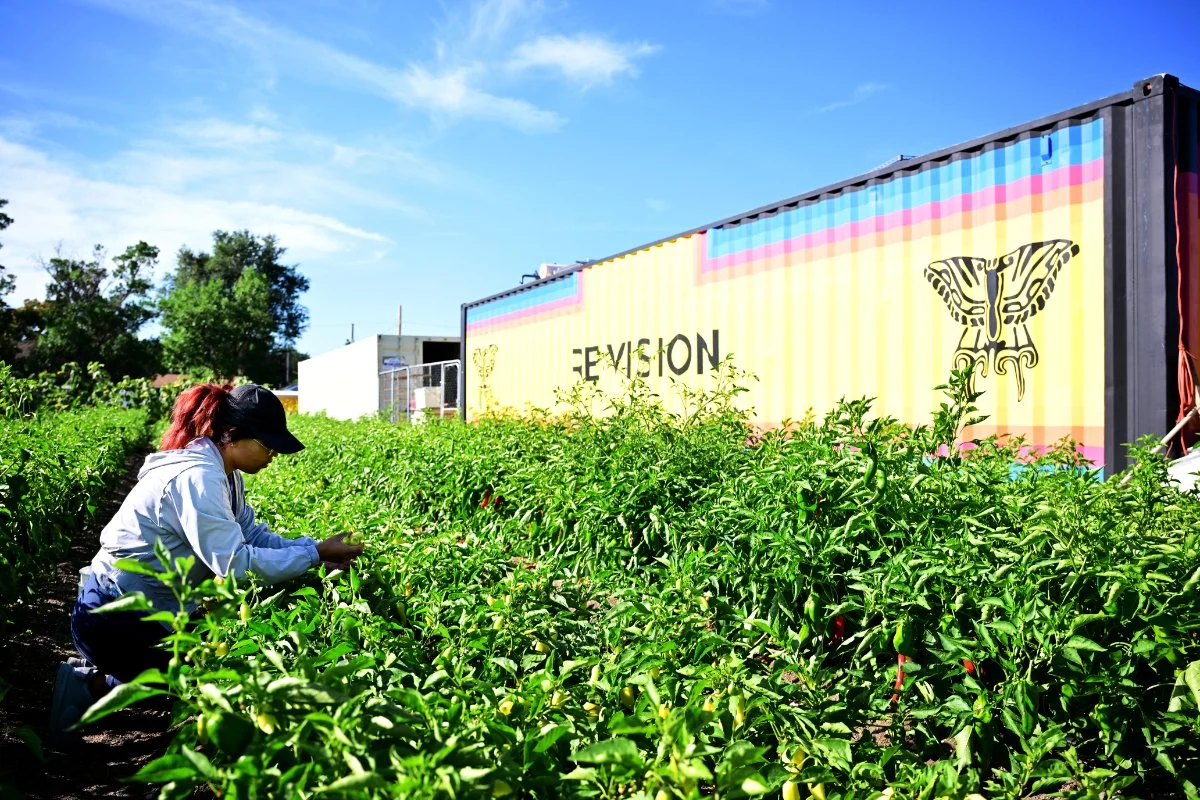
For centuries, communities across what is now the United States have cultivated food within and immediately surrounding their living spaces, a practice deeply intertwined with sustenance, culture, and survival. This tradition, known as urban agriculture, has continuously adapted to meet profound social and economic needs, manifesting in forms as diverse as sophisticated Indigenous agricultural systems, vibrant multicultural community farms, and cutting-edge indoor hydroponic vertical farms. Today, as the nation reflects on its 250 years of agricultural history, understanding the trajectory of urban agriculture requires a candid examination of its complex origins and its crucial role in building resilient food systems for the future.
The role of urban farms has expanded significantly over time, evolving into a multifaceted strategy for cultural preservation, enhancing food security, and advancing the broader goal of food sovereignty. Increasingly, these city-based agricultural endeavors also serve as vital pockets of climate resilience, offering green spaces that mitigate urban heat island effects, foster biodiversity, and facilitate natural water filtration, thereby bolstering environmental health. Despite these profound benefits, urban farms confront a myriad of contemporary challenges, though their importance in a rapidly changing world remains as critical as ever.
At its core, urban agriculture is an expansive term encompassing any food production occurring within or directly adjacent to urban and suburban areas. Due to its varied manifestations, there is no single, official national tally of urban farms in the U.S. However, numerous surveys and localized inventories indicate that thousands of these operations thrive across the country. They broadly fall into three main categories, each with distinct characteristics and objectives.

A Deep Dive into Urban Agriculture’s Diverse Forms
Community Farming and Gardening (Nonprofit and Mutual Aid): These operations are typically soil-based growing spaces collaboratively managed by neighbors, Indigenous growers, or nonprofit organizations. Their primary objective is not revenue generation but rather the advancement of food sovereignty, the provision of fresh, nutritious produce, the preservation of cultural foodways, and the strengthening of community cohesion. Examples include volunteer-run plots distributing harvests to local food banks, educational gardens teaching sustainable practices, and cultural gardens focused on heirloom crops significant to specific ethnic groups. These initiatives often embody principles of mutual aid, sharing resources and labor to benefit all participants and the wider community.
Commercial Outdoor Farming (For-Profit): These are private agricultural businesses that cultivate urban or peri-urban land with the explicit aim of generating revenue. They typically sell their produce directly to local markets, restaurants, or through Community Supported Agriculture (CSA) programs, where consumers purchase shares of the harvest in advance. While vital for local economies and fresh food access, these farms frequently face intense competition for land access from commercial real estate developers, leading to precarious tenure and escalating operational costs in urban environments.
Controlled-Environment Indoor Vertical Farming (High-Tech, Soil-Free, Often Corporate): Representing the technological frontier of urban agriculture, these facilities utilize advanced systems such as hydroponics (growing plants in nutrient-rich water), aquaponics (combining aquaculture with hydroponics), or aeroponics (growing plants in an air or mist environment). Characterized by artificial lighting (often LEDs), robotics, and precise climate controls, these operations feed crops with liquid nutrient solutions rather than soil. While promising year-round production regardless of external climate, these high-tech ventures have faced significant controversy regarding their environmental impact and financial sustainability. Many operate as venture-backed, for-profit enterprises, primarily focusing on high-margin crops like gourmet greens and culinary herbs due to the substantial capital and energy investments required.
The Historical Tapestry: Urban Agriculture Through the Ages
Understanding the contemporary landscape of urban agriculture necessitates confronting the uncomfortable truths embedded within America’s broader agricultural history. As Miguel Altieri, professor emeritus of agroecology at the University of California, Berkeley, and a leading authority on sustainable farming systems, asserts, "If we talk about 250 years of farming in America, we have to acknowledge that history. Urban agriculture itself started in the ancestral food systems of Native tribes, in the backyard gardens of the enslaved, and on the backs of exploited immigrant workers."

Indigenous Foundations: Long before European arrival, Indigenous societies masterfully integrated sophisticated farming systems directly into their settlements, nourishing dense human populations while simultaneously respecting and enhancing local ecologies. In the arid Southwest, Ancestral Pueblo communities developed ingenious methods to farm high mesas, capturing scarce rainfall through elaborate stone terraces, check dams, waffle gardens, and rock mulches. These techniques effectively slowed runoff, reduced evaporation, and concentrated moisture around crops, demonstrating profound ecological understanding. Across the fertile Mississippi River Valley, Mississippian societies established intensive maize-based agricultural systems that sustained sprawling urban centers like Cahokia Mounds, once home to tens of thousands. Farther northeast, the Haudenosaunee Confederacy, spanning from New York into Canada, cultivated large fields adjacent to their longhouses, employing polyculture practices like the "Three Sisters" (corn, beans, and squash), which mutually benefited one another when interplanted. Communal planting extended to any uncleared areas, underscoring a deep relationship between community, food, and place. This symbiotic relationship was violently disrupted by European colonization, with forced displacement severing communities from their ancestral homelands, seeds, and generations of ecological knowledge. Today, a powerful movement is underway to restore this knowledge, with many modern urban farms drawing directly on Indigenous practices, emphasizing diverse polycultures, prioritizing soil health, and preserving heirloom seeds. The Indigenous value of reciprocity also underpins the mutual aid philosophy prevalent in many community urban farming initiatives.
Gardens of Resilience: Enslavement and Immigration: The roots of urban farming were also profoundly shaped by the violence of the transatlantic slave trade. Denied adequate food rations on plantations, enslaved Africans drew upon their extensive agricultural expertise from their homelands to cultivate small garden plots, often referred to as "provision grounds." In these spaces, they raised crops that had arrived with the slave trade, such as okra, sweet potatoes, cowpeas, and collard greens, demonstrating incredible resilience and agency in securing their own sustenance and preserving cultural foodways under brutal conditions.
Later waves of immigrants further enriched this tradition, using urban spaces to protect and nourish their food heritage. In New York City’s Lower East Side during the late 19th and early 20th centuries, Italian and Jewish immigrant families transformed tenement fire escapes into vibrant window-box gardens, growing familiar herbs and vegetables to supplement meager incomes and maintain cultural connections. Around the same period, Chinese immigrants, often barred from land ownership, repurposed neglected floodplains into highly productive farms, while Japanese farmers leased unwanted city plots in areas like Los Angeles and Seattle. Before their forced internment during World War II, these Japanese farmers astonishingly supplied over a third of California’s commercial produce on just two percent of its farmland, showcasing remarkable efficiency and innovation. These diverse groups—Indigenous growers, enslaved Africans, and immigrant farmers—collectively laid many of the foundational principles that would define urban agriculture: local food production, community cooperation, cultural preservation, and the profound belief that growing food could both sustain and strengthen the social fabric of communities.
Moments of Crisis: From "Potato Patches" to Victory Gardens: Historically, urban agriculture has surged during periods of crisis or when mainstream food supply chains faltered. Following the Panic of 1890, Detroit Mayor Hazen S. Pingree initiated the "potato patches" program, enabling unemployed factory workers to cultivate vacant city lots, providing both food and purpose. Decades later, during both World War I and World War II, the federal government galvanized citizens to plant "victory gardens" not only in backyards but also in public parks, schoolgrounds, and communal spaces. At their peak in 1944, nearly 20 million victory gardens were estimated to produce 40 percent of all fresh produce consumed in the country, ensuring local food supplies while commercial harvests were directed to troops overseas. This era demonstrated the immense collective capacity of urban populations to contribute to national food security.

Modern Revival: Activism and Food Justice: The 1970s saw a renewed spirit of agricultural resistance emerge in urban centers. Activist groups like New York City’s Green Guerrillas, responding to urban decline and neglected spaces, famously threw "seed bombs" and cleared debris to reclaim derelict land for shared community gardens. By the 2000s, food justice leaders such as Will Allen and Karen Washington expanded on this foundation, strategically utilizing urban farming to combat food apartheid (systemic lack of access to healthy food in marginalized communities), secure land rights, and build financial strength within historically underserved communities. This trajectory laid the groundwork for the modern urban agriculture movement, integrating nonprofit community gardens, commercial urban farms, and high-tech indoor operations, all rooted in the fundamental practice of cultivating food where people live.
Policy Shifts and Technological Leaps: Beginning in the late 2000s and early 2010s, cities across the U.S. started to update their zoning and land-use policies to better accommodate urban agriculture. These changes created new opportunities for community gardens, urban farms, rooftop growing, and certain commercial operations. Cleveland, for instance, established an Urban Agriculture Overlay District in 2010, Seattle expanded its urban agriculture zoning the same year, and San Francisco launched an Urban Agriculture Incentive Zone program in 2014. Simultaneously, a separate branch of urban agriculture gained rapid momentum. Advances in LED lighting, hydroponics, automation, and climate-control systems attracted substantial investor interest in controlled-environment agriculture, fueling a rapid expansion of vertical farming companies throughout the 2010s.
The Multifaceted Benefits of Cultivating Urban Spaces
Experts have extensively studied the realistic potential for U.S. cities to produce food locally, with some findings proving striking. In 2016, researchers calculated that Cleveland, Ohio, possessed sufficient vacant land to supply at least half of its residents’ fresh vegetable needs and nearly 100 percent of its poultry and eggs. Even on a smaller scale, urban plots demonstrate remarkable productivity. A 2025 study in the international journal Agriculture suggested that a modest 10-by-10-meter plot could supply up to 50 percent of a family’s annual vegetable needs. In Philadelphia, over 200 community gardens collectively harvested approximately 2 million pounds of vegetables in a single season, while Detroit’s network of community gardens produced hundreds of thousands of pounds of fresh food in 2014. Field trials in Cleveland further demonstrated that agroecologically managed urban plots yielded over 6.2 kilograms per square meter—more than four times the output of conventionally managed urban plots.
However, researchers like Carolyn Dimitri, professor of food studies at New York University, emphasize that measuring urban agriculture strictly by yield or economic output overlooks its broader, often more profound value. "The social benefits of urban farming are often much stronger than the pure financial economics," Dimitri notes. A comprehensive review by the Johns Hopkins Center for a Livable Future highlighted that urban farms serve as vital social infrastructure. While their social value may be challenging to quantify, urban farms create invaluable spaces for education, employment, cultural preservation, and intergenerational knowledge transfer. Altieri describes this as an "invisible benefit," explaining, "When people come together to farm in a neighborhood, you build community cohesion."

Ecologically, soil-based urban farms contribute significantly to environmental resilience. They help cool urban heat islands, sequester carbon from the atmosphere, and support native pollinators, thereby enhancing local biodiversity. The practice of composting enriches urban soil structure, much as it does on any farm. Altieri points out that every 1 percent increase in soil organic matter enables the ground to hold substantially more water, a critical factor that reduces stormwater runoff during heavy rains and simultaneously lowers irrigation needs during periods of drought, making cities more adaptable to extreme weather events.
Navigating the Headwinds: Challenges Facing Urban Farms
Despite the surge of interest in urban agriculture during the COVID-19 pandemic, the overall number of farms is currently facing a steady decline. Altieri attributes this paradox to the multiple, overlapping threats of our "polycrisis" era. "Crisis drives the desire for local self-reliance, but a polycrisis destabilizes the inputs—energy, capital, land, and cheap resources—that commercial urban agriculture relies on to survive," he explains.
Challenges for Land-Based Urban Farming: These operations confront several critical pressures. Chief among them are escalating real estate values, which make land acquisition or long-term leasing prohibitively expensive, leading to insecure land access for many farms that operate on rented plots. High municipal water rates also pose a significant financial burden. Furthermore, a complex web of regulatory hurdles, opaque zoning laws, and administrative red tape frequently impedes the conversion of public or underutilized land into permanent agricultural spaces. Community farms, heavily reliant on grant funding and volunteer labor, have also been challenged by recent shifts in federal policy and the availability of grants, leaving many organizations struggling to cover basic operational infrastructure.
Challenges for High-Tech Vertical Urban Agriculture: Once heralded as a panacea capable of operating independently of weather or soil conditions, controlled-environment vertical urban agriculture—including hydroponics, aquaponics, and aeroponics—is now grappling with stark economic realities. While these indoor farms expanded rapidly during the 2010s, attracting substantial investment due to technological advancements in LED lighting, climate control, and automation (doubling in number between 2009 and 2019), they now face significant headwinds. Rising energy prices, higher interest rates, the capital-intensive nature of their operations, and persistent profitability challenges have undermined many of these business models. Major players such as AppHarvest, Bowery Farming, Kalera, Plenty Unlimited, and 80 Acres Farm have either filed for bankruptcy, undergone restructuring, or ceased operations, highlighting the precarious financial landscape of this sector.

Critics and researchers have also questioned the broader role of high-tech urban farms as a comprehensive solution to food insecurity. Even when some projects aim to support food security in areas lacking fresh produce access, the high energy costs mean indoor facilities rarely produce calorie-dense staple crops like grains or beans, which require more water and extended growing times. Instead, their focus remains primarily on fast-growing greens and culinary herbs. "This tech expansion is often driven by venture business models rather than community food security," Altieri states. "It produces high-cost greens for affluent markets, while community-led efforts that build social cohesion and feed low-income neighborhoods struggle for basic funding." Dimitri echoes this sentiment, noting that capital-intensive systems designed without a deep understanding of the intricate food system often fail to address the root causes of food insecurity. While high-tech facilities can achieve impressive yields of certain greens, they cannot replicate the comprehensive ecological infrastructure, the diverse range of nutritious crops, or the vital community spaces provided by soil-based farms.
Toward a Resilient Future: Collective Action and Systemic Change
Modern food systems are characterized by long, often fragile supply chains optimized for efficiency rather than resilience. Most major cities maintain only a few days’ supply of fresh food at any given time. "Consider a major metro area like the San Francisco Bay Area," Altieri illustrates. "It imports thousands of tons of food every day, traveling an average of 1,000 miles. If a major earthquake strikes, or if diesel supply chains break down, supermarket shelves are empty in 48 hours."
To construct a food system capable of enduring future ecological and economic shocks—which are increasingly probable—Altieri argues that urban agriculture cannot rely on isolated, individual farms operating in silos, nor can it depend solely on technological quick fixes. Instead, the future of urban farming hinges on robust grassroots organizing, strategic networking, and collective movement-building.
For Altieri, scaling the impact of urban agriculture requires growers, community leaders, and advocacy groups to unite around a shared vision for food sovereignty. When urban farmers establish strong regional coalitions, they gain the capacity to pool resources, share invaluable ecological knowledge, and collectively demand systemic political change. This includes advocating for crucial policies such as guaranteed public land access, protective zoning regulations, municipal water subsidies, and dedicated funding streams specifically for soil-based community projects.

"Urban agriculture has proven its capacity to step up during every major crisis in American history," Altieri affirms. "The question isn’t whether urban agriculture works—it does. The real work ahead is organizing our communities and building the collective power needed to secure land, water, and resources for generations to come." The ongoing evolution and challenges of urban agriculture underscore its enduring relevance as a vital component of a resilient, equitable, and sustainable food future for the United States.