admin
admin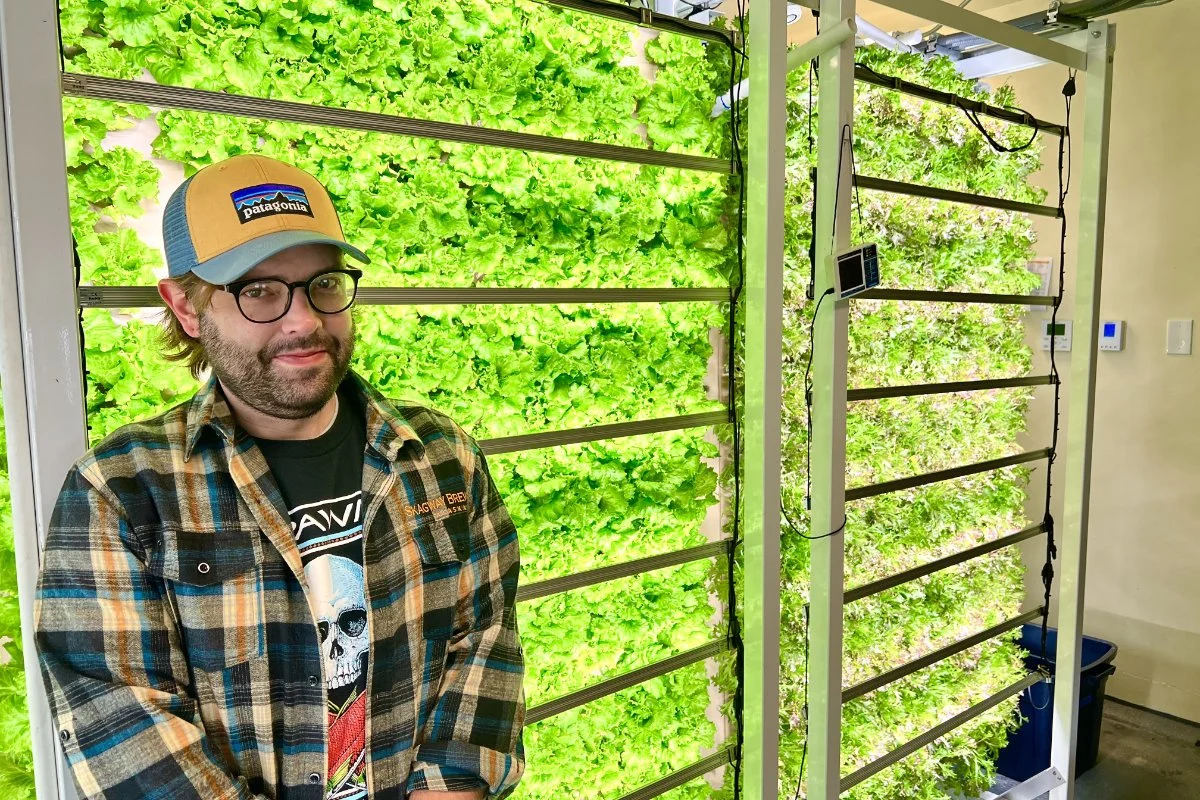
As the vertical farming industry grapples with a landscape littered with failed investments and broken business models, a small, independent farm in remote Alaska is charting a distinct path to success by addressing a uniquely local problem. The Skagway Brewing Company, affectionately known to locals as "Brew Co.," has harnessed aeroponic technology not for global market disruption, but to ensure its isolated community has year-round access to fresh, healthy produce, illustrating a compelling alternative model for controlled environment agriculture (CEA).
The Boom and Bust of the Vertical Farming Industry
The past decade witnessed an extraordinary surge of interest and investment in vertical farming, touted as a revolutionary solution to global food security, land scarcity, and climate change. Fueled by ambitious promises of high yields, minimal water usage, and pesticide-free produce, venture capital poured into the sector. The Agriculture Improvement Act of 2018 (the "farm bill") provided a legislative tailwind, expanding support for urban agriculture, including indoor and rooftop farming initiatives. This enthusiasm culminated in a staggering $4.7 billion in venture capital investment flowing into ag-tech during the 2019 boom alone, with companies projecting valuations in the billions.
However, this rapid expansion was often built on shaky foundations. By the mid-2020s, a harsh reality began to set in, leading to a wave of high-profile bankruptcies and liquidations that have all but erased many once-celebrated vertical farms. Bowery Farming, once the largest vertical farming company in the U.S. with a valuation peaking at $2.3 billion, abruptly shuttered its operations. Its Georgia facility, a symbol of the industry’s grand ambitions, was liquidated in late 2025 in what was described by Fertilizer Daily as one of the "largest vertical farming asset disposals in industry history." Similarly, AppHarvest, a company backed by prominent figures like Martha Stewart and JD Vance, filed for bankruptcy in 2023, citing the insurmountable hurdles of high operational costs and persistently low yields. Plenty Unlimited, which had attracted over $1 billion from investors including Bezos Expeditions and Walmart, declared bankruptcy in 2025 before a strategic pivot to a partnership with Driscoll’s to grow strawberries. Even indoor farming pioneer 80 Acres Farm, after 13 years in business, ceased operations just last week, unable to secure the capital needed to continue.
Analysts attribute this widespread collapse to a confluence of factors: exorbitant startup costs, business models that failed to account for real-world market dynamics, intense price competition from traditional agriculture, and a pervasive prioritization of technological innovation over fundamental agricultural understanding and consumer demand. Dr. Laura Cammarisano, an assistant professor of plant sciences at the University of California, Davis, and a specialist in controlled environment agriculture, offers a critical perspective: "Some of these companies started without having a plant person within their team. They have engineers, economists, entrepreneurs—and they start without having a grower. How do you even start a farm without a grower? I understand this looks all technical, but the main piece in this is a plant." This sentiment underscores a fundamental disconnect between tech-driven ambition and the biological realities of cultivation.

Skagway’s Isolation and the Quest for Freshness
In stark contrast to these grand, often failed, ventures, the Skagway Brewing Company’s journey began with a far more grounded necessity. Skagway, a picturesque town in southeast Alaska, is home to approximately 1,000 year-round residents. This population swells dramatically during the summer months, hosting over 1.3 million cruise ship passengers who flock to experience its Gold Rush history and natural beauty. Despite its moniker as the "Garden City of Alaska," Skagway faces profound challenges in accessing fresh, healthy produce year-round.
Geographically isolated, especially during the harsh winter months, the town is largely reliant on an intricate and often precarious barge system to transport food from the Lower 48 states to its single local market. This logistical dependency translates into produce that is frequently costly, inconsistent in quality, and difficult to source reliably. Fresh, delicate items like lettuce are particularly vulnerable to spoilage during long transit times, arriving "bad or partially bad," as farm manager John Michael Mead describes, necessitating hours of sorting through damaged goods. The high cost of shipping and the perishability of such items significantly inflate prices, making healthy eating a luxury rather than a given for many residents. This perpetual struggle with food insecurity, exacerbated by external factors like adverse weather conditions or broader supply-chain disruptions, has long cast a shadow over the community’s well-being, affecting both physical nutrition and mental resilience.
The Raven’s Nest: A Brewery’s Unexpected Agricultural Venture
It was against this backdrop of persistent scarcity and logistical headaches that Mike Healy, owner of Skagway Brewing Company, conceived an audacious solution. Frustrated by the poor quality and inconsistent supply of lettuce for his brewery’s restaurant, Healy initially explored traditional outdoor growing options. However, the brief Alaskan growing season, stretching from early April to October, proved impractical for meeting the restaurant’s demands, especially during the peak tourist months. "If we wanted those leafy greens and herbs early on when the cruise ship season started, we would have to put so much energy between heat and lights to get those happening," Healy explained, making outdoor cultivation prohibitively expensive.
His search led him to an indoor agriculture conference in Las Vegas in 2018, where he encountered aeroponic systems. Aeroponics, a method of growing plants in an air or mist environment without soil, using nutrient-rich mist sprayed directly onto the roots, offered a compelling solution. The closed-loop system promised accelerated growth, minimal water use, and the elimination of pesticides, all within a controlled environment impervious to Alaska’s harsh climate. Healy invested $150,000 in an aeroponics farm, envisioning not only a stable food source for his business but also a beacon of sustainability for Skagway, aiming to make his brewpub "the most sustainable brewpub on the planet."

A Rocky Start and DIY Resilience
The journey, however, was far from smooth. Healy’s substantial investment in 2018 quickly turned into a cautionary tale about the volatility of the ag-tech sector. Shortly after he paid for the system, the company that sold it to him vanished, leaving him in a lurch. "What I didn’t know—basically when I was writing the check, which was a large check—[was that] the company was going out of business," Healy recounted. The company cashed his check and went silent.
Through sheer determination, Healy managed to reconnect with the salesman he had met at the conference, who, out of personal commitment, personally delivered the system in a shipping container and assisted with the initial installation. However, the system’s quality was questionable. "Unfortunately, it wasn’t a very good system," Healy admitted. The components were largely generic, off-the-shelf items, with the only proprietary elements being insufficient misting panels and inadequate piping unable to handle the necessary pressure. Lacking tech support, replacement parts, or any guidance from the defunct vendor, Healy and his team were forced to become accidental engineers, rebuilding the entire system twice through trial and error.
Operational Success and Integrated Sustainability
Despite the inauspicious beginning, the aeroponic farm, dubbed the "Raven’s Nest," found its permanent home on the top floor of the new Skagway Brewing Company building, which the company moved into in 2019. The facility was designed with this integrated approach in mind: the brewery on the first floor, the restaurant on the second, and the farm on the third, directly supplying fresh greens to the kitchen below.
Today, the Raven’s Nest thrives, producing approximately 250 pounds of artisanal lettuce each week. This output is sufficient to meet the brewery restaurant’s entire demand, eliminating the need to import costly and often subpar produce. The farm cultivates varieties specifically chosen for their suitability to vertical gardening and short crop cycles, including red oak, butter crisp, sweet crisp, a romaine-sweet crisp hybrid, and basil. During the busy summer months, nearly all the produce is consumed internally. In winter, any surplus greens are generously donated or sold at cost to the local school, senior center, or the town market, enhancing community food security.

Beyond its primary function of food production, the Raven’s Nest embodies Healy’s vision of sustainability through innovative integration. One significant feature is its closed-loop system for carbon dioxide (CO2). Large breweries can invest in expensive CO2 recapture systems, but such solutions are typically unavailable or cost-prohibitive for smaller operations. For years, Skagway Brewing Company had simply vented its CO2 byproduct from beer fermentation into the atmosphere, a practice that always made Healy uneasy. Now, a tube connects the fermenters directly to the farm, channeling the CO2 byproduct to enrich the growing environment. Academic research has consistently shown that elevated CO2 levels significantly boost plant productivity. Healy estimates this CO2 capture will increase the farm’s overall harvest by more than 20 percent this year, while simultaneously reducing the brewery’s carbon footprint.
Furthermore, the heat generated by the LED grow lights on the third-floor farm serves a dual purpose. In Skagway’s frigid winters, this ambient heat contributes to warming the staff offices located below, thereby reducing the brewery’s overall energy consumption and utility bills. This intelligent reuse of resources exemplifies the circular economy principles that underpin the Raven’s Nest’s design. The brewery also utilizes spent yeast from the brewing process for compost in the town’s community gardens, further closing the loop on its waste streams.
The Economics of Local Greens: Beyond the Price Tag
While the qualitative benefits of fresh, local produce are undeniable, the economic calculus of the Raven’s Nest is more nuanced. Farm manager John Michael Mead estimates that, factoring in initial setup costs and ongoing maintenance, growing the restaurant’s own lettuce costs about 10 percent more than purchasing and shipping it. However, this calculation omits a multitude of intangible and long-term benefits that are difficult to quantify financially.
"In the long term, when you think about greens being grown in the desert in Arizona, then driven all the way to Seattle and then shipped up to Alaska on a boat—that’s a lot of diesel, a lot more fuel, and a much bigger sustainability impact," Mead points out. The reduced carbon footprint from eliminating thousands of miles of transportation is a substantial environmental gain. Moreover, the consistency of supply and guaranteed freshness translate into operational efficiencies for the restaurant. "If the lettuce shows up and it’s bad, even though we’d get refunded by our vendor, we still lose that business," Mead explains, highlighting the real cost of unreliable external supply chains. The avoidance of food waste due to spoilage during transit also represents a significant saving, both financially and ecologically.
Despite these advantages, the dream of fully supplying the entire Skagway community with fresh produce year-round remains elusive, primarily due to the escalating cost of electricity in remote Alaska. "Part of the original plan was to be able to fully supply our community in the winter. And unfortunately, the cost of electricity just keeps going up. And as a result of that, it’s become uneconomical," Healy concedes. This underscores a critical challenge for vertical farming in energy-intensive regions, where the operational expenditure for lighting and climate control can quickly outweigh the benefits of local production for broader community distribution at competitive prices. Healy remains hopeful that future efficiencies or changes in energy costs might make this broader community supply feasible again.

Lessons from the Raven’s Nest: Human Touch Over Blind Automation
The success of the Raven’s Nest, particularly against the backdrop of larger industry failures, offers valuable insights. Dr. Cammarisano’s earlier observation about the absence of "plant people" in many ag-tech startups resonates deeply with Skagway Brewing’s approach. Healy, having grown up on a farm in South Dakota, understood the fundamental importance of agricultural expertise, leading him to hire an experienced indoor farm manager, John Michael Mead.
Mead champions a balanced approach, emphasizing the irreplaceable role of human oversight. "A lot of times, these systems rely too much on automation," Mead states. "It’s important to have human contact. You have to be able to walk your system, understand what’s going on, and know if your plants are healthy." This blend of advanced technology with traditional horticultural wisdom—the "plant person" overseeing the "technical piece"—appears to be a crucial differentiator for the Raven’s Nest.
Broader Implications and the Future of Small-Scale CEA
The Skagway Brewing Company’s aeroponic farm serves as a powerful case study for the viable application of controlled environment agriculture in specific contexts. While vertical farming is unlikely to replace conventional soil-based agriculture on a global scale anytime soon, its potential in niche markets and remote locations is undeniable. "I do think this has a great potential for certain locations and for certain scales like Skagway, where it’s serving the community," Dr. Cammarisano confirms. "Elsewhere, the point is that this type of production system or farming is too expensive to even compete with high-quality organic."
The ongoing challenges faced by small businesses like Brew Co.—including the closure of vendors, the proprietary nature of many systems, and a general lack of industry support for small-scale customers—highlight the need for more accessible, adaptable, and robust CEA solutions. The time, resources, labor, supply-chain management, and ongoing maintenance all contribute to the overall costs, both tangible and intangible.

However, the educational and community-building potential of small-scale closed farming systems is also gaining recognition. In cities across New York, California, and Maryland, indoor farms are being integrated into schools, reconnecting students with their food sources and imparting valuable life skills. In Santa Barbara, California, an aeroponic tower farm, combined with a microgreens greenhouse and an apiary, helps feed families, seniors, and students, demonstrating a community-centric model.
Just as early computers that once filled entire rooms have miniaturized to fit into pockets, it is conceivable that vertical farming systems will eventually scale down, becoming more affordable, easier to install, and simpler to maintain. This evolution could enable more restaurants, breweries, rural communities, schools, and senior centers to benefit from fresh, year-round produce, regardless of their geographic isolation or climate.
Until such widespread accessibility is achieved, the realities of growing lettuce in Skagway will remain surprisingly complicated, a testament to the persistent limits and enduring potential of growing food in partnership with machines. Mike Healy and John Michael Mead never set out to disrupt global agriculture or amass billions in venture capital. Their goal was simply to feed their neighbors during the long, dark winters and their guests during the bustling summers. In communities like Skagway, where the stakes of food security are acutely felt, this hyper-local, need-driven application of indoor farming may well represent its true north, offering a resilient model for sustainable living in the most challenging environments.