admin
admin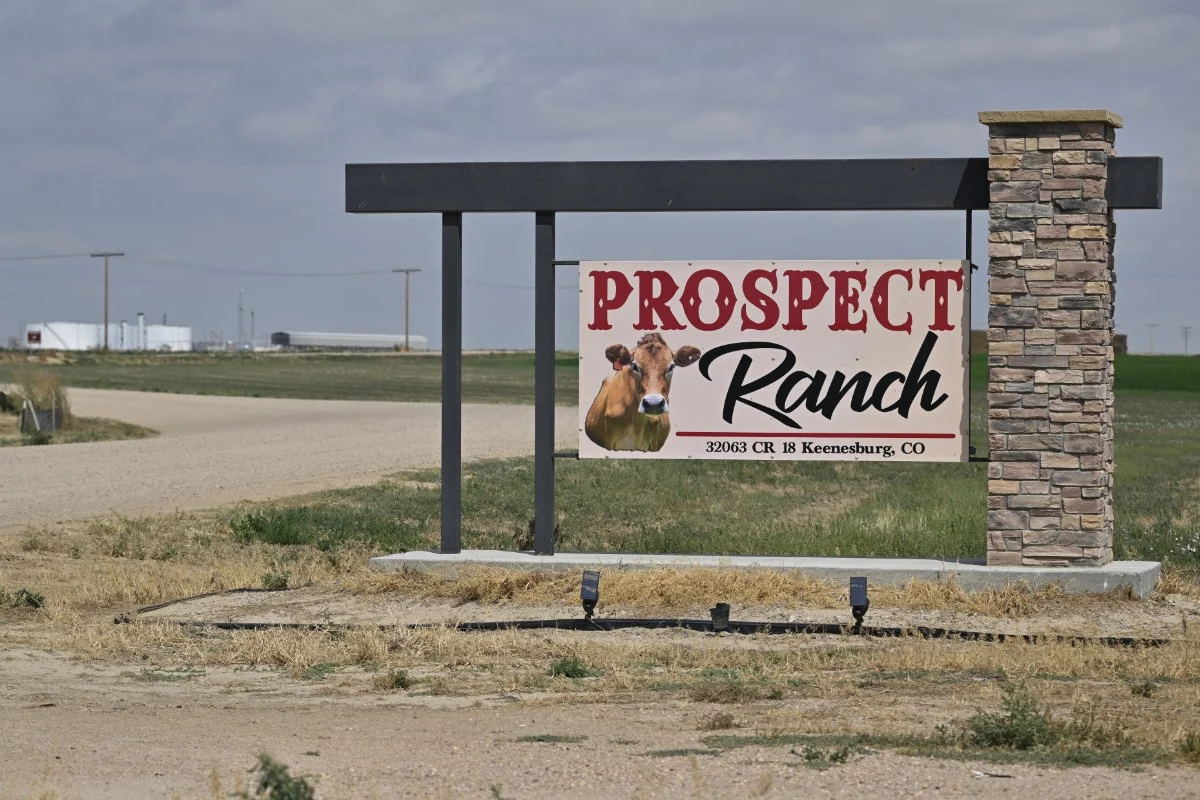
Safety experts and labor advocates are sounding alarm bells over a deepening crisis in agricultural worker safety, attributing a rise in preventable deaths and injuries to severe cutbacks in federal oversight, particularly within the Occupational Safety and Health Administration (OSHA). The tragic incident at Prospect Valley Dairy in Keenesburg, Colorado, in August 2025, where six workers perished from toxic gas exposure, stands as a stark illustration of the consequences of diminished regulatory enforcement and an industry characterized by increasing scale and inherent hazards. This event, now the subject of a wrongful death lawsuit, underscores widespread concerns that an already perilous sector is becoming even more dangerous for its often vulnerable workforce under the current administration.
The Prospect Valley Dairy Tragedy: A Preventable Catastrophe
On August 20, 2025, the serene landscape of Prospect Valley Dairy in Keenesburg, Colorado, was shattered by a horrific industrial accident. Two workers were engaged in routine maintenance, attempting to repair a critical manure management system within an enclosed underground pump room. This confined space, known for its inherent dangers, became a death trap when a pipe suddenly disconnected, unleashing a torrent of manure water and, critically, hydrogen sulfide gas. Hydrogen sulfide, a highly toxic gas produced during the decomposition of manure, rapidly overcame the two men as they struggled to stem the flow. In a desperate attempt to rescue their colleagues, four additional workers entered the hazardous environment, only to be similarly overcome by the potent neurotoxin.
Emergency services were immediately dispatched, but the severity of the situation quickly became apparent. A 45-minute 911 call, later reviewed by Colorado Public Radio, captured the grim reality: EMTs arriving on the scene confirmed they could not safely access the unconscious workers, trapped 12 feet deep in the pit, due to the extreme risk of gas exposure. Within minutes, the call for a rescue helicopter was rescinded, replaced by the somber request for a coroner. The incident claimed six lives, leaving families devastated and reigniting urgent calls for improved safety protocols in an industry too often overlooked by federal regulators.
Nearly a year after the tragedy, family members of four of the deceased have filed a wrongful death lawsuit against Prospect Valley Dairy and HD Builders LLC, alleging that both entities were aware of the manure-management system’s defects and that the fatalities were entirely avoidable. Jordan Barab, a former deputy assistant secretary at OSHA and a respected voice in workplace safety, unequivocally stated, "It was terribly tragic and also completely preventable. It’s well known that manure pits are dangerous confined spaces." The owner of Prospect Valley Dairy, Arend Bos, could not be reached for comment regarding the lawsuit.
Agriculture’s Persistent Peril: A History of Hazard
The animal agriculture industry has long been identified as one of the most dangerous sectors for workers in the United States. Beyond the immediate and acute dangers of toxic gas exposure in confined spaces like manure pits, farmworkers face a litany of other risks. These include entanglement in powerful machinery, suffocation in grain bins or hay piles, and animal-related injuries from large livestock. Data from Purdue University’s annual summary of U.S. Agricultural Confined Space-related Injuries and Fatalities consistently highlights manure pit drownings and asphyxiation as common workplace fatalities. The very nature of modern, large-scale farming, often involving immense animal populations and complex machinery, amplifies these inherent dangers.
OSHA, established in 1970, was created with the mandate to ensure safe and healthy working conditions for America’s workforce. Its responsibilities include setting and enforcing safety standards, providing training and outreach, and investigating serious workplace incidents. However, the agency’s capacity to fulfill this critical mission, particularly within the agricultural sector, has been severely hampered by decades of underfunding and political maneuvering, further exacerbated by recent administrative policies.
The Erosion of Oversight: OSHA Under Strain
Under President Donald Trump’s second administration, a concerted effort towards deregulation, spearheaded by the newly formed Department of Government Efficiency (DOGE), has reportedly accelerated the weakening of OSHA. This trend has fueled deep apprehension among former government officials and safety experts who fear an already underregulated industry will become even more perilous for its predominantly foreign-born and, in many cases, undocumented workforce.
A January 2026 report from the Office of Inspector General revealed a significant decline in federal OSHA inspectors, dropping by 13 percent between February 2024 and June 2025. When combined with state-level inspectors, the total force of approximately 1,720 individuals is tasked with safeguarding the health and safety of 144 million workers across 11.6 million worksites in numerous industries. This translates to each inspector being responsible for the well-being of roughly 84,000 workers.
This drastic reduction in personnel means that OSHA has become "much more reactive than proactive," as Barab noted. The probability of a random inspection, or indeed any inspection, has plummeted. Current estimates suggest it would now take an astonishing 191 years for the agency to inspect every workplace under its jurisdiction just once—a significant increase from the 165 years reported by Civil Eats in 2022. For most employers, particularly in agriculture, the likelihood of ever encountering an OSHA inspector is practically negligible.
Debbie Berkowitz, a fellow at Georgetown University’s Kalmanovitz Initiative for Labor and the Working Poor and a former senior OSHA official, highlighted the disparity: "Most of the time [OSHA inspectors are] looking at construction sites, because those are easier to inspect, less time consuming, and they’re also all around. So, OSHA doesn’t have to travel hours to a farm.” This geographic and logistical challenge further isolates agricultural operations from meaningful oversight.
Penalties and Accountability: A System in Retreat
The weakening of OSHA extends beyond staffing levels to the very enforcement mechanisms designed to deter non-compliance. In the aftermath of the Prospect Valley Dairy incident, OSHA cited Prospect Ranch LLC (the dairy operator) and High Plains Robotics (a division of Fiske, Inc., which provided maintenance) for failing to protect workers from atmospheric hazards and neglecting to provide adequate safety training. HD Builders LLC, also present at the site, received citations.
Berkowitz criticized the nature of these citations: "They have to educate workers about chemical hazards and the measures needed to protect them when working in and around manure. They didn’t do that," adding that the citations did not even reach the most severe classification. She pointed out that if "willful" violations—indicating a disregard for worker safety—had been issued, the penalties could have exceeded $150,000 per violation, dwarfing the approximately $85,000 fine levied against Prospect Ranch LLC (down from an initial proposal of $132,406), which the dairy is now contesting.

Data from the policy research center Good Jobs First corroborates this trend, reporting a 66 percent decrease in average penalties during the first nine months of 2025 compared to the same period over the previous 17 years. Health and safety penalties specifically dropped by 47 percent, and enforcement cases declined by 35 percent. In a February 2026 letter to Department of Labor officials, six Democratic U.S. Senators voiced concern that the 42 percent decrease in "willful violations" found during inspections in 2025 compared to 2024 "indicates that OSHA inspectors may be being encouraged to issue citations for lesser violations, allowing employers who commit serious safety violations to avoid facing proportional consequences."
For many companies, the economic calculus has shifted: non-compliance is now often cheaper than investing in robust safety measures, especially with the dramatically reduced risk of inspection and the diminishing severity of penalties.
The Agricultural Exemption: A Decades-Old Loophole
A significant barrier to comprehensive worker protection in agriculture is the long-standing OSHA budget rider, first attached to the agency’s appropriations budget in 1976. This rider exempts farms with 10 or fewer employees from most OSHA inspections, enforcement, and penalties. Intended to protect small farms from perceived onerous government oversight, this exemption leaves a substantial segment of the agricultural workforce with little to no federal protection.
"Because of the intense lobbying of the agricultural industry led by Big Ag," Berkowitz explained, "No party, Democrat or Republican, wants to take it on, because the backlash would be so strong—‘You’re against small farms.’ But that’s just not true. We’re about saving lives.” This political deadlock ensures that a critical loophole persists, allowing hazardous conditions to go unchecked on countless operations.
Will Lambek, a staff member at Vermont-based Migrant Justice, a grassroots organization advocating for economic justice and human rights, starkly articulated the situation: “We can’t say that we’ve seen deterioration because you can’t go lower than zero,” noting he has “never seen an OSHA inspection on a dairy farm in Vermont.” While acknowledging that previous administrations might have had more inspectors and robust research from the National Institute for Occupational Safety and Health (NIOSH), the overall sentiment among advocates is that federal oversight for agricultural workers has been consistently minimal.
Beyond Inspections: Other Threats to Worker Safety
The challenges facing agricultural workers extend beyond regulatory shortcomings. Many workers, particularly those in animal agriculture, are foreign-born, and some are undocumented. Their livelihoods and often their housing are directly tied to their employment, creating a climate of fear and vulnerability. "The workers are literally sleeping next to or right above the cows that they’re milking,” Lambek said. This precarious situation means that speaking up about safety concerns or workplace abuses can result not only in job loss but also in homelessness, especially with increased Trump-era immigration enforcement creating a "chilling effect" on workers reporting unsafe conditions.
The chilling effect, combined with a lack of robust oversight, contributes to significant underreporting of injuries and illnesses. One analysis claims that over 80 percent of nonfatal injuries and illnesses on animal farms are not reported to OSHA. Despite this likely underreporting, agriculture remains one of the most fatal industries in which to work, consistently ranking high in the Bureau of Labor Statistics’ annual Census of Fatal Occupational Injuries.
Adding to these pressures is the relentless trend of industry consolidation. Since 2002, the U.S. has lost 61 percent of its dairy farms, yet the total dairy cow inventory has grown. This indicates a shift towards fewer, but much larger, operations. These concentrated animal feeding operations (CAFOs) house thousands of animals, creating increasingly crowded, noisy, pathogen-rich, and manure-laden environments. As the concentration of animals rises, so does the risk of workers being injured by animals or exposed to the immense quantities of waste they produce, further highlighting the need for specialized safety standards. Prospect Valley Dairy, for instance, managed the excrement of over 6,000 cows, generating 62,500 to 112,500 gallons of manure daily – enough to fill an Olympic-sized swimming pool in less than two weeks.
"Big Ag Rules the Roost": The Battle for Standards
Experts like Berkowitz believe that local OSHA offices, such as the one in Denver that handled the Prospect Valley case, often do their best within severe limitations. However, "they have the lowest number of inspectors in the history of the agency to be able to protect workers from being killed or dying on the job.” Beyond staffing, a fundamental issue is the lack of specific safety standards for agriculture.
While hundreds of standards govern general industry workplaces, only a handful apply to agriculture. For example, OSHA’s confined-space standard, which dictates strict safety protocols for spaces "not necessarily designed for people" but "large enough for workers to enter"—like the pump room at Prospect Valley Dairy—explicitly does not apply to agriculture. This glaring omission means that while a worker fixing a pipe in a slaughterhouse basement would be covered by stringent safety requirements, an agricultural worker performing the same task in a manure pit is not. "If you talk to any OSHA inspector who’s ever gone on a farm to do an inspection, the first thing they’ll tell you is we need more standards to cover agriculture,” Berkowitz emphasized. This regulatory vacuum, she asserts, is a direct result of "Big Ag" lobbying, which effectively "rules the roost" when it comes to worker protections on farms.
Working for Change: Advocacy and the Path Forward
Despite the formidable challenges, advocacy groups are actively working to challenge the entrenched power of large agribusiness and improve worker conditions. In Vermont, Migrant Justice pioneered the "Milk with Dignity" program, described by Lambek as a worker-driven initiative "to address systemic human rights violations and improve labor and housing conditions" in the dairy industry. This model, inspired by the Coalition of Immokalee Workers’ successful Fair Food Program, empowers workers to participate directly in ensuring their rights. However, such programs remain localized, with 80 percent of Vermont’s dairy workers still outside its protections.
True, systemic transformation, advocates argue, must occur at the federal level. This includes more robust federal enforcement of labor laws and, crucially, the closing of existing agricultural worker loopholes. The roadmap is clear: federal regulators at OSHA need to extend the same worker protections that apply to other hazardous industries, such as slaughterhouses and factories, to the agricultural sector. This would involve developing and enforcing specific standards for common agricultural hazards, including confined spaces, machinery operation, and chemical exposure.
The year 2025 marked 55 years since OSHA was signed into law, yet the agency is currently operating with the lowest staffing and inspector count in its history. Agriculture, consistently one of the most dangerous industries for workers, remains disproportionately unregulated. With the ongoing dismantling of regulatory capacity, experts warn that the situation for agricultural workers is poised to become "much more dire," as the current administration appears "set on essentially emaciating the only worker protections workers have.” The human cost of these policy choices continues to mount, with the Prospect Valley Dairy tragedy serving as a somber reminder of the urgent need for a renewed commitment to worker safety.