admin
admin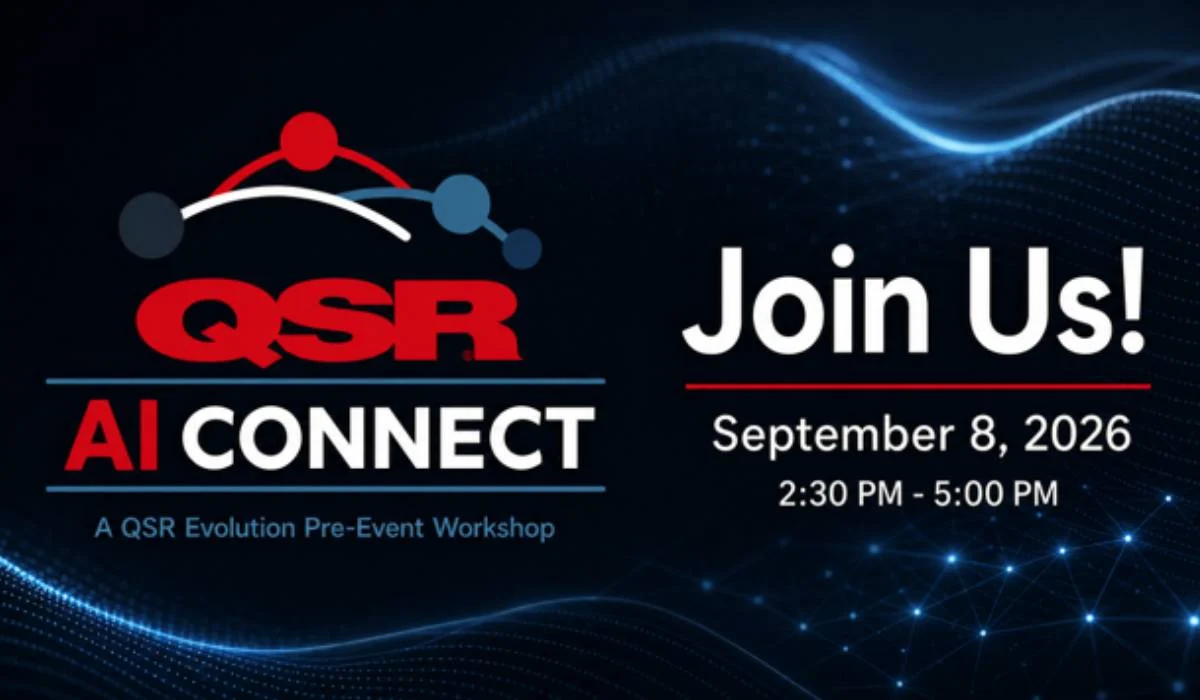
The rapid integration of artificial intelligence into the global food service landscape has transitioned from a futuristic concept to an immediate operational necessity. As restaurant leaders face a complex array of choices regarding automation, data analytics, and generative tools, the QSR Evolution Conference—organized by Arrowfly and the editorial teams behind QSR and FSR magazines—has announced the launch of QSR AI Connect. This executive initiative is specifically designed to provide a structured framework for restaurant leaders to move beyond theoretical experimentation and toward the development of actionable, value-driven AI roadmaps. Developed in collaboration with NexChapter, the program addresses a critical gap in the industry: the disconnect between the acquisition of sophisticated technology and the realization of measurable business outcomes.
The Strategic Shift from Technology Acquisition to Operational Integration
The core philosophy of QSR AI Connect is rooted in the observation that the mere purchase of artificial intelligence tools does not equate to organizational success. In the current economic climate, characterized by fluctuating labor costs and tightening margins, restaurant brands are often overwhelmed by the sheer volume of "black box" solutions promising to revolutionize their business. However, without a cohesive strategy that aligns these tools with human capital and operational priorities, such investments frequently fail to deliver a return on investment.
Danny Klein, Vice President of Editorial at Arrowfly’s Foodservice, Retail, and Hospitality group, emphasizes that the conversation within the industry has matured significantly over the last 24 months. According to Klein, the industry is no longer debating the relevance of AI; rather, the focus has shifted toward identifying the specific entry points that offer the most significant impact. QSR AI Connect serves as a response to this shift, providing a collaborative environment where executives can share insights and develop strategies for leading their organizations through profound technological change.
A Chronological Approach to AI Adoption
The QSR AI Connect initiative is structured as a multi-phase educational journey, beginning with digital engagement and culminating in high-level executive workshops. This chronological progression is designed to build foundational knowledge before moving into complex strategic planning.
The initiative officially commences on Tuesday, August 18, with a complimentary webinar titled "Turning AI Strategy into Real Restaurant Results." This session is intended to introduce the QSR AI Connect framework to a broader audience, exploring emerging use cases and the fundamental considerations that executive teams must address when preparing for innovation. The webinar serves as a precursor to the more intensive, in-person components of the program.
The centerpiece of the initiative is the inaugural executive workshop, "Leading Through the AI Era: An Executive Workshop for Restaurant Leaders," scheduled for Tuesday, September 8. This session will take place immediately prior to the opening general session of the QSR Evolution Conference in Atlanta. Unlike traditional conference seminars that rely heavily on passive presentations, this workshop is designed as an interactive working session. Participation is intentionally limited to ensure a high level of peer-to-peer collaboration and focused discussion.
Industry Context: The Economic Imperative for AI in Foodservice
The launch of QSR AI Connect comes at a pivotal moment for the Quick-Service Restaurant (QSR) and Fast-Casual sectors. Recent industry data highlights the mounting pressure on operators to find efficiencies through technology. According to recent market analysis, the global AI in the food and beverage market is projected to grow at a compound annual growth rate (CAGR) of over 38% through 2030. This growth is driven by several factors, including chronic labor shortages, the rising cost of raw materials, and an increasingly digital-first consumer base.
In the United States, the restaurant industry continues to grapple with high turnover rates, which often exceed 100% annually in the QSR segment. AI offers potential solutions in predictive scheduling and automated recruitment, which can stabilize the workforce. Furthermore, as delivery and mobile ordering now account for a significant portion of total sales, AI-driven personalization in loyalty programs has become a primary driver of frequency and check growth. The QSR AI Connect program is designed to help leaders navigate these specific pressures by evaluating AI applications across five key pillars: marketing and loyalty, back-of-house operations, labor management, guest experience, and enterprise-level decision-making.

Expert Guidance and the NexChapter Partnership
The strategic direction of QSR AI Connect is led by Art Sebastian, the Founder and CEO of NexChapter. Sebastian brings a wealth of experience in digital transformation, having previously held senior leadership roles where he oversaw growth strategies, retail media, and digital commerce for major industry players. His involvement ensures that the workshop content is grounded in the realities of large-scale retail and restaurant operations.
Sebastian posits that AI is no longer a localized IT project but has evolved into a "leadership imperative." He argues that the competitive advantage in the coming decade will not belong to the companies that adopt the most AI tools, but to those that make the most calculated decisions about where AI can create tangible value for guests and employees alike. Under his guidance, workshop participants will utilize an Executive AI Workbook—a proprietary tool designed to help leadership teams prioritize investments and accelerate the execution of their digital strategies over a 12- to 36-month horizon.
Methodological Framework: From Polling to Practical Application
The methodology employed during the September 8 workshop reflects a sophisticated approach to executive education. The session will integrate real-time executive polling to benchmark participants against their peers, providing a snapshot of how the industry is currently allocating resources toward AI. This data-driven approach allows leaders to see where they stand in terms of "AI readiness" compared to the broader market.
Following the benchmarking phase, the workshop moves into collaborative exercises. These are designed to help participants distinguish between "hype-driven" technology—tools that may offer novelty but little long-term value—and strategic investments that improve the bottom line. By working through structured exercises, attendees will translate abstract technological capabilities into specific operational improvements, such as:
- Labor Optimization: Using predictive analytics to forecast demand more accurately, thereby reducing labor waste while ensuring adequate coverage during peak periods.
- Hyper-Personalization: Leveraging machine learning to analyze customer data and deliver individualized offers that increase lifetime value.
- Supply Chain Resilience: Utilizing AI to monitor inventory levels in real-time and predict potential disruptions before they impact the restaurant level.
- Enhanced Guest Interaction: Implementing sophisticated natural language processing (NLP) for voice ordering and customer service to reduce friction in the ordering process.
Broader Implications for the Restaurant Industry
The introduction of QSR AI Connect signifies a maturing of the restaurant industry’s relationship with technology. For years, the "tech stack" was viewed as a collection of disparate tools—point-of-sale systems, third-party delivery tablets, and loyalty apps—that often operated in silos. The move toward an AI-centric strategy suggests a shift toward a more unified, intelligent ecosystem where data flows seamlessly between departments to inform better decision-making.
Furthermore, the emphasis on "leadership" over "technology" in the QSR AI Connect mission statement reflects a growing realization that cultural change is the biggest hurdle to AI adoption. For AI to be effective, it must be embraced by store managers and frontline employees. The workshop’s focus on "leading through change" suggests that executive education must now include the soft skills required to manage the human-AI interface.
As the industry moves toward the 2025 fiscal year, the insights generated from QSR AI Connect are expected to influence how major brands allocate their capital expenditures. By providing a forum for "strategic technology partners" to contribute to the discussion without the pressure of traditional sales pitches, the initiative fosters an environment of genuine innovation. This collaborative model may serve as a blueprint for future industry events, where the focus shifts from the "what" of technology to the "how" of business transformation.
The QSR Evolution Conference, through this new initiative, positions itself as a critical hub for the next era of restaurant management. By bridging the gap between technological potential and operational reality, QSR AI Connect aims to ensure that the next generation of restaurant growth is both intelligent and sustainable. For executives looking to secure their place in an AI-driven future, the journey begins this August, setting the stage for a transformative gathering in Atlanta this September.