admin
admin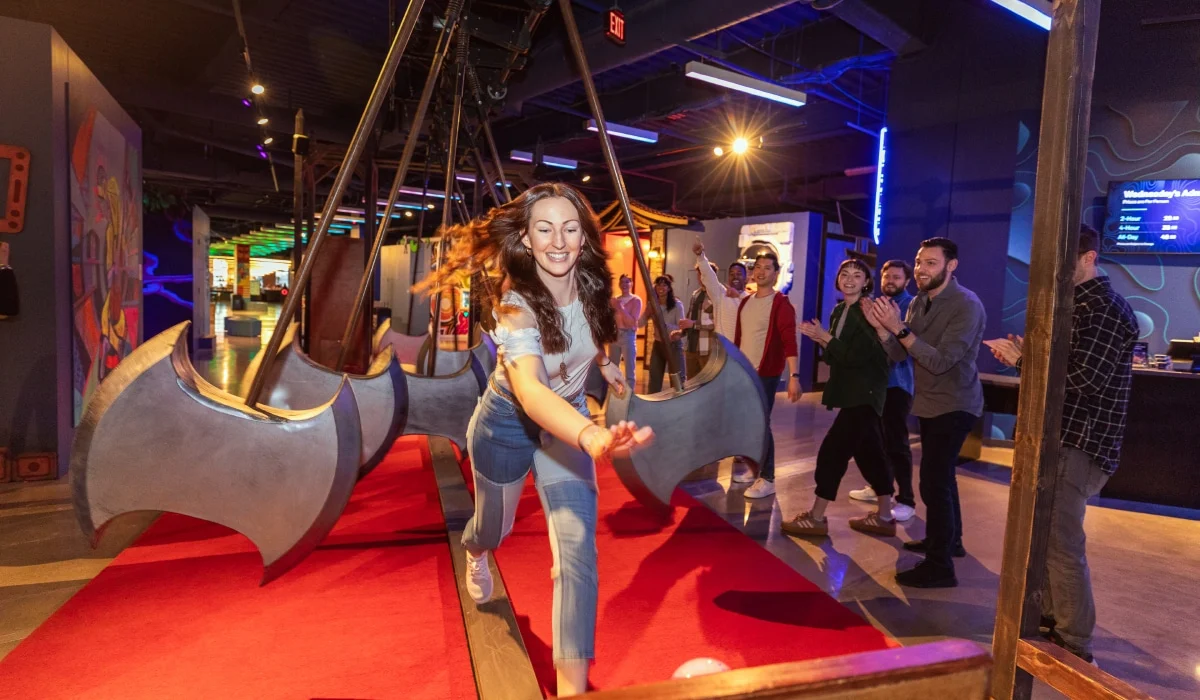
Level99, the pioneer of a large-scale interactive "eatertainment" category, has announced a significant milestone in its corporate trajectory with the acquisition of $50 million in new growth equity. This latest capital infusion comes from Act III Holdings, the investment vehicle led by Ron Shaich, the founder and former CEO of Panera Bread. This commitment serves as a follow-on to previous funding rounds, bringing Act III’s total investment in the concept to $150 million. The move signals a robust confidence in Level99’s ability to scale its proprietary blend of physical and mental challenges, high-end hospitality, and digital integration across the United States.
The timing of the investment coincides with the successful launch of Level99’s fourth and most high-profile location to date at Disney Springs in Lake Buena Vista, Florida. Since opening its doors in June, the Disney Springs venue has reportedly outperformed internal projections, demonstrating the concept’s viability in high-traffic, world-class tourism hubs. This performance has emboldened the company’s leadership to pivot from a regional focus toward an aggressive national real estate strategy, targeting premier retail and lifestyle centers across the country.
The Evolution of the Level99 Concept and Business Model
Founded by Matt DuPlessie, a visionary in the field of immersive attractions and an alumnus of the MIT Media Lab, Level99 was designed to bridge the gap between traditional escape rooms, high-tech arcades, and full-service dining. The concept first debuted in 2021 in Natick, Massachusetts, transforming a massive footprint within the Natick Mall into a sprawling complex of "Challenge Rooms."
Unlike traditional entertainment venues that rely on passive consumption, Level99 centers on active participation. Each venue typically spans between 35,000 and 50,000 square feet, housing more than 50 distinct challenge rooms. These rooms are categorized by the type of skill required—physical, mental, or skill-based—and are designed for groups of two to six players. The "proprietary" nature of these games is a key differentiator; the company designs, builds, and maintains its own hardware and software, ensuring a unique experience that cannot be found at competing venues like Dave & Buster’s or Main Event.
A critical component of the Level99 business model is its focus on "replayability." In the entertainment industry, many attractions suffer from a "one-and-done" problem where guests do not return once they have seen the content. Level99 addresses this by utilizing digital player profiles. Upon entry, guests are issued a radio-frequency identification (RFID) wristband that tracks their progress, scores, and achievements. This gamification strategy, mirroring the progression systems found in modern video games, encourages repeat visits as players strive to "level up" their profiles and unlock new content.
Strategic Partnership with Act III Holdings
The involvement of Ron Shaich and Act III Holdings provides Level99 with more than just financial resources; it provides a blueprint for operational excellence in the hospitality sector. Shaich is widely credited with revolutionizing the "fast-casual" dining segment during his tenure at Panera Bread. His investment philosophy through Act III focuses on "category-defining" brands that offer a distinct value proposition and have the potential for massive scale.
Act III’s initial commitment of $50 million was supplemented by another $50 million in late 2023, and this newest $50 million tranche brings the total follow-on investment to $100 million. Shaich has publicly lauded the concept’s unit economics and its ability to draw consistent foot traffic. In a statement regarding the latest funding, Shaich highlighted the "social energy" of the venue, noting that Level99 successfully combines the mechanics of gaming with a premium hospitality environment.
The partnership reflects a broader trend in the private equity and venture capital worlds, where investors are increasingly looking for "omnichannel" entertainment—businesses that can thrive both as a physical destination and as a brand with deep digital engagement. For Act III, Level99 represents a cornerstone of their portfolio, which also includes other high-growth brands like CAVA and Tatte Bakery & Cafe.
A Chronology of Growth: From Natick to Orlando
Level99’s growth trajectory has been calculated and methodical, focusing on high-density suburban and urban markets with a strong mix of families, young professionals, and corporate groups.
- 2021: Natick, Massachusetts. The flagship location opened during a period of transition for the American mall. By taking over a large-format space previously occupied by traditional retail, Level99 proved that "eatertainment" could serve as a powerful anchor tenant, driving traffic to neighboring stores.
- 2022-2023: Providence and Tysons. The company expanded to Providence, Rhode Island, and Tysons, Virginia. The Tysons location, situated in one of the wealthiest and most competitive retail corridors in the United States, further validated the concept’s appeal to a sophisticated demographic.
- June 2024: Disney Springs, Florida. The opening at Disney Springs marked a turning point. Operating within the Walt Disney World Resort ecosystem required Level99 to meet incredibly high standards for guest experience and operational throughput. The fact that the location exceeded expectations suggests the brand can compete at the highest level of the global attractions industry.
- Late 2024 and Beyond: The company has already broken ground or finalized plans for several new sites. West Hartford, Connecticut, is slated to open later this year. Looking toward 2027, the development pipeline includes major markets such as Paramus, New Jersey; King of Prussia, Pennsylvania; and Raleigh, North Carolina.
Culinary Integration: The "Eat" in Eatertainment
While the challenge rooms are the primary draw, Level99 has invested heavily in its food and beverage (F&B) program to ensure it remains a destination for diners who may not even be participating in the games. This "chef-driven" approach distinguishes the brand from the standard "pizza and wings" fare common in many family entertainment centers.
The menu at Level99 locations often features Detroit-style square pizzas, Wagyu beef burgers, and sophisticated shared appetizers designed for groups. Furthermore, the company has leaned into the "craft" movement by partnering with local breweries. For example, its Massachusetts and Rhode Island locations feature a partnership with Night Shift Brewing, a prominent New England craft brewery. These "taprooms" within the venue provide a sophisticated atmosphere that appeals to adults, making the space viable for corporate events, team-building retreats, and date nights.
This dual-revenue stream—gaming and high-margin F&B—is central to the company’s attractive unit economics. By capturing a larger share of a guest’s total "night out" budget, Level99 maximizes the revenue per square foot of its massive facilities.
Industry Implications and the Future of Retail Real Estate
The rapid expansion of Level99 is indicative of a seismic shift in the commercial real estate landscape. As e-commerce continues to erode the dominance of traditional department stores, mall operators are desperate for "experiential" tenants that provide a reason for consumers to leave their homes. Level99 fits this requirement perfectly, occupying 40,000-square-foot boxes that were once the domain of brands like Sears or Lord & Taylor.
Industry analysts suggest that the "eatertainment" sector is currently in a "gold rush" phase. However, many concepts struggle with high capital expenditures and low repeat visitation. Level99’s reliance on proprietary technology and a "software-update" model for its games allows it to refresh the guest experience without the massive costs associated with rebuilding physical rides or attractions.
The company’s goal to add four locations annually starting in 2027 reflects a controlled but aggressive scaling strategy. If successful, Level99 could become the "Topgolf" of indoor interactive gaming—a ubiquitous, high-quality brand that defines its category.
Official Responses and Strategic Outlook
Founder and CEO Matt DuPlessie emphasized that the additional capital is not just for building walls but for refining the "quality leadership" the brand has established. "This additional investment commitment from Act III further validates our vision and demonstrates the strength of our business model as we work to create this new category of entertainment," DuPlessie stated. He noted that the Disney Springs success was a "litmus test" for the brand’s ability to resonate across diverse geographies.
From the investor perspective, Ron Shaich’s endorsement carries significant weight in the industry. His belief that Level99 is "well-positioned to transform the entertainment landscape" suggests that Act III sees the company as a long-term hold with the potential for an eventual public offering or a high-value acquisition.
As Level99 prepares for its West Hartford opening and eyes the massive markets of Pennsylvania and New Jersey, the company remains focused on maintaining the "THEA Award-winning" quality that defined its first year. The THEA Award, often described as the "Oscar" of the themed entertainment industry, recognized Level99 for its innovation in guest engagement—a standard the company must now maintain as it scales from a regional success to a national powerhouse.
With $150 million in total backing and a proven track record in one of the world’s most competitive entertainment markets, Level99 is no longer a startup experiment; it is a significant player in the reshaping of American leisure and hospitality. The coming years will determine if its "endlessly replayable" model can maintain its momentum as it enters new territories and faces emerging competitors in the rapidly evolving world of interactive entertainment.