admin
admin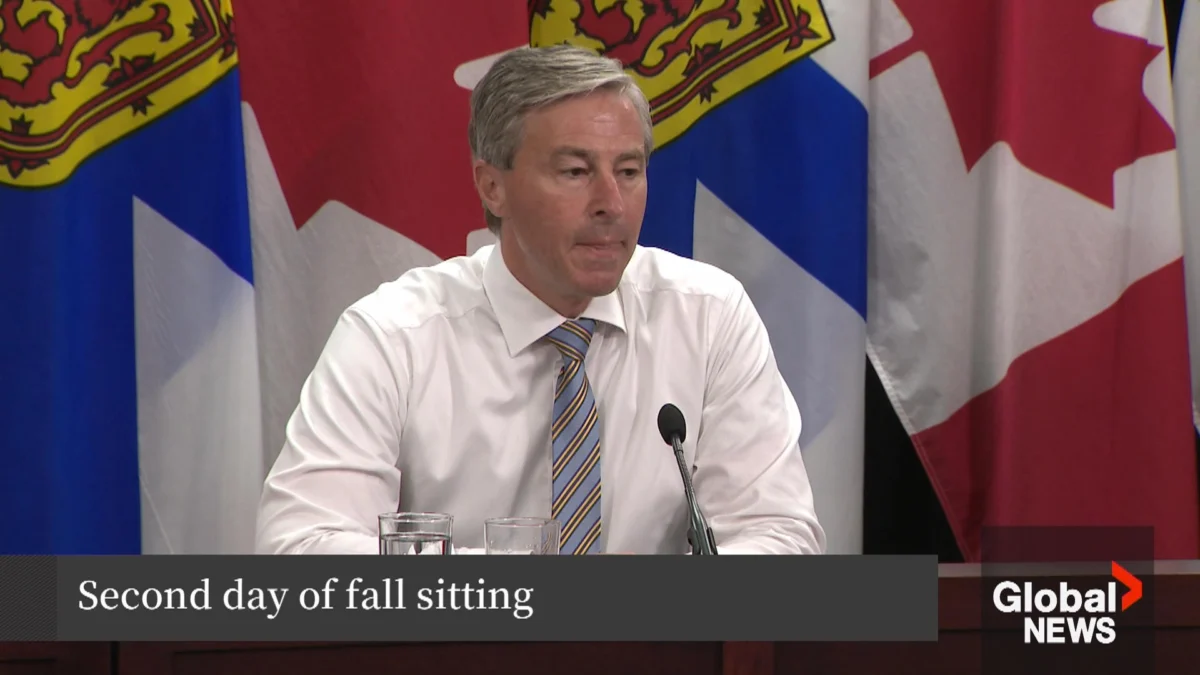
Premier Tim Houston of Nova Scotia announced today his government is initiating a comprehensive review into the fundamental structure of how Nova Scotia Power (NSP), the province’s primary electricity utility, generates its income. This pivotal move aims to directly link the utility’s financial performance to its operational output, service quality, and adherence to provincial energy objectives, marking a significant shift towards enhanced accountability and improved service for Nova Scotians. The Premier, who also holds the portfolio of Minister of Energy, tabled legislation that mandates the Nova Scotia Energy Board to undertake this crucial examination, focusing on the implementation of a performance-based regulation (PBR) framework. This legislative action comes amidst persistent public dissatisfaction over rising electricity costs and concerns regarding service reliability, issues that have long galvanized public discourse and opposition calls for reform.
The Rationale Behind the Reform
The impetus for this legislative push stems from a widely held sentiment among Nova Scotians that they are not receiving adequate value for their significant electricity expenditures. Premier Houston articulated this concern, stating that his government seeks to fundamentally question whether the current income model of the utility genuinely incentivizes better service and accountability. The proposed bill, if enacted, would compel the Nova Scotia Energy Board to scrutinize the existing regulatory framework and explore the merits of transitioning to a PBR model. This model, unlike traditional cost-of-service regulation, would directly connect a portion of NSP’s revenues, earnings, or even subject it to incentives and penalties, based on measurable outcomes. These outcomes are explicitly defined in the proposed legislation to include critical areas such as system reliability, progress in emissions reduction, and overall customer service quality. The government believes that such a linkage would create a powerful incentive for NSP to not only meet but exceed performance targets, while simultaneously holding it financially responsible for any shortcomings.
A History of Public Concern
Nova Scotia Power, a subsidiary of Emera Inc., operates as a regulated monopoly, providing electricity generation, transmission, and distribution services to over 520,000 customers across the province. For decades, its operations have been overseen by the Nova Scotia Utility and Review Board (NSUARB), an independent quasi-judicial body responsible for setting rates and ensuring fair practices. However, public confidence in NSP’s performance has been repeatedly challenged. Rate increases, often justified by the utility to fund necessary infrastructure upgrades or operational costs, have been a recurring point of contention. Over the past decade, for instance, Nova Scotians have witnessed a series of rate adjustments, leading to some of the highest electricity costs in Atlantic Canada. These increases have often been coupled with public frustration over service reliability, particularly in the wake of severe weather events that frequently plunge large swaths of the province into prolonged darkness. Major hurricanes and winter storms have exposed vulnerabilities in the grid, leading to widespread and lengthy power outages, further fueling the narrative of inadequate service for the price paid.
Beyond reliability and cost, NSP’s role in meeting the province’s ambitious climate change targets has also been a focal point of public and political debate. Nova Scotia has set aggressive goals for phasing out coal-fired electricity generation and transitioning to renewable energy sources, aiming for 80% renewable electricity by 2030. While NSP has made strides in integrating renewables, the pace and cost of this transition, along with the continued reliance on fossil fuels for a significant portion of its generation, remain under public scrutiny. The current regulatory framework, critics argue, may not adequately incentivize the utility to accelerate its decarbonization efforts or prioritize innovative, cost-effective solutions that benefit ratepayers and the environment concurrently. These multifaceted concerns have created fertile ground for a new approach to utility regulation, one that the Houston government now seeks to champion through this proposed bill.
Detailing the Proposed Legislation
The bill tabled by Premier Houston is designed to initiate a formal process rather than immediately impose a new regulatory model. Its primary function is to direct the Nova Scotia Energy Board to conduct an in-depth review of performance-based regulation for Nova Scotia Power. The legislation specifies that this review must commence within 30 days of the bill receiving royal assent and becoming law. This timeline underscores the government’s intent to move swiftly on the matter, signaling its commitment to addressing public concerns without undue delay.

Performance-Based Regulation Explained
Performance-based regulation (PBR) represents a departure from the traditional cost-of-service (COS) model, where utilities are typically allowed to recover their prudently incurred costs plus a regulated rate of return on their capital investments. While COS provides stable earnings for utilities, critics argue it can disincentivize cost efficiency and innovation, as utilities have less incentive to reduce expenses that they can simply pass on to ratepayers. PBR, in contrast, aims to align utility incentives with public policy goals and customer interests. It introduces mechanisms that financially reward utilities for achieving predefined performance targets and penalize them for failing to meet those targets.
Key metrics that could be considered under a PBR framework in Nova Scotia, as suggested by the government, include:
- Reliability: This would likely involve standard industry metrics such as the System Average Interruption Duration Index (SAIDI), which measures the average duration of power interruptions for each customer, and the System Average Interruption Frequency Index (SAIFI), which measures the average number of interruptions experienced by each customer. Improved reliability would lead to financial incentives, while declining reliability could trigger penalties.
- Emissions Reduction: Given Nova Scotia’s climate goals, PBR could link a portion of NSP’s earnings to its success in reducing greenhouse gas emissions from its operations, accelerating the integration of renewable energy, and investing in clean energy technologies. This could involve specific targets for renewable energy penetration or carbon intensity.
- Customer Service: This category could encompass various aspects, including response times to inquiries, complaint resolution rates, ease of access to information, and overall customer satisfaction scores. Metrics could be derived from customer surveys, call center data, and complaint logs.
- Operational Efficiency: While not explicitly mentioned in the initial summary, PBR often includes efficiency targets, encouraging utilities to minimize operational costs through innovation and best practices, rather than simply passing those costs on to consumers.
The legislation envisions a system where if NSP exceeds targets in these areas, it could earn additional revenue or a higher rate of return. Conversely, if it falls short, it could face financial penalties, such as reduced allowable earnings or mandatory rebates to customers. This direct financial linkage is intended to provide a powerful impetus for the utility to prioritize performance in areas of critical public interest. The Nova Scotia Energy Board’s review will be tasked with defining these specific metrics, establishing appropriate benchmarks, and designing the precise incentive and penalty mechanisms to ensure they are fair, transparent, and effective. The final report from the board is expected to detail these recommendations, paving the way for potential regulatory changes.
The Path Forward: A Chronology of Review
The process outlined by the government sets a clear timeline for action. Upon the bill’s enactment, the Nova Scotia Energy Board will have a 30-day period to formally initiate its review. This initial phase will likely involve internal planning, the appointment of expert consultants if necessary, and the development of a detailed work plan.
Following the initiation, the review process itself is anticipated to be comprehensive and multi-faceted, involving:
- Stakeholder Consultation: The Energy Board will undoubtedly invite submissions and hold public hearings, providing an opportunity for Nova Scotia Power, consumer advocacy groups, environmental organizations, industry experts, and the general public to present their perspectives, data, and recommendations. This public engagement is crucial for ensuring transparency and incorporating diverse viewpoints into the regulatory design.
- Data Collection and Analysis: The Board will require extensive data from Nova Scotia Power regarding its historical performance in areas like reliability, emissions, operational costs, and customer service. This data will be critical for establishing baseline performance and setting realistic yet ambitious targets under a PBR framework.
- Jurisdictional Scan: A key component of the review will likely involve examining how PBR models have been implemented in other jurisdictions, both nationally and internationally. Learning from the successes and challenges faced by utilities and regulators in places like Ontario, British Columbia, California, or the United Kingdom will inform the design of a model tailored for Nova Scotia.
- Drafting Recommendations: Based on the gathered evidence, consultations, and analysis, the Nova Scotia Energy Board will formulate a set of recommendations for a performance-based regulatory framework for Nova Scotia Power. These recommendations will cover specific performance metrics, the structure of incentives and penalties, the frequency of performance reviews, and the overall governance of the new system.
- Publication of Final Report: As stipulated by the proposed legislation, the final report of the Energy Board’s review will be made public. This transparency will allow Nova Scotians to understand the rationale behind the proposed changes and hold both the government and the utility accountable for their implementation. The precise duration of this comprehensive review has not been specified but, given the complexity and significance of the undertaking, it is reasonable to expect it could span several months, potentially extending into the next calendar year, before a definitive framework is recommended for implementation.
Stakeholder Reactions and Expert Perspectives
The announcement of the proposed bill has elicited a range of anticipated reactions from various stakeholders, reflecting the complex interplay of interests in the province’s energy sector.

Government and Opposition Views
Premier Houston reiterated his government’s unwavering commitment to ensuring Nova Scotians receive fair value and reliable service. "For too long, Nova Scotians have felt that their hard-earned money isn’t translating into the reliable, affordable electricity they deserve," Houston stated during his announcement. "This bill is about putting customers first, holding our utility accountable, and ensuring our energy future is built on performance, not just profit." He emphasized that this move is a critical step towards modernizing the regulatory landscape and aligning NSP’s operations with provincial priorities.
The opposition parties, who have historically advocated for stronger oversight of Nova Scotia Power, largely welcomed the initiative, though often with a note of caution. Hypothetically, the leader of the official opposition might comment, "While we are pleased to see the government finally acting on what we have called for for years, the devil will be in the details. We need a robust, transparent process that genuinely empowers the Energy Board and delivers tangible benefits to ratepayers, not just symbolic gestures. We will be watching closely to ensure this isn’t just another review that gathers dust." This reflects a common political stance of supporting a popular measure while retaining critical oversight.
Industry and Advocacy Responses
Nova Scotia Power, as the directly impacted entity, would likely issue a statement expressing its commitment to collaborating with the government and the Nova Scotia Energy Board throughout the review process. A hypothetical spokesperson for NSP might say, "Nova Scotia Power is committed to providing safe, reliable, and increasingly clean energy to our customers. We understand the importance of accountability and continuous improvement. We look forward to engaging constructively with the Nova Scotia Energy Board to explore how a performance-based framework can support our ongoing investments in grid modernization, renewable energy integration, and enhanced customer service, all while balancing affordability for Nova Scotians." This type of statement would typically emphasize their dedication to customers and provincial goals while subtly highlighting the challenges and investment needs inherent in operating a utility.
Consumer advocacy groups, long vocal critics of NSP’s rates and service, would likely express cautious optimism. A representative from a hypothetical consumer watchdog organization might state, "This is a positive first step, and we applaud the government for listening to the concerns of Nova Scotians. However, the success of this initiative will depend entirely on the strength of the performance metrics, the independence of the Energy Board, and the enforcement of penalties. We must ensure that any new framework genuinely translates into lower bills, fewer outages, and better service for everyday Nova Scotians, not just a new way for the utility to justify its earnings."
Environmental groups would also weigh in, emphasizing the need for emissions reduction targets to be central to any performance-based framework. A hypothetical spokesperson for an environmental organization could add, "As Nova Scotia races towards its climate targets, it’s imperative that Nova Scotia Power is incentivized to accelerate its transition to clean energy. The PBR framework must include ambitious, measurable targets for decarbonization and grid modernization that support a sustainable and affordable energy future for the province."
Independent energy experts would offer balanced perspectives. Dr. Eleanor Vance, a hypothetical professor of energy economics at a local university, might explain, "Performance-based regulation has shown promise in other jurisdictions for aligning utility incentives with public policy goals. However, designing effective PBR is a complex task. It requires careful consideration of the right metrics, avoiding unintended consequences like cost-cutting that compromises safety, and ensuring regulatory certainty for necessary capital investments. The Nova Scotia Energy Board will have a significant challenge, but also an opportunity, to craft a robust model that truly benefits the province."

Broader Implications for Nova Scotia’s Energy Future
The proposed shift to a performance-based regulatory model carries profound implications for Nova Scotia’s energy landscape, affecting the utility, its customers, and the province’s broader economic and environmental objectives.
Potential Benefits and Challenges
For Nova Scotia Power, a PBR framework could necessitate a significant reorientation of its business strategy. Instead of primarily focusing on capital expenditure recovery, the utility would be incentivized to prioritize operational efficiency, customer satisfaction, and innovative solutions that deliver measurable results. This could lead to accelerated investments in smart grid technologies, improved maintenance practices to enhance reliability, and a more aggressive pursuit of renewable energy projects that meet provincial targets. The potential for financial incentives could also spur innovation and lead to a more agile and responsive utility.
For ratepayers, the most anticipated benefits include improved service reliability, potentially more stable or even lower electricity rates in the long term due to efficiency gains, and a more responsive customer service experience. If the PBR framework is well-designed, it could create a direct link between the quality of service received and the costs incurred, fostering greater trust between the utility and its customers.
For the province, a successful PBR model could be instrumental in achieving its ambitious climate change goals by financially incentivizing NSP to meet decarbonization targets. It could also contribute to greater economic competitiveness by providing more reliable and potentially more affordable energy, which is a key factor for attracting and retaining businesses. Furthermore, it represents a significant step towards modernizing governance in a critical sector, demonstrating the government’s commitment to accountability and public interest.
However, implementing PBR is not without its challenges. Defining the "right" performance metrics is crucial; they must be clear, measurable, and relevant, without being overly prescriptive or creating perverse incentives. Data collection and verification will need to be robust to ensure transparency and fairness. The Nova Scotia Energy Board will require significant expertise and resources to effectively design, implement, and continually monitor such a complex regulatory system. There is also the risk of "gaming" the system, where utilities might focus solely on incentivized metrics to the detriment of other important areas, or where setting targets too low fails to drive meaningful improvement. Balancing the need for utility profitability to attract investment with the desire for lower rates and improved service will be a delicate act.
A National and International Context
Nova Scotia’s move towards performance-based regulation places it within a broader trend observed across North America and internationally. Utilities in jurisdictions like California, New York, Ontario, and parts of the United Kingdom have adopted various forms of PBR to address similar challenges related to grid modernization, decarbonization, and customer expectations. These models often vary in their complexity and specific incentives, but share the common goal of shifting utilities from a volume-based revenue model to one that rewards outcomes. Learning from these diverse experiences will be vital for Nova Scotia as it embarks on its own journey to redefine the relationship between its primary electricity provider and the public it serves. The proposed bill represents not just a regulatory adjustment, but a potential paradigm shift in how Nova Scotia Power operates and how Nova Scotians experience their essential electricity service in the years to come.