admin
admin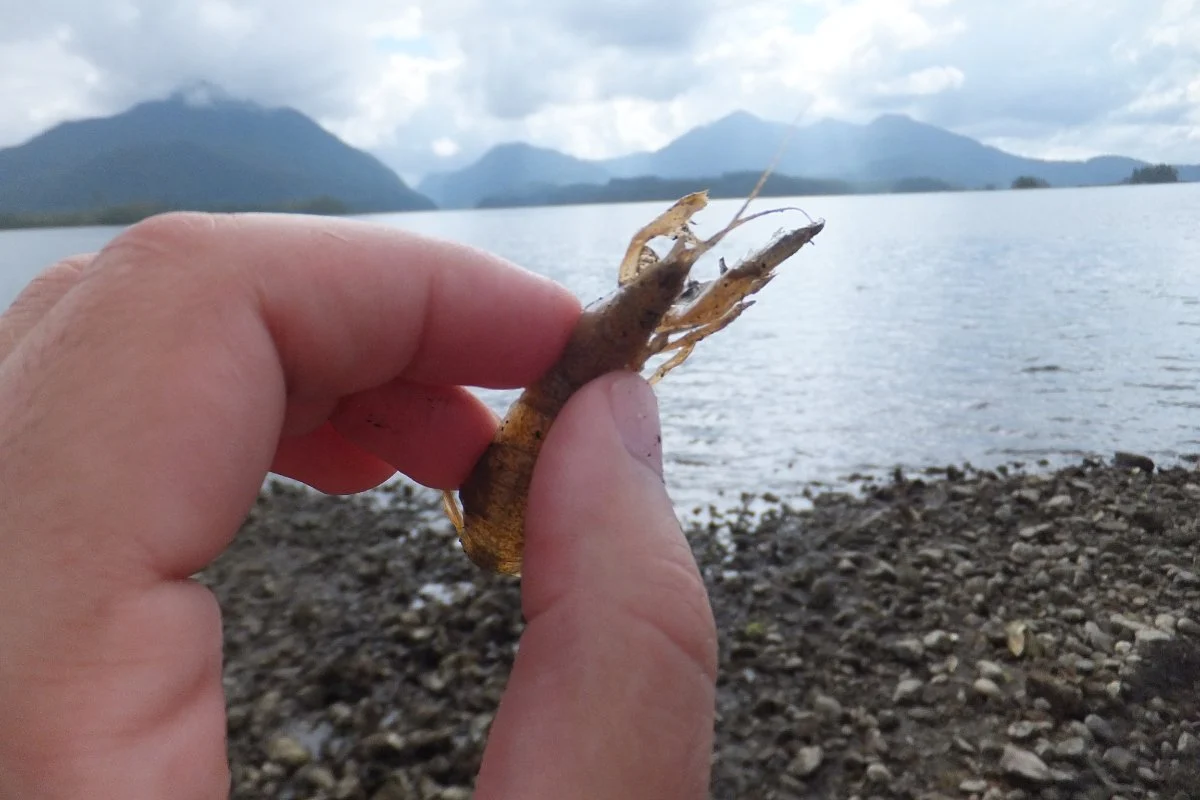
The serene, productive waters of Willapa Bay, Washington, a vital hub for Pacific Northwest aquaculture, are at the epicenter of a renewed battle against the tenacious ghost shrimp, a persistent menace threatening the region’s multi-million dollar oyster industry. As traditional pesticide controls are a thing of the past, farmers and scientists are embracing a suite of innovative strategies, from groundbreaking vibrocompaction technology to adaptive farming techniques, to safeguard the future of oyster cultivation in this ecologically significant estuary.
The Enduring Challenge of the Ghost Shrimp
For decades, oyster farmers in Willapa Bay have grappled with Neotrypaea californiensis, commonly known as the ghost shrimp. These burrowing crustaceans, typically reaching lengths of 2-4 inches, create extensive networks of tunnels in the intertidal mudflats, transforming firm, stable oyster beds into unstable, silty quagmires. This destabilization suffocates young oysters (spat), prevents proper growth, and can even bury mature oysters, leading to significant mortality rates and substantial economic losses for an industry that has been a cornerstone of the regional economy for over a century. The problem, while historical, intensified with shifts in environmental conditions and farming practices, prompting a critical need for effective control measures.
Historically, the primary weapon against ghost shrimp was the pesticide carbaryl, a carbamate insecticide applied directly to the affected beds. While effective at reducing shrimp populations, growing environmental concerns over its impact on non-target species, water quality, and overall ecosystem health led to its gradual phase-out and eventual ban in the early 2010s. The cessation of carbaryl use, while lauded by environmental advocates, left oyster farmers without a proven, large-scale solution, plunging the industry into a crisis and spurring an urgent search for sustainable alternatives.
Vibrocompaction: An Engineering Solution from Concrete to Crustaceans
Amidst this urgent demand for alternatives, a promising new technology called vibrocompaction has emerged as a potential game-changer. This innovative approach, developed by Laura Ruesink, a research scientist at the University of Washington, and her husband, Alan Trimble, a former research scientist at the same institution, draws inspiration from civil engineering principles used in consolidating wet concrete for building foundations. The core hypothesis is elegantly simple yet profoundly effective: if vibrating concrete can create a dense, stable foundation, why not apply the same principles to compact mud and trap burrowing shrimp?
The concept behind vibrocompaction involves simultaneously vibrating the mud about a foot below the surface while compacting it from above. The vibration temporarily reduces the friction between the mud particles, allowing the applied pressure to consolidate the substrate into a hard, impenetrable layer. In essence, the shrimp, typically insulated by a meter of wet sand, are caught beneath this newly hardened surface, effectively trapped and unable to access oxygen or food. Early attempts to crush shrimp by simply driving heavy machinery like tanks, Marsh Masters, or snow rollers over the sand had largely failed, as the shrimp remained safely ensconced in their deep burrows. The addition of targeted vibration is the critical differentiator.
Initial trials conducted on oyster farms in Willapa Bay have yielded highly encouraging results. Ruesink and Trimble reported that vibrocompaction performed "on par with carbaryl" in terms of effectively eliminating ghost shrimp populations in treated areas. Within a few days of treatment, the shrimp, unable to burrow through the compacted mud, succumbed. This "proof of concept" is a significant milestone, demonstrating the viability of a non-chemical, mechanical solution to a long-standing biological problem.
The potential for scaling this technology is now Ruesink’s primary focus. She envisions the development of a specialized machine capable of treating 100 to 200 acres per year – the estimated area necessary to maintain the economic viability of oyster farming in Willapa Bay. Such a machine, she estimates, would cost approximately $2 million and could be deployed within two years, representing a substantial investment in the industry’s future.
Recognizing the promise of this research, the U.S. Department of Agriculture (USDA) recently awarded Ruesink a substantial $300,000 grant on September 30, [Current Year – assuming 2024 for timeline purposes], to continue her vibrocompaction research through 2028. This crucial funding will enable Ruesink to expand trials across multiple sites within Willapa Bay, allowing for a more comprehensive assessment of the technology’s efficacy and its broader ecological impacts. A key aspect of this expanded research will be to rigorously study whether vibrocompaction is harmful to other important species, particularly clams, which are also extensively farmed in Willapa Bay and, ironically, can also be smothered by dense ghost shrimp populations. Ensuring the environmental safety of this new method is paramount for its long-term acceptance and implementation.
Adaptive Strategies: Tracking Shrimp and Moving Off-Bottom
While vibrocompaction offers a direct intervention, some oyster farmers and researchers are also exploring more adaptive strategies, focusing on understanding shrimp behavior and altering farming methods to mitigate their impact. As oyster farmer Wilson pragmatically observes, "I think you have two options: track the shrimp or get off the bottom somehow."
One promising adaptive approach involves meticulously tracking the movements of ghost shrimp populations. Ruesink notes that the cessation of pesticide use has inadvertently provided a clearer view into the natural dynamics of shrimp populations, allowing researchers to observe their movements with greater accuracy. Studies have documented that the borders of shrimp-infested grounds can retreat anywhere between 9 and 30 meters per year. This observed mobility suggests a potential for tactical farming – strategically planting oysters on the "receding side" of shrimp movements, thereby utilizing areas that have recently been vacated by the crustaceans.
To facilitate this tracking, Katie Ruesink of Bay Center Farms, Laura Ruesink and Alan Trimble’s daughter, has been employing drone technology since early 2026. By flying a camera-mounted drone over their plots, she has been able to visually track the movements of shrimp from above, generating valuable data on their spatial and temporal dynamics. This data could eventually lead to predictive models, allowing farmers to anticipate shrimp movements and adjust their planting schedules and locations accordingly. However, critical questions remain regarding the viability of this strategy, particularly "What’s the interval between when they’re gone and when they come back?" – a crucial factor for long-term planning and investment.
Another significant adaptive strategy involves moving away from traditional ground culture and "getting off the bottom" entirely. This means cultivating oysters in the bay’s open water, away from the vulnerable intertidal flats where ghost shrimp thrive. Shoalwater Seafood, operated by the Shoalwater Bay Indian Tribe, pioneered this approach in Willapa Bay, starting their oyster farming operations in 2019. Instead of laying oyster seed directly on the tideflats, they invested in floating cage systems, specifically the "FlipFarm" technology from a New Zealand-based company.
The FlipFarm system represents a paradigm shift in oyster cultivation. It utilizes cages that float on the water’s surface, allowing oysters to grow suspended in the water column, entirely circumventing the ghost shrimp problem. Furthermore, this system is primarily geared towards cultivating oysters for the burgeoning half-shell market, a segment of the seafood industry that is experiencing faster growth than the traditional market for oyster meat, which has long been Willapa Bay’s staple product.
The advantages of off-bottom culture are compelling. Half-shell oysters grown in these systems mature much faster, typically ready for harvest in 12 to 18 months, compared to the three to five years required for larger ground oysters. An entry-level FlipFarm installation, costing roughly $30,000, can produce approximately 5,000 dozen oysters. This yield is roughly equivalent to what can be grown on one acre using traditional ground culture methods in Willapa Bay, but in half the time, offering a quicker return on investment and greater efficiency.
However, transitioning to off-bottom culture is not without its challenges, particularly for established farms spanning hundreds of acres, like Wilson’s. The capital investment required to convert from bottom culture to floating cages on such a large scale would be significant. Moreover, Wilson points out the competitive nature of the half-shell market, noting that while it offers "fast turnaround, faster money," farmers "aren’t getting that much more for their product" than they are for traditional ground oysters. These economic considerations mean that for many farmers deeply invested in traditional methods, a complete transition may not be immediately feasible or desirable.
A Broader Landscape of Challenges and Resilience
The ghost shrimp crisis, while significant, is but one facet of the multifaceted challenges confronting oyster farmers in Willapa Bay. Wilson’s candid assessment paints a stark picture of the industry’s enduring struggles: "We are in an industry where we have an 89.6 percent mortality [rate for oysters], and on top of that, we have shrimp and now green crab." This high baseline mortality rate, compounded by invasive species, underscores the inherent difficulties and risks of aquaculture.
Beyond ghost shrimp, farmers also battle invasive estuary weeds that can choke out oyster beds, predatory snails that feed on young oysters, and the rapidly expanding threat of the European green crab (Carcinus maenas). The green crab, an aggressive invasive species, competes with native crabs, preys on shellfish, and degrades eelgrass habitats, further stressing the delicate ecosystem of Willapa Bay and adding another layer of complexity to oyster management. These continuous conflicts paint a picture of an industry constantly on the defensive, requiring immense resilience and adaptability from its practitioners.
Despite these "dire" circumstances, which Wilson suggests have become "normal" in the demanding world of farming, the spirit of innovation and perseverance remains strong. The ongoing research into vibrocompaction, the tactical exploration of shrimp movements, and the adoption of advanced off-bottom farming technologies all demonstrate a proactive approach to securing the future of this vital industry.
Official Responses and the Path Forward
The support from institutions like the USDA for vibrocompaction research highlights a broader recognition of the need for sustainable aquaculture solutions. This federal funding is critical in bridging the gap between scientific discovery and practical application, enabling the rigorous testing and scaling required for new technologies to be adopted by the industry. The emphasis on studying the ecological impacts of vibrocompaction, particularly on non-target species like clams, reflects a commitment to environmentally responsible innovation.
The Willapa Bay oyster industry stands at a pivotal juncture. The blend of high-tech engineering solutions, data-driven adaptive strategies, and diversified farming methods points toward a future where coexistence with environmental challenges, rather than eradication, becomes the norm. The ongoing efforts by scientists, farmers, and government agencies underscore a collective commitment to protecting Willapa Bay’s ecological integrity while ensuring the continued economic vitality of its cherished oyster farms. The quest for sustainable solutions is not merely about preserving a commodity; it is about sustaining a way of life, an ecosystem, and a cultural heritage deeply rooted in the waters of the Pacific Northwest.