admin
admin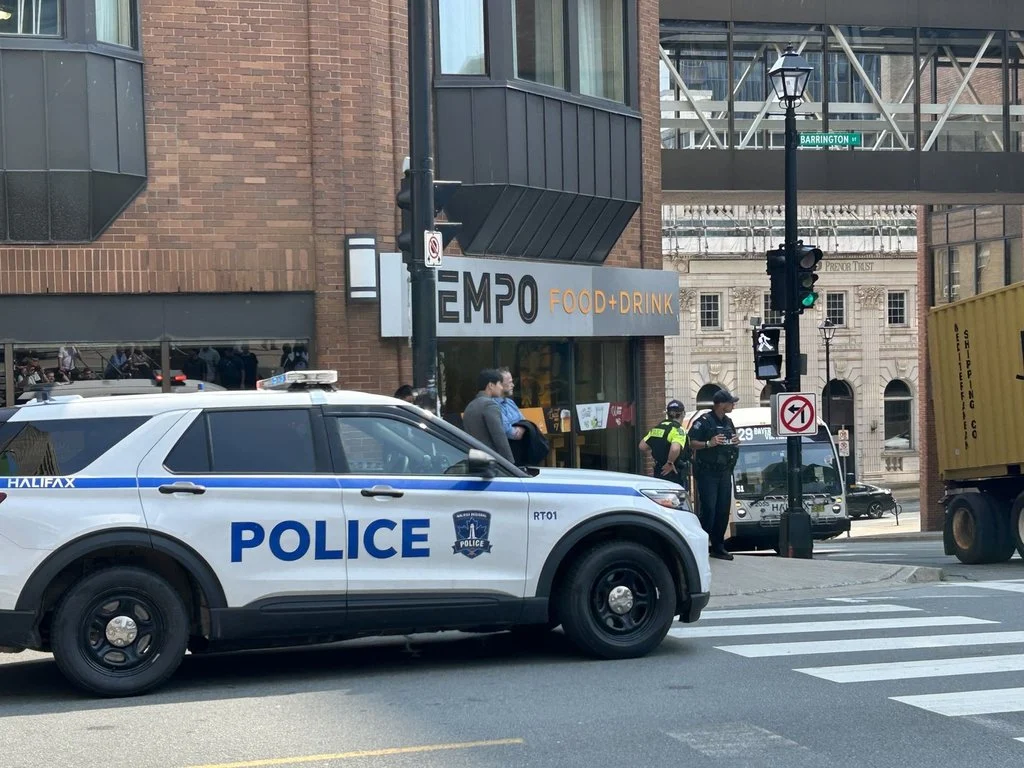
Proceedings for Ali Assakereh, the 54-year-old man accused of threatening to bomb the U.S. consulate in Halifax in August, encountered significant procedural hurdles during a recent court appearance, leading to a rescheduling and a judicial directive for in-person attendance to mitigate communication issues. The hearing, conducted via video link, was abruptly halted when Assakereh, represented by legal aid lawyer Krysten Stevens, expressed a desire to plead not guilty and opt for a judge-alone trial in the Nova Scotia Supreme Court. However, a handwritten note held up to the camera by the accused contradicted this stance, stating, "I no need to change court," prompting Provincial Court Judge Barbara Beach to adjourn the matter until next month. This development underscores the complexities inherent in cases involving international security implications, language barriers, and the potential application of Canada’s anti-terrorism legislation.
Courtroom Snafus and the Path Forward
The October 8, 2026, hearing began with Stevens informing Judge Beach of her client’s intention to bypass a preliminary inquiry and proceed directly to a judge-alone trial in the Nova Scotia Supreme Court, where he would enter a plea of not guilty. This strategic move, common in cases where the defence aims to streamline the judicial process or avoid certain disclosures at an earlier stage, was initially accepted by the court, with Judge Beach advising that the plea would formally be entered before the higher court. However, the unexpected intervention from Assakereh himself, who had been listening to the proceedings through a telephone line and had reportedly complained about audio levels, introduced immediate confusion. His handwritten note directly contradicted the instructions conveyed by his counsel, creating an impasse.
Recognizing the potential for miscommunication and the critical nature of the charges, Judge Beach mandated that both Assakereh and his Farsi interpreter appear in person for the next hearing. Farsi, the official language of Iran and widely spoken in Afghanistan and Tajikistan, requires precise and nuanced interpretation, especially in legal contexts where a misunderstanding of a single word can have profound implications. The reliance on a video link and telephone interpretation, while often a practical necessity in modern justice systems, proved inadequate in this particular instance, highlighting the persistent challenges of ensuring equitable access to justice for accused individuals with language barriers. The decision for in-person attendance aims to ensure absolute clarity and prevent further procedural derailments in a case already fraught with high-stakes legal implications.
The Alleged Incident: A Day of Disruption in Downtown Halifax
The charges against Assakereh stem from an incident on August 10, 2026, which sent shockwaves through downtown Halifax and triggered a large-scale emergency response. According to police reports, Assakereh allegedly placed a propane tank and flammable liquids inside his vehicle and then parked it in close proximity to the U.S. consulate building on Upper Water Street. The discovery prompted swift action from law enforcement and emergency services. Authorities initiated a broad evacuation of a significant section of downtown Halifax, impacting businesses, residences, and pedestrian traffic, as a precautionary measure to ensure public safety.

The Halifax Regional Police, in conjunction with the RCMP and other specialized units, established a wide perimeter around the consulate. The Canadian Armed Forces’ Joint Task Force (Atlantic) also deployed an Explosive Ordnance Disposal (EOD) team to the scene. These highly trained specialists conducted a meticulous assessment of the vehicle and its contents. After several hours of intense investigation and analysis, the explosives experts determined that while the propane tank and flammable liquids were present, they did not constitute an immediate threat to public safety in the configuration found. Consequently, all evacuation orders were lifted later the same day, allowing residents and businesses to return to normalcy, albeit with lingering concerns about the implications of such an incident. The incident, though ultimately deemed non-threatening in its execution, underscored the vulnerabilities of diplomatic missions and the extensive resources required to respond to potential security breaches.
Grave Charges and the Shadow of Terrorism Legislation
Ali Assakereh is currently facing three specific charges under the Criminal Code of Canada: mischief, uttering threats, and a charge under Section 431.2, which specifically prohibits threats against internationally protected persons, including diplomats. While mischief (Section 430) and uttering threats (Section 264.1) carry significant penalties, it is the charge under Section 431.2, coupled with the Crown’s intention to classify the alleged actions as "terrorist activity," that elevates the case to an exceptionally serious level.
Section 431.2 of the Criminal Code is designed to protect individuals who, by virtue of their diplomatic status or international role, are afforded special protection under international law. A conviction under this section alone can lead to a substantial prison sentence. However, the Crown’s declaration that it considers the alleged offence to be "terrorist activity" dramatically alters the potential legal landscape. Under Part II.1 of the Criminal Code, specifically Section 83.01, "terrorist activity" is broadly defined to include an act committed in whole or in part for a political, religious, or ideological purpose, objective, or cause with the intention of intimidating the public, or a segment of the public, with regard to its security, including economic security, or compelling a person, a government or a domestic or an international organization to do or to refrain from doing any act.
Should the court agree with the Crown’s designation of the alleged threat as terrorist activity, the penalties for the underlying offences are significantly enhanced. For instance, an offence that might ordinarily carry a maximum sentence of five years in prison could, under the terrorism enhancement, become punishable by up to life imprisonment. This distinction is not merely semantic; it reflects a legislative intent to treat acts aimed at undermining national security or international relations with the utmost gravity. The prosecution’s decision to pursue this designation indicates their belief that Assakereh’s alleged actions were not merely criminal but were intended to cause widespread fear or to coerce a government, aligning with the stringent definitions of terrorism in Canadian law. This legal strategy signals a robust response to perceived threats against diplomatic security and national interests.
Diplomatic Security in a Volatile World: The Canadian Context
The alleged threat against the U.S. consulate in Halifax is not an isolated incident but rather fits into a broader pattern of heightened security concerns surrounding diplomatic missions globally and within Canada. Diplomatic facilities, symbolizing foreign presence and influence, are often perceived targets for individuals or groups seeking to express political grievances or sow discord.

Just weeks prior to the Halifax incident, the U.S. Consulate in Toronto was targeted by gunfire on two separate occasions in 2026. The first incident, on March 10, involved two suspects allegedly firing multiple shots at the building, leading to charges against an 18-year-old and a 19-year-old. A second shooting occurred in July, resulting in the arrest and charges against a 19-year-old man and a 15-year-old boy. While no one was injured in either Toronto shooting, these events, coupled with the Halifax threat, underscore a worrying trend of increased direct threats against foreign diplomatic interests on Canadian soil.
These incidents necessitate a constant review and enhancement of security protocols by Canadian authorities, including the RCMP, which is responsible for protecting foreign diplomatic missions. The coordinated response in Halifax, involving local police, federal agencies, and military assets, demonstrates the multi-layered approach to protecting these critical sites. Such events also strain inter-agency resources and demand seamless cooperation between municipal, provincial, and federal law enforcement bodies. The U.S. State Department and Global Affairs Canada regularly collaborate on security assessments and intelligence sharing to mitigate risks, but the dynamic nature of threats means vigilance must be perpetual.
The Role of Legal Aid and Procedural Justice
The involvement of Legal Aid in Assakereh’s defence highlights a fundamental principle of the Canadian justice system: the right to legal representation, regardless of an accused’s financial means. Krysten Stevens, as a Legal Aid lawyer, is tasked with ensuring her client’s rights are protected and that he receives a fair trial, even in the face of serious allegations and complex legal procedures. This role is particularly crucial when an accused faces language barriers, as effective communication between lawyer and client, and between client and court, is paramount.
The procedural confusion observed during the video hearing — where Assakereh’s handwritten note contradicted his lawyer’s stated intentions — illustrates the practical difficulties that can arise. Legal Aid lawyers often navigate these challenges, ensuring that interpreters are properly utilized and that their clients fully comprehend the legal process, their rights, and the implications of their decisions. The judge’s directive for an in-person appearance for both Assakereh and his Farsi interpreter underscores the court’s commitment to procedural fairness, recognizing that accurate communication is non-negotiable when an individual’s liberty is at stake, especially in a case with such high potential penalties. The legal system must balance efficiency with the imperative of ensuring every accused person can meaningfully participate in their defence.
Broader Implications and Public Perception
The alleged bomb threat in Halifax and the subsequent legal proceedings carry significant broader implications beyond the immediate case. For the city of Halifax, such an incident creates public anxiety and disrupts daily life, raising questions about urban security and emergency preparedness. The temporary evacuation of a bustling downtown area, while necessary for safety, has economic consequences for businesses and causes inconvenience for residents.

From a national and international perspective, threats against diplomatic missions are seen as direct challenges to international relations and the principle of diplomatic immunity. They can strain bilateral relations and necessitate increased security measures, which come at a considerable cost. The designation of an alleged act as "terrorist activity" also sends a powerful message about Canada’s commitment to combating terrorism in all its forms, signaling that such threats will be met with the full force of the law. This approach aligns with Canada’s international obligations and its stance against acts that seek to undermine peace and security.
Security experts note that incidents targeting diplomatic sites, even if ultimately deemed non-threatening in their immediate physical capacity, can still achieve a psychological impact by creating fear and uncertainty. They prompt critical reviews of intelligence gathering, threat assessment protocols, and rapid response capabilities. The ongoing legal process will delve into the specifics of Assakereh’s intent and actions, and its outcome will likely inform future security policies and public discourse around national security and diplomatic protection.
The Road Ahead
With the case now rescheduled for next month, the focus will be on resolving the procedural ambiguities and ensuring a clear path forward. The in-person attendance requirement for Ali Assakereh and his Farsi interpreter is a crucial step towards preventing further miscommunications and ensuring that all parties are aligned on the procedural next steps. The defence will continue to prepare its strategy, while the Crown will continue to build its case, particularly regarding the contentious "terrorist activity" designation.
The Nova Scotia Supreme Court will ultimately be the venue where Assakereh formally enters his plea and where the more substantive legal arguments surrounding the charges, including the terrorism enhancement, will be heard. This complex legal battle is poised to be a significant test of Canada’s anti-terrorism framework and its commitment to protecting diplomatic integrity in an increasingly unpredictable global environment. The outcome will be closely watched by legal experts, security officials, and the international community, as it will set important precedents for how Canada addresses threats against internationally protected persons and the application of its most serious criminal provisions.