admin
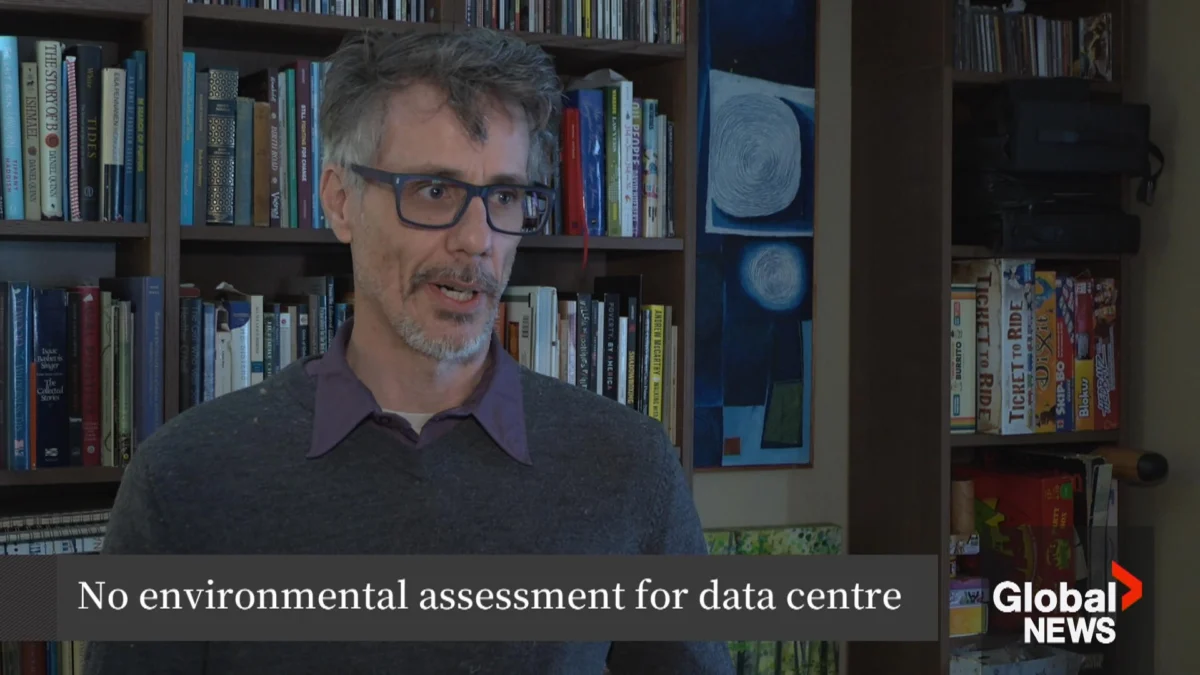
The Nova Scotia government is embroiled in a significant controversy following Premier Tim Houston’s steadfast defence of his office’s decision to send a formal complaint to a Toronto-based university professor who publicly voiced concerns about a proposed artificial intelligence (AI) data centre in the province. The incident has ignited a heated debate surrounding academic freedom, government transparency, and the appropriate boundaries of official engagement with independent expert commentary on public policy matters. Premier Houston publicly affirmed his approval of a communication adviser’s critical email sent to Dr. Sibo Chen, an associate professor of communication at Toronto Metropolitan University, arguing that it was necessary to provide "additional information" to someone "lacking in information but yet speaking as an expert." This unprecedented intervention by a premier’s office into academic discourse has drawn sharp criticism from opposition parties, academics, and civil liberties advocates, raising questions about a potential chilling effect on expert voices in Nova Scotia.
The contentious exchange began after Dr. Chen provided an interview to CBC News, where he articulated that public anxieties regarding the proposed Everwind Fuels AI data centre project in Richmond County, Cape Breton, particularly concerning its substantial water and electricity demands, were "valid." These comments resonated with a growing chorus of local residents and environmental groups who have expressed apprehension about the project’s potential strain on provincial resources and its broader environmental footprint. In response to Dr. Chen’s media appearance, William Burns, a communications adviser within the Premier’s Office, dispatched an email last week directly to Dr. Chen, with a copy notably forwarded to a CBC News reporter and the chair of Dr. Chen’s academic department. Burns characterized Dr. Chen’s remarks as "slanted," "irresponsible," and purportedly "not backed by research on the local community," asserting that "Nova Scotians deserve facts, not speculation presented in a way that creates unnecessary anxiety." This direct governmental challenge to a scholar’s professional opinion has since escalated into a broader discussion about the integrity of public debate and the role of academic expertise in policy formulation.
The Catalyst: Professor Chen’s Commentary and Public Concerns
Dr. Sibo Chen, an associate professor specializing in environmental communication and controversies, particularly in a Canadian context, drew the ire of the Premier’s Office for lending his academic perspective to the public discourse surrounding the Everwind Fuels data centre. His interview highlighted the legitimacy of concerns raised by Nova Scotians regarding the colossal resource requirements of such a facility. The proposed $10-billion data centre, intended to be leased to the U.S. AI company Anthropic for a period of 20 years, is projected to be an enormous undertaking. Initially, it would draw an estimated 95 megawatts of electricity and approximately 100,000 litres of water daily. Following an anticipated expansion in mid-2028, these figures are expected to surge dramatically to 420 megawatts of electricity and 500,000 litres of water per day. These projections have fueled considerable public anxiety in a province already grappling with climate change impacts, including drought conditions in some areas and a provincially mandated transition away from fossil fuels for electricity generation.
Dr. Chen’s comments were not isolated but echoed sentiments widely held among citizens and opposition politicians. A Change.org petition calling for the halt of AI data centre development in Nova Scotia had amassed over 24,000 signatures as of Wednesday afternoon, underscoring the depth of public apprehension. Environmental advocacy groups have also voiced concerns about the project’s carbon footprint, given Nova Scotia Power’s current reliance on coal-fired generation for a significant portion of its electricity supply, and the broader environmental implications of large-scale industrial development in sensitive ecosystems. The provincial government’s decision to bypass a full environmental assessment for the project has further exacerbated these concerns, leading many to question the transparency and rigour of the approval process.

Premier Houston’s Unwavering Stance and the Government’s Narrative
In the face of mounting criticism, Premier Tim Houston has remained resolute in his defence of his office’s actions. Speaking to reporters on Wednesday, he articulated his belief that it is "incumbent on all of us" to challenge individuals "presenting themselves as an expert and speaking definitively on something that they’re wrong on." This statement suggests a governmental philosophy that extends beyond merely correcting factual inaccuracies to actively engaging with and challenging expert interpretations that deviate from the official narrative. The Premier’s communication adviser, William Burns, in his email to Dr. Chen, specifically challenged the professor’s understanding of the project’s local impact. Burns asserted that Everwind Fuels has committed to covering the cost of all electricity infrastructure, thereby preventing an increase in power rates for existing customers – a key point of contention for the public. He also cited comments from Lois Landry, the warden of Richmond County, who indicated that provisions are in place to safeguard residents and regulate the amount of water drawn from nearby Lake Landrie for the facility.
Furthermore, Burns’ email implicitly questioned Dr. Chen’s credibility by highlighting his geographical distance, suggesting that as a professor from a Toronto university, he "could not understand the impact of data centre in Nova Scotia." This line of argument, implying that only local perspectives hold validity, has been widely criticized for attempting to discredit academic expertise based on location rather than the substance of the research or argument. The government’s proactive stance signals a determination to control the public narrative surrounding major development projects, especially those deemed crucial for economic growth and technological advancement within the province.
A Battle of Narratives: Facts, Speculation, and Local Context
The exchange has crystallized into a battle over narrative control and the definition of "facts." The Premier’s Office emphasizes specific assurances from Everwind Fuels, such as the company’s commitment to absorb infrastructure costs to prevent rate hikes and the existence of water management protocols. These are presented as concrete "facts" that Dr. Chen purportedly overlooked. However, critics argue that such assurances, while important, do not fully address the broader systemic concerns about resource allocation, environmental impact, and the long-term sustainability of hosting such a resource-intensive industry in Nova Scotia.
Dr. Chen, for his part, firmly maintains that his comments were grounded in a decade of studying environmental controversies across Canada and were backed by peer-reviewed research on the general implications of AI data centre development. He notes the irony of becoming the subject of his own study on how scholars are harassed for engaging in "knowledge mobilization." He highlighted that despite his critical research on the Alberta oilsands, he had never before received a complaint from a premier’s office, underscoring the unusual nature of this specific intervention. His academic work often focuses on the complex interplay between technological advancement, environmental justice, and public perception, making him a qualified voice on the societal implications of large-scale infrastructure projects like the AI data centre. The government’s claim that he lacked "local" research is countered by his assertion that his expertise lies in the broader patterns and implications of such developments, which are not necessarily confined by provincial borders.

Academic Freedom Under Scrutiny
The decision by the Premier’s Office to copy Dr. Chen’s departmental chair on the complaint email has been widely interpreted as an attempt to exert pressure and, potentially, intimidate. Dr. Chen himself suggested this was an implied tactic to silence dissent. This particular action has sparked outrage among academic communities and proponents of free speech. Organizations dedicated to academic freedom emphasize the crucial role of universities and scholars in contributing independent, evidence-based analysis to public debates, even when such analysis is critical of government policies or proposed projects. The implicit threat of involving an employer in a dispute over a professor’s public commentary is seen as a direct assault on the principles of intellectual autonomy and the right of academics to share their expertise without fear of reprisal.
Several academic associations and civil liberties groups have expressed dismay over the incident. They argue that such governmental interference can create a "chilling effect," discouraging other experts, particularly those working within Nova Scotia, from offering critical perspectives on government initiatives. This could lead to a less informed public discourse and potentially poorer policy decisions, as diverse expert opinions are essential for robust democratic governance. The fear is that local professors, witnessing the treatment of Dr. Chen, might self-censor to avoid similar official pushback, thereby diminishing the pool of independent expertise available to the public and media within the province.
Political Fallout and Broader Implications
The Premier’s unwavering stance has been met with fierce condemnation from Nova Scotia’s opposition parties. Nova Scotia NDP leader Claudia Chender described Premier Houston’s comments as "disturbing," stating that his hope for staff to "regularly correct" media and experts on their professional points of view "should actually send a chill down peoples’ spines." Chender further suggested that the Premier’s comments imply his staff are "bullying" independent experts who dare to criticize the government’s projects. This political fallout underscores the deep divisions over the government’s approach to public engagement and its perceived attempts to control information.
The incident also highlights broader implications for governance and public trust. When a government actively seeks to discredit or silence academic experts, it risks eroding public confidence in both its decision-making processes and its commitment to transparency. The public’s concerns about the AI data centre are multifaceted, encompassing not only resource usage but also the long-term economic benefits versus environmental costs, and the lack of a comprehensive environmental assessment. Dr. Chen noted that while the government presents assurances, it has not provided enough comprehensive information to fully assuage public anxieties, making the public’s worries entirely understandable.

The resource demands of the data centre are indeed significant within the Nova Scotian context. The projected 500,000 litres of water per day for cooling purposes is roughly equivalent to the daily consumption of hundreds of average Nova Scotian households. While Everwind Fuels has indicated measures to protect Lake Landrie, the sheer volume raises questions about sustainable resource management, especially in an era of unpredictable climate patterns. Similarly, the 420 megawatts of electricity represents a substantial draw on the provincial grid, which is currently undergoing a complex and costly transition away from fossil fuels. While Everwind states it will cover infrastructure costs, the demand still requires generation, and how this will align with Nova Scotia’s ambitious climate targets – such as phasing out coal by 2030 – remains a critical question for many.
This controversy extends beyond Nova Scotia, touching upon the global phenomenon of the burgeoning AI industry and its environmental footprint. As AI technologies become more pervasive, the demand for data centres, which are notoriously energy and water intensive, is soaring. This incident in Nova Scotia serves as a microcosm of a larger international debate about how societies can balance technological advancement and economic development with environmental stewardship and democratic accountability. The Premier’s office’s intervention has inadvertently cast a spotlight not only on the specifics of the Everwind Fuels project but also on the fundamental role of independent expertise in shaping informed public discourse and holding powerful entities accountable.
In conclusion, the clash between the Nova Scotia Premier’s Office and Professor Sibo Chen represents a critical juncture in the province’s approach to major development projects and public engagement. It has ignited a vigorous debate about the boundaries of governmental influence, the sanctity of academic freedom, and the imperative for transparent, fact-based dialogue on issues of profound public interest. As the Everwind Fuels data centre project moves forward, the ripple effects of this incident on Nova Scotia’s academic community, its political landscape, and its capacity for open, critical discourse will undoubtedly continue to unfold.