admin
admin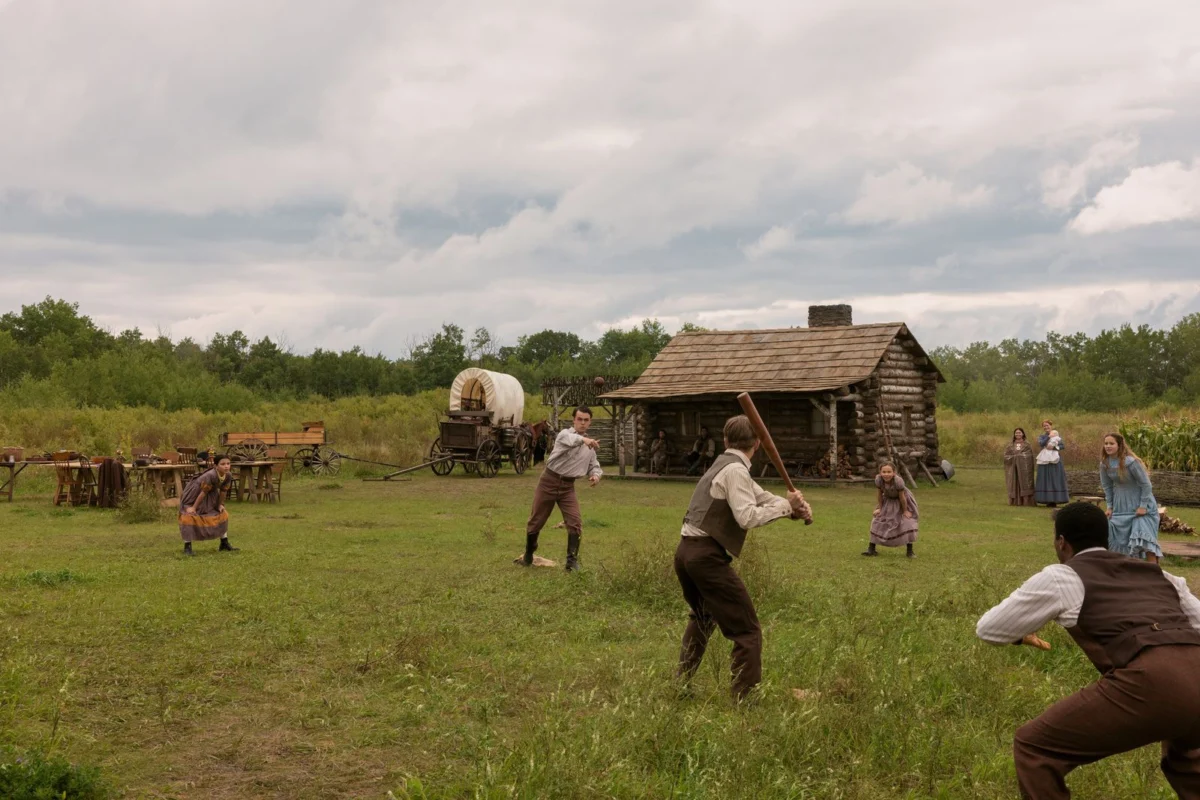
Netflix’s ambitious new adaptation of Laura Ingalls Wilder’s beloved Little House on the Prairie series has premiered, plunging viewers back into the late 19th-century American frontier. This latest iteration, helmed by showrunner and executive producer Rebecca Sonnenshine, endeavors to capture the Ingalls family’s profound desire for a fresh start—a simple, secure home forged through immense hard work and sacrifice. In this narrative, the humble log cabin transcends its role as a mere setting, emerging as a central character, a potent symbol of American aspiration and resilience, deserving of as much scrutiny as the cast portraying the iconic family.
The Enduring Legacy and the Weight of Adaptation
The decision to revisit Little House on the Prairie comes at a significant cultural juncture, debuting hard on the heels of America’s 250th birthday, a period ripe for reflection on foundational national myths. The original nine books by Laura Ingalls Wilder, fictionalizing her family’s pioneering life, are cornerstones of American literature, having sold tens of millions of copies since the first volume, Little House in the Big Woods, was published in 1932. These semi-autobiographical novels, initially aimed at young readers, painted a vivid, if romanticized, picture of westward expansion, shaping generations’ understanding of frontier life.
The new Netflix series, renewed for a second season even before its July 9 premiere, faces the formidable challenge of measuring up not only to the revered source material but also to Michael Landon’s iconic 1970s television adaptation. That series, which ran from 1974 to 1983, became a cultural phenomenon, earning numerous accolades and maintaining remarkable popularity on streaming platforms decades later. Its wholesome portrayal and enduring appeal have set a high bar, creating a deep-seated nostalgia that any new adaptation must contend with.
Beyond the comparisons, the Little House narrative has, in recent decades, become a cultural lightning rod. The books have been subjected to intense criticism for their depictions of Native Americans, which frequently range from outright racist caricatures to complete erasure of indigenous peoples’ experiences and land rights. This historical baggage presents perhaps the most significant hurdle for a contemporary adaptation. The Netflix remake explicitly attempts to wrestle with this controversial aspect, a proactive approach that has, predictably, drawn both praise and pre-emptive criticism. Conservative media personality Megyn Kelly, for instance, voiced concerns about Netflix potentially "wokeifying" the source material long before the show’s debut, highlighting the polarized cultural landscape in which this adaptation arrives.
Aesthetic Vision: The Idealized Log Cabin and Frontier Landscape
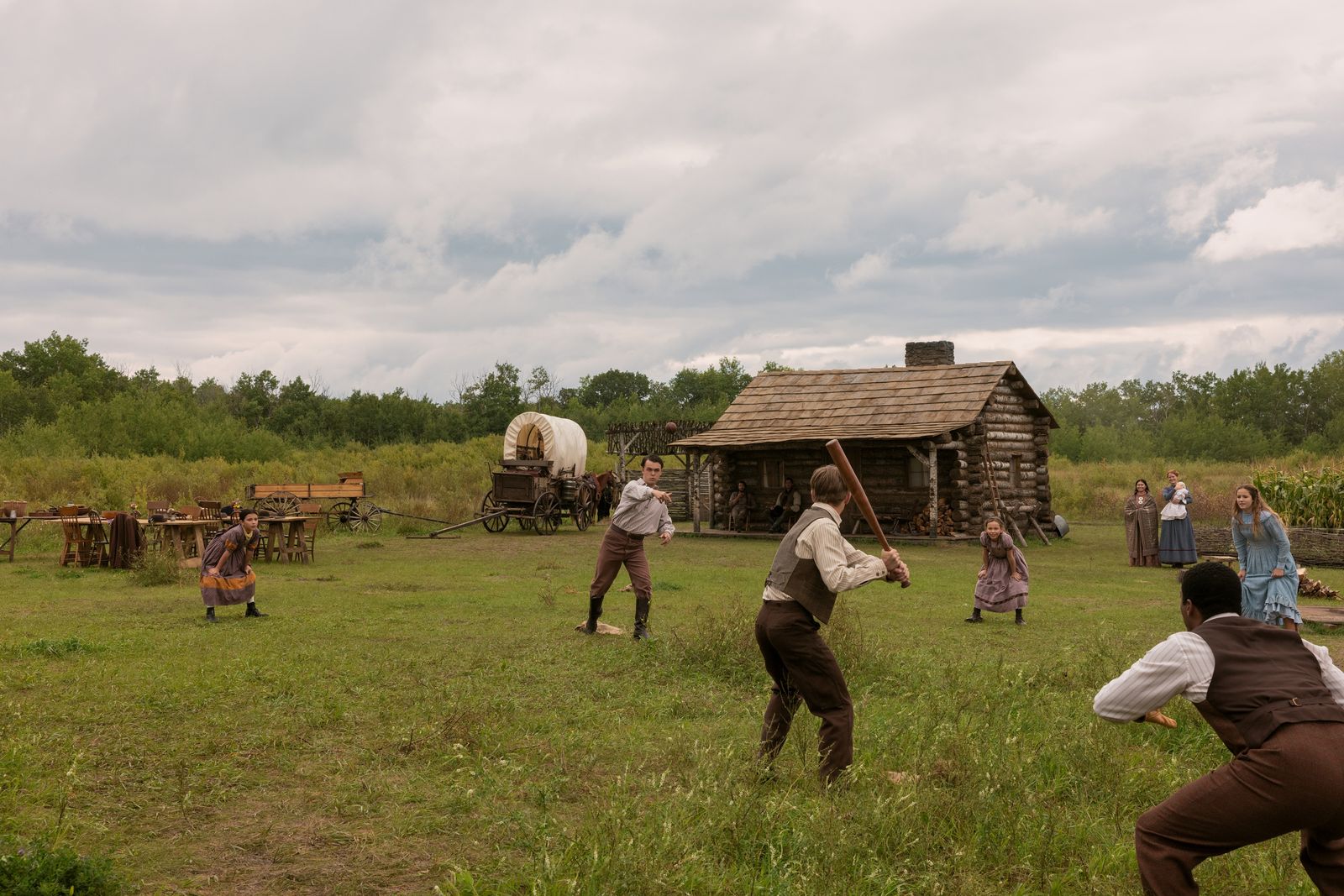
Visually, the Netflix series steers clear of overt grittiness, instead embracing a stunning, almost idealized aesthetic. The creative team, recognizing the intrinsic link between the story and its environment, leans heavily into the sheer beauty of the frontier landscape. Filmed in Manitoba, Canada, rather than the Kansas prairie it depicts, the show presents sweeping vistas of "a sighing green ocean of prairie" under vast blue skies, interspersed with idyllic scenes of flower crowns, fresh-picked blackberries, and a romanticized natural abundance. This picturesque portrayal is designed to evoke a yearning for the simpler, outdoor life, a sentiment that resonates with modern audiences’ growing interest in nature and self-sufficiency.
Much of the initial two episodes are dedicated to the arduous, yet visually compelling, process of constructing the titular little house. Classic frontier mishaps, such as Ma’s foot injury from a rolling log, are depicted, necessitating Pa’s reliance on a gruff, alcoholic neighbor for help. However, these challenges are presented without delving into the harshest realities of infection or dire consequences, maintaining the show’s generally scrubbed-up tone. The payoff arrives in episode three, showcasing a meticulously crafted cabin interior that epitomizes rustic charm. Wide plank floors, wooden shutters with elegantly simple cutouts, and hand-hewn beds adorned with exquisite quilts that "could make a dedicated antiquer weep" fill the space. Translucent cream-colored curtains billow gently in the prairie breeze, adding to the ethereal atmosphere. Personal touches, like the "CI" monogram (for Charles and Caroline Ingalls) engraved on the door and "The Ingalls Family Home" cradled in a botanical motif on the mantel, underscore the family’s deep connection to their new abode. The final flourish, Ma placing a delicate pink-and-blue porcelain shepherdess on the mantel, solidifies the image of a lovingly created, cherished home.
Behind the Scenes: Crafting Authenticity in an Idealized World
The production team, including showrunner Rebecca Sonnenshine, production designer Jonah Markowitz, and set decorator James V. Kent, undertook extensive research to construct the show’s world. Their dedication to authenticity, particularly in the cabin’s construction, is notable. "We actually built it that way—no nails, all wood pegs," Markowitz revealed to Netflix’s companion site, Tudum, emphasizing the effort to replicate homesteader-style techniques. Kent added, "My aim was to make it as homey and reflective of the Ingalls family as possible," a goal clearly achieved in the on-screen presentation.
However, this "homey" aesthetic, while visually appealing, also highlights the adaptation’s deliberate departure from historical realism. The show’s pristine cabin, despite the Ingalls’ depicted economic precarity (an entire episode revolves around Mary and Laura trying to win festival prizes to pay debts), is conspicuously clean and well-lit. A scene with eight candles and a lit kerosene lamp burning in broad daylight, for instance, underscores this idealized portrayal. Historically, frontier families would have relied on smoky, foul-smelling tallow candles made from rendered animal fat, a far cry from the romantic notion of beeswax. The absence of "prairie dust, no soot, no greasy cooking residue, no chamber pot logistics" further solidifies the image of a "scrubbed-up space," one that looks more like a modern "Ballerina Farm" aesthetic than the harsh reality of a 19th-century frontier dwelling.
This aesthetic choice aligns with previous visual interpretations of the Little House world. For millennial women familiar with the American Girl catalog, the Netflix cabin likely evokes Kirsten Larson’s idyllic homestead as much as Wilder’s original descriptions. The staging also follows the visual legacy of Garth Williams’s iconic pencil illustrations for the novels from the mid-1940s and the 1970s TV show, which, with its palette of "37 shades of nicotine brown," still conveyed a determined homeyness. These fictional spaces share a common thread: "just rough enough to seem cozy, but not bad enough to make you agree with Ma’s sister," who, in this adaptation, constantly begs Ma to return to the relative stability of Wisconsin.
Confronting the Past: Native American Representation
The most sensitive aspect of the new adaptation is its approach to the historical depictions of Native Americans. The original books, particularly Little House on the Prairie, which inspired the first season’s plot, are set on the Osage Diminished Reserve in Kansas. As historian Caroline Fraser details in her Pulitzer Prize-winning biography Prairie Fires: The American Dreams of Laura Ingalls Wilder, the Ingalls were, in reality, squatters with no legal right to the land or the trees they used to build their cabin. Their presence was part of a larger, often violent, influx of settlers who encroached upon Osage territory, stealing resources and ultimately forcing the Osage out. This historical context reveals a stark truth: the Ingalls’ "fresh start" was built upon the dispossession of others.
The Netflix adaptation, acknowledging this fraught history, attempts a significant revision. It introduces the Mitchells, an Osage family, including a character named Good Eagle who becomes a counterpart to Laura. This narrative choice aims to portray the Ingalls as individuals who "immediately see the inherent humanity of the Osage," a stark contrast to the original texts where Native Americans were often portrayed as antagonists or simply absent from the Ingalls’ moral consideration. This effort to "work with this reality" is a direct response to decades of criticism from scholars and Native American communities regarding the books’ problematic racial undertones and historical inaccuracies.
The decision to introduce friendly, integrated Osage characters represents a deliberate effort to modernize the narrative and align it with contemporary values of inclusivity and historical accountability. This proactive stance, however, is a delicate balancing act. While seeking to rectify past wrongs, it risks either tokenism or creating a historically sanitized version of frontier interactions, potentially diluting the very real conflicts and injustices that defined the era. The challenge lies in addressing the historical record meaningfully without fundamentally altering the core "Ingalls as protagonists" narrative, which remains the show’s focus.
The Enduring Power of the Log Cabin Fantasy
Despite the historical revisions and aesthetic sanitization, the log cabin remains a powerful emblem. The series, much like Wilder’s original books, taps into a deeply ingrained American fantasy: the dream of self-sufficiency, of building a home and a life from scratch in a pristine wilderness. The "Little House books" have always captivated readers with the narrative of "each home take shape as the Ingalls moved across the prairie—the log cabin in Independence, Kansas, the dugout in Minnesota’s Plum Creek, the homestead in De Smet, South Dakota." This "parade of houses and homes" speaks to a fundamental human desire for shelter, security, and the creation of personal space within a vast, untamed landscape. Wilder herself, in Little House on the Prairie (the 1935 book inspiring the Netflix season), described the log cabin as "a pleasant house," despite its dirt floor, noting how "soft light came through the canvas roof, wind and sunshine came through the window holes."
This appeal resonates with the same fascination found in The Boxcar Children, Jean Craighead George’s My Side of the Mountain, or Julie Andrews’s Mandy—stories that speak to children’s imaginative play of "playing house" in adventurous, often precarious, settings. It’s a fantasy of forging existence against the odds, a romanticized version of survival that prioritizes ingenuity and family bonds over harsh realities.
The Ingalls’ real-life sojourn in Kansas was, in a deadly serious sense, a form of "playing house" on contested land. Caroline Fraser’s Prairie Fires vividly captures the volatile environment of the Osage territory, where thousands of settlers converged, "setting up saw mills, stealing fence rails, and dismantling or seizing cabins for themselves." The Ingalls, whether actively participating in this violence or not, were beneficiaries of a system designed to dispossess the Osage.
The Netflix adaptation’s attempt to reconcile the beloved "log cabin fantasy" with these grim historical truths represents a crucial moment in the ongoing re-evaluation of American foundational narratives. The series endeavors to maintain the core appeal of the Ingalls’ quest for a cozy home, a powerful symbol with immense cultural currency, arguably "the core American fantasy." Yet, it implicitly asks viewers to engage with this fantasy while acknowledging its complex and often uncomfortable origins. The show’s success will ultimately be measured by its ability to balance nostalgic comfort with a more nuanced, inclusive historical perspective, inviting audiences to appreciate the beauty of the prairie home without ignoring the shadows cast by its construction.