admin
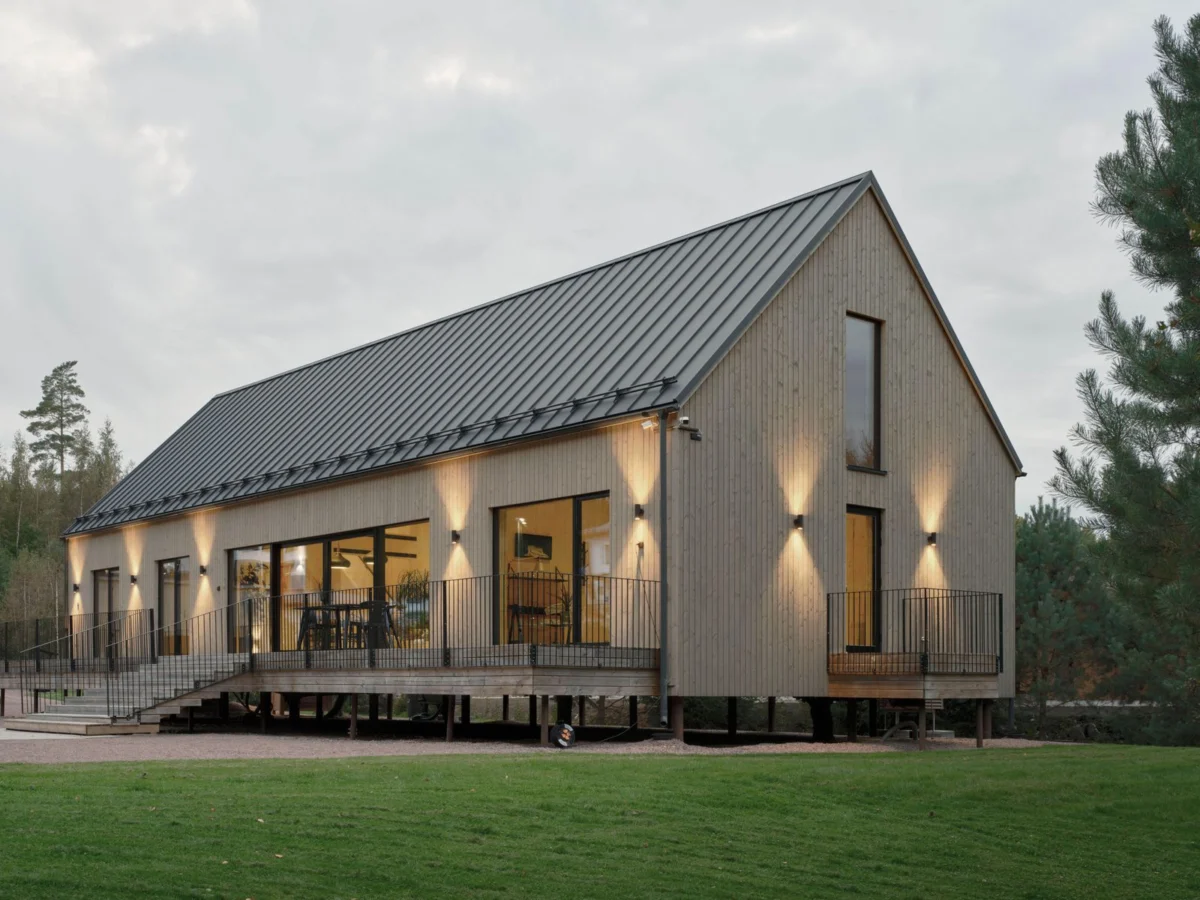
In an unexpected turn for the nascent sustainable homebuilding sector, Finnish architect Pekka Airaxin, founder of the cross-laminated timber (CLT) homebuilding startup Kainuu, has secured his company’s inaugural clients directly from what was initially an investor outreach. Nicholas Anderson and Tuire Niemi, a couple with extensive careers in finance, most recently based in Helsinki, embarked on a quest to establish a rural home conducive to remote work, ultimately aligning their vision with Airaxin’s innovative approach to construction. This serendipitous encounter not only provides Kainuu with its foundational project but also underscores a broader societal shift towards sustainable living and decentralized work models, particularly within the Nordic region.
The Genesis of Kainuu: A Vision for Sustainable Construction
Pekka Airaxin’s journey into entrepreneurship with Kainuu is rooted in a profound conviction regarding the future of sustainable architecture. A seasoned architect with a portfolio spanning various design challenges, Airaxin observed a growing disconnect between conventional construction practices and the urgent global imperative for environmental stewardship. Traditional building methods often entail significant carbon footprints, reliance on non-renewable materials, and lengthy, labor-intensive processes. Airaxin envisioned a solution in cross-laminated timber (CLT) – an engineered wood product rapidly gaining traction for its ecological benefits, structural integrity, and aesthetic appeal.
Founded with the explicit goal of revolutionizing residential construction, Kainuu aims to deliver high-quality, energy-efficient, and environmentally friendly homes. The company’s name itself, Kainuu, references a serene, forested region in northeastern Finland, symbolically linking the startup’s mission to Finland’s rich natural heritage and its abundant timber resources. Airaxin’s ambition was to streamline the homebuilding process, making sustainable living more accessible and efficient. By leveraging CLT’s prefabricated nature, Kainuu sought to reduce construction times, minimize on-site waste, and ensure superior insulation and indoor air quality – factors increasingly valued by discerning homeowners.
Prior to the encounter with Anderson and Niemi, Airaxin had primarily focused on securing seed funding from venture capitalists and impact investors. The typical startup trajectory involves demonstrating market potential through comprehensive business plans, securing initial capital, and then scaling operations. Kainuu was positioned as a disruptive force in the Finnish construction market, appealing to investors keen on green technology and sustainable development. However, the path to investment can often be protracted and competitive, requiring significant effort to articulate long-term value propositions.
A Strategic Pivot: From Investor Pitch to Client Partnership
The pivotal moment arrived during Airaxin’s networking efforts, where he crossed paths with Nicholas Anderson and Tuire Niemi. The couple, accomplished financiers, had spent the majority of their professional lives navigating the demanding urban landscapes of major European cities, with Helsinki being their most recent base. While their careers thrived in the bustling financial centers, a growing desire for a different quality of life began to emerge – one that emphasized proximity to nature, tranquility, and a reduced daily commute. The burgeoning remote work trend, significantly accelerated by global events, provided the practical framework for them to reconsider their residential paradigm.
Anderson and Niemi were not merely seeking a house; they were looking for a lifestyle change embodied in a home that resonated with their values. Their extensive research into sustainable building practices led them to the burgeoning field of timber construction, and specifically CLT. They were drawn to its environmental credentials, its ability to create warm, inviting living spaces, and its inherent connection to the Finnish landscape. When they met Airaxin, what began as a conversation about investment opportunities quickly evolved into a dialogue about their personal homebuilding aspirations.
"It was immediately clear that Nicholas and Tuire weren’t just interested in the financial metrics of Kainuu; they were deeply invested in the philosophy behind it," Airaxin reportedly commented on the initial interaction. "Their vision for a sustainable, remotely-work-friendly home in the countryside perfectly mirrored the very essence of what Kainuu aims to deliver. It wasn’t just a business transaction; it felt like a shared mission." This direct validation from potential clients, rather than investors, offered a powerful proof of concept for Kainuu’s model. The immediate need for a product, rather than just a concept, spurred a strategic reorientation within the nascent company.
The Clients: Nicholas Anderson and Tuire Niemi’s Rural Renaissance
Nicholas Anderson and Tuire Niemi represent a growing demographic of professionals seeking to redefine their work-life balance and environmental footprint. Their decision to transition from a dynamic urban environment like Helsinki to a rural setting reflects a broader trend observed across developed nations. For decades, urbanization has been the dominant demographic force, drawing talent and capital into metropolitan centers. However, the advent of reliable high-speed internet, coupled with a cultural shift towards flexible working arrangements, has catalyzed a counter-movement.
As financiers, Anderson and Niemi were accustomed to high-pressure, fast-paced environments. Their move to the countryside was not a retirement plan but a deliberate choice to integrate their professional lives with a more holistic and sustainable personal existence. They articulated a desire for a home that would not only be a comfortable living space but also a highly functional remote office, capable of supporting their demanding careers without compromising on well-being. The selection of CLT was not arbitrary; it stemmed from a meticulous evaluation of materials based on factors like energy efficiency, long-term environmental impact, and the potential for a healthier indoor climate.
"Our careers have provided us with incredible opportunities, but also a deep understanding of resource allocation and long-term value," Tuire Niemi is understood to have stated. "When we looked at building our own home, sustainability wasn’t just a preference; it was an imperative. Pekka’s vision for Kainuu, combined with the inherent qualities of CLT, presented a solution that perfectly aligned with our values for ecological responsibility and a high-quality living environment." Nicholas Anderson added, "The ability to work effectively from anywhere has liberated us to choose where we truly want to live. A Kainuu home offers us that freedom, built on principles we believe in." Their decision highlights a growing consumer demand for homes that are not only aesthetically pleasing but also embody ethical and environmental consciousness.
Cross-Laminated Timber (CLT): A Sustainable Construction Revolution
The material at the heart of Kainuu’s offering, Cross-Laminated Timber (CLT), is a true innovation in sustainable construction. Comprising multiple layers of timber glued together with the grain of each layer oriented at right angles to the next, CLT panels possess exceptional strength and dimensional stability. This structural integrity allows for the construction of multi-story buildings and complex architectural forms, challenging the traditional dominance of concrete and steel.
From an environmental perspective, CLT offers compelling advantages. Wood, as a renewable resource, sequesters carbon dioxide from the atmosphere during its growth. Unlike energy-intensive materials like concrete and steel, the production of CLT requires significantly less embodied energy. Studies suggest that using timber in construction can reduce carbon emissions by up to 50% compared to conventional materials, while also creating a natural carbon sink within the built environment. Furthermore, the prefabrication of CLT panels off-site in controlled factory environments minimizes construction waste, reduces noise pollution on site, and accelerates the building timeline. A typical CLT structure can be erected significantly faster than a comparable concrete building, leading to cost savings and reduced disruption.
The Nordic countries, with their vast forest resources and strong tradition of timber construction, have been at the forefront of CLT adoption. Finland, in particular, has a robust forestry industry and a national commitment to sustainable development, making it an ideal environment for companies like Kainuu to flourish. The Finnish government has actively promoted timber construction through various initiatives, recognizing its potential to boost the bioeconomy and contribute to climate goals. Industry reports indicate a robust growth trajectory for the global CLT market, projected to expand at a compound annual growth rate (CAGR) exceeding 15% over the next decade, driven by increasing environmental regulations and consumer demand for green buildings.
Beyond its environmental and structural benefits, CLT also contributes to healthier indoor environments. Wood naturally regulates humidity, creating a more comfortable and stable internal climate. The aesthetic qualities of exposed timber surfaces have been linked to biophilic design principles, promoting well-being, reducing stress, and fostering a connection to nature within the home. For clients like Anderson and Niemi, these holistic benefits played a crucial role in their decision-making process.
The Broader Context: Remote Work, Rural Migration, and the Finnish Housing Landscape
The story of Kainuu’s first clients is emblematic of several converging macro-trends reshaping society and the economy. The global shift towards remote work, dramatically accelerated in the wake of the 2020 pandemic, has fundamentally altered the relationship between work, home, and geography. What was once a niche benefit is now a mainstream expectation, enabling individuals to decouple their professional lives from urban centers. This flexibility has empowered many to seek residences that offer a higher quality of life, more space, and greater proximity to nature, often found in rural or semi-rural areas.
In Finland, this trend resonates deeply with the nation’s cultural affinity for nature and its extensive network of "mökkikulttuuri" (cottage culture). Finns have long cherished their connection to the wilderness, with many owning summer cottages as retreats from urban life. The remote work phenomenon has now blurred the lines between temporary escape and permanent residence, allowing for year-round enjoyment of the countryside. This has led to an increased demand for primary residences outside major cities, stimulating local economies in areas that might have previously faced depopulation.
This rural migration presents both opportunities and challenges. While it can revitalize smaller communities, it also necessitates investment in robust digital infrastructure, essential services, and transportation links. For developers like Kainuu, it opens up a significant market for sustainable homes that are designed for both comfortable living and productive remote work. The Finnish housing landscape, traditionally characterized by a mix of apartment living in cities and detached homes in suburbs, is now witnessing a diversification of demand, with a renewed focus on self-sufficiency, green spaces, and sustainable materials.
Implications for Kainuu and the Future of Sustainable Building in Finland
The acquisition of Nicholas Anderson and Tuire Niemi as its first clients marks a significant milestone for Kainuu. For a startup, securing a direct client project before comprehensive investor funding provides invaluable market validation. It demonstrates that there is a tangible demand for its product and that its value proposition resonates directly with end-users. This real-world proof of concept can be a powerful tool when approaching future investors, transforming speculative business plans into concrete examples of success.
For Pekka Airaxin, this pivot from an investor-centric approach to a client-first strategy highlights the agility required in the startup ecosystem. It suggests that sometimes, the most effective way to demonstrate potential is through direct engagement with the market, building a product that fulfills an immediate, unmet need. This initial project will allow Kainuu to refine its construction processes, optimize its supply chain for CLT, and gather crucial feedback that can inform future designs and operational improvements.
The broader implications for the Finnish sustainable building sector are also noteworthy. Kainuu’s success in attracting clients through its commitment to CLT and remote-work-friendly design can inspire other architectural and construction firms to embrace similar models. It underscores the commercial viability of sustainable materials and practices, challenging the perception that green building is necessarily more expensive or complex. As more consumers prioritize environmental responsibility and well-being in their housing choices, companies like Kainuu are poised to capture a growing share of the market. This development could further accelerate Finland’s transition towards a bioeconomy, leveraging its natural resources for innovative, low-carbon solutions.
Expert Perspectives and Future Outlook
Industry analysts view this development as a positive indicator for the broader sustainable construction market. "The direct client engagement for a company like Kainuu is a fantastic sign," remarked Dr. Helena Virtanen, an expert in sustainable urban planning at Aalto University. "It shows that consumer demand for truly green homes is not just theoretical; it’s driving purchasing decisions. The combination of CLT’s environmental benefits and the remote work revolution creates a potent market opportunity for innovative companies."
The trajectory for Kainuu now appears promising, with a solid foundation laid by its inaugural client project. The experience gained from building Anderson and Niemi’s home will undoubtedly serve as a blueprint for future endeavors, allowing Kainuu to scale its operations and potentially attract the very investors it initially sought, but now with a proven track record. As Finland and the world continue to grapple with climate change and evolving work patterns, companies like Kainuu, championing sustainable materials and adaptable living solutions, are positioned to play a crucial role in shaping the future of our built environment. The shift from an investment hunt to a groundbreaking client project represents not just a strategic win for a startup, but a compelling narrative for the future of sustainable living.