admin
The inauguration of the Good Times General Store at Desa Potato Head in Seminyak, Bali, represents a significant evolution in the intersection of sustainable hospitality, high-concept architecture, and circular retail. Designed in a long-term partnership with the Office for Metropolitan Architecture (OMA), the space serves as the brand’s first permanent retail environment, specifically engineered to decenter traditional consumption in favor of education, craftsmanship, and material transparency. By integrating a working laboratory and production studio directly into the retail floor, the project challenges the conventional "black box" of manufacturing, inviting visitors to witness and participate in the lifecycle of the objects they purchase.
A Decade of Architectural Evolution: The OMA and Potato Head Partnership
The opening of the Good Times General Store is the latest milestone in a collaborative relationship between OMA and Potato Head that has spanned more than ten years. This partnership first gained global prominence with the completion of the Desa Potato Head masterplan—a "creative village" that redefined the luxury resort as a hub for community and environmental activism.
Led by OMA Managing Partner David Gianotten, the architectural strategy for the General Store builds upon the foundations laid during the 2022 exhibition "N*thing is Possible" at the National Design Centre in Singapore. That exhibition served as a research-intensive precursor, investigating how hospitality brands could transition toward a zero-waste model. The General Store translates those theoretical findings into a physical, permanent structure, moving circularity from an abstract concept into a tangible, experiential reality.
According to David Gianotten, the design philosophy prioritizes "experience, participation, and interaction" over the static display of merchandise. This approach reflects a broader shift in global retail trends, where physical storefronts are increasingly evaluated by their ability to provide "brand immersion" and ethical transparency rather than mere transactional efficiency.
Architectural Innovation: Reimagining the Balinese Vernacular
The physical structure of the Good Times General Store is an exercise in what the design team calls "contemporary-traditional" architecture. Rather than replicating the ornamental aesthetics of Balinese temples or historic dwellings, the architects focused on the functional intelligence of local building techniques and materials.

The exterior is defined by a striking alang-alang thatch façade. Traditionally used for roofing across the Indonesian archipelago, this locally sourced tropical grass provides a highly textured, organic outer layer that integrates the building into the coastal landscape of Seminyak. The use of thatch is not merely aesthetic; it provides natural insulation and breathability, essential for the humid Balinese climate.
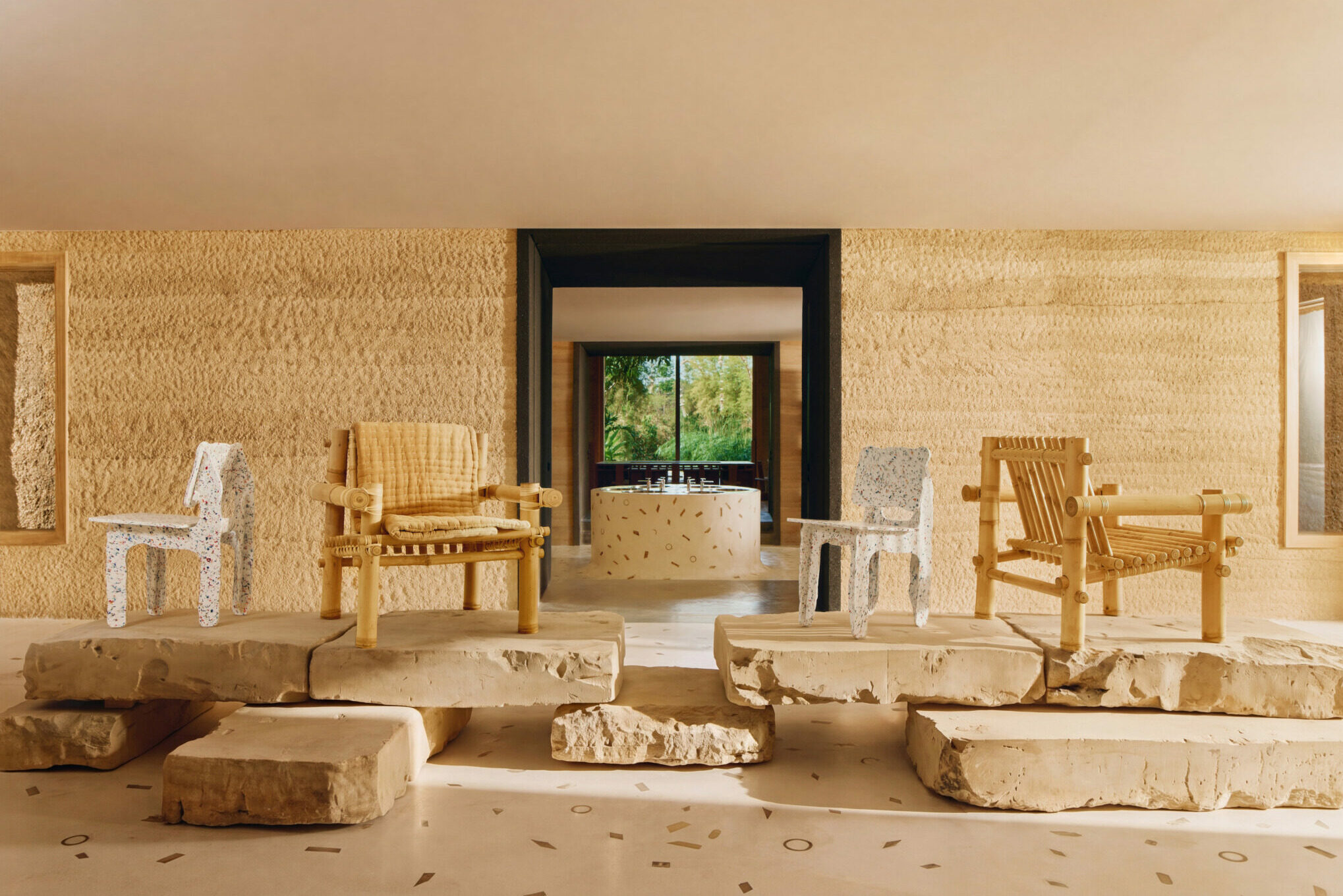
Internally, the store is anchored by rammed-earth walls. Utilizing local clay, these walls provide a grounded, tactile quality that anchors the space. Rammed-earth construction is noted for its high thermal mass, which helps regulate indoor temperatures naturally, reducing the building’s reliance on energy-intensive air conditioning.
Bamboo, a cornerstone of sustainable Southeast Asian architecture, is utilized throughout the project in innovative ways. It appears as a primary structural element and is also repurposed as an aggregate within the terrazzo flooring, creating a unique visual rhythm that celebrates the material’s versatility. By using bamboo in these varied forms, the designers highlight its potential as a high-performance alternative to carbon-heavy construction materials like steel or pure concrete.

The Five-Bay Sequential Experience: From Product to Process
The interior layout of the Good Times General Store is organized into five interconnected "bays," designed to lead the visitor on a narrative journey. This sequence is intended to move the consumer from the "finished object" toward the "raw material and labor" that produced it.
Bay 1: The Gateway of Local Craft
The first bay serves as an introduction to the Indonesian creative landscape. It features a curated selection of souvenirs and lifestyle objects created by local craftspeople. By showcasing these items at the entrance, the store establishes its role as a platform for domestic talent, emphasizing the importance of preserving traditional skill sets in a globalized economy.
Bay 2: The Potato Head Collection
The second bay transitions into apparel, housing the Potato Head Collection. This line of clothing is inspired by the aesthetics and lifestyle of Bali, utilizing textiles that reflect the island’s heritage while adhering to modern silhouettes.

Bay 3: Wasted by Potato Head and Max Lamb
The third bay introduces the "Wasted" collection, a collaboration with renowned British designer Max Lamb. Lamb, known for his rigorous exploration of materials, worked with Potato Head to transform discarded waste streams—ranging from plastic to industrial offcuts—into high-design furniture and homewares. This section demonstrates that "waste" is merely a material without a designated purpose, and through design, it can be elevated to luxury status.
Bay 4: The Natural Dye Studio
In the fourth bay, the focus shifts from retail to active production. This bay houses a working natural dye studio. Here, food and plant waste collected from the Desa Potato Head kitchens and grounds are transformed into organic pigments. These dyes are used in on-site workshops where visitors can learn the art of dyeing, painting, and pattern-making. This transparency allows consumers to understand the chemical-free alternatives to industrial textile coloring.
Bay 5: The Workshop and the HDPE Wall
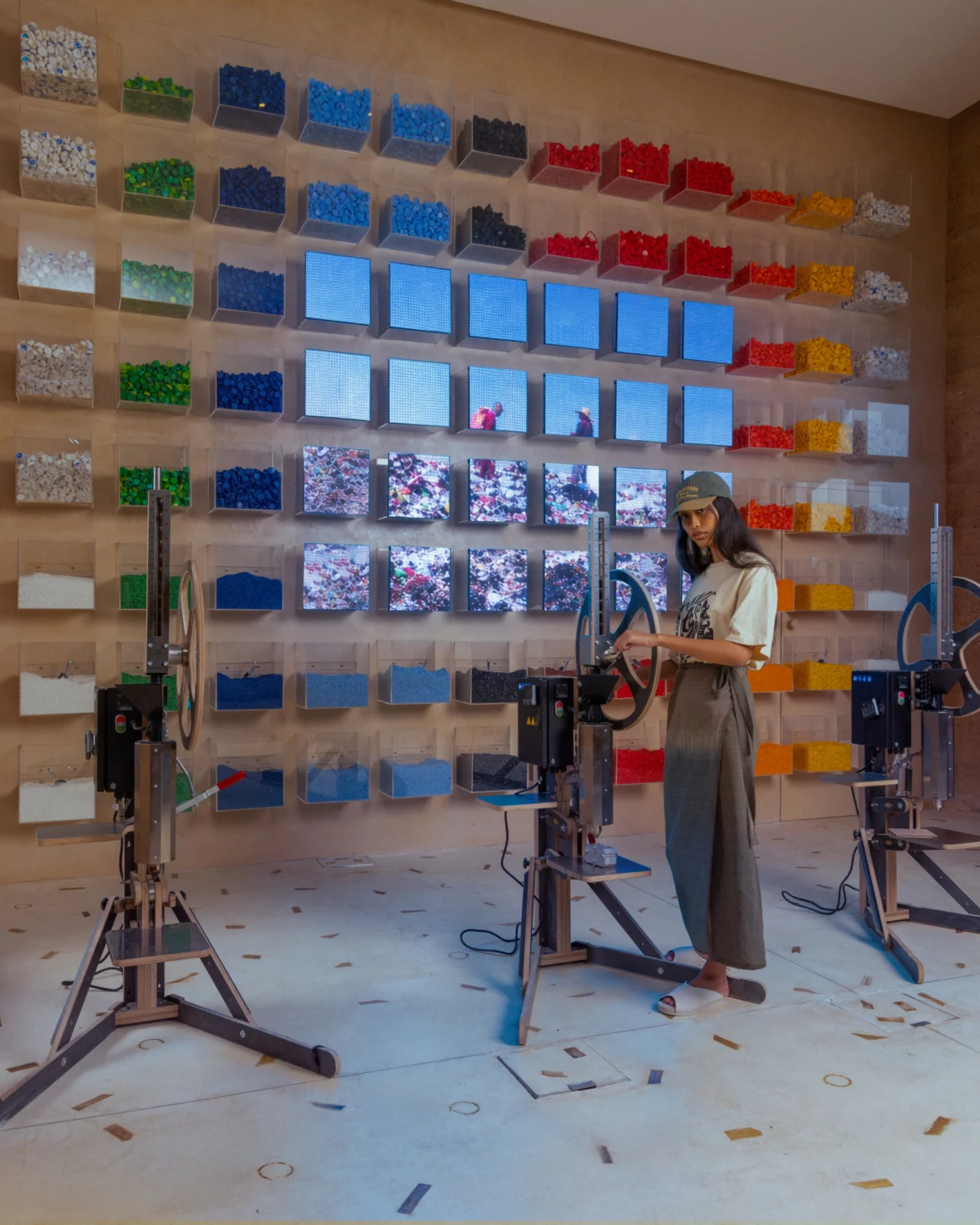
The final bay, The Workshop, is the most radical departure from traditional retail. One wall is composed of a grid of shredded High-Density Polyethylene (HDPE) plastic. This plastic was recovered from waste collectors across Bali and Java, sorted by color, and processed into fragments. The wall serves as a visual database of Bali’s plastic consumption, turning a modern environmental crisis into a vibrant architectural feature. The surrounding space is dedicated to experimentation, where designers and visitors can collaborate on new ways to process and repurpose discarded materials.

Supporting Data: The Scale of Circularity
The necessity for such a facility is underscored by the environmental challenges facing Indonesia. Bali produces approximately 1.6 million tons of waste annually, of which an estimated 303,000 tons are plastic. Currently, only a small fraction of this waste is recycled through formal channels.
Potato Head’s "Waste Lab," which feeds into the General Store, processes approximately 2 tons of waste per month. By integrating these processes into a retail environment, the brand aims to increase awareness and scale the demand for products made from recycled materials. The "Follow the Waste" tour, a program linked to the store, provides further transparency by allowing guests to track the journey of a discarded plastic bottle from the resort’s bin to its final form as a designer chair or architectural component.
Official Responses and Strategic Implications
The project has been received by the architectural and design community as a blueprint for the future of "regenerative tourism." Ade Herkarisma, Group Head of Architecture and Development at Potato Head, emphasized that the project’s success relied on a fundamental shift in design methodology.

"We discovered that circularity goes beyond material selection," Herkarisma stated. "It is about rethinking how we design, build, operate, and engage people in the process of giving new value to resources that would otherwise be discarded."
Industry analysts suggest that the Good Times General Store represents a significant move toward "radical transparency." In an era where "greenwashing" is a common critique of the hospitality and fashion industries, Potato Head’s decision to place the "messy" work of recycling and dyeing in the middle of a luxury retail space acts as a powerful verification of their sustainability claims.
Broader Impact: Redefining Global Retail Standards
The implications of the Good Times General Store extend far beyond the shores of Bali. As global brands struggle to reconcile their environmental footprints with their economic goals, the OMA-designed space offers a model for how the two can be integrated.

The project highlights three critical shifts in the retail landscape:
- Material Flexibility: The designers had to adapt to the inherent irregularities of reclaimed materials. This challenges the industrial standard of "perfect consistency" and suggests a new aesthetic of "intentional variation."
- The Maker-Consumer Interface: By providing a space for workshops, the store transforms the consumer from a passive recipient into an active participant in the supply chain.
- Decentralized Production: The dye studio and workshop demonstrate the viability of micro-factories located at the point of sale, reducing the carbon footprint associated with logistics and shipping.
As Desa Potato Head continues to expand its "Good Times, Do Good" philosophy, the General Store stands as a physical testament to the idea that the future of retail is not just about what is sold, but the story of how it came to be and where it will go next. By placing the act of making on par with the act of selling, OMA and Potato Head have created a space that is as much a laboratory for the future as it is a shop for the present.