admin
admin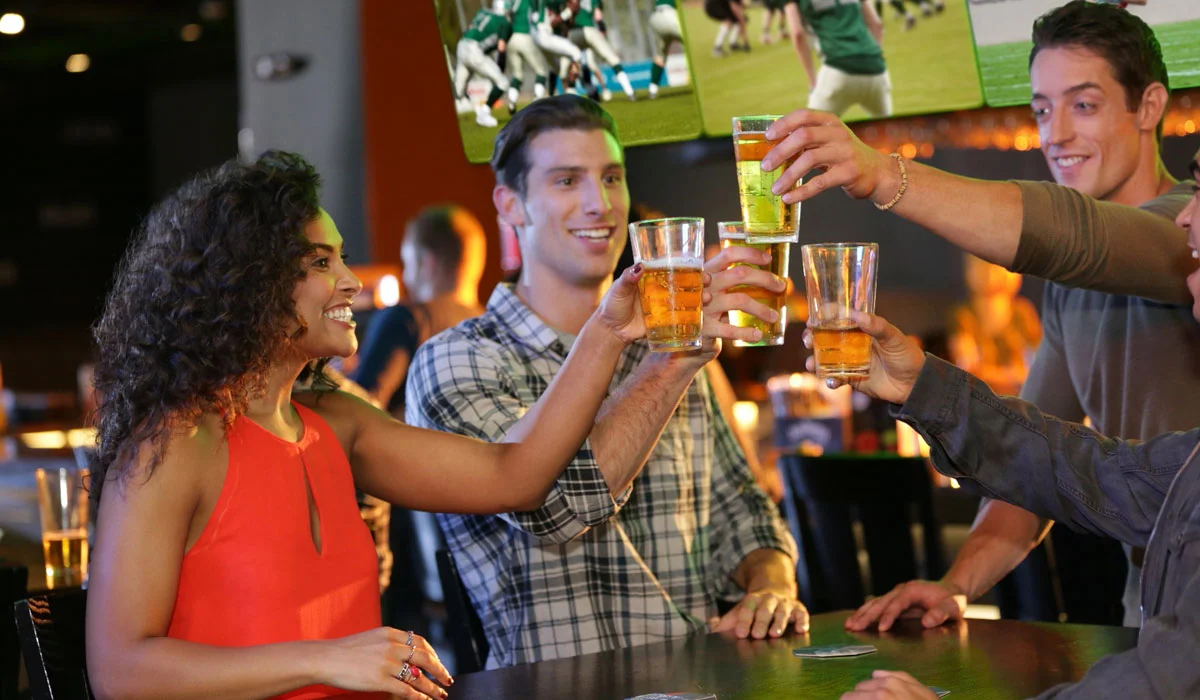
In an era where consumer discretionary spending is under intense scrutiny, Dave & Buster’s Entertainment, Inc. is embarking on a comprehensive strategic overhaul aimed at reclaiming its position as the premier destination for "eatertainment." Under the leadership of newly appointed CEO Darin Harper, who transitioned from his role as Chief Financial Officer last month following the retirement of Tarun Lal, the company is doubling down on operational execution, marketing precision, and cultural relevance. The shift comes at a critical juncture for the brand, which operates 184 units across North America but faces a unique challenge: despite maintaining a brand awareness level exceeding 90 percent, its average customer visits less than twice a year.
The brand’s recent performance highlights the urgency of this pivot. Following the release of its second-quarter fiscal results, Dave & Buster’s stock experienced a double-digit decline, reflecting investor concerns over a top- and bottom-line miss. The company reported adjusted EBITDA of $98.9 million, falling 18 percent short of consensus estimates. Same-store sales declined 2.9 percent, which, while an improvement over the 5.4 percent drop seen in the first quarter, still signaled a struggle to capture consistent foot traffic. Total revenue for the quarter stood at $544.1 million, down 2.4 percent year-over-year, partially due to the lapping of $10 million in deferred revenue from the previous year.
A New Leadership Era and the Search for Consistency
The appointment of Darin Harper as CEO marks a significant moment in the company’s recent history. Harper inherited a business that, by his own admission, has struggled to be the "obvious answer" for consumers planning social excursions. The leadership transition follows a period of relative instability; Tarun Lal served less than a year in the top post, and the company operated for over a year without a Chief Marketing Officer.
To address these gaps, Harper has moved quickly to fortify his executive team. In the second quarter, the company hired Jeremy Tucker as CMO. Tucker brings a wealth of experience from high-profile roles at AutoNation, Planet Fitness, and The Walt Disney Company. His primary task is to repair a marketing strategy that Harper described as having been "disconnected" for several years, characterized by a frequently changing promotional calendar and inconsistent media placement.
Joining Tucker is Amanda Busby, the newly appointed Chief Operating Officer. Busby’s background includes extensive experience in high-volume environments, having led operations for SSP America across nearly 60 North American airports and spending nearly two decades at Red Robin. Her focus is centered on "brand fundamentals"—the day-to-day execution that ensures a guest’s rare visit is high-quality enough to warrant a return.
The Three Pillars of the Strategic Turnaround
Harper’s roadmap for recovery is built upon three foundational pillars: capturing existing demand, ensuring relevance, and promoting consistent value. During his first earnings call as CEO, Harper emphasized that Dave & Buster’s must win "decisively" when it is the chosen destination for a planned outing.
1. Capturing Demand Through Occasions
Dave & Buster’s is primarily an occasion-based business. Unlike quick-service restaurants, it is rarely a spontaneous stop. Therefore, the brand is shifting its marketing focus toward "personal, seasonal, and cultural needs moments." This means moving away from massive, disconnected "tent-pole" advertising campaigns and instead utilizing middle-to-lower-funnel marketing to target consumers when they are actively planning birthdays, holiday parties, or sporting event viewings.
2. Maintaining Cultural Relevance
The company is aggressively pursuing "in-culture" experiences to ensure its entertainment and food and beverage (F&B) offerings remain appealing. This involves leveraging its massive brand awareness to secure intellectual property (IP) partnerships. In 2024 alone, the brand has launched 10 new games and attractions based on popular franchises such as The Mandalorian, Stranger Things, John Wick, and Hot Wheels. Research conducted by the brand suggests that 70 percent of guests would be incentivized to visit more often if they knew about fresh gaming options.
3. Delivering Consistent Value and Execution
One of the most candid admissions from the new leadership was that Dave & Buster’s "lost value" over the last few years by being too aggressive with pricing. To course-correct, the company has simplified its rate cards to make them more legible for guests and adjusted game pricing to encourage longer "dwell times." According to Harper, these changes have already resulted in a 16 to 20 percent increase in time spent in the "midway" (the gaming area), which historically leads to higher F&B attachment rates.
Financial Performance and Sector Analysis
While the broader entertainment business for Dave & Buster’s has struggled—down by high single digits in the most recent quarter—there are bright spots in the financial data. The F&B segment saw comparable sales grow by 7.6 percent, marking the fifth consecutive quarter of positive growth. This suggests that while the gaming side of the business is recovering from a post-pandemic cooling period, the brand’s efforts to improve its culinary and bar offerings are resonating.
The company’s special events business also grew for the seventh straight period, highlighting the brand’s strength in hosting organized group gatherings. To sustain this, Dave & Buster’s is leaning into its identity as a premier sports-watching destination. Internal data shows that over 90 percent of customers who watch sports at a venue order food, and over 80 percent order alcohol. By installing 40-foot screens and creating "four-wall activations" around events like the World Cup or NFL Sundays, the brand aims to capture a larger share of the sports-viewing market.
Chronology of Recent Performance Trends:
- Q1 Fiscal 2024: Same-store sales dropped 5.4 percent.
- June 2024: Same-store sales trended at negative 5.0 percent.
- July 2024: Improvement noted with same-store sales at negative 1.6 percent.
- Q2 Fiscal 2024: Adjusted EBITDA missed estimates by 18 percent; stock price tumbled.
- Q3 Outlook: Early trends suggest continued progression toward positive territory.
Operational Refinement and the Remodeling Program
A critical component of the company’s capital allocation strategy is the remodeling of its existing fleet. Dave & Buster’s has completed six remodels so far in fiscal 2024, including locations in Cincinnati, Jacksonville, San Antonio, Nashville, San Diego, and Miami. These updated stores are designed with a more modern aesthetic and a layout that is easier for guests to navigate.
Early results indicate that the remodeled units are outperforming legacy stores. The company plans to complete two more remodels this year in Frisco, Texas, and Westbury, New York. Interestingly, the brand has developed a "materially more cost-effective blueprint" for these renovations, allowing them to preserve high-impact guest features while reducing overall capital expenditure.
In terms of financial discipline, the company has identified $15 million in cost savings to be realized over the next 12 months, with a long-term goal of doubling that figure. Interim CFO Cory Hatton noted that the company is currently prioritizing core business initiatives over rapid outbound growth, a move intended to stabilize the balance sheet and improve unit-level economics.
Broader Implications and Industry Outlook
The challenges facing Dave & Buster’s are emblematic of the broader "eatertainment" sector. As inflation-weary consumers pull back on non-essential spending, venues that combine dining and entertainment must provide a superior value proposition to justify the cost of a visit. The competition is no longer just other arcade-bars, but rather any social activity that vies for a consumer’s limited "leisure budget."
By simplifying its message and focusing on "low-hanging fruit" like localized sports viewing and IP-driven gaming, Dave & Buster’s is attempting to transition from a "one-off" destination to a "go-to" neighborhood hub. The company’s focus on the "team member experience" under COO Amanda Busby also acknowledges a fundamental truth in the hospitality industry: service speed and quality are the primary drivers of repeat business.
As the company moves into the latter half of the fiscal year, the success of the Harper administration will likely be measured by its ability to turn the improving July trends into sustained positive same-store sales. With a total of 250 company-owned stores across the portfolio (including 66 Main Event locations) and a renewed focus on the domestic core, the brand is positioned to test whether its "cultural relevance" strategy can overcome the headwinds of a cautious consumer economy.
The brand’s shift toward "middle-to-lower funnel" marketing and its investment in bespoke, in-house gaming options represent a calculated risk. If Dave & Buster’s can successfully convince its 90 percent aware audience to visit four times a year instead of two, the financial upside would be transformative. For now, the company remains in a "test and learn" phase, moving quickly to execute a strategy that seeks to make Dave & Buster’s the unmistakable, obvious answer for the American consumer’s next big night out.