admin
admin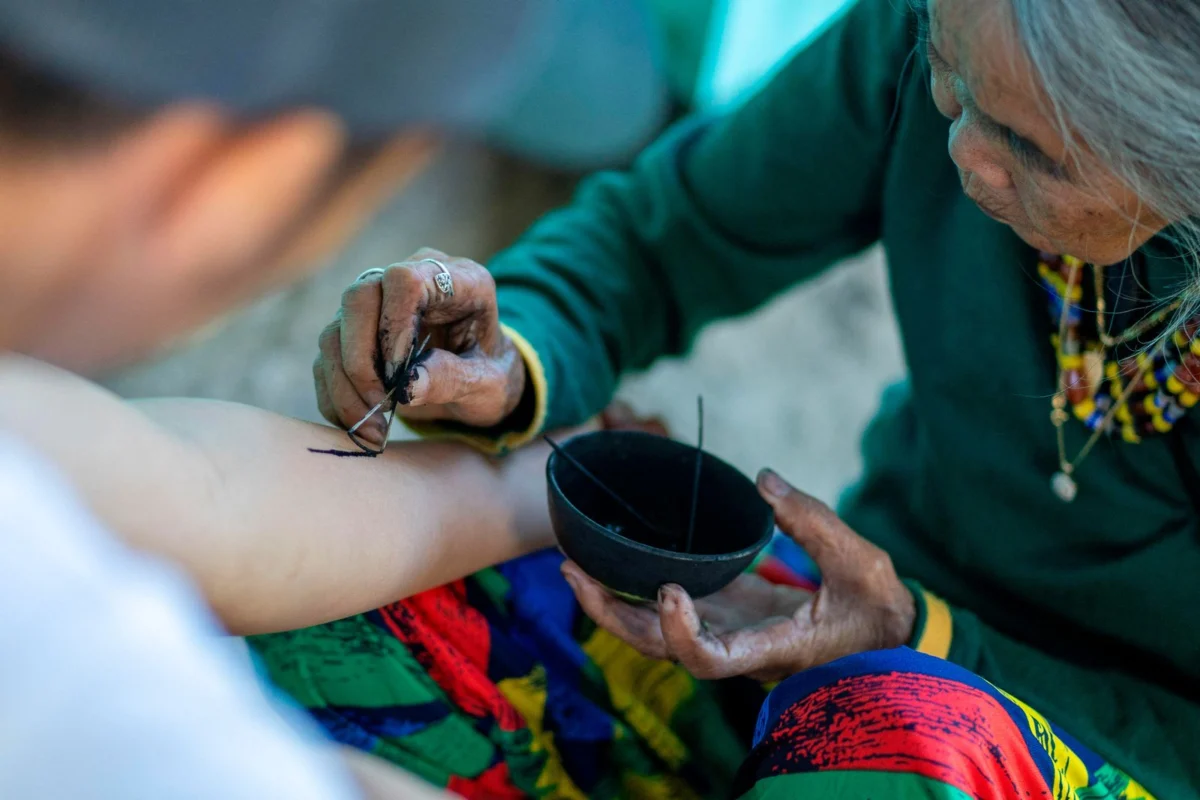
A groundbreaking academic endeavor by Filipino-Canadian architectural designer and professor Monique Lizardo is poised to redefine the study of architectural history, proposing that traditional indigenous tattoos and other cultural artifacts serve as invaluable, living archives of past societies. Her research, which began to formalize after a deeply personal journey to the Philippines, challenges conventional modes of historical record-keeping by demonstrating how symbols etched on bodies and woven into textiles can reveal profound insights into the lived experiences, environmental conditions, and social structures of ancient communities.
The Genesis of an Idea: Apo Whang-Od and the Vogue Spotlight
The catalyst for Lizardo’s innovative research emerged in April 2023 when Vogue Philippines featured 106-year-old Apo Whang-Od, an Indigenous Kalinga tattoo artist, on its cover. This landmark publication not only celebrated Whang-Od as the magazine’s oldest-ever cover model but also brought global attention to her role as a mambabatok, a master of the ancient, hand-tapped tattooing practice known as batok. The striking images of Whang-Od, adorned with intricate patterns of diamonds and woven motifs on her body, immediately resonated with Lizardo. For the architectural designer, these were not merely aesthetic markings but potent visual data.
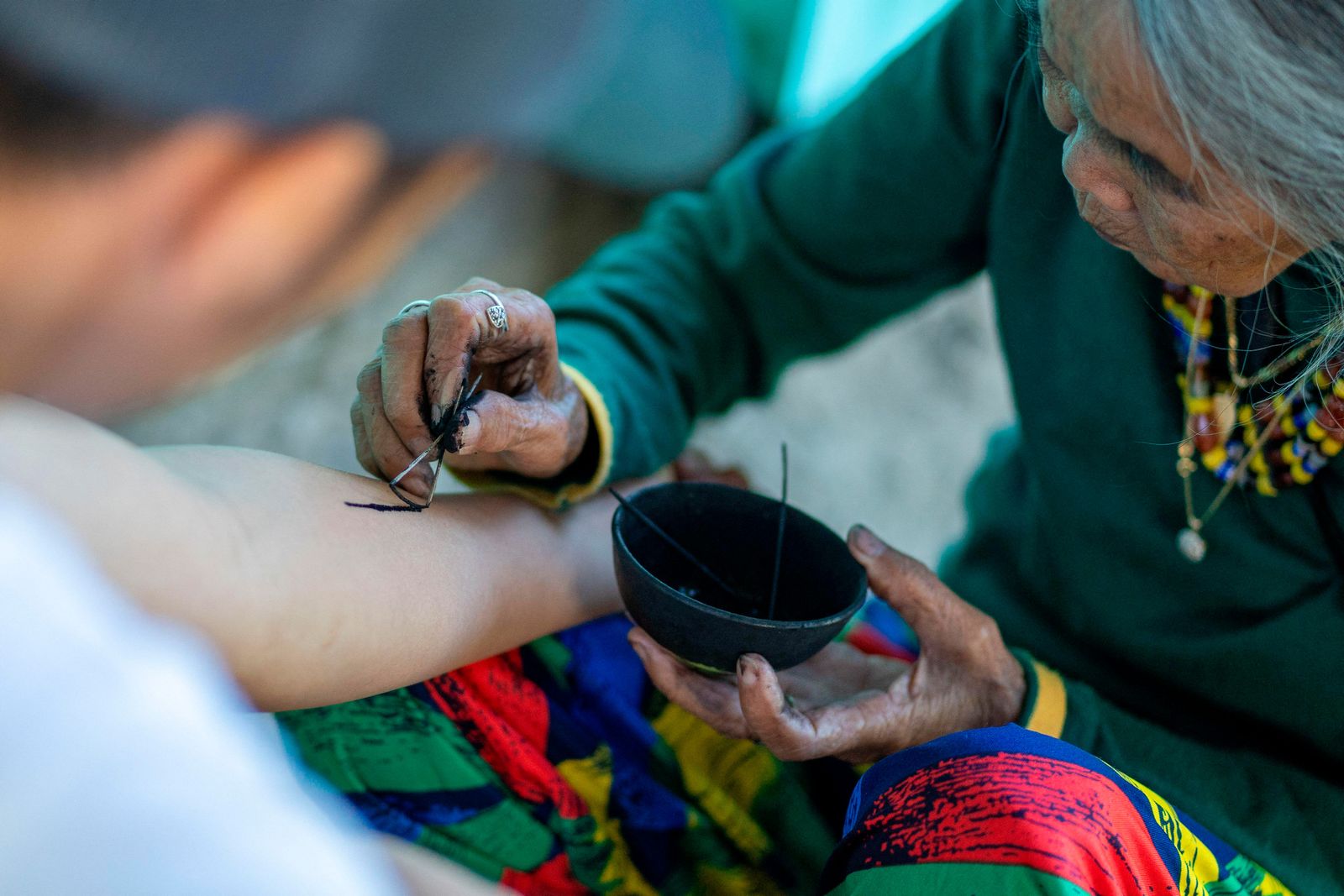
The batok tradition of the Kalinga people, residing in the mountainous Cordillera Administrative Region of the northern Philippines, is a practice steeped in centuries of cultural significance. Historically, these tattoos were more than mere adornment; they were markers of status, bravery, beauty, and identity. Applied using a thorn from a pomelo or calamansi tree, a bamboo stick, and a mixture of charcoal and water, each tap of the mambabatok is a connection to a lineage of artistry and storytelling. Whang-Od, often hailed as the last true mambabatok of her generation, has become a living embodiment of this rich heritage, attracting pilgrims from around the world eager to receive a mark from her ancient hands.
Inspired by the Vogue feature, Lizardo embarked on a journey to the remote mountain village of Buscalan in December 2023, seeking to receive a traditional batok from Apo Whang-Od herself. This immersive experience proved transformative, solidifying her nascent hypothesis: the patterns on Whang-Od’s body, and indeed on other Kalinga elders, bore striking resemblances to motifs found on traditional Kalinga architecture, furniture, and clothing. It was this realization that cemented the direction of her research, pushing her to explore the potential of these embodied designs as viable architectural and historical archives.
Tattoos as Living Archives: Decoding Kalinga Society
Lizardo’s subsequent deep dive into Kalinga culture revealed that the seemingly decorative patterns held specific, profound meanings. Each tick, dash, diamond, and woven motif functioned as a symbol, collectively narrating stories of the Kalinga people’s existence. For instance, certain dash-tick mark tattoos were historically associated with headhunting success, worn by warriors on prominent body parts like behind the ear, on the chest, or even the face, with each mark signifying a successful kill. Other patterns depicted elements of their natural environment and daily life, such as rice paddies symbolizing abundance and beauty, or python scales representing youth preservation for women.
Crucially, Lizardo identified that these symbols were not arbitrary artistic choices but direct indicators of the bearers’ specific environmental and social conditions. They acted as a dynamic record, reflecting the realities and values of ancient Kalinga societies. The presence or absence of certain tattoos across generations, therefore, became a powerful diagnostic tool. The disappearance of the headhunting tick-mark tattoo, for example, is a poignant historical marker. Its cessation in modern Kalinga society indicates a fundamental shift away from the need for headhunting as a means of safety or status, suggesting a profound evolution in their social fabric and security landscape. Conversely, the continued prevalence of tattoos depicting rice paddies or mountain peaks signifies the enduring importance of these elements to Kalinga identity and sustenance.
This analytical framework allows Lizardo to "read" the body as a map, tracing what was paramount to people at different historical junctures and thereby understanding their realities. By examining the collective "tattoo landscape" of elders in a community, one can infer the prevailing conditions of a given era. A community with many successful warrior tattoos might suggest a past characterized by conflict but also strong communal defense, creating a spatial sense of safety within its boundaries. Conversely, widespread rice paddy tattoos could indicate periods of agricultural prosperity and communal well-being. This innovative approach offers a tangible, embodied history that complements and, in some cases, surpasses the insights gleaned from traditional archaeological or written records, which may be scarce or biased.
The concept of tattoos as meaningful cultural texts is not unique to the Kalinga. Lizardo acknowledges parallels with other indigenous practices, such as the deq tattooing technique from Southwest Asia and North Africa (SWANA), which also uses hand-tapped markings to convey specific cultural meanings. This cross-cultural resonance underscores the universality of embodied knowledge systems and the potential for similar research across diverse indigenous communities worldwide.
Expanding the Archive: Beyond the Skin, Into Textiles and Ceramics
Lizardo’s methodology extends beyond human skin, broadening the scope of what can be considered an architectural and historical archive. She applies her analytical lens to other traditional art forms, including ceramics and textiles, demonstrating their capacity to encode spatial and historical information.
One compelling case study involves prehistoric ceramics from Paquimé in Casas Grandes, Chihuahua, Mexico. This archaeological site, renowned for its extensive ceramic production, features recurring symbols and motifs that Lizardo argues are deeply connected to the surrounding environment and the daily lives of its ancient inhabitants. By analyzing these recurring patterns, much like the Kalinga tattoos, she seeks to reconstruct aspects of their architectural forms, social organization, and environmental interactions that might otherwise be lost to time.
Another significant example comes from the "Secret Codes: African Nova Scotian Quilts" exhibit, curated by David Woods. This collection showcased quilts created by African-Canadian communities during the interwar years, which, while appearing as ordinary laundry, actually served as clandestine communication tools. These quilts incorporated coded patterns that conveyed vital information to Black individuals seeking freedom or safety, symbolizing messages such as "You’ve arrived at a decision point, multiple routes to freedom, choose a path," or "Travel in disguise, change identities, move between the clothing of a slave and the clothing of a free person."
Lizardo’s architectural training allows her to interpret these quilt patterns as spatial instructions, leading her to create "speculative landscapes" and renderings of what an environment might have looked like if someone were navigating it based on these coded messages. This not only unearths hidden histories of resistance and resilience but also reconfigures the understanding of architecture itself—not just as static buildings, but as dynamic, coded environments shaped by human experience and movement. This approach fundamentally shifts the study of history from passive observation to an active, empathetic engagement with the past, seeking to understand not just what spaces looked like, but what it felt like to inhabit them.
Challenging Conventional Record-Keeping: Redefining Architecture and History
Lizardo’s research profoundly challenges traditional notions of what constitutes "relevant" or "accurate" historical documentation and, more broadly, what defines architecture. She argues that architecture is not solely about physical buildings or landscapes but encompasses the broader concept of "space"—how it is formed, used, and perceived by its inhabitants. This perspective expands architectural inquiry to include the social, cultural, and environmental interactions that shape human experience within a given locale. The speculative landscapes derived from tattoos or quilts are not merely imaginative exercises; they are attempts to map the invisible forces and lived realities that define spaces, offering insights into human congregation, safety, and community formation.

Traditional archives, often produced by colonial powers or dominant narratives, frequently omit or misrepresent indigenous voices and experiences. By centering indigenous art forms as primary sources, Lizardo’s work provides a crucial counter-narrative, offering a "first-person perspective" that allows for a decolonized understanding of history. It validates indigenous knowledge systems and elevates women and elders as vital knowledge bearers, whose bodies and crafts hold centuries of accumulated wisdom.
Architects, with their inherent training in interpreting complex visual information—from floor plans detailing social interactions to elevations revealing environmental impacts—are uniquely positioned to engage with this new methodology. Lizardo suggests that these analytical skills can be readily translated to cultural artifacts, allowing practitioners to discern social implications, historical contexts, and spatial narratives embedded within art. This encourages architects and urban planners to move beyond treating cultural artifacts as mere aesthetic references and instead view them as rich, spatial archives.
The implications for contemporary architectural and planning practices are significant. Beyond performing perfunctory land acknowledgments, this research encourages a deeper, structural integration of indigenous voices and histories into design processes. Imagine buildings or public spaces designed not just for function, but as immersive teachers, reflecting the historical uses and cultural meanings of the land they occupy. This could lead to more thoughtfully designed public spaces that are inclusive, safe, and culturally resonant, perhaps by incorporating design elements informed by historical narratives of community gathering or safety, as suggested by the meaning of certain tattoos or quilt codes. The call is for a pervasive curiosity: asking "where things are from" not just geographically, but culturally and historically.
A New Paradigm for Heritage and Design
Lizardo’s framework aligns with contemporary discussions on "spatial memory" and the body as a site of liberation, as explored by scholars like Trisha Hersey of The Nap Ministry. Just as a child remembers the story behind each scab, or an individual recalls the life stage associated with a tattoo, indigenous bodies and artifacts carry spatial and temporal memories. These embodied histories offer a dynamic, "living history" that transcends static texts, providing a direct, visceral connection to ancestral experiences. Emerging learning studies, which suggest increased knowledge absorption through immersive, tactile engagement, further support the idea that "action"—whether dancing, creating art, or receiving a tattoo—can trigger and retain profound memories.
Ultimately, Monique Lizardo’s pioneering research underscores the critical need to push beyond the confines of traditional literature in architectural and art history. It advocates for recognizing indigenous art as a valid, primary form of documentation, challenging inherent biases in existing historical records. By fostering an interdisciplinary approach that values cultural artifacts as spatial archives, her work opens new avenues for understanding, preserving, and celebrating indigenous heritage, while simultaneously enriching the fields of architecture, urban planning, and historical scholarship with more inclusive, empathetic, and profound insights into the human past. This paradigm shift offers a pathway to a more comprehensive and decolonized understanding of our shared human story, emphasizing the enduring power of culture etched into the very fabric of existence.