admin
From the intimate scale of a diversified vegetable farm to the expansive operations of a commodity row crop producer, the practical application and very definition of "regenerative agriculture" are proving as varied as the landscapes they aim to heal. This divergence, explored through the lens of two Maryland farms, highlights the movement’s evolving nature, its profound potential, and the inherent challenges in standardizing a term central to the future of food systems and environmental sustainability.
The Regenerative Imperative: A Global Call for Soil Health
The concept of regenerative agriculture has gained significant traction in recent years, evolving from niche discussions among soil health advocates to a mainstream topic embraced by consumers, corporations, and policymakers alike. At its core, regenerative agriculture aims to restore and enhance ecosystem health through farming practices that reverse environmental degradation. This typically involves a set of principles: minimizing soil disturbance (no-till or reduced tillage), maximizing crop diversity, keeping living roots in the ground year-round (cover cropping), integrating livestock, and minimizing synthetic inputs.
The urgency for such a paradigm shift is underscored by decades of conventional agricultural practices that have led to widespread soil erosion, nutrient depletion, biodiversity loss, and significant contributions to greenhouse gas emissions. The United Nations’ Food and Agriculture Organization (FAO) estimates that one-third of the world’s soil is moderately to highly degraded. In the United States, the Natural Resources Conservation Service (NRCS) reports that soil erosion on cropland averages about 4.9 tons per acre per year. Regenerative practices offer a tangible pathway to sequester atmospheric carbon, improve water quality, enhance biodiversity, and build more resilient farm ecosystems capable of withstanding climate extremes.
However, the rapid popularization of the term has also led to a lack of a universal, legally binding definition. This flexibility, while allowing for broad adoption, also creates a complex landscape where "regenerative" can be interpreted in vastly different ways, leading to debates over genuine impact versus "greenwashing." As of 2026, various certification bodies and industry groups are working towards establishing clearer standards, but a consensus remains elusive, leaving farmers to navigate a fluid concept often shaped by their unique ecological and economic realities.
Maryland’s Unique Challenge: Protecting the Chesapeake Bay
Nowhere is the impact of agricultural practices on environmental health more acutely felt than in the Chesapeake Bay watershed. Spanning over 64,000 square miles across six states and the District of Columbia, the Bay is the largest estuary in the United States, supporting a delicate ecosystem threatened by nutrient and sediment pollution. Runoff from agricultural lands, laden with nitrogen and phosphorus from fertilizers, has historically contributed significantly to harmful algal blooms, oxygen-depleted "dead zones," and declining aquatic life.
Maryland, as a critical Bay state, has implemented aggressive policies and incentive programs to encourage farmers to adopt conservation practices. These initiatives, often predating the widespread use of the "regenerative" label, have played a crucial role in promoting practices like cover cropping and no-till, laying the groundwork for many farmers’ transition towards more ecologically sound methods. State programs have offered financial assistance for farmers to plant cover crops, establish riparian buffers, and manage nutrients, making Maryland a leader in agricultural conservation. It is against this backdrop of both ecological urgency and proactive policy that Tommy Shireman and Trey Hill operate their distinct farming enterprises.
Third Way Farm: Cultivating Biodiversity and Community on 60 Acres
On the western shore of the Chesapeake Bay, Tommy Shireman, alongside his wife Michelle, stewards Third Way Farm, a 60-acre diversified operation in its eleventh year. Shireman’s journey into farming was less about tradition and more about a deeply held conviction to address climate change, care for the Earth, and mentor the next generation—a philosophy rooted in his faith. For Shireman, "regenerative really means to bring life back or to add life to something. It means that all the things that we do in trying to grow food and take care of this land should be buttressing and improving and enhancing the life, from the soil all the way up to the plants and animals above it."

Third Way Farm exemplifies a holistic, biodiverse approach to regenerative agriculture. The farm eschews chemical pesticides and synthetic fertilizers, relying instead on a intricate web of natural processes. Shireman’s "north star" is maintaining continuous soil cover and minimizing disturbance. He famously states, "Tarps are our tiller," illustrating his innovative method of preparing beds by smothering weeds and previous crop residues under black tarps for several weeks, then enriching the soil with on-farm vermicompost and external compost before direct seeding. This technique avoids mechanical tillage, preserving the intricate fungal and microbial networks beneath the surface.
The farm’s landscape is a testament to biodiversity: rows of vegetables like peppers, carrots, and potatoes intersperse with cut flowers, an array of berry bushes, and nascent fruit and nut trees (pear, plum, fig, jujube, elderberry, mulberry, black locust, honey locust, apple, persimmon, hazelnut). This agroforestry approach not only diversifies income streams but also enhances habitat for pollinators and beneficial insects, sequesters carbon, and provides shade for livestock.
Livestock integration is another cornerstone of Third Way’s regenerative system. Heritage crossbreed pigs forage in wooded areas, turning over soil and adding fertility, while Red Devon cattle are rotationally grazed on pastures. Shireman employs a sophisticated silvopasture model where cattle are moved to fresh patches daily, followed by chickens 5-10 days later. The chickens consume pests and weed seeds and further distribute nutrients. This intensive rotational grazing allows pastures to rest for a minimum of 60 days, promoting robust regrowth of perennial grasses and building soil organic matter. Shireman proudly points to a section of pasture, once degraded hayfield, now boasting shoulder-high grasses and young trees, a living demonstration of soil regeneration. This integrated system of diverse crops, perennial plantings, and managed livestock creates a resilient, self-sustaining ecosystem that consistently builds soil health year after year.
Harborview Farms: Scaling Regenerative Principles in Commodity Production
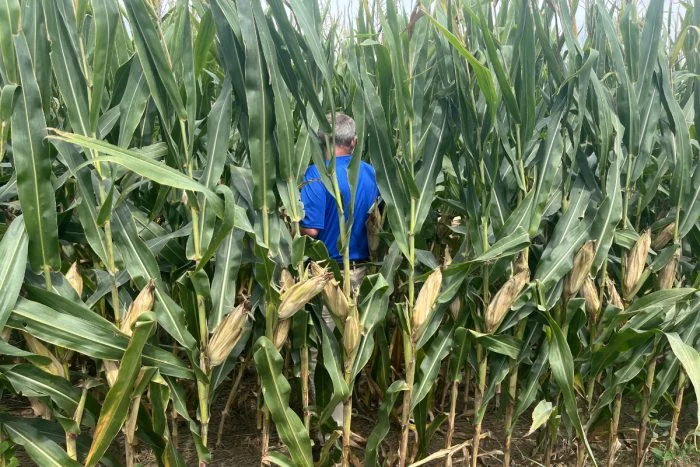
Across the vast expanse of the Chesapeake Bay, on Maryland’s Eastern Shore, Trey Hill represents the third generation at Harborview Farms. His 3,000-acre operation stands in stark contrast to Third Way, focusing primarily on commodity corn and soybeans destined for the state’s industrial poultry industry. For generations, Harborview followed the conventional trajectory of American agriculture: scaling up, prioritizing yields, and embracing mechanization and synthetic inputs. However, two decades ago, Hill embarked on a different path, driven initially by state incentives to protect the Bay.
Hill’s regenerative journey began with cover crops. Maryland’s robust payment programs for planting cover crops after fall harvests provided the initial impetus. These programs, critical for reducing nutrient runoff into the Bay, demonstrated unexpected benefits on his farm. Hill observed improvements in soil structure, water infiltration, and a noticeable increase in biodiversity. "One of the earliest observations I had as we converted to cover crops and to mixed species and planting green and all that stuff was just seeing the different life around the field and in the soil," Hill recounted. "Before ‘regenerative’ was a word, I liked ‘ecological,’ because I was increasing ecological diversity around the field. It’s really easy to see. You can hear my beans singing to us now with the crickets and the bugs. You can hear the birds."
By 2016, Hill had implemented cover crops across all his fields and fully adopted "planting green," a no-till system where cash crops (corn, soybeans, wheat) are planted directly into living cover crops. The cover crops are then terminated using a combination of herbicides and a roller crimper, maximizing the duration of living roots in the soil. This practice significantly improves soil health, suppresses weeds, and enhances water retention. While Hill still utilizes chemical pesticides and fertilizers—a point of contention for some purists—he has dramatically reduced their application. He has cut herbicide use by over 50% through the strategic use of roller crimping and "see and spray" technology, which precisely targets individual weeds rather than broadcasting chemicals across entire fields. Insecticide use has also been drastically reduced, though he continues to plant seeds treated with insecticides, citing persistent pest pressures in the Mid-Atlantic climate.
Hill acknowledges the criticisms regarding his continued reliance on some synthetic inputs. He experiments annually with chemical-free fields, but the high pest and weed pressures in his region often necessitate trade-offs. He argues that tilling more to control weeds organically would cause greater soil disturbance, counteracting the benefits of his no-till system. For Hill, the tangible improvements—increased earthworm populations (evidenced by the "bumps" of their castings), cleaner water leaving his fields, enhanced biodiversity, and improved soil organic matter—validate his approach. He aims to pass on an operation that is not just productive but also ecologically sound, a commitment to his daughter who has shown interest in farming. His work demonstrates that regenerative principles can be adapted and scaled within large-scale commodity agriculture, offering a pragmatic pathway for significant environmental impact.
The Definition Divide: Corporations, Certifications, and the Consumer
The contrasting approaches of Third Way and Harborview Farms vividly illustrate the central debate surrounding regenerative agriculture: its definition. The lack of a clear, universal standard has created a complex landscape for farmers, consumers, and the industry at large.
Corporate Engagement and "Greenwashing" Concerns: Major food corporations, recognizing growing consumer demand for sustainable products and the potential for improved supply chain resilience, have increasingly embraced "regenerative." Companies like General Mills, Cargill, and Danone have announced ambitious goals to transition millions of acres to regenerative practices. While these commitments are welcomed by many as a driver of change, critics, including some environmental advocacy groups, warn of "greenwashing." Without stringent, verifiable criteria, they argue, companies can make broad claims that may not translate to genuine, holistic ecological improvements, potentially undermining the integrity of the movement. For instance, a farm might adopt no-till and cover crops, but still rely heavily on synthetic fertilizers and pesticides, which some purists argue falls short of true regeneration.

The Quest for Certification: In response to this ambiguity, several third-party certification programs have emerged, each with its own set of standards. The Regenerative Organic Certified (ROC) standard, for example, combines requirements for soil health, animal welfare, and social fairness, building upon existing organic certifications. Other initiatives focus specifically on soil carbon sequestration or water quality. These certifications aim to provide transparency and accountability, offering consumers a way to identify products that meet specific environmental and ethical benchmarks. However, the proliferation of different labels can confuse consumers and create administrative burdens for farmers, particularly smaller operations.
Academic and Policy Perspectives: Agricultural scientists and researchers are actively working to quantify the benefits of various regenerative practices across different regions and farming systems. Longitudinal studies are crucial to provide the data needed to inform policy and refine definitions. Institutions like the Rodale Institute have been pioneers in demonstrating the long-term ecological and economic viability of regenerative organic systems. Policy makers, including the USDA, are also grappling with how to best support and incentivize regenerative transitions. The USDA’s "Climate-Smart Commodities" program, for example, aims to create market opportunities for farmers adopting practices that reduce greenhouse gas emissions and sequester carbon, often aligning with regenerative principles. However, the program has faced scrutiny over its criteria and the balance between supporting small, diversified farms and large commodity operations.
Economic and Environmental Implications: Bridging the Gap
The journeys of Shireman and Hill underscore that the economic implications of transitioning to regenerative agriculture are as varied as the practices themselves. For diversified farms like Third Way, the ability to sell directly to consumers through CSAs, farmers’ markets, and local restaurants often allows them to capture premium prices for their high-quality, ethically produced goods. While the labor intensity of diversified, chemical-free farming can be high, reduced input costs for synthetic chemicals and the value added through direct marketing can make these operations profitable.
For commodity farmers like Hill, the economic calculus is different. While the adoption of no-till and cover crops can reduce fuel and equipment costs, the continued use of some synthetic inputs means the primary market remains conventional. However, Hill has experienced reduced herbicide costs through precision application and improved soil health reducing the need for other inputs. Furthermore, enhanced soil resilience can lead to more stable yields, particularly in the face of increasingly volatile weather patterns. Future carbon markets or direct payments for ecosystem services could also provide significant new revenue streams for commodity producers who demonstrate measurable carbon sequestration or water quality improvements. An agricultural economist might infer that while the initial capital investment in new equipment (e.g., roller crimpers, precision sprayers) or a shift in management strategy can be significant, the long-term benefits of reduced input costs, increased soil resilience, and potential market premiums make regenerative practices a sound investment.
Environmentally, both farms offer substantial benefits, albeit through different scales and methods. Third Way Farm’s extensive biodiversity, perennial systems, and integrated livestock management create a rich, complex ecosystem that maximizes carbon sequestration, enhances pollinator habitat, and eliminates chemical runoff. Harborview Farms, by minimizing tillage and maintaining year-round living roots on 3,000 acres, significantly reduces soil erosion and nutrient leaching into the Chesapeake Bay, while also building soil organic matter on a massive scale. While Hill’s use of some chemicals might be a point of debate, his substantial reduction in their use, coupled with the vast acreage under improved management, represents a significant positive environmental impact that would be difficult to achieve through an exclusively organic approach at that scale in his region.
The Path Forward: Collaboration, Innovation, and Clearer Standards
The stories of Tommy Shireman and Trey Hill are not mutually exclusive but rather complementary narratives within the broader regenerative agriculture movement. They demonstrate that "regenerative" is less a single destination and more a spectrum of practices, a continuous journey of improvement tailored to specific farm contexts.
The future of regenerative agriculture will likely involve:
- Continued Innovation and Research: Further research into effective practices for diverse agro-climatic zones, and the development of new technologies (like advanced sensors, AI-driven precision agriculture, and biological inputs) will be crucial for scaling adoption.
- Harmonized Standards and Certifications: Collaborative efforts between industry, academia, NGOs, and farmers are needed to develop clearer, scientifically backed, and widely accepted definitions and certification pathways that are both rigorous and practical. This will provide clarity for consumers and prevent "greenwashing."
- Supportive Policy and Economic Incentives: Government programs, like those in Maryland, will need to continue evolving to provide financial and technical assistance that supports farmers through the transition period, rewards long-term ecological outcomes, and helps de-risk adoption. This includes exploring mechanisms for valuing ecosystem services.
- Education and Knowledge Sharing: Facilitating farmer-to-farmer learning, extension services, and educational programs is essential to disseminate best practices and foster a culture of continuous improvement.
- Consumer Engagement: Educating consumers about the complexities and benefits of regenerative agriculture will be vital in driving demand for regeneratively produced goods and supporting farmers who embrace these practices.
Ultimately, whether defined by a small, diversified farm focused on holistic biodiversity or a large commodity operation making incremental yet impactful changes, the overarching goal of regenerative agriculture remains the same: to leave the land better than we found it. The diverse pathways taken by farmers like Shireman and Hill are not just individual choices but collective steps towards a more resilient, sustainable, and life-affirming food system for all.