admin
admin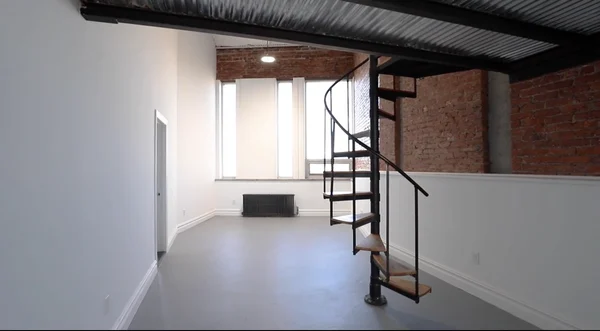
Mariano Testa, a resident whose home occupies a meticulously converted former firehouse, has transformed an imposing architectural element—a heavy metal door—into a deeply personal, evolving archive of his life. This distinctive feature, serving as the entrance to his expansive loft, is not merely a functional barrier but a living canvas adorned with an array of personal artifacts. From a friend’s wedding invitation to a cherished photograph of his dog, Luna, and ephemeral fortune cookie messages, each item is deliberately pinned, creating a tangible record. Testa describes this unique practice as "a beautiful record of the year and what’s happening in my life, good and bad," drawing a contemporary parallel by noting, "Maybe like a real-life Instagram wall or something, you know?" This innovative approach to personal archiving transcends mere decoration, offering a profound commentary on memory, identity, and the evolving relationship between digital and physical documentation in contemporary living spaces.
The Genesis of a Personal Archive in an Industrial Setting
The journey into Testa’s world begins with the building itself. Firehouses, often robust structures built for durability and utility, have increasingly become prime candidates for adaptive reuse in urban centers worldwide. These conversions capitalize on high ceilings, open floor plans, and distinctive architectural details, offering unique residential experiences that contrast sharply with conventional housing. Testa’s choice to reside in such a space speaks to a broader trend towards valuing historical character and architectural innovation in personal environments. The heavy metal door, likely an original feature designed for security and fire resistance, provides a formidable backdrop for his ongoing project. Its industrial aesthetic, often seen as cold or uninviting, is here imbued with warmth and personal narrative.
The concept of pinning mementos to a prominent surface did not emerge overnight but evolved organically. Testa, perhaps initially seeking a temporary display solution, discovered the profound impact of this accumulating collection. Each addition is a deliberate act, a conscious decision to memorialize a moment, a connection, or a sentiment. Unlike a digital folder, where items are stored away from immediate view, these physical tokens remain perpetually present, inviting reflection and conversation. This practice transforms a static architectural element into a dynamic, interactive installation, reflecting Testa’s belief that his home should be a direct extension of his experiences.
Adaptive Reuse: A Broader Context in Urban Development
The conversion of former industrial and public service buildings like firehouses, warehouses, and schools into residential or mixed-use spaces is a significant trend in urban planning and architecture. This movement, known as adaptive reuse, gained momentum in the late 20th century as cities sought sustainable ways to revitalize urban cores and preserve architectural heritage. Rather than demolishing structurally sound buildings, developers and homeowners discovered the inherent value in their robust construction, generous proportions, and unique historical narratives.
Firehouses, in particular, present distinctive advantages and challenges. Their original design often includes large bay doors, high ceilings to accommodate fire apparatus, and sturdy, fire-resistant materials. These features translate into spacious, light-filled living areas with an inherent industrial chic. However, conversions also require significant investment in updating infrastructure—plumbing, electrical systems, and insulation—to meet modern residential standards. Despite these challenges, the appeal of living in a building with a tangible past, far removed from the uniformity of new builds, continues to attract individuals like Mariano Testa. According to a 2022 report by the National Trust for Historic Preservation, adaptive reuse projects often contribute more to local economies through job creation and property value increases compared to new construction, while also reducing environmental impact by minimizing demolition waste and the demand for new materials. Testa’s firehouse loft exemplifies this successful integration of historical preservation with contemporary living, setting the stage for his personalized approach to interior design.
The Door as a Living Narrative: A Chronology of Personal Events
Mariano Testa’s memento door is far more than a decorative feature; it functions as a chronological, tactile diary. The items pinned to its surface are not randomly placed but represent specific moments, milestones, and daily occurrences that collectively paint a portrait of his life. A friend’s wedding invitation, for example, marks a significant social event, celebrating connection and shared joy. The picture of Luna, his dog, anchors the door in the realm of everyday companionship and unconditional affection. Fortune cookie messages, often whimsical or prophetic, add an element of serendipity and introspection, capturing fleeting thoughts or hopes.
The process of adding to the door is an ongoing chronology. Testa likely adds items as they occur, creating layers of memories that can be revisited and re-contextualized over time. This continuous accretion means the door is never truly finished; it is perpetually in progress, reflecting the dynamism of life itself. Unlike a traditional scrapbook, which is often compiled retrospectively, Testa’s door is a real-time, public (within his private space) display of current and recent events. This immediacy allows for a more fluid and less edited representation of his personal journey, embracing both "good and bad" experiences as integral parts of the narrative. The physical act of pinning, the subtle rustle of paper, the varying textures of each item—these sensory details are absent in digital archives, contributing to the profound intimacy of Testa’s project.
Digital Echoes in a Physical Space: The "Real-Life Instagram Wall" Analogy
Testa’s analogy of his door as a "real-life Instagram wall" is particularly insightful, bridging the gap between contemporary digital culture and traditional methods of personal expression. Instagram, and similar social media platforms, have popularized the concept of curating one’s life through visual snippets, offering a public-facing narrative. However, critical distinctions exist between Testa’s physical door and its digital counterpart.
While both involve curation, the "Instagram wall" on a digital platform is often meticulously filtered, edited, and optimized for external validation. It presents a highly polished, often idealized version of reality. In contrast, Testa’s physical door, while curated, appears to embrace a more authentic and unvarnished representation of his life. The inclusion of "good and bad" experiences suggests a resistance to the pressure of presenting only the highlights. Furthermore, the audience for Testa’s door is primarily himself and those he invites into his home, fostering a sense of intimacy and genuineness that can be diluted in the vast, often anonymous public sphere of social media.
Psychologically, interacting with physical objects offers a different cognitive experience than scrolling through digital images. Tangible mementos engage multiple senses—sight, touch, and sometimes even smell (the scent of old paper, for instance)—triggering more vivid and robust memories. A 2023 study published in the Journal of Consumer Research indicated that physical artifacts foster a stronger sense of connection and authenticity than their digital equivalents, particularly when associated with personal milestones. Testa’s door serves as a powerful reminder of the enduring human need for tangible anchors in an increasingly digital world, where memories can feel ephemeral and easily lost in the vastness of cloud storage.
The Psychology of Mementos and Personal Space
The act of collecting and displaying mementos is deeply rooted in human psychology, contributing significantly to identity formation, memory recall, and overall well-being. Psychologists and sociologists widely acknowledge that physical objects serve as powerful external cues, triggering episodic memories and helping individuals construct a coherent narrative of their lives. These "transitional objects," as some theorists refer to them, can provide comfort, continuity, and a sense of belonging.
In the context of personal space, the customization of one’s home environment is crucial for fostering a sense of ownership and psychological comfort. A study by the Journal of Environmental Psychology highlighted that individuals who personalize their living spaces report higher levels of satisfaction and emotional attachment to their homes. Testa’s door exemplifies this principle, transforming a structural component into a deeply personal artifact that reflects his journey, values, and relationships. It’s a dynamic autobiography, constantly updated, allowing him to literally surround himself with the tangible evidence of his existence. This active engagement with one’s personal history, rather than merely archiving it away, can be a therapeutic and grounding practice, providing a constant reminder of one’s roots and evolving path.
The Evolution of a Design Trend: Authenticity in Home Environments
Mariano Testa’s innovative use of his firehouse door aligns with a broader shift in interior design towards authenticity, personalization, and storytelling. For decades, minimalist aesthetics often prioritized clean lines and uncluttered spaces, sometimes at the expense of personal expression. However, contemporary design increasingly embraces individuality, encouraging homeowners to infuse their spaces with character and narrative. This trend is fueled by a desire to create homes that feel lived-in, unique, and genuinely reflective of their occupants, moving away from mass-produced uniformity.
Publications like Dwell, which featured Testa’s home through Melissa Dalton’s reporting, consistently champion design that is both functional and deeply personal. They highlight homes that push boundaries, explore sustainable practices, and celebrate innovative ways of living. Testa’s memento door, therefore, is not an anomaly but a compelling example of how everyday objects and architectural elements can be reimagined to serve a higher purpose—that of personal expression and memory keeping. This approach resonates with a growing segment of the population that seeks to imbue their living environments with meaning beyond mere aesthetics, transforming houses into true homes that tell a story.
Logistics and Longevity: Sustaining a Living Archive
A practical question arises regarding the longevity and management of such a dynamic archive: what happens when the door becomes full? Testa’s system, by its very nature, suggests a continuous cycle of addition and perhaps, occasional re-evaluation. It is plausible that, like any evolving archive, there might be a process of rotation or curation. Older, less immediately relevant items might be moved to a secondary, less prominent physical archive (perhaps a box or a dedicated drawer), making space for new memories while still preserving the past. This would maintain the door’s function as a "record of the year," focusing on the most current and impactful moments while acknowledging the transient nature of space.
Alternatively, the sheer volume could become part of its aesthetic, creating a dense, layered tapestry of his life. This approach would turn the door into a palimpsest, where newer additions might partially obscure older ones, symbolizing how new experiences build upon and sometimes overshadow previous ones. The ongoing nature of the project means it requires active engagement and periodic maintenance, making it a living, breathing component of his home that demands attention and care, much like one tends to a garden. This sustained interaction ensures that the door remains a vital and relevant part of his daily existence, continually reflecting his current state and journey.
Broader Implications for Contemporary Living
Mariano Testa’s firehouse door offers a compelling model for how individuals can re-engage with physical space and personal history in an increasingly digitized world. It underscores the enduring human need for tangible connections, for objects that can be touched, felt, and directly experienced. In an era where digital content often feels ephemeral and easily lost in the cloud, a physical archive like Testa’s provides a grounding counterpoint, a steadfast reminder of lived experience.
This project has broader implications for how we conceive of memory, identity, and the home. It encourages a shift from passive consumption of media to active creation and curation of one’s personal narrative. It invites others to consider how they might transform mundane elements of their own living spaces into meaningful canvases for self-expression. Ultimately, Testa’s door is more than just a quirky design choice; it is a profound statement on the value of authenticity, the power of personal narrative, and the innovative ways in which we can imbue our homes with soul and story. It stands as a testament to the idea that our personal spaces can, and perhaps should, be as dynamic, complex, and evolving as the lives we lead within them.