admin
admin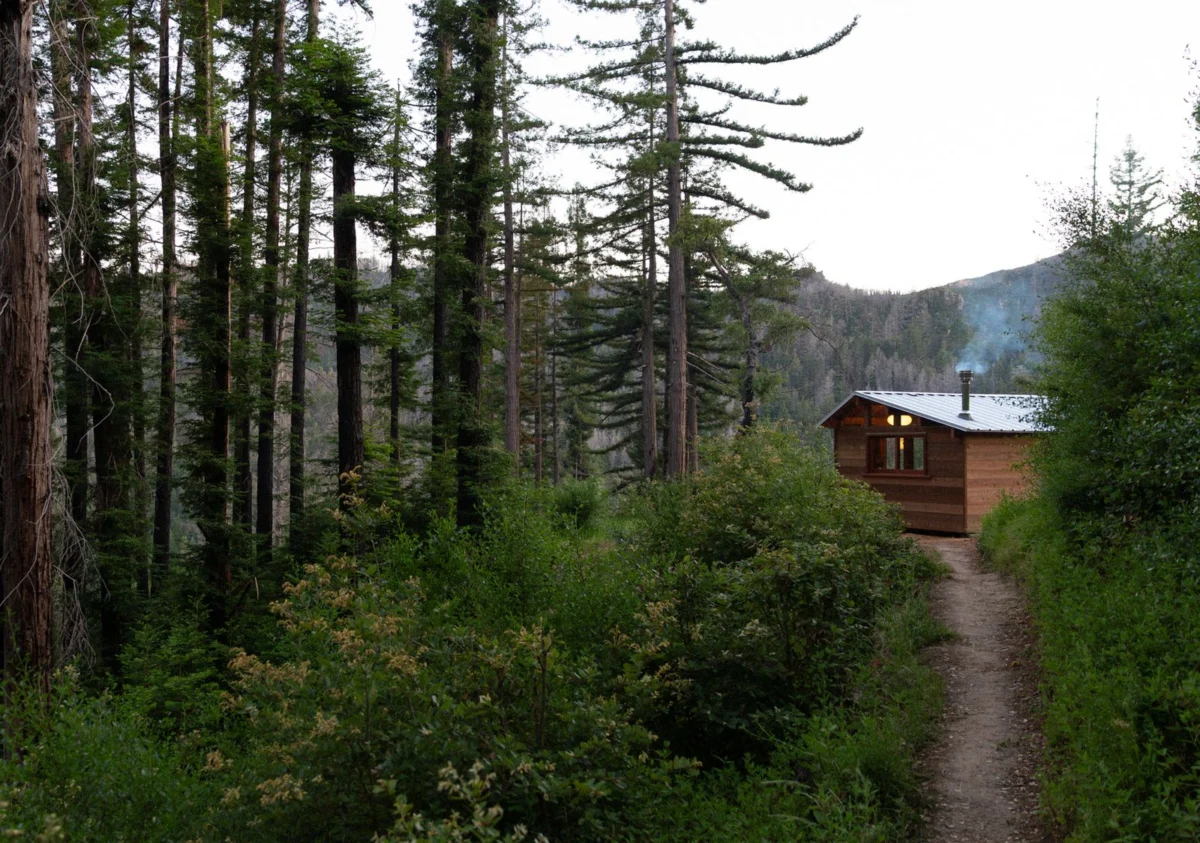
San Francisco, CA – A decade ago, what began as a burgeoning desire for more space and meaningful engagement beyond the confines of urban living evolved into a profound journey for Molly Fiffer and Jeff Waldman. In 2014, the couple found their third-story San Francisco apartment increasingly ill-suited to their lifestyle, which had moved beyond simple arts and crafts to more ambitious, noise-generating projects that strained neighborly relations. Their initial attempt at a rooftop garden, a common aspiration for city dwellers seeking greenery, was quickly dismantled by their landlord due to liability concerns, underscoring the limitations of their metropolitan environment. These frustrations, coupled with their experiences hosting and attending workshops – including a memorable whole pig butchering event in their apartment – intensified their yearning for impactful, hands-on experiences and, crucially, more quality time and physical space.
The Urban Catalyst: Seeking More Than City Life
The couple’s discontent mirrored a broader trend among urban residents, particularly in high-cost-of-living cities like San Francisco, where the average apartment size can feel restrictive and access to nature is often limited to parks or distant weekend trips. For Fiffer and Waldman, the piecemeal solutions they initially adopted – renting cabins for long weekends, frequent camping trips, or extended stays at friends’ family properties – offered temporary respite but failed to satisfy their deeper craving. They yearned for a place they could truly shape, ideally nestled within a woodland setting, where they could dedicate days to tinkering, playing, and bonding over collaborative problem-solving. Molly, in particular, harbored a poignant desire to plant a fig tree, a symbol of rootedness and growth that felt impossible in their urban dwelling.
The idea of relocating to a place with ample acreage, or at least a sizable yard, was briefly entertained. They explored far-flung options, including the possibility of moving outside Boise, Idaho, which offered affordable space and notable natural beauty. However, this consideration ultimately brought them back to a critical realization: their day-to-day happiness was inextricably linked to their established local community in San Francisco and their deep affection for California. The prospect of sacrificing their social network and cultural ties for mere space felt like an unacceptable trade-off. Resolved to remain in their beloved California, but still restless for a solution, they faced a pivotal question: what next?
The Dream of Communal Living and Practical Realities
Their resolve to stay in California shifted their focus towards acquiring a weekend getaway property. This sparked conversations with like-minded friends about some form of communal land ownership, a romantic notion that often envisioned a collection of small cabins scattered across a large, shared plot. Various properties, from empty lots to vacation homes and dilapidated cabins, appeared on their collective radar, but each presented significant concessions in terms of cost or condition. The idea of splitting the expense with friends seemed a viable strategy to make the financial mathematics work for what was, for many, an unprecedented investment.
A significant turning point came in the fall of 2015 when Jeff Waldman attended a timber framing workshop at Beaver Brook, a communal getaway located a few hours from New York City. This experience offered a tangible glimpse into the potential of shared land. The cabin he slept in, famously gracing the cover of Cabin Porn – a book that became an inspirational touchstone for urban dwellers romanticizing rustic escapes – further fueled his aspirations. Seeking advice, Waldman consulted Zach Klein, then CEO of Dwell and one of Beaver Brook’s owners. Klein and his wife, Courtney, shared their property with a dozen or two friends, offering invaluable firsthand experience.
Klein offered two critical pieces of advice that profoundly shaped Fiffer and Waldman’s subsequent decisions. Firstly, he cautioned that despite seemingly earnest desires, he found it challenging to get a group of individuals moving in a singular direction simultaneously, particularly concerning financial commitment. To make such a venture a reality, Klein advised, it often takes one person to step up and make the initial financial investment, then offer friends the opportunity to opt-in and share. Secondly, he strongly recommended purchasing a property with an existing home, even if it was a teardown. Securing a loan for a developed property is significantly easier than financing raw land, and a pre-existing structure typically comes with utilities already in place, vastly reducing the hurdles and onerous costs associated with starting from scratch on a vacant lot.
These insights resonated deeply. At that stage in their lives, with few friends owning homes, the financial commitment required for any real estate purchase was substantial. While several friends had expressed interest – their friend Charlie had even drafted a "founding document" complete with a cover photo of a treehouse superimposed on a woodland property they had toured – translating enthusiasm into collective action proved difficult. Despite substantive conversations, meaningful headway on any of the properties or with the friends for a shared purchase remained elusive. There was "lots of talk, little action."
The Leap into the Wild: Securing "The Land"
Taking Zach Klein’s first piece of advice to heart, Fiffer and Waldman pivoted to the idea of a solo property venture. This meant the entry cost had to be minimized, leading them, for better or worse, to disregard Klein’s second recommendation about buying an existing home. Their search shifted decisively towards undeveloped land, with the intention of building from the ground up.
In late 2016, after meticulously scouting dozens of properties stretching up and down the California coast and into the Sierra Nevada Mountains, they were introduced to a compelling 10-acre parcel. Located less than two hours south of San Francisco, nestled in the Santa Cruz Mountains – a region celebrated as the home of California’s first state park, once roamed by grizzly bears and now known for its abundant banana slugs – the property offered a unique blend of accessibility and wildness.
The drive to the property itself was an adventure, requiring a "running start" in their two-wheel-drive Honda to navigate the "rowdy dirt road." Upon cresting, they found a single, U-Haul-sized patch of flat ground, currently occupied by a tarp and plywood drying shed. Their realtor then bushwhacked them higher to a "tiny sliver of south-facing ridge," where, by standing in "juuust the right spot," one could barely glimpse a potential view through the dense canopy of redwood, fir, oak, and madrone trees. This precarious spot was optimistically billed as a possible building site for a shed-sized cabin, a vision difficult to grasp while "clinging to branches and slipping off the hillside." Yet, despite the initial challenges, the potential was palpable.
Navigating the Challenges of Undeveloped Property
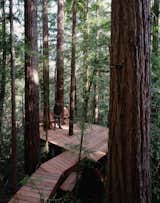
Of the ten acres, only about two were semi-accessible via the existing drive that wound to the upper reaches of the property. This path meandered through groves of secondary-growth redwoods, remnants of extensive logging in the late 1800s. Ancient stumps and a few larger, malformed trees, deemed unsuitable for milling, stood blackened like stone, silent witnesses to a century-old wildfire.
The woods were exceptionally thick, a testament to a century without significant fire and the benefit of numerous wet seasons. The Santa Cruz Mountains present a challenging environmental dichotomy: summers can bring scorching hundred-degree days, creating conditions ripe for wildfires, while winters deliver an average of fifty inches of rain annually – more than Seattle. The winter immediately following their property viewing would prove historic, dumping over a hundred inches of rain in a single season, leading to springing creeks, fallen trees, landslides, and road closures that lasted for years. While they didn’t fully grasp these specific risks at the time, the temperate climate, with its lack of snow and rare freezing temperatures, promised a manageable environment for their time there and any future building projects.
Exploring the property involved dodging poison oak and sliding down gullies through carpets of redwood duff and tanoak leaves, all while trying to locate each boundary flag. The land was teeming with wildlife; game cameras later revealed bobcats, foxes, deer, turkeys, and even occasional mountain lions. However, these larger creatures were elusive through the dense undergrowth of fern, lilac, and French broom. California newts and western fence lizards, however, were abundant and reliably visible, offering small but constant reminders of the vibrant ecosystem.
The property lacked essential utilities like power and water. However, an easement for water could be secured from a neighboring property, a crucial factor given the prohibitive weight of transporting more than a few gallons for drinking. Generators and batteries seemed a more manageable solution for electricity. The asking price represented all the cash they had, plus an additional $35,000 they didn’t possess. Securing a traditional loan for raw land is notoriously difficult; lenders are generally reluctant to back such purchases without a robust business plan. Undeterred, they submitted an offer for the asking price, proposing to pay a majority in cash and seller-finance the remaining balance over five years. The wait for acceptance was fraught with nervous anticipation.
When their offer was finally accepted, their initial reaction was not one of unbridled excitement but rather a profound sense of uncertainty. Even at a fraction of the cost of a developed home, it was their largest financial commitment to date, feeling like a significant gamble for an "undeveloped patch of dirt and a handful of newts." There was no clear vision, no definitive "Hell yes." Instead, a nervous "Fuck, now what?" encapsulated their initial emotional state.
Building a Vision, Forging a Community
The one aspect that remained clear was the modest scale of their experiment. Having abandoned the idea of pooling cash with friends based on Zach Klein’s advice, they committed to buying at a scale they could personally afford, which necessitated reducing their grand communal aspirations. This property was destined to be an "experimental entry point" rather than a sweeping communal living solution. However, from the outset, Fiffer and Waldman were resolute in their intention for it to be a "community asset," freely available for friends to use and a collaborative space for projects.
As they announced the purchase to their friends, the common refrain, "We bought dirt," humorously betrayed the nascent stage of their planning. They envisioned the parcel as a means to satisfy their deep desires for projects in the woods, a campsite, and an adventure in rural property ownership that would allow them to maintain their urban life and close ties to their social network. It was viewed as a "play-space," a "canvas" for creation, an outlook that, remarkably, remained consistent over the years.
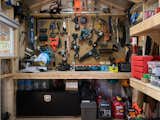
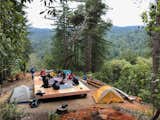
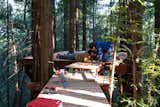
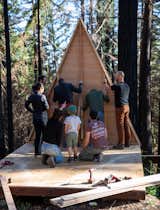
Over time, various structures and gatherings took shape on the property. One of their first projects was a storage shed, a practical necessity. Later, they constructed a platform in a stand of redwoods, designed with built-in seating, which became a focal point for communal activities. In May 2019, they completed their first cabin, a structure with a shed roof and a deck featuring integrated seating, embodying their hands-on ethos. Their friends frequently joined them, camping out and contributing to projects, transforming the property into a truly collaborative endeavor.
Resilience Amidst Disaster: The CZU Lightning Complex Fires
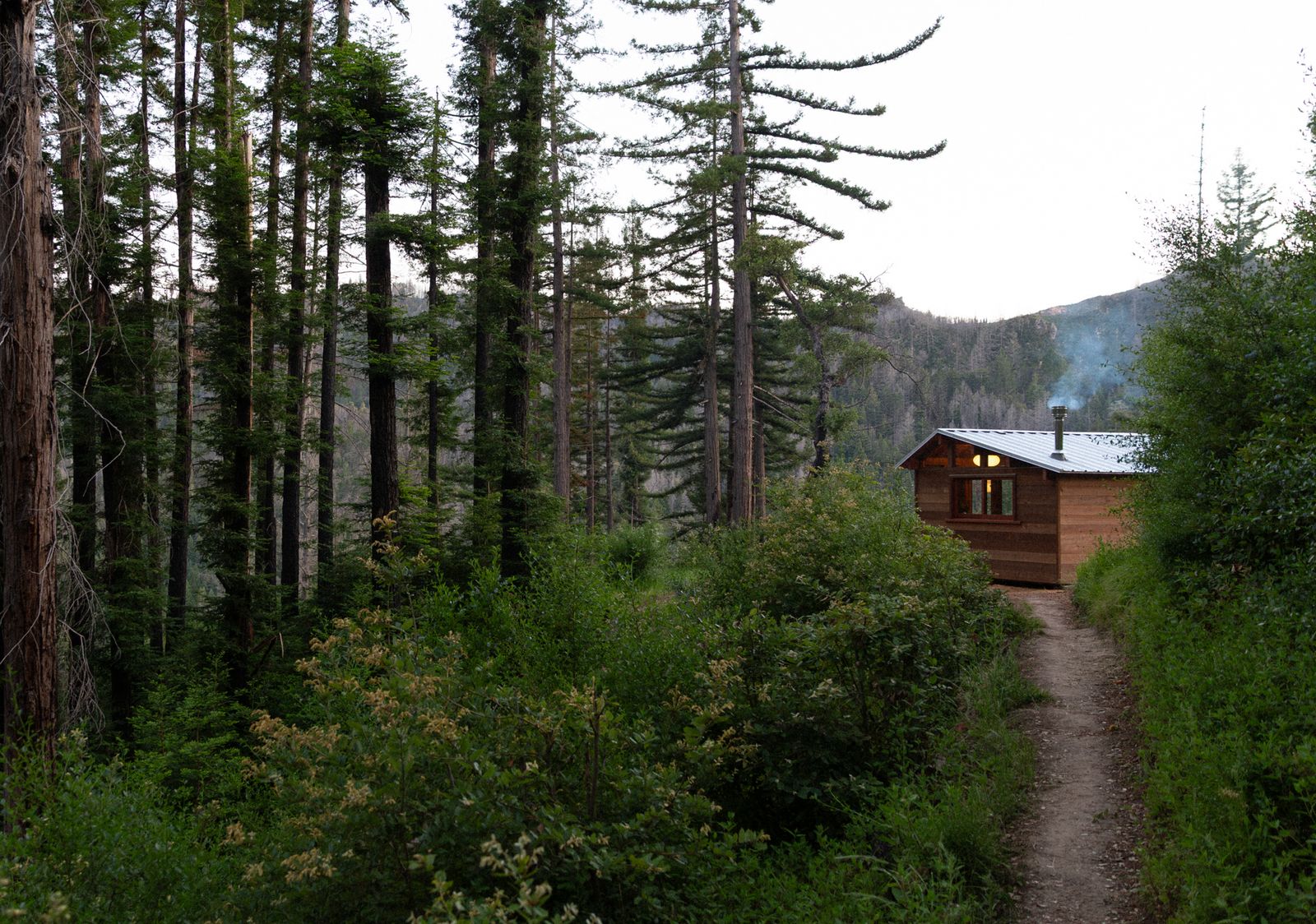
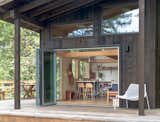
Their journey, however, faced an unforeseen and devastating challenge. In August 2020, the CZU Lightning Complex fires swept through the Santa Cruz Mountains, tragically wiping out their property. This catastrophic event forced Fiffer and Waldman to start anew, a testament to their unwavering commitment to their vision and their "Land." Undeterred, they embarked on rebuilding, designing a new cabin with an askew gable roof and double doors opening into a living area complete with a wood-burning stove, kitchen, and built-in benches. This second iteration of their cabin, like the first, was a community effort, with friends once again gathering to help raise the A-frame structure they designed, a plan set for which they now sell, sharing their practical knowledge with others.
"The Land": A Canvas for Connection and Creation
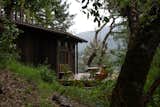
Through all the evolution and adversity, the property never acquired a formal name. No one referred to it as "Newt Ranch" or "The Cabin." It wasn’t defined by its features, roads, or nearby peaks or streams. Instead, everyone simply called it "The Land." This informal moniker perfectly encapsulates its essence: a foundational space, a blank canvas for projects, a wild retreat, and a constant source of connection.
Molly Fiffer and Jeff Waldman’s decade-long endeavor in the Santa Cruz Mountains is more than a personal story of acquiring property; it is a microcosm of a larger societal yearning for authentic experiences, tangible creation, and reconnection with nature. Their journey, fraught with financial hurdles, environmental risks, and ultimate triumph over disaster, underscores the resilience required to forge a life that balances urban community with wild escapism. Their upcoming book, "The Land," promises to share the rich tapestry of their experiences, offering inspiration and practical insights to those who, like them, desire to leave their mark on a piece of dirt and call it their own.