admin
admin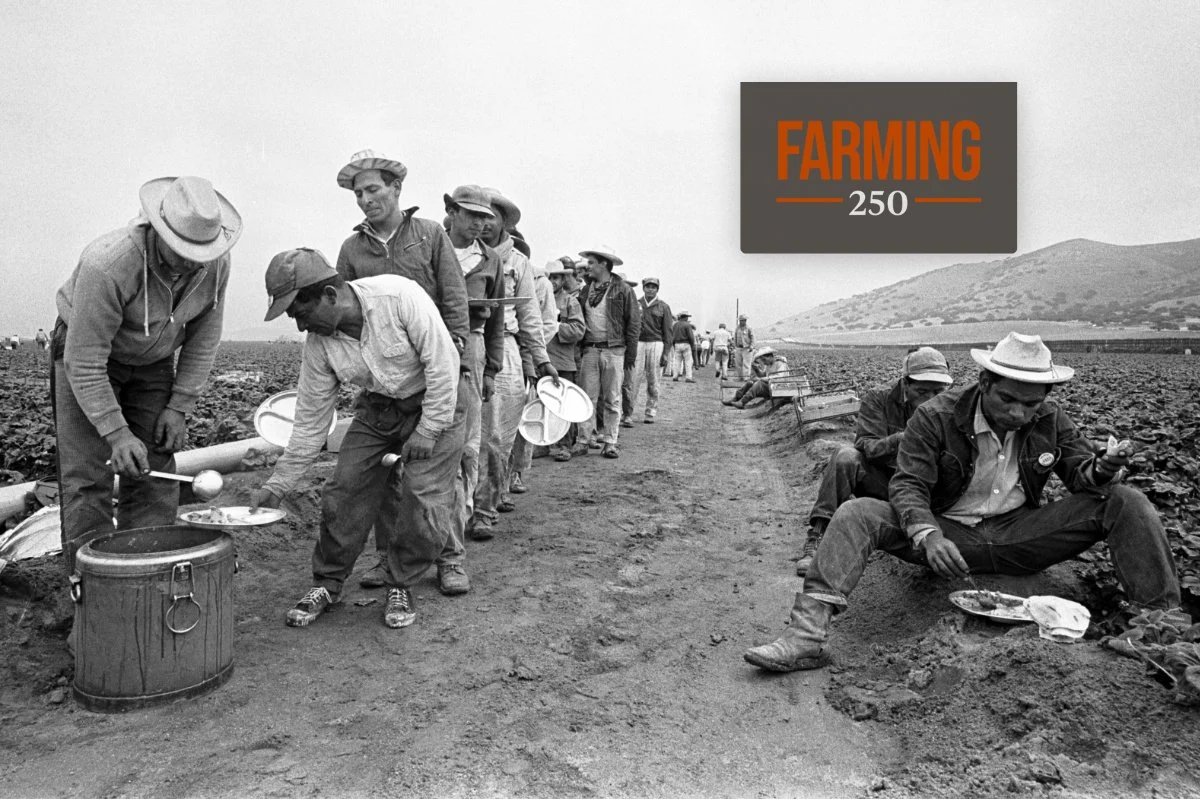
In 2005, approximately 50,000 individuals entered the United States to fulfill agricultural labor needs through the federal guestworker visa program, H-2A. A decade later, government data revealed a dramatic increase, with that number tripling. By 2024, less than ten years subsequent to that, the figure had nearly tripled again, approaching 400,000 workers annually. This explosive growth, an eight-fold increase in under two decades, presents a striking paradox: despite the unprecedented reliance on the H-2A program, American farms report struggling more intensely than ever to secure sufficient labor.
The Intensifying Farm Labor Crisis
The current agricultural labor crunch is the culmination of several complex and overlapping trends. These include the increasing consolidation of farms into larger, more industrialized operations, shifts in U.S. immigration policy that have restricted traditional pathways for undocumented labor, and a diminishing willingness among U.S. citizens to undertake demanding farm work. John Hollay, president and CEO of the National Council of Agricultural Employers (NCAE), articulated the long-standing nature of this challenge, stating, "We’ve been an industry that has been labor challenged for a long time, but it absolutely has gotten more acute."
The severity of the issue was underscored by House Agriculture Chairman G.T. Thompson (R-Pennsylvania) following a series of meetings with farmers nationwide in preparation for the upcoming farm bill. Thompson reported that labor shortages were raised more frequently than almost any other concern. In response to these pressures, Thompson recently introduced legislation aimed at significantly transforming the H-2A program, proposing changes that would further expand its scope and accessibility for both farms and workers. This legislative push, however, has surprised many observers, given that the H-2A program, despite its rampant growth, is often viewed within the agricultural sector as a measure of last resort. Farmers frequently find the program cumbersome and expensive to navigate, while farmworker advocates consistently point to its potential to enable exploitation, largely due to the employer’s extensive control over a worker’s housing, transportation, and legal status in the country. The central question remains: given these inherent difficulties and criticisms, why are U.S. farms increasingly reliant on a program widely regarded as problematic?
A Deep-Rooted History of Labor Dependency
The current state of American farm labor is deeply embedded in a historical trajectory of dependency on marginalized and often coerced workforces. For centuries, American agriculture relied on the brutal system of chattel slavery, forcing Africans and their descendants to toil in sugar, tobacco, cotton, and other fields. By 1860, an estimated 2.5 million enslaved individuals, the largest concentration, were forced to work in cotton cultivation, according to the Colonial Williamsburg Foundation. Following the Civil War, many formerly enslaved people continued to provide labor as sharecroppers, a system that, while technically free, often trapped them in cycles of debt and dependency reminiscent of their prior bondage.
The 20th century witnessed a gradual but profound shift towards hiring immigrants for farm work, a pattern that consistently targeted individuals with the fewest resources and vulnerabilities. Mary Mendoza, a Penn State historian specializing in U.S.-Mexico borderlands, eloquently articulates this enduring pattern: "American capitalism, especially in the agriculture industry, but also in general, rests on the bodies of racialized people, whether it’s forced labor through chattel slavery or coerced labor…really pulling from the poorest echelons of society." Mendoza’s research, including her book Deadly Divide: How Insects, Pathogens, and People Defied the U.S.-Mexico Border, extensively covers the historical dynamics of farm labor migration.
The Bracero Program: A Precursor to Modern Guestwork
A significant precursor to the H-2A program was the Bracero program, which operated between 1942 and 1964. This bilateral agreement brought approximately 4 million Mexican laborers to the U.S. to address wartime labor shortages in agriculture. While Mexican migration was already underway, World War II significantly intensified the demand. Mexican officials, as Mendoza notes, were amenable to the program, seeing an opportunity for poor, predominantly Indigenous laborers to send remittances home, thereby stimulating Mexico’s economy.
The Bracero program was highly selective, targeting young, healthy, landless men. Prospective workers endured arduous journeys from across Mexico to processing centers, often waiting for days or weeks. Medical examinations by Mexican doctors assessed their physical strength and the calluses on their hands as proof of their capacity for hard labor. Upon acceptance, they were transported to the U.S. border, sometimes in overcrowded cattle cars lacking basic amenities like food or bathrooms. Once in the U.S., they faced further scrutiny from American doctors, who, as Mendoza points out, often perpetuated stereotypes of Mexicans as "dirty and diseased," even when the unsanitary conditions were a direct result of the processing itself. Workers were infamously sprayed with DDT and other toxic chemicals to eliminate lice, a dehumanizing practice. Following these procedures, they were sent to selection areas where farmers would physically inspect them, often touching their bodies to gauge their musculature, before choosing their workforce.
Braceros were deployed to nearly every U.S. state, though concentrations were highest in the West. The work was universally difficult, characterized by long hours and physically demanding tasks. However, due to insufficient government oversight and enforcement, many braceros endured terrible conditions. Federal inspectors frequently documented unsanitary housing, lack of running water, and other violations, yet follow-up and remediation were often absent, leaving workers vulnerable.
The Bracero program ended in 1964. A year later, Congress passed the Immigration and Nationality Act of 1965, which, while a broader immigration reform, notably imposed the first numerical limits on immigration from Latin America. This legislative shift, as Mendoza explains, initiated a concerted effort to "increasingly control the border," setting the stage for contemporary immigration dynamics. Rather than halting migration, these restrictions compelled many individuals from Mexico and further south to cross the border without legal authorization to seek farm work in the U.S.
NAFTA’s Impact and the Rise of Undocumented Labor
The flow of individuals with agricultural backgrounds from Mexico intensified in the 1990s following the implementation of the North American Free Trade Agreement (NAFTA). NAFTA’s provisions opened Mexican markets to heavily subsidized U.S. corn, causing the price that Mexican farmers could command for their own corn to plummet by over 65 percent. This economic shock dispossessed millions of Mexican farmers, forcing them to seek alternative livelihoods. With robust demand for agricultural workers north of the border but an increasingly restricted legal pathway, many opted for undocumented entry into the U.S. farm sector.
USDA data illustrate this transformation: in 1990, just over half of U.S. crop farmworkers were immigrants, with about 14 percent lacking legal status. By 2000, more than three-quarters were foreign-born, and over half of those lacked legal authorization. Concurrently, the H-2A program, established under the Immigration Reform and Control Act (IRCA) of 1986, began its gradual expansion. Its growth accelerated significantly as immigration laws became even more restrictive, particularly after the events of 9/11, creating a greater need for a "legal" but temporary workforce.
The Contemporary Farm Labor Landscape and H-2A’s Ascendancy
In recent decades, immigration patterns and enforcement have fluctuated with national leadership, but the fundamental composition of the farm labor force has remained consistent. It primarily comprises undocumented immigrants, immigrants with legal status and citizenship, and a rapidly expanding segment of H-2A visa holders. U.S.-born workers represent the smallest and continually shrinking share of this workforce.
As of 2022, the USDA estimated that approximately 70 percent of crop farmworkers were born outside the U.S. The most recent USDA National Agricultural Workers Survey (NAWS) further revealed that about 60 percent of surveyed crop workers originated from Mexico, 6 percent from Central America, and 2 percent from other countries. A critical finding from the NAWS is that non-U.S.-born workers typically arrived in the country around 20 years ago and, notably, over 70 percent have been in the U.S. for at least 15 years. Furthermore, these workers are increasingly "settled" in one location, a departure from the historical pattern of highly mobile migrant workers traveling seasonally.
These demographic shifts are key drivers behind the increasing reliance on the H-2A program, as explained by John Hollay of NCAE. The existing domestic workforce, including long-term immigrant residents, is less mobile. Large, consolidated farms, often located in regions like California’s Salinas Valley (which alone harvests approximately 70 percent of U.S. lettuce), struggle to attract a local workforce. Compounding this, the aging demographic of immigrant workers who arrived decades ago, coupled with a general disinclination among younger generations (regardless of origin) to pursue arduous farm work, exacerbates the labor supply problem.
The enforcement actions of past administrations, such as President Donald Trump’s immigration crackdown, also significantly impacted farm labor availability. Fear of apprehension and deportation led many farmworkers to avoid work, and mass deportations further depleted the existing workforce, turning some farm towns into "ghost towns," as observed in Florida. In 2022, a bipartisan compromise farm-labor reform bill, which would have offered a pathway to legal status for some workers while expanding H-2A, came close to passing but ultimately failed to garner sufficient votes. In this challenging environment, H-2A has become, for many farmers, an indispensable tool for ensuring crops are harvested and planted. "It’s not something that farmers want to do," Hollay stated, "it’s something they have to do if they actually want to continue to harvest or plant. That’s just where things are at the moment."
Challenges and Criticisms of the H-2A Program
While many experts agree that the H-2A program offers greater regulation and safety than the Bracero program, and many mid-size fruit and vegetable farms successfully foster long-term relationships by bringing back the same workers for over a decade, significant exploitation persists. The structure of the program, which ties a worker’s legal status, housing, and transportation directly to their employer, creates a power imbalance ripe for abuse.
Recent years have seen numerous documented cases of severe exploitation. In the last five years, the Department of Justice brought human trafficking charges against farms in Georgia that allegedly forced H-2A workers to labor in dangerous conditions without pay in onion fields. Similarly, a group of H-2A workers filed a lawsuit against a Michigan blueberry farm, alleging human trafficking. Advocacy organizations like Centro de Los Derechos del Migrante have extensively documented prevalent issues within the program, including discrimination, wage theft, harassment, and safety violations. These incidents highlight the ongoing vulnerability of guestworkers, despite the program’s intended protections.
Recent Reforms and Controversial Legislative Proposals
Under the Biden administration, efforts were made to improve protections for H-2A workers. Changes were introduced that raised wages and implemented new safeguards. The USDA also launched a pilot program aimed at optimizing the H-2A process for both workers and employers. However, this pilot program has faced delays and hiccups due to funding freezes and grant program reviews.
The most significant recent development is the bill introduced by House Agriculture Chairman Thompson at the end of June. A central, and highly controversial, aspect of this proposed legislation is the introduction of year-round hiring within a program traditionally designed for seasonal agricultural labor. This shift has drawn strong opposition from farmworker groups and unions. Milton Jones, president of the United Food and Commercial Workers Union (UFCW), warned that "The Securing Agriculture’s Workforce Act will turn these stable, permanent jobs into temporary ones, leaving workers with less money to take home and spend in their local economies."
Beyond year-round hiring, Thompson’s bill seeks to permanently roll back many of the Biden-era protections. It aims to streamline the application process for farmers, which often involves extensive paperwork, but also proposes lowering wages for workers and charging them for housing. Diego Lopez, director of the United Farm Workers Foundation, characterized the bill as a "wish list for H-2A employers on the backs of workers."
John Hollay of the NCAE defends the proposed wage adjustments, arguing that previous formulas led to "inflated wages" within H-2A, making it unsustainable for many farmers. He contended that the proposed lower wages would be more reflective of market rates, emphasizing that the program "can’t bankrupt the employers to the point where they can’t afford the workers, which is the path that we were on." (It’s worth noting that minimum H-2A wages vary by state, averaging $18.12 in 2025).
Broader Implications and the Path Forward
The intense debate surrounding H-2A reflects the fundamental and enduring tensions embedded in American farm labor history. It highlights a system that has consistently relied on the labor of individuals from other countries, yet often treats their presence and the value of their labor distinctly differently from that of U.S.-born workers. This dichotomy creates a permanent underclass, essential to the nation’s food supply but frequently denied equitable treatment and stable pathways to integration.
A point of rare agreement among stakeholders is the pervasive lack of adequate attention paid in agricultural policy to the crucial question of who will do the work, and to the well-being of those people who undertake it. While the federal farm bill undergoes renewal every five years, no significant legislation addressing comprehensive farm labor reform has successfully passed Congress since the 1980s. As Hollay lamented, "we just didn’t think about what it would take to have the modern workforce to meet the modern agriculture system that we kept building."
The implications of this ongoing crisis extend beyond the agricultural sector. Labor instability can impact food prices, supply chain reliability, and the economic viability of rural communities. The ethical considerations of relying on a program with documented instances of exploitation also weigh heavily on the national conscience.
While some, like historian Mary Mendoza, believe that with substantial reforms, the H-2A program could function more equitably for farmworkers, she ultimately suggests a more radical solution. "It would be even better to scrap it all together and have immigration reform," she posits, advocating for a comprehensive approach that addresses the root causes of both labor shortages and worker vulnerability, rather than perpetuating a cycle of temporary, precarious labor. The future of American agriculture, and the fundamental rights of those who feed the nation, hinges on addressing these deeply entrenched issues with meaningful, long-term solutions.