admin
admin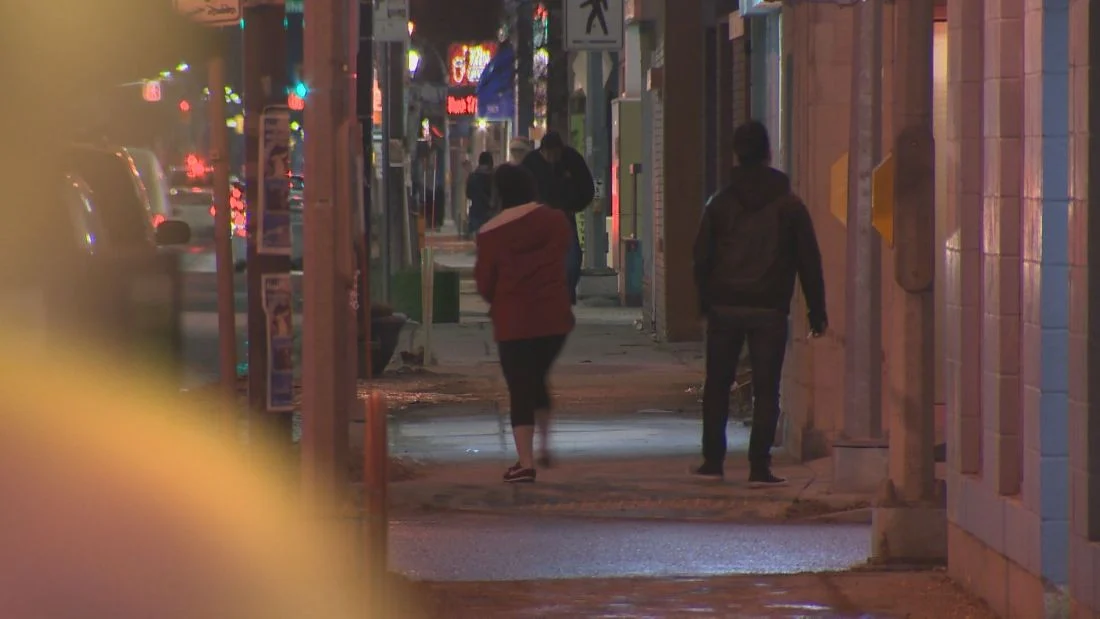
Winnipeg has once again been identified as the least safe major city in Canada, according to a recent national poll, reinforcing a reputation that appears to be worsening over time and highlighting a significant disconnect between public perception and crime statistics. The comprehensive survey, conducted by Liaison Strategies, probed the safety perceptions of 1,500 Canadian adults across 15 major cities, revealing that more than half of respondents consider the Manitoba capital to be either "somewhat unsafe" or "very unsafe." This finding is not merely a repetition of past trends but indicates a further deterioration in Winnipeg’s perceived safety profile compared to previous studies.
The Liaison Strategies poll, conducted via telephone on August 30-31, 2023, asked respondents to rate the "net safety score" of various Canadian urban centres. Participants were given options ranging from "very safe," "somewhat safe," "somewhat unsafe," and "very unsafe," alongside an option for those who felt they lacked sufficient information to respond. The selection of cities, including Toronto, Edmonton, and Moncton, was deliberate, designed to allow for comparative analysis with a similar study undertaken in 2017, in which David Valentin, principal at Liaison Strategies, was also involved. Valentin noted that Winnipeg consistently placed at the bottom of these rankings, and alarmingly, its standing has slid even further in the latest iteration. Of the 1,500 Canadians surveyed, a notable 38 percent categorized Winnipeg as "somewhat unsafe," while an additional 21 percent perceived it as "very unsafe," underscoring a widespread negative perception.
"Winnipeg was always doing badly in this ranking, but now it’s doing even worse – just objectively," Valentin commented, acknowledging the gravity of the findings. He further elaborated on the underlying issues, stating, "Obviously, there are some real challenges in terms of the amount of crime that’s taking place there, and we’re seeing that not from this survey, but from Statistics Canada. There really is a need to get that under control." This observation by Valentin is critical, as it bridges the gap between public sentiment and official crime data, suggesting that the perception of unsafety in Winnipeg is not entirely unfounded, although the degree of public alarm might be influenced by various factors.
The Shifting Landscape of Perceived Unsafety: A National Snapshot
Beyond Winnipeg, the poll identified Toronto, Saskatoon, Edmonton, and Vancouver as the next cities perceived to be the least safe, rounding out the bottom five. This grouping of large urban centres suggests a broader concern among Canadians regarding safety in major metropolitan areas. Conversely, the survey painted a picture of relative tranquility in other parts of the country. Ottawa emerged as the city with the highest perceived safety, closely followed by Quebec City, which trailed by just one percentage point, with 74 percent of respondents deeming it "very" or "somewhat safe." The Atlantic provinces also fared well in the public’s estimation, with Charlottetown securing third place, followed by Victoria, B.C., in fourth, and Moncton in fifth. Halifax and St. John’s, the other Maritime cities included in the survey, ranked sixth and eighth respectively, further solidifying the region’s reputation for perceived safety.
Valentin attributed the positive perception of cities like Ottawa and Quebec City to their typical portrayal in national media. "I think so much of the news we absorb from Ottawa is about the government. I can’t recall the last time I saw news about Quebec City, but when I see it, it’s always about the winter events," he noted. This suggests that the nature and frequency of news coverage play a significant role in shaping public opinion. Similarly, he pointed out the relative lack of negative news from Atlantic Canada. "We get a lot less news out of Atlantic Canada. There’s very, very few high-profile incidents that we hear about from out East," Valentin explained, highlighting how a quieter media presence can contribute to a perception of greater safety.
The Disconnect: Perception Versus Statistical Reality

A crucial aspect revealed by the Liaison Strategies poll is the intricate interplay between public perception and actual crime statistics. While Valentin acknowledges real crime challenges in Winnipeg, he also emphasized that perception is not always aligned with reality. Only 12 percent of respondents indicated that their opinions were based on official crime statistics, suggesting that other, often more emotionally charged or visually impactful, sources heavily influence public sentiment.
For instance, Toronto, despite ranking as the second least safe city in terms of public perception, presents a different picture when examined through the lens of per capita crime rates. "Toronto, for example, its net safety is second worst, but really, it belongs towards the higher end of the list when it comes to safety. There’s a lot of things that go wrong in Toronto, but you also have to account for the large population," Valentin elaborated. He concluded, "As a result, it’s not actually that unsafe to be in Toronto, despite what most Canadians believe."
This divergence is well-documented by data from Statistics Canada. The Crime Severity Index (CSI), which measures both the volume and severity of police-reported crime, offers a more nuanced understanding. While Winnipeg has consistently faced challenges, often reporting CSI scores above the national average, other cities perceived as unsafe, like Toronto, might have high volumes of crime due to sheer population size, but their per capita rates or severity of crime might be lower than public perception suggests. For example, in 2022, Statistics Canada reported that Winnipeg’s CSI was indeed higher than the national average and significantly higher than cities like Toronto. However, even within Winnipeg, specific types of crime or certain geographic areas might disproportionately influence overall perception. Saskatoon and Edmonton, which also ranked poorly in perception, similarly tend to have higher CSIs compared to the national average, particularly in violent crime, which often garners significant media attention.
Factors Shaping Public Perception: The Media’s Potent Influence
The poll highlighted that people’s understanding of safety in areas where they do not reside is shaped by a confluence of factors, with news coverage playing a dominant role. A significant 28 percent of respondents reported that their views were informed by news coverage. Valentin underscored the powerful impact of media, particularly in the digital age. "If you’re hearing about high profile robberies or high-profile crime, that can really colour your view of what is going on out there," he stated.
He provided a vivid illustration of this phenomenon: "You can watch one robbery in one mall from 10 different angles. TikTok will show you all 10 angles, and you might get them all in sequence, but you might also see them over a span of three or five weeks. At which case, you might say to yourself, ‘wow lots of people in Mississauga right now are robbing jewelry stores,’ but it might just be the one incident." This example powerfully demonstrates how the pervasive nature of social media and fragmented news consumption can amplify isolated incidents, leading to an exaggerated perception of widespread danger. The constant barrage of visual content, often devoid of broader context or official statistics, can create a skewed reality for viewers.
Beyond news, personal experiences and stories shared by loved ones also contribute to shaping perceptions. A single negative encounter or a harrowing tale from a friend can significantly impact an individual’s view of a city, even if that experience is not representative of the city’s overall safety profile. This anecdotal evidence, while powerful for the individual, can spread through social networks and contribute to broader public opinion, sometimes more effectively than statistical reports.
Winnipeg’s Ongoing Challenges and Potential Responses

Winnipeg’s persistent ranking at the bottom of safety perception polls underscores systemic challenges that likely contribute to both actual crime rates and public anxiety. Socio-economic factors such as poverty, homelessness, mental health crises, and issues related to drug addiction are often cited by experts as significant drivers of crime in urban centres. Winnipeg, like many other major Canadian cities, grapples with these complex issues, which can manifest as increased property crime, violent incidents, and visible signs of distress that contribute to a feeling of unsafety among residents and visitors. The city also faces specific challenges related to its demographics, including the overrepresentation of Indigenous people in the justice system, which points to deeper historical and social inequities requiring comprehensive, community-based solutions.
In response to these challenges, city officials and law enforcement agencies would likely emphasize ongoing efforts to enhance public safety. Such initiatives typically include increased police presence in high-crime areas, targeted interventions to address specific types of crime, and community-based programs aimed at crime prevention and addressing the root causes of criminal activity. For instance, the Winnipeg Police Service routinely releases crime statistics and highlights initiatives focused on community engagement, gang prevention, and support for vulnerable populations. The City of Winnipeg’s municipal government often articulates strategies for urban renewal, supportive housing, and mental health services, all of which indirectly or directly contribute to public safety and well-being.
However, the consistent negative perception suggests that these efforts, while important, may not be effectively translating into a change in public opinion, or perhaps the underlying issues are so profound that visible improvements are slow to materialize. A crucial aspect of addressing this perception gap involves more effective communication strategies from civic leaders and law enforcement to convey accurate crime statistics, highlight successes in crime reduction, and explain the complexities of urban safety.
The Broader Implications for Urban Development and Social Cohesion
The perceived safety of a city has far-reaching implications that extend beyond individual peace of mind. A city’s reputation for safety can significantly impact its economic vitality, tourism industry, and ability to attract and retain residents and businesses. Cities perceived as unsafe may struggle with investment, as businesses are hesitant to establish operations in areas where employees and customers might feel vulnerable. Tourism can suffer, with potential visitors opting for destinations with a more positive image. Moreover, a pervasive sense of unsafety can erode social cohesion within a city, leading to decreased community engagement, a reluctance to use public spaces, and heightened anxiety among residents.
Conversely, cities like Ottawa and Quebec City, consistently lauded for their perceived safety, benefit from a positive cycle. This perception can foster a vibrant public life, encourage investment, and enhance civic pride. Their media portrayal, often focusing on political events, cultural festivals, or picturesque landscapes, helps to cultivate an image of stability and charm, effectively overshadowing any localized crime issues that might exist.
The findings of the Liaison Strategies poll serve as a powerful reminder that while crime statistics provide an objective measure of safety, public perception is a complex, often emotionally driven phenomenon that can be heavily influenced by media narratives, personal anecdotes, and broader societal anxieties. For cities like Winnipeg, the challenge is twofold: to effectively address actual crime rates through robust policies and community initiatives, and simultaneously to manage and reshape public perception through transparent communication, visible improvements, and a concerted effort to highlight the city’s positive attributes. The national margin of error for the poll was reported at ±2.53 percentage points, 19 times out of 20, affirming the statistical reliability of these significant findings and underscoring the urgent need for a comprehensive approach to urban safety and perception management across Canada.