admin
A year and a half ago, West Virginia’s Eastern Panhandle became the backdrop for a significant health policy announcement, spearheaded by then-Attorney General Patrick Morrisey and joined by prominent health advocate Robert F. Kennedy Jr. Standing alongside state legislators, "Make America Healthy Again" (MAHA) proponents, and local children, Morrisey unveiled a multi-pronged strategy aimed at overhauling the state’s dire public health landscape. His declaration was stark: "There’s no way around it, West Virginia ranks at the bottom of many public health metrics," citing alarming statistics on obesity, heart disease, diabetes, and overall life expectancy. Yet, he promised a new direction, outlining a four-pillar plan designed to reverse these trends and elevate the health outcomes for West Virginians.
The Vision: A Four-Pillar Plan for a Healthier West Virginia
The proposed reforms centered on a blend of behavioral incentives and regulatory changes. The first pillar encouraged increased physical activity, urging West Virginians to "get out and walk more," an initiative envisioned to combat sedentary lifestyles contributing to the state’s high rates of chronic disease. This often involves promoting outdoor recreation, developing walking trails, and public awareness campaigns. The second pillar introduced stronger work requirements for federal assistance programs, aiming to incentivize employment and self-sufficiency, a policy frequently debated for its potential impact on vulnerable populations. Proponents argue such requirements foster economic independence, while critics warn they can push families further into poverty and food insecurity.
On the nutritional front, Morrisey’s administration took decisive action that garnered national attention. West Virginia became one of the pioneering states to implement a ban on certain artificial food dyes in school meals, a move that predated and arguably influenced a later federal announcement by the Food and Drug Administration (FDA) to phase out these additives by the end of 2026. This legislative step reflected growing concerns about the potential links between artificial food dyes and behavioral issues in children. Concurrently, Morrisey signed a letter of intent to request a waiver from the federal government to prohibit the purchase of sodas and other sugary beverages under the Supplemental Nutrition Assistance Program (SNAP). This bold proposal sought to steer SNAP participants towards healthier food choices, a contentious issue given debates over individual autonomy versus public health mandates within federal benefit programs.
Robert F. Kennedy Jr., a vocal proponent of health and environmental reforms, lauded West Virginia’s proactive stance, declaring the state was setting "a shining example for the rest of the country" with these actions. He underscored a perceived paradox, noting, "It’s just wild that we are literally surrounded by farmlands. We are functionally sitting on farmlands, and people don’t have food." This statement highlighted the persistent challenge of food deserts and food insecurity, even in agriculturally rich regions, a phenomenon driven by economic factors, lack of infrastructure, and systemic issues.
A Ground-Level Reality Check: Disconnect Between Policy and People
Fast forward a year and a half, and the ambitious rhetoric emanating from the state capital faces a sobering reality check on the ground. In Sandyville, a small community nestled amidst West Virginia’s rolling hills, Caitlin Ware, a part-time pastor at the Sandyville United Methodist Church, remains largely unconvinced by the celebrated reforms. Her perspective, rooted in direct community engagement, paints a starkly different picture of the state’s most pressing health and wellness challenges.
Sitting in her church, Ware held up a bottle, swirling dirty, sediment-tainted water within. Her wry question cut through the policy debates: "Can we ban this dye?" The irony was palpable. "This isn’t food dye, obviously. This is just tap water in McDowell County." Her simple gesture illuminated a critical, often overlooked, aspect of public health in West Virginia: access to clean, safe drinking water.
Ware’s insights come from her dual role. Beyond her pastoral duties in Sandyville, she also works extensively in the southern coalfields region of the state, an area where clean water access has been a systemic crisis for decades. The problem stems from severely decaying pipes and infrastructure, a legacy of aging systems and insufficient investment. According to the Gazette-Mail, West Virginia has the dubious distinction of having the highest rate of public water systems with violations of the Safe Drinking Water Act, as monitored by the Environmental Protection Agency (EPA). These violations expose residents to contaminants, leading to health risks and eroding trust in public utilities. For many residents in these regions, the immediate health concern isn’t artificial food dyes, but the fundamental safety of their most basic necessity. Ware notes that a significant portion of SNAP participants in these areas are compelled to use their benefits not for food, but to purchase bottled water, diverting crucial resources from nutritional needs to basic survival.
Systemic Barriers vs. Lifestyle Changes: A Fundamental Divide

Ware’s critique extends to the broader philosophy underpinning the MAHA initiatives. While conversations around MAHA in the state largely focus on individual "lifestyle changes"—walking more, choosing healthier foods—Ware argues vehemently that such personal shifts cannot overcome the monumental infrastructure and institutional challenges plaguing the state. "If we were truly serious about making our communities healthy, we would have more than $25 for food benefits," Ware asserted, highlighting the inadequacy of current assistance levels. She continued, "We would not be forcing people to pay for that water. We would have bellies full. We would have safe showers."
This highlights a fundamental ideological divide: whether public health crises are primarily a result of individual choices or systemic failures. For many West Virginians, particularly those in underserved rural areas, the daily struggle is not merely about choosing a soda over water, but about having any safe water, or enough food to eat. The conversation about food dyes, while important for some, feels distant when families are grappling with contaminated tap water, limited access to fresh produce, and dwindling federal assistance.
The Broader Impact and Unresolved Issues
Despite the localized skepticism, West Virginia’s early actions within the MAHA framework did reverberate nationally. Robert F. Kennedy Jr.’s early tenure visit and the state’s legislative initiatives served as a catalyst. Other states have since followed West Virginia’s lead, enacting similar laws restricting food dyes or mandating specific labeling for products containing certain additives. The state’s ban on food dyes in school meals was specifically cited when the FDA announced its plan to phase out artificial food dyes at the federal level, demonstrating West Virginia’s unexpected role as a policy innovator. However, the proposed SNAP soda ban faced significant legal hurdles and is currently on hold due to litigation, reflecting the contentious nature of such restrictive policies and challenges to federal authority.
While MAHA leaders at the national level celebrate these actions on SNAP and food dyes as significant victories for public health, the perspective from many West Virginians interviewed by Civil Eats reveals a different sentiment. For them, the MAHA initiatives appear to be more "rhetoric than action," leaving the most pressing, deeply entrenched issues unresolved. These issues include the dire state of aging infrastructure, a chronic lack of well-paying jobs, pervasive food insecurity, and the critical danger of unsafe drinking water.
The Economic Undercurrent: Food Insecurity in a Farming State
The irony of Kennedy’s initial observation about West Virginia being "surrounded by farmlands" while people lack food resonates deeply with Caitlin Ware. Sandyville, once a vibrant agricultural community, now struggles with widespread food insecurity. Ware recounted a recent funeral she officiated for a local farmer whose family, facing severe financial hardship, requested food or donations instead of flowers. This poignant detail underscores the profound economic challenges in rural West Virginia, where traditional livelihoods have diminished, and access to fresh, affordable food remains elusive for many. The decline of local agriculture, coupled with the closure of rural grocery stores, contributes to the proliferation of food deserts, forcing residents to rely on convenience stores with limited healthy options or travel long distances to access supermarkets.
Community Resiliency: The Role of Food Pantries
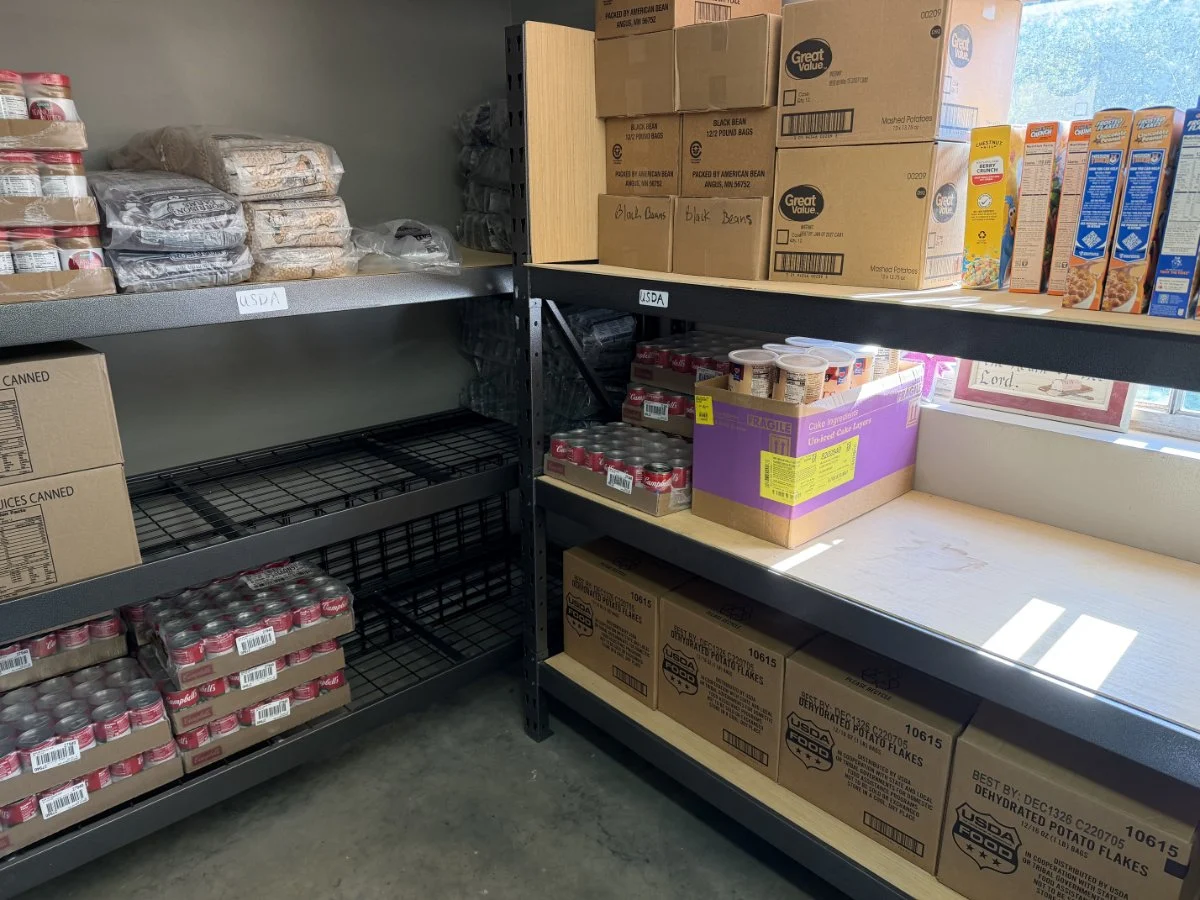
Amidst these systemic challenges, local institutions like the Sandyville United Methodist Church stand as vital bulwarks against despair. Perched on a rolling hill, the church, with its simple cross, houses a community food pantry that has served as a lifeline for decades. Inside, parishioners Marvin and Robin Miller, deeply involved in the pantry’s operations, shared their experiences. The couple, who met and raised their children in the church, radiate pride in their community and their efforts to support it. Marvin, wearing a bright blue t-shirt with the church’s logo, was visibly moved when discussing their work, often brought to tears by the profound need they witness.
The food pantry was established in 1993, an initiative championed by Robin’s mother. Robin eventually took over as co-director, while Marvin serves as the energetic "go-getter," responsible for picking up, sorting, and stacking donations. Over the past several years, the Millers have consistently served approximately 45 families. However, during periods of heightened economic strain, such as government shutdowns that led to delays in SNAP benefits, the demand for food boxes has doubled, stretching their resources to the limit. These spikes in demand highlight the fragility of the social safety net and the immediate, devastating impact of disruptions to federal assistance programs. For Marvin Miller, the perceived disconnect between policy and outcome is clear: "Prior proper planning prevents piss-poor performance," he stated, echoing a sentiment of frustration. "Right now, we’ve got some piss-poor performance going on in our programs."
The experience of West Virginia, therefore, serves as a complex case study in public health policy. While state and national leaders champion initiatives focused on individual behavior and specific dietary additives, the lived realities of many West Virginians reveal a more foundational struggle against decaying infrastructure, economic precarity, and inadequate access to basic necessities like clean water and sufficient food. The ambitious "Make America Healthy Again" agenda, while yielding some national influence on specific issues like food dyes, faces a formidable challenge in addressing the deeper, systemic ailments that continue to undermine the health and well-being of the Mountain State’s most vulnerable citizens.