admin
admin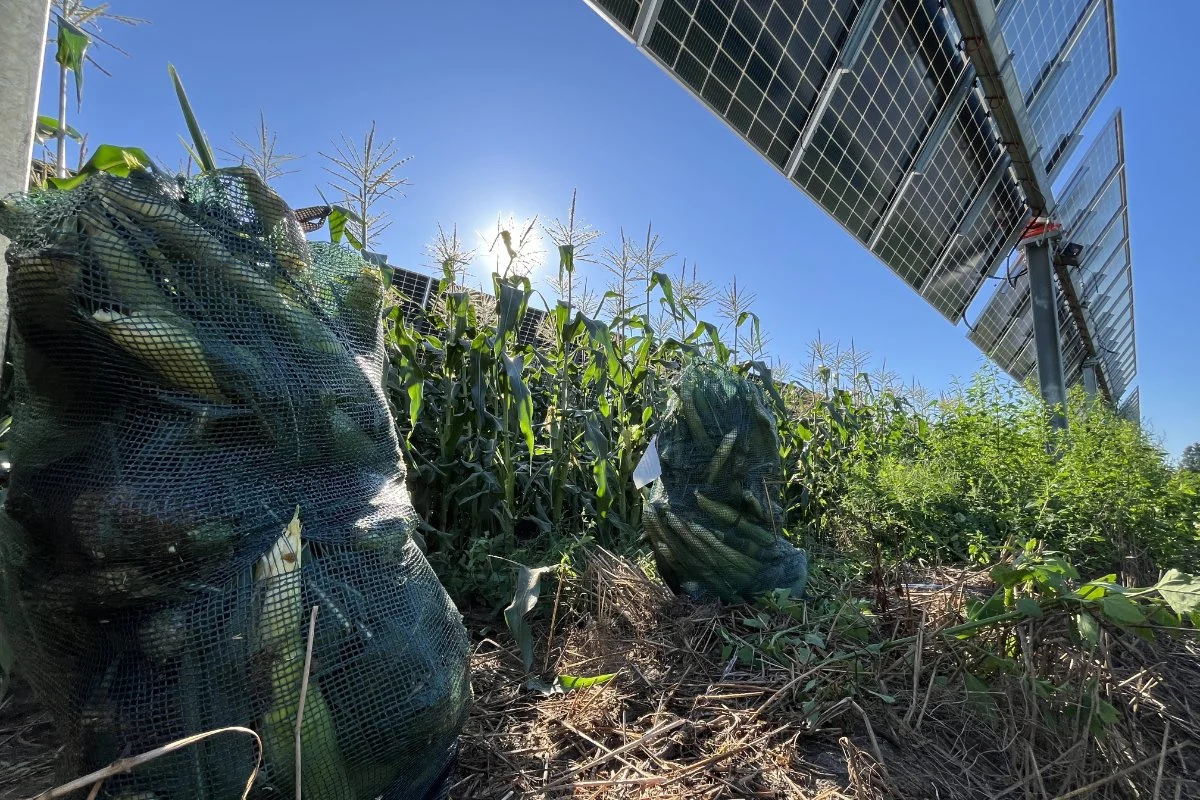
The rapid expansion of utility-scale solar energy infrastructure, a critical component of the nation’s strategy to combat climate change, is increasingly at odds with the imperative to preserve valuable agricultural land. While vast arrays of photovoltaic panels are essential for decarbonizing the grid, the conventional approach to their deployment often overlooks the long-term health and productivity of the land they occupy. This oversight is transforming formerly vibrant farmlands into neglected industrial sites, raising alarms among soil scientists, agricultural advocates, and rural communities alike. However, a growing movement champions an integrated approach known as agrivoltaics, demonstrating that solar development can, and should, coexist with and even enhance agricultural production, rather than displace it.
The Unseen Costs of Neglect: A Closer Look at Solar’s Footprint
From a distance, a newly established utility-scale solar site might appear meticulously managed, characterized by orderly rows of panels enclosed by perimeter fencing and softened by a vegetation buffer along public roads. This superficial order, however, often masks a troubling reality beneath the surface. Closer inspection frequently reveals a landscape scarred by compacted soil, sparse and weedy ground cover, and seed mixes that have germinated unevenly, left untended since initial planting. This neglect transforms agricultural assets into fallow ground, contributing little to the local ecosystem or economy beyond energy generation.
Emily Cole, PhD, a distinguished soil scientist and Senior Scientist at American Farmland Trust (AFT), whose career has been dedicated to the intersection of farming and solar energy, highlights this critical issue. "No one is farming this land, and in many cases, no one is stewarding it. As a result, it does very little," Cole observes. "That should concern anyone who cares about maximizing the use of limited American farmland." Her extensive research, much of which predates the widespread recognition of "agrivoltaics" as a field, consistently points to a costly and prevalent impulse within the solar industry: to ignore the land beneath the panels.
The scale of this issue is substantial and rapidly expanding. In 2025 alone, the U.S. added nearly 27 gigawatts (GW) of utility-scale solar capacity. Each gigawatt requires thousands of acres, predominantly rural, often on land that was formerly farmed or remains highly farmable. The U.S. Department of Energy (DOE) and the National Renewable Energy Laboratory (NREL) project that utility-scale solar could require millions of acres by 2050 to meet aggressive decarbonization targets, placing immense pressure on agricultural landscapes. This surge in solar development has made it one of the fastest-growing sources of farmland conversion, exacerbating existing trends of land loss to urban sprawl and other forms of development. The American Farmland Trust’s "Farms Under Threat" initiative, for instance, reported that between 2001 and 2016, nearly 11 million acres of agricultural land were converted to developed uses, with solar now adding a significant new dimension to this challenge.
Crucially, much of this development occurs on land leased from farm families, meaning that the management—or mismanagement—of these sites will profoundly shape their agricultural potential for generations. The consequences of poor land stewardship are far-reaching: heavy construction equipment compacts soil, sometimes to depths requiring years to recover. Compacted soil loses its ability to absorb water, leading to runoff, erosion, and poor plant growth. This cycle of degradation not only diminishes the land’s immediate agricultural value but also its long-term ecological resilience, impacting water quality, biodiversity, and carbon sequestration potential.
Agrivoltaics: Cultivating Energy and Sustenance

The solution, according to Cole and a growing chorus of experts, lies in treating the land beneath solar panels not as a mere surface for energy infrastructure, but as a working agricultural system. This paradigm shift necessitates early and continuous engagement with agronomists—experts in crop production and soil health—to guide site management from conception through operation.
Agrivoltaics, also known as solar sharing or co-location, is a land-use strategy that integrates solar energy generation with agricultural production on the same parcel of land. This synergistic approach offers a multitude of benefits, transforming potential conflict into mutual gain.
Economic Benefits:
For farmers, agrivoltaics can provide crucial economic stability. Solar lease payments offer a reliable, diversified income stream that can help family farms remain viable in an increasingly challenging agricultural economy. Beyond lease payments, many agrivoltaic models allow farmers to continue cultivating crops or grazing livestock, generating additional revenue. For aspiring or beginning farmers, agrivoltaic sites can offer relatively affordable access to land that might otherwise be out of reach, helping to address the critical issue of land access that often stymies the next generation of agriculturalists.
Environmental Benefits:
Integrating agriculture with solar panels yields significant environmental advantages. Thoughtful agronomic management fosters healthier soil, enhancing its capacity for carbon sequestration, improving microbial activity, and increasing water infiltration and retention. This can reduce the need for irrigation and mitigate drought impacts. Furthermore, designing multi-use vegetation, such as native pollinator habitats or forage crops, significantly boosts local biodiversity, supporting essential pollinators vital for surrounding agricultural fields and broader ecosystem health. The shade provided by solar panels can also reduce water evaporation from the soil, potentially improving crop yields in hot, arid climates by creating a microclimate that benefits certain plant species.
Social and Community Benefits:
Community acceptance is often a major hurdle for large-scale solar projects. However, research indicates that agrivoltaics significantly increases public support. A recent survey, for instance, found that rural Americans are considerably more supportive of solar projects when they deliver tangible agricultural benefits to their regions. Projects incorporating farming or grazing around solar installations enjoyed 14 percent more support, while native plantings under panels increased support by approximately 17 percent. This increased community trust translates into smoother permitting processes, reduced local opposition, and more harmonious long-term operations. By demonstrating a commitment to land stewardship and local economic contribution, solar developers can become valued partners rather than perceived threats to rural livelihoods and landscapes.
From Vision to Reality: Pioneering Projects and Best Practices
While the concept of agrivoltaics is gaining traction, successful implementation requires a deliberate and informed approach. The critical first step is integrating agronomic expertise from the earliest stages of project development. A soil scientist walking a site before construction can identify areas most vulnerable to compaction, advise on topsoil protection strategies, and proactively address potential problems before they escalate into expensive fixes.
Agronomists play a vital role in designing sustainable vegetation plans. They can specify appropriate seed mixes that thrive under partial shade, support livestock grazing, or create robust pollinator habitats. They can also recommend strategies to decrease erosion and manage stormwater runoff, ensuring the site functions as a cohesive ecological system.

Some developers have already embraced this integrated model, demonstrating its viability and benefits. Hyperion Systems, for example, has been a pioneer in developing agrivoltaic projects in close partnership with farmers who own the land. At Joe Czajkowski Farm in Hadley, Massachusetts, a partnership with Hyperion Systems showcases the potential: sweet corn and broccoli flourish under solar arrays, harvested and bagged for market. This tangible outcome illustrates how energy production and food production can successfully coexist.
Similarly, Doral Renewables, operator of one of the largest solar installations in the country, has embedded agronomic management into its projects. Their approach includes continuous soil health monitoring, structured farmer partnerships, and comprehensive vegetation plans. The results are markedly different from the norm: vegetation establishes more reliably, farm operators generate real income, and the soil is actively managed rather than abandoned. These successful projects stand as compelling evidence that integrating agronomy into solar development is not merely an ideal, but a practical and beneficial strategy.
Conversely, without such expert guidance, even well-intentioned efforts can fail. Bringing livestock to graze on projects with sparse, low-quality vegetation, for instance, is detrimental to both the animals and the land, as the site is ill-equipped to support sustained grazing. This highlights the difference between merely placing panels on land and intentionally designing an agrivoltaic system.
Policy, Guidance, and the Path Forward
The gap between these successful projects and the prevailing industry norm is not due to a lack of scientific understanding or federal guidance. Agrivoltaics research is advancing rapidly, providing a growing body of evidence for its effectiveness in various climates and agricultural contexts. Recognizing this, the U.S. Department of Agriculture (USDA) Natural Resources Conservation Service (NRCS) published comprehensive conservation guidance for utility-scale solar sites in 2024. This guidance covers critical aspects such as soil health, compaction mitigation, vegetation management, grazing practices, and even decommissioning protocols, providing a robust framework for sustainable solar development.
However, the efficacy of this guidance is limited by its voluntary nature; developers are not currently obligated to implement it. A true transformation in the solar industry’s approach to land stewardship would require developers, lenders, and project owners to fundamentally accept responsibility for the soil’s health and productivity for the entire lifespan of the project. While some pioneering companies may adopt these practices proactively, widespread change will likely necessitate policy intervention.
This conversation is not new in Washington, but it has largely stalled. USDA and DOE staff have briefed congressional committees on the interplay between agriculture, farmland, and solar development. Legislative proposals and relevant provisions in Farm Bill drafts have been introduced, yet none have successfully navigated the legislative process. This legislative inertia underscores the critical importance of state and local policies in driving change.
Communities hold significant power, particularly at the county level, where the majority of solar projects receive approval. Before a single shovel breaks ground, planning boards can—and should—implement clear, legally binding conditions. These could include mandatory soil health plans, dedicated funds for the eventual removal of the solar array, and explicit requirements that the land must be demonstrably farmable again once the panels are decommissioned. Such proactive measures ensure that solar development genuinely meets agronomy, safeguarding agricultural potential for future generations.

At the American Farmland Trust, the "Smart Solar Principles" offer a comprehensive framework designed to guide policymakers and developers in advancing solar energy while simultaneously protecting farmland and ensuring its long-term viability. These principles advocate for careful site selection, robust land management plans, and community engagement, emphasizing that solar development should complement, not compromise, agricultural resources.
The Broader Landscape: Food Security, Climate Action, and Rural Vitality
The integration of agrivoltaics is not merely an operational improvement; it is a strategic imperative that connects directly to national priorities of food security, climate change mitigation, and rural economic vitality. The country urgently needs more solar infrastructure to achieve its clean energy goals and combat the escalating climate crisis. Simultaneously, the protection of productive farmland is non-negotiable, given its finite nature and the increasing global demand for food. Agrivoltaics demonstrates that these two vital goals are not mutually exclusive but can, in fact, be mutually reinforcing.
By treating the land beneath solar panels as a living, dynamic system of soil, plants, and water, the benefits compound. Healthy soils are more resilient to extreme weather, sequester carbon more effectively, and support more robust ecosystems. For rural communities, agrivoltaics can diversify local economies, provide stable income streams, and help preserve the agricultural character of their regions. It offers a tangible pathway to ensure that the transition to renewable energy benefits, rather than burdens, the agricultural sector.
The choice is clear: we can continue down a path where solar development inadvertently degrades valuable farmland, or we can embrace a future where clean energy and productive agriculture flourish side-by-side. Developers who have already adopted a holistic view of the land as a living system are witnessing superior outcomes, with healthier, more productive landscapes. Before further degradation of our invaluable soils and the erosion of agricultural opportunities, communities and policymakers must implement the wealth of available management guidance. By doing so, solar development can become an integral, beneficial part of the future of American agriculture, ensuring that the land tells a story of health, productivity, and sustainable innovation, rather than one of abandonment and missed potential.