admin
admin
The U.S. Department of Agriculture’s (USDA) Regenerative Pilot Program (RPP), hailed by the Trump administration as a landmark initiative to advance sustainable farming practices, is facing significant skepticism from agricultural experts and farmers. While initially celebrated as a pivotal step, critics argue the program primarily reallocates existing conservation funds rather than injecting new investment, and its potential impact is severely undermined by ongoing staff cuts within the USDA’s crucial field offices. This critical examination comes as the agricultural sector grapples with the escalating challenges of climate change, soil degradation, and the economic viability of farming, placing renewed focus on the effectiveness of federal conservation efforts.
The Promise of Regenerative Agriculture: A Shifting Policy Landscape
Regenerative agriculture, a holistic approach to farming that emphasizes soil health, biodiversity, and ecosystem resilience, has gained considerable traction in recent years as a promising solution to many of the environmental and economic woes facing modern agriculture. Practices such as cover cropping, no-till farming, diversified crop rotations, and integrated livestock management are central to this paradigm, aiming to sequester carbon, improve water quality, enhance biodiversity, and reduce reliance on synthetic inputs. The appeal of regenerative practices extends beyond environmental benefits, with proponents highlighting their potential to boost farmer profitability by reducing input costs and increasing farm resilience to extreme weather events.
In June 2026, the Trump administration signaled its formal commitment to this movement with an executive order (EO) specifically dedicated to "advancing regenerative agriculture." This marked a significant moment, representing the first presidential directive of its kind to explicitly endorse these practices. Jonathan Lundgren, a prominent researcher and advocate for regenerative farming, expressed cautious optimism on LinkedIn, noting that the EO would now "engage the administration’s resources into supporting regenerative agriculture on an expanded scale." He hoped this "first step will support our bottom-up efforts to change the culture of food in the U.S. and globally."
The cornerstone of the administration’s plan was to "maximize the funding" and "expand the reach" of the USDA’s Regenerative Pilot Program (RPP), which had been announced at the close of 2025. This program aimed to funnel resources through two established conservation initiatives: the Environmental Quality Incentives Program (EQIP) and the Conservation Stewardship Program (CSP). The USDA proudly reported that it had exceeded its initial goals, disbursing $851.7 million across 5,100 RPP farmer contracts. However, a deeper dive into these figures reveals a more complex and, for many, less encouraging reality.
Unpacking the "Investment": A Reallocation of Existing Funds
Despite the celebratory tone surrounding the RPP’s launch and subsequent contract awards, a significant point of contention revolves around the nature of its funding. Experts quickly pointed out that the program does not represent a new infusion of capital into regenerative agriculture but rather a re-prioritization of existing funds within the USDA’s budget. This distinction is crucial for understanding the program’s true impact and its limitations.
According to data provided by a USDA spokesperson to Civil Eats, of the $851.7 million distributed through RPP contracts, a little more than half—$468.9 million—was specifically allocated to practices designated as "regenerative." The remaining $382.9 million went towards "other practices" on the same farms, which, while potentially beneficial, were not necessarily core regenerative components.
This allocation pattern prompted comparisons with historical spending on similar practices. Anne Schechinger, senior director of agriculture and climate research at the Environmental Working Group (EWG), analyzed USDA’s past data for EQIP, focusing on the same list of practices prioritized by RPP. Her findings are illuminating: in 2023, USDA obligated $314 million to these practices, increasing to $471 million in 2025. Crucially, in 2024, when the Biden administration’s Inflation Reduction Act (IRA) had significantly boosted overall conservation funding, the agency directed a substantial $776 million towards "climate-smart" practices, many of which overlap with those now labeled "regenerative." While a direct, apples-to-apples comparison is challenging given RPP combines EQIP and CSP funds, it is evident that in previous years, particularly 2024, the USDA had already allocated more money to these practices through EQIP alone.

The USDA spokesperson defended the approach, stating that "prioritization of conservation practices can be done through the allotment of existing or new funds for specific practices." They also highlighted that Republicans, through the "One Big Beautiful Bill," had permanently moved extra conservation funds initially allocated by Democrats in the IRA into existing conservation programs. While this increased the total money available in the broader conservation budget, it simultaneously removed the specific requirements that these funds be used for climate-focused practices, many of which were inherently regenerative. Going forward, the agency plans to set aside 25 percent of EQIP and CSP funds specifically for RPP contracts, a percentage that, within EQIP, averaged 25 percent of total funding for similar practices between 2022 and 2025 anyway.
Michael Happ, program associate for climate and rural communities at the Institute for Agriculture and Trade Policy, articulated a common sentiment among conservation advocates. "We’re supportive of anything that can get more folks enrolled in conservation programs and get more conservation on the ground," Happ stated. However, he questioned the actual net impact of RPP: "This is a set-aside of existing funds for practices that are already really popular. The first question I had was, ‘Will this actually invest more in these practices?’ I’m not sure if I can answer that question yet." The data suggests the answer, for now, is no.
The Shadow of Staffing Cuts: Hindering Program Effectiveness
Beyond the funding debate, a critical impediment to the RPP’s effectiveness lies in the widespread staffing shortages plaguing the USDA’s Natural Resources Conservation Service (NRCS) field offices. These local offices are the front lines of conservation, where dedicated staff work directly with farmers to provide technical assistance, help develop conservation plans, and process program applications.
Over the past year, the Trump administration implemented significant staff cuts across the USDA, leaving many local field offices severely under-resourced. Data indicates that nearly 150 USDA county offices have no conservation staff, and many states have seen drastic reductions in personnel. In Minnesota, for instance, NRCS officials reported being down approximately 100 employees, with existing staff working extended hours to meet RPP goals.
Jesse Womack, a policy specialist at the National Sustainable Agriculture Coalition, minced no words: "This was implemented in a period where NRCS staff has been pretty well eviscerated. There are counties across the country that no longer have a single NRCS staffer available to producers."
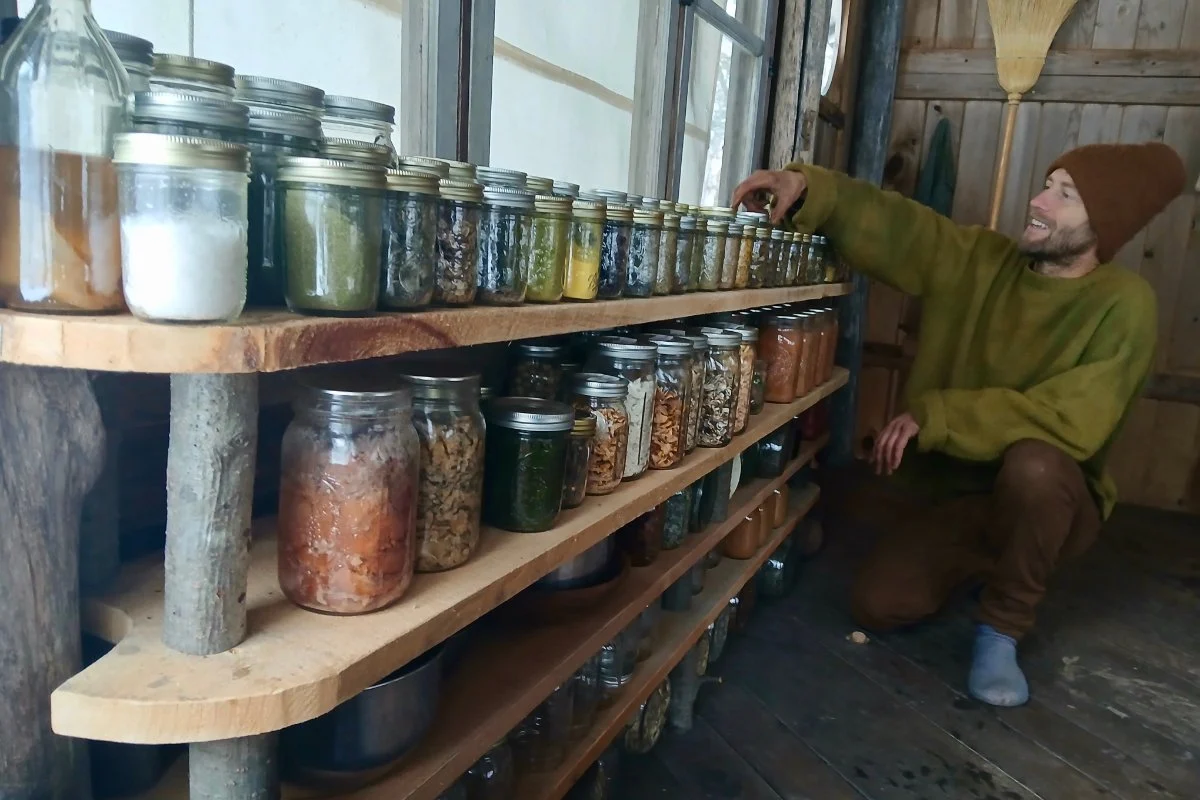
This human resource crisis has several detrimental implications for the RPP. First, it strains the capacity of agents to adequately assist farmers, especially with a new, albeit re-packaged, program. Seth Kroeck, who runs Crystal Spring Farm in Brunswick, Maine, and grows certified organic vegetables and grains, recounted his experience. When he inquired about RPP, his agent, though helpful, "groaned" due to being the sole NRCS staff member covering two offices. Kroeck’s application, despite his agent’s initial optimism, was ultimately rejected, illustrating the potential for administrative bottlenecks and limited bandwidth to thoroughly evaluate complex applications.
Second, understaffing can lead to a focus on simpler, less time-intensive applications, potentially disadvantaging small- and mid-sized farms that often require more tailored planning. "When you have very few hands to spend that money and really big budgets, the pressure becomes to work with bigger farmers on more expensive contracts," Womack explained. "That pretty explicitly disadvantages smaller farms." Data analyzed for Civil Eats by a former USDA budget specialist revealed that the average dollar amount across contracts increased by 70 percent, though the agency noted it was "too premature to evaluate contract size" for 2026 fully.
Third, there’s a risk that NRCS agents, under pressure, will prioritize practices they already know well and that require minimal paperwork, rather than pushing for more advanced or innovative regenerative approaches. Happ worried that this could lead to the adoption of "least complicated practices, which don’t have the same climate and other environmental benefits as more advanced regenerative projects."
Defining "Regenerative": The Nuance of Practice Selection

The specific practices prioritized by RPP also sparked discussion. While MAHA Action, the political arm of a popular agricultural advocacy group, referred to RPP as a program "helping farmers quit chemicals," the reality is more nuanced. On RPP’s list of primary practices, only one is explicitly linked to reducing pesticide use (Integrated Pest Management, which aims to reduce but not eliminate pesticide reliance). Some of the most commonly funded practices, such as cover crops and no-till farming, can, in certain conventional commodity systems, paradoxically lead to increased herbicide use to manage weeds without mechanical tillage. This highlights a broader debate within the regenerative movement about the degree to which chemical inputs can be considered compatible with true regenerative principles.
Despite these caveats, experts acknowledged several benefits of RPP contracts compared to typical EQIP or CSP agreements. RPP contracts are longer, with a minimum duration of five years, providing farmers with more time to implement practices, observe results, and make necessary adjustments. Furthermore, RPP mandates soil health testing, a feature highly lauded by advocates. Jesse Womack emphasized its importance: "If you know that your biologically active soil is going to provide more plant nutrition for you than you otherwise would have accounted for, then we can start talking about very serious reductions in applied fertilizer, which has incredible environmental benefits. Soil health testing is possibly one of the most important emerging management tools we have to help folks become more profitable per acre with less inputs."
RPP also requires farmers to engage in "whole farm planning" with NRCS agents, though its practical distinction from standard conservation planning remains somewhat unclear to farmers like Kroeck. Robert Bonnie, a former USDA official who oversaw NRCS under President Barack Obama and worked on climate-smart practices under Biden, noted that "a good NRCS agent should be helping farmers identify resource concerns across their whole farm anyway."
Bonnie summarized the consensus: "The [Regenerative Pilot] program is well-intended and is a good use of NRCS money. The practices are good, and there’s a lot of demand for them. But it’s not revolutionary, it’s a continuation of what NRCS has been doing for a long time. My concern is that in order to make programs like this successful, you have to have the staff to implement them."
The experience of Jason Russell of Big Boulder Farms in Iowa further illustrates the challenges. Russell, who focuses on regenerative practices, sought RPP funding to graze cattle on his cropland—an innovative approach to soil health. After nearly a year of planning and paperwork, his application was rejected. "They said there’s no money available because they just want to concentrate on existing pastureland, not putting animals on existing cropland," Russell recalled, expressing confusion over the rationale. This rejection underscores a potential lack of flexibility or understanding within the program for less conventional, yet highly impactful, regenerative strategies, particularly when staff are overwhelmed.
Political Maneuvering and the Future of Conservation Funding
The RPP’s rollout is also occurring against a backdrop of significant legislative changes that could further reshape the landscape of agricultural conservation. Republicans in Congress, through the proposed farm bill, have moved to reduce funding available for EQIP by an estimated $2 billion in coming years. Agricultural economists from institutions like the University of Illinois estimate that these changes could lead to the rejection of more than 56,500 farmer applications. This potential cut, combined with the earlier move to re-purpose IRA funds without climate-specific mandates, raises serious concerns among environmental groups and sustainable agriculture advocates about the long-term commitment to genuinely transformative conservation.
MAHA Action and prominent advocates like Alexandra Muñoz and Kelly Ryerson have vocally opposed these cuts, with Ryerson asserting that the farm bill would "defund the regen ag pilot." This political maneuvering suggests a broader ideological struggle over the direction and funding priorities of federal agricultural policy.
Looking ahead, the USDA spokesperson indicated that the agency plans to host stakeholder roundtables to gather direct feedback on the RPP’s implementation and identify areas for refinement. However, the promised Regenerative Advisory Council, which was listed on the USDA’s website as a key component of the program, has been scrapped. This decision raises questions about the administration’s willingness to formally institutionalize diverse expert and farmer input into the program’s evolution, potentially limiting its adaptability and responsiveness to on-the-ground needs.
In conclusion, while the Regenerative Pilot Program represents a notable executive endorsement of regenerative agriculture, its execution has been met with a blend of cautious optimism and significant apprehension. The program’s reliance on existing funds, rather than new investment, coupled with severe USDA staff shortages and ongoing political shifts in conservation funding, casts a long shadow over its potential to catalyze a widespread transformation in American farming. For many, the RPP embodies a critical tension: the laudable goal of fostering regenerative practices clashing with the pragmatic realities of bureaucratic constraints and political will. The coming years will reveal whether this "pilot" can genuinely steer American agriculture towards a more sustainable and resilient future, or if it will remain largely a re-branding of existing efforts.