admin
admin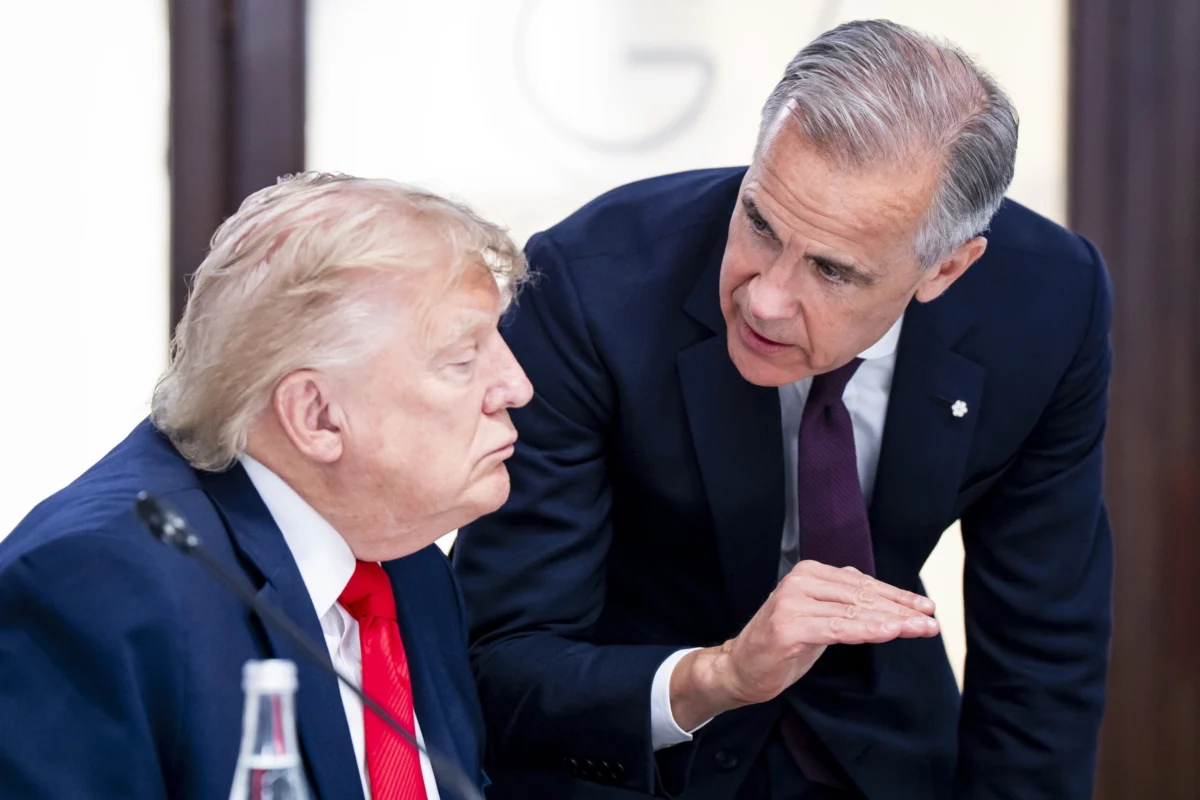
Prime Minister Mark Carney announced Saturday that crucial trade negotiations with the United States had irrevocably stalled, collapsing at the eleventh hour due to intractable disagreements over auto tariffs, Canada’s independent trade policy, and the protection of Canadian culture and language. This abrupt breakdown marks a significant setback in one of the world’s most extensive bilateral trading relationships, casting a shadow of uncertainty over future economic ties and raising questions about the stability of the broader North American trade framework.
The dramatic turn of events comes after several days of cautious optimism, during which a resolution to the protracted trade disputes had appeared not just possible, but increasingly probable. United States President Donald Trump had notably postponed the imposition of a scheduled 50 percent tariff on billions in Canadian goods by three days, explicitly citing "progress in trade talks" as the rationale. He had even publicly declared, "we have a deal" with Canada, a statement that had momentarily buoyed market confidence and diplomatic hopes.
While the Canadian delegation, led by Prime Minister Carney, maintained a more circumspect assessment, there were tangible signs of forward momentum. Earlier in the week, Carney had shared details of a potential agreement with Canada’s provincial premiers, reportedly soliciting their support for a key concession: a renewed commitment to facilitate the sale of American alcohol within Canadian markets. This move, intended as a goodwill gesture and a demonstration of Canada’s willingness to find common ground, underscored the advanced stage of the negotiations. However, the delicate diplomatic dance ultimately faltered. At a critical juncture, Prime Minister Carney made the decisive call to recall his negotiating team to Ottawa, publicly stating that he was "walking away from a bad deal," a declaration that resonated across the nation and signaled the profound irreconcilability of the remaining differences.
A Chronology of Mounting Tensions and Failed Diplomacy
The roots of the current impasse can be traced back to 2025, when the Trump administration first levied 25 percent tariffs on Canadian goods, specifically targeting the automotive sector. These initial tariffs were a stark reminder of the "America First" trade philosophy and immediately ignited concerns within Canada’s economically vital manufacturing heartland.
- 2025: The U.S. imposes 25% tariffs on Canadian-assembled vehicles, predominantly impacting Ontario’s automotive industry. President Trump explicitly states his desire for automakers to relocate jobs south of the border.
- Late 2025 – Early 2026: Bilateral trade relations remain strained, punctuated by tit-for-tat tariffs and escalating rhetoric. Canada initiates a strategy of global trade diversification, securing new agreements with countries like Indonesia and the United Arab Emirates, and advancing talks with India, aiming to reduce reliance on the U.S. market.
- Summer 2026: The scheduled review of the Canada-United States-Mexico Agreement (CUSMA) looms, adding pressure for a resolution to ongoing trade irritants. U.S. lawmakers identify Canada’s Online Streaming Act as a major point of contention.
- Early Week of Collapse (Date Implied): Intensive, high-stakes negotiations commence, with both sides signaling a desire for a breakthrough. Progress is reportedly made on several fronts, leading to a degree of optimism.
- Mid-Week: U.S. President Trump delays the implementation of 50% tariffs on Canadian goods, citing progress, and publicly announces a "deal" is imminent. Prime Minister Carney briefs provincial premiers on a potential agreement, including a concession on American alcohol sales.
- Friday/Saturday: The "eleventh hour" arrives. New demands and intractable differences emerge from the U.S. side regarding auto content, Canada’s independent trade policy, and cultural protections.
- Saturday: Prime Minister Carney recalls his negotiating team, declaring he is "walking away from a bad deal." He publicly outlines the three core reasons for the collapse.
The Automotive Sector: A Point of Irreconcilable Division
The automotive industry, a cornerstone of the Canadian economy, emerged as the most prominent casualty of the failed negotiations. Since the initial 25 percent tariffs were imposed in 2025, the sector, particularly in Ontario, has been under immense pressure. The provincial government and powerful unions have vociferously advocated for measures to safeguard the tens of thousands of direct and spinoff jobs tied to vehicle assembly and parts manufacturing. Canada’s automotive sector directly employs over 120,000 people and contributes approximately $19 billion to the nation’s GDP annually, with an additional 400,000 indirect jobs dependent on its health. The threat of tariffs on vehicles assembled predominantly in Ontario, which accounts for over 80% of Canada’s vehicle production, presented an existential crisis for the industry.

Prime Minister Carney revealed that while some progress had been made on a framework for integrating autos into a revised trade arrangement, the deal ultimately unraveled over two critical issues. First, the two sides could not reconcile their definitions of "Canadian content" in vehicles, a crucial metric for determining tariff applicability. The U.S. stance reportedly aimed to impose stricter requirements that would disadvantage Canadian-made components and assembly processes. Second, and perhaps more significantly, the U.S. was unwilling to extend tariff relief to medium or heavy vehicles, such as trucks, insisting on limiting the agreement solely to passenger cars.
Carney highlighted the severe implications of this exclusion, pointing specifically to facilities like Ford Motor’s plant in Oakville, which is a major producer of F-series trucks, and General Motors’ Oshawa plant, known for its Silverado truck production. "No rationale, just for exclusion," Carney stated, expressing frustration at the American position. He warned that such a carve-out would "effectively mov[e] into a series of terms that would have made the production [of those vehicles] more uneconomic over time." Industry analysts corroborate this assessment, suggesting that subjecting heavy vehicle production to tariffs while exempting passenger cars would create a significant competitive disadvantage for Canadian manufacturers, potentially leading to plant closures and substantial job losses. The Canadian Vehicle Manufacturers’ Association (CVMA) immediately expressed deep disappointment, with its president stating, "This is a direct blow to the heart of our manufacturing capability and the livelihoods of thousands of Canadian families."
Sovereignty in Trade: Canada’s Global Ambitions Challenged
Another critical sticking point, which Prime Minister Carney described as an affront to Canadian sovereignty, was the U.S. demand to include terms that would restrict Canada’s ability to forge independent trade agreements with other nations. Since the initial round of U.S. tariffs in 2025, Ottawa has aggressively pursued a strategy of trade diversification, positioning itself as a vital "middle power" and a reliable partner for countries seeking stable global supply chains. This proactive approach has yielded significant results, with Canada recently concluding trade deals with emerging economies like Indonesia and the United Arab Emirates, and advancing talks with India. The Prime Minister’s Office proudly touts a record of nearly 20 new trade agreements or expanded partnerships during this period, collectively representing hundreds of billions in potential trade.
"The U.S. introduced, in the last hours, efforts to restrict our ability to have other trade deals," Carney stated emphatically. "We believe in free trade; we’re the partner of choice in many respects for countries around the world, and the Americans wanted to restrict that. They had language that they wanted to restrict. Unacceptable." This demand was widely interpreted in Ottawa as an attempt by the U.S. to maintain economic hegemony over its northern neighbor, preventing Canada from diversifying its economic partnerships and reducing its vulnerability to U.S. protectionist policies.
Furthermore, Carney revealed that discussions had also included the United States encouraging Canada to match its tariffs on other countries. While acknowledging that such an approach could make sense in truly integrated markets, particularly for goods like steel where free trade between Canada and the U.S. exists, Carney stressed a crucial caveat: "If you do that though, you should have an integrated market. In other words, the tariff level that you apply from Canada into the United States — because America wants to tariff everybody on everything — but the tariff level you apply should be clearly the lowest. It shouldn’t be the same as other people. It should clearly be the lowest because you have this added market protection." This position underscored Canada’s refusal to simply mirror U.S. protectionism without reciprocal benefits, particularly unrestricted access to the American market. The Canadian Chamber of Commerce echoed these concerns, stating that "any attempt to dictate Canada’s sovereign trade policy is an overreach that undermines our national interest and global economic strategy."
Cultural Protections: A Defense of National Identity
Perhaps the most unexpected, yet deeply symbolic, point of contention revolved around Canadian culture and French language rules. While Prime Minister Carney offered limited specific details, he strongly suggested that these demands amounted to a broader assault on Canadian identity and sovereignty. "[There were] efforts to restrict our protections of our language, our culture, and in effect, our sovereignty," he declared. Later, speaking in French, he explicitly mentioned "threats" from the United States within the proposed deal regarding French language and Quebec culture.

This issue is not entirely new to bilateral relations. Republican lawmakers in the U.S. have previously targeted Canada’s Online Streaming Act, which was passed in 2023. This legislation empowers the Canadian Radio-television and Telecommunications Commission (CRTC) to mandate that large foreign streaming platforms, such as Netflix and Amazon, contribute a portion of their annual Canadian revenues to funds dedicated to producing Canadian content. U.S. streamers and the Motion Picture Association have initiated court challenges against this act, arguing it is "discriminatory" and imposing undue financial burdens. They have also contested the CRTC’s requirement for financial disclosure, which is necessary to ensure compliance with Canadian content funding obligations. The Trump administration had already identified the Online Streaming Act as a significant trade irritant in the lead-up to the summer 2026 CUSMA review, suggesting it could lead to additional tariffs.
For Canada, the protection of its cultural industries and linguistic diversity, particularly French, is a deeply entrenched policy rooted in national identity and constitutional principles. Quebec Premier François Legault swiftly condemned the U.S. demands, stating, "Our language and our culture are non-negotiable. We will not compromise on what makes us Québecois and Canadian." This issue transcends mere economic considerations, touching upon fundamental aspects of Canadian self-determination and cultural preservation in the face of overwhelming American cultural influence. The implied U.S. demands were perceived as an attempt to dismantle policies designed to foster a distinct Canadian cultural landscape.
Broader Implications and the Path Forward
The collapse of these high-stakes trade talks carries significant economic and political implications for both Canada and the United States. For Canada, the immediate consequence is heightened economic uncertainty. Industries already grappling with existing tariffs and global supply chain disruptions now face an exacerbated climate of instability. The automotive sector, in particular, could see delayed investments, potential job cuts, and a re-evaluation of production strategies if new tariffs are applied or existing ones remain. Consumers could also face higher prices for imported goods.
Politically, Prime Minister Carney’s decision to walk away from a "bad deal" is a calculated risk. While it reinforces Canada’s commitment to sovereignty and national interest, it also means foregoing a potential resolution that could have alleviated economic pressures. Opposition parties, while broadly supporting the defense of Canadian sovereignty, will undoubtedly scrutinize the government’s negotiating strategy and its handling of the ongoing trade relationship with its largest partner. The leader of the Official Opposition stated, "While we commend the Prime Minister for standing firm on Canadian values, we must now see a clear plan for how Canada will navigate this increasingly hostile trade environment and protect Canadian jobs."
For the United States, the failure to secure concessions on auto content, market access, and cultural policy reflects the enduring strength of Canadian resolve and the limits of its "America First" strategy. The U.S. administration’s aggressive tactics, including the threat of punitive tariffs, have not yielded the desired comprehensive agreement. This breakdown could further strain bilateral relations, complicating cooperation on other critical issues such such as security, environmental policy, and geopolitical strategy. It also raises questions about the future stability of CUSMA, which is slated for review and could face renewed challenges if these underlying tensions are not addressed.
The path forward remains fraught with challenges. Both nations are left in a precarious position, with no clear timetable for resuming talks and fundamental disagreements persisting on issues touching upon core national interests. Canada will likely intensify its diversification efforts, seeking to strengthen trade ties with Asia, Europe, and other global partners to mitigate reliance on the U.S. market. Meanwhile, the prospect of prolonged trade hostilities looms, necessitating resilience and strategic foresight from Canadian policymakers and industries alike. The "eleventh hour" collapse underscores that despite deep historical ties and integrated economies, fundamental differences in national priorities and approaches to trade continue to define and challenge the Canada-U.S. relationship.