admin
Following a decisive Democratic sweep in the 2026 midterm elections, the political landscape in Washington, D.C., has dramatically reshaped, sending ripples of anticipation and uncertainty across various sectors, particularly within food and agricultural policy. As lawmakers returned to the capital this week, Republicans commenced a period of introspection, grappling with their losses and initiating a search for new leadership, while Democrats began to chart an ambitious legislative course from a position of renewed strength. Though the new Congress will not be officially sworn in until early next year, and President Donald Trump retains veto power, advocates, policy analysts, and congressional figures are already signaling that this shift could herald significant changes for the future of food systems, farm economies, and environmental stewardship across the United States.
A New Congressional Climate Emerges
The November 3, 2026, midterm elections delivered a robust mandate to Democrats, flipping key seats like Iowa’s Senate race with Joshua Turek’s victory over Republican Ashley Hinson, and securing considerable majorities in both chambers. This "blue wave" has fundamentally altered the legislative environment, moving it away from the unilateral Republican dominance that characterized the early years of Trump’s second term. While the President’s veto authority remains a formidable barrier to outright reversals of his administration’s signature policies, the increased Democratic leverage is expected to foster new avenues for negotiation, compromise, and potentially, the advancement of long-stalled progressive agendas.
Mike Lavender, policy director at the National Sustainable Agriculture Coalition (NSAC), underscored the electoral impact on rural issues. "Agriculture issues and rural issues absolutely showed up in the results of the election," Lavender stated, linking voter concerns over escalating food prices, the ongoing conflict in Iran, and contentious immigration policies directly to their intersection with food and farming sectors. These issues, previously addressed through a Republican lens, are now poised for re-evaluation under Democratic leadership, though the immediate path forward remains subject to intense debate and strategic maneuvering during the remaining lame-duck session.

Representative Chellie Pingree (D-Maine), a long-standing champion for sustainable agriculture, organic farming, and local food initiatives, expressed optimism regarding the potential for change. "I think there are huge opportunities out there," Pingree told Civil Eats, highlighting her eagerness to collaborate with newly elected members from states like Iowa. She noted that in these regions, agriculture was not only a central theme but also critical issues such as water quality and environmental contamination resonated deeply with voters across the political spectrum, indicating a bipartisan appetite for addressing these challenges.
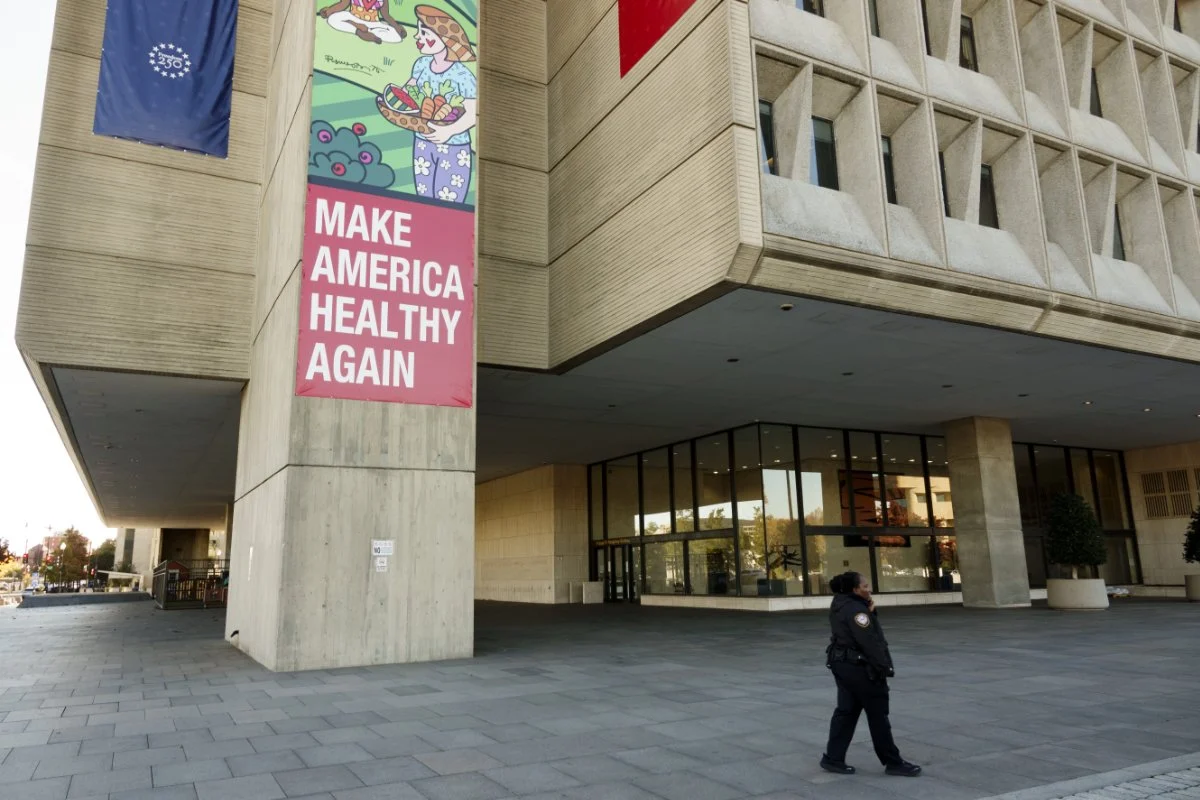
The coming months are expected to see intense focus on several key areas where the shift in power could have profound implications: food assistance programs like SNAP, the protracted negotiations for the new Farm Bill, the trajectory of the "Make America Healthy Again" (MAHA) movement, the vitality of rural farming economies, immigration policies affecting food workers, and critical climate and environmental regulations.
Food Security and the Farm Bill Battle
The 2026 midterms were significantly influenced by voter anxieties over rising food prices and overall affordability, factors that anti-hunger advocates believe contributed to the Democratic victories. Gina Plata-Nino, director of SNAP policy at the Food Research and Action Center, characterized the "blue wave" as "a sharp rebuke to the Trump administration agenda," particularly its deep cuts to the Supplemental Nutrition Assistance Program (SNAP) under the "One Big Beautiful Bill" (OBBB). "It really was a reflection that working-class, middle-class Americans have had enough," Plata-Nino asserted.
Despite the Democratic gains, the immediate outlook for rolling back all SNAP cuts remains challenging due to President Trump’s veto power. During the lame-duck session, anti-hunger advocates are prioritizing a delay in the SNAP benefit cost-shift to states—a provision that could impose millions of dollars in new expenditures on state budgets. Some states have already indicated they might be forced to reduce SNAP services or even temporarily withdraw from the program if this cost-shift takes effect. The Senate’s version of the farm bill included a one-year delay, but Democrats and advocates deem this insufficient, pushing for more comprehensive relief.

Senator Michael Bennet (D-Colorado), a potential contender for the chairmanship of the Senate Agriculture Committee, acknowledged the urgency. "It would be great if we could get a farm bill during the lame-duck session, but I don’t know what’s possible," he remarked, underscoring the tight timeline. On the House side, Agriculture Committee Chair Glenn Thompson (R-Pennsylvania) reportedly signaled openness to a two-year cost-shift or other compromises, as reported by Politico, but the looming change in congressional control complicates any swift resolution.
Further exacerbating the situation, the USDA recently proposed changes to "broad-based categorical eligibility" for SNAP, a move that the agency estimates could cut an additional 6.3 million people from the program, on top of the 5.5 million already impacted by the OBBB. Representative Pingree criticized the timing: "It’s ironic that on the first day that Congress is back in session, the USDA has gone and made even deeper cuts to SNAP benefits, given that’s a big sticking point for us. This cuts even more people out of the program, which means there’s even more to negotiate."
Beyond SNAP, Congress also faces outstanding issues such as the USDA’s sweeping reorganization, announced last summer. A judge temporarily paused the rollout in October amidst a lawsuit from unions, but Agriculture Secretary Brooke Rollins has indicated plans are still in progress. Senator John Hoeven (R-North Dakota), chair of the Agriculture Appropriations Subcommittee, confirmed that some reorganization efforts could proceed with his committee’s approval, emphasizing a shared goal of making the USDA "work better for our farmers" by potentially decentralizing jobs and bureaucracy.
The Evolving MAHA Movement
The "Make America Healthy Again" (MAHA) movement, which gained prominence through Health Secretary Robert F. Kennedy Jr.’s support for President Trump, also saw its influence tested in the midterms. Senator Ron Johnson (R-Wisconsin) attributed some Republican losses to the administration’s perceived failure to deliver on MAHA’s agenda, particularly regarding delays on key food policy issues and continued support for pesticides, despite initial promises.

MAHA Action, the movement’s political arm, had pledged $100 million to midterm races but largely backed non-competitive campaigns. Its most significant investment went to Zach Lahn’s bid for Iowa governor, a race he ultimately lost to Democratic challenger Rob Sand, despite active rallying by Kennedy and other prominent MAHA leaders. Tony Lyons, president of MAHA Action, openly admitted, "Last night was really really hard," during a post-election press call.
The departure of Calley Means from the administration further clouds MAHA’s future direction. However, the appointment of Stephen Miller as White House Chief of Staff has injected new optimism among some MAHA advocates. Kennedy publicly lauded Miller on social media, stating, "Next to me, Stephen Miller is the strongest MAHA supporter in the administration. It’s time to unleash the Kraken." Miller had previously served on the MAHA Commission, which produced reports on children’s health, and Means had controversially accused former Chief of Staff Susie Wiles of blocking MAHA initiatives.
While some Democrats had attempted to appeal to MAHA voters by discussing healthy foods, pesticide regulation, and corporate consolidation, the fragile alliance is now threatened. Discussions emerged this week over potentially impeaching Kennedy, with Senator Angela Alsobrooks (D-Maryland) tweeting, "The time is now. RFK Jr. must resign or be fired. End of discussion." Senator-elect Annie Andrews (D-South Carolina) echoed this sentiment. Zen Honeycutt, founder of Moms Across America, cautioned that Democrats hoping to attract MAHA voters in future elections should instead collaborate with Kennedy.
Revitalizing Rural Economies and Agricultural Policy
The Democratic midterm sweep is expected to intensify focus on farm economies and rural issues, which have struggled under existing federal policies. "The current state of federal food and farm policy is not working," NSAC’s Lavender contended. "One of the things we can take away from the election is that voters agree with that. The message is so resounding, that it feels foolish to not make a significant change in policy for everyone." This sentiment suggests increased pressure on both parties to enact meaningful reforms, particularly concerning the high costs of diesel and groceries.

Tariffs, which directly impact these costs, are also on the Democratic agenda. The Wall Street Journal reported that Democrats are already devising a plan to overturn Trump’s tariffs on Canada, though securing enough votes remains uncertain. Senator Adam Schiff (D-California), a junior member of the Agriculture Committee, recently visited Canada to highlight the tariffs’ detrimental effects on farmers. "We’ll certainly use whatever leverage we have to end these tariffs," Schiff stated, indicating a coordinated effort.
Within the Agriculture committees, the new Democratic leadership is poised to prioritize anti-consolidation and pro-competition policies. Lavender noted that NSAC members have specifically requested a stronger focus on these issues, particularly concerning livestock processing and input consolidation. The elections saw several candidates win on anti-monopolist platforms, including Iowa’s Senator-elect Josh Turek, Texas Ag Commissioner-elect Clayton Tucker, and Michigan’s Senator-elect Abdul El-Sayed, who campaigned on a "farmers over billionaires" agenda. Michigan Farmers Union president Bob Thompson endorsed El-Sayed, stating, "He has called for putting family farms ahead of corporate agriculture and taking on the consolidated seed, fertilizer and chemical companies that price-gouge farmers."
Beyond agricultural specifics, Democrats are also committed to tackling healthcare affordability, a critical concern in rural areas. They may attempt to roll back Medicaid cuts and reinstate Affordable Care Act subsidies, daring President Trump to veto these popular measures. Senator Ron Wyden (D-Oregon), expected to chair a key healthcare policy committee, has expressed support for Medicare for All legislation, signaling a potential shift in the national healthcare debate.
Immigration’s Role in the Food System
Immigration policy, particularly its impact on the food sector, was another flashpoint during the midterms. Two days post-election, a press call organized by the American Business Immigration Coalition (ABIC) featured business owners criticizing Vice President J.D. Vance for downplaying the disruption caused by Trump administration immigration enforcement. Matt Teagarden, CEO of the Kansas Livestock Association, detailed how recent ICE raids in southwestern Kansas severely disrupted the entire supply chain, with dairies and feedyards housing workers to avoid stakeouts. "These raids were the latest example of how fragile the entire American food system is," Teagarden stated. "Without immigrant workers, it can fold like a house of cards."

In Kansas, Democratic candidate Adam Hamilton ousted incumbent Senator Roger Marshall (R-Kansas), a senior member of the Senate Agriculture Committee, signaling voter dissatisfaction with the current approach. Despite this, President Trump’s appointment of Stephen Miller as Chief of Staff reinforces a hardline stance on immigration enforcement. Miller’s past support for aggressive tactics and comments from figures like Mike Howell of the Mass Deportation Coalition ("Worksite amnesty is over. We will be at the farms") suggest continued challenges for agricultural guestworker program reforms.
However, Democrats are ready to leverage their newfound power. Senator Dick Durbin (D-Illinois) announced plans to push for the passage of the DREAM Act during the lame-duck session, believing there are sufficient votes. This legislation, and related proposals, aims to provide legal status pathways for individuals brought to the U.S. as children, as well as for Temporary Protected Status (TPS) holders, many of whom work in food processing and have faced termination of their status under the Trump administration. The Dignity Act, another bill gaining traction, would allow some farm and food workers to apply for work permits, though its enforcement provisions, like mandatory E-Verify, face opposition from worker advocacy groups.
Representative Pramila Jayapal (D-Washington) affirmed the Democratic focus on comprehensive immigration reform next year. "This week, voters cast their votes for a better future, where immigrants’ lives and rights are respected," she declared, emphasizing the election of pro-immigration champions and a more diverse slate of candidates.
Climate Action and Environmental Stewardship
The first two years of President Trump’s second term saw a significant rollback of climate regulations and cuts to clean energy programs, decisions with profound implications for farmers who are on the front lines of climate change. Farmers have increasingly contended with crop-destroying weather patterns, severe floods, extreme heat, and wildfires, with limited federal recourse.

The Democratic midterm victories are expected to provide new leverage to challenge the administration on these issues. A key focus will be restoring programs like the Rural Energy for America Program (REAP), which, despite its popularity among farmers for lowering energy costs, has been significantly curtailed by the administration. Furthermore, Democratic wins in gubernatorial races across the country mean that states will have more allies pushing for clean energy development at the local level.
Representative Pingree, who will chair the Interior and Environment Subcommittee on Appropriations in the new year, expressed her intent to "reinstate some of the things that they’ve cut." As a member of the Agricultural Appropriations Subcommittee, she will also advocate for restoring funding to climate-smart agriculture and conservation programs. "I’m just going to look for every opportunity I can to re-engage the debate that was there prior to the Trump administration about supporting farmers on soil-related matters, sequestering carbon in the soil," Pingree affirmed, "but also reducing their energy costs and bringing back renewable energy programs in any place we can."
Looking Ahead: Challenges and Opportunities
The 2026 midterm elections represent a pivotal moment for U.S. food and agricultural policy. While the Democratic sweep offers new opportunities to address long-standing issues—from food insecurity and rural economic hardship to immigration reform and climate change mitigation—the persistent reality of a divided government, with President Trump retaining veto power, ensures that legislative progress will be hard-won. The lame-duck session will test the limits of bipartisan cooperation, particularly on critical matters like the Farm Bill and SNAP. As the new Congress convenes in January, the stage is set for intense negotiations and a renewed push for policies that aim to create a more equitable, resilient, and sustainable food system for all Americans. The path ahead will undoubtedly be fraught with challenges, but the electoral shift has undeniably opened new avenues for advocacy and change.