Jia Lissa
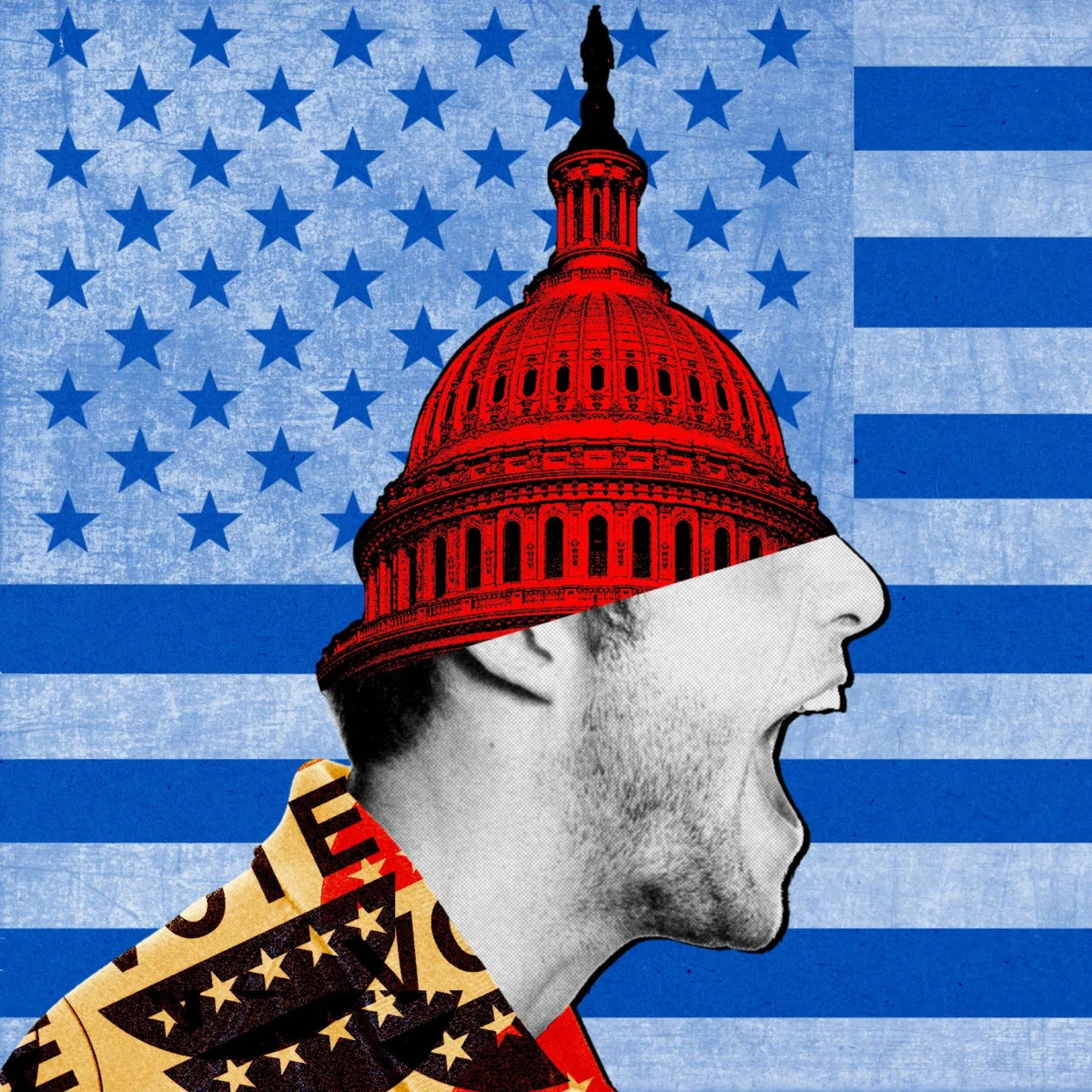
On Election Day last week, white nationalist figure Nick Fuentes issued a directive to his followers on X, urging them to “get out and vote Democrat today.” The provocative post quickly garnered significant attention, accumulating over 12 million views across the platform. In the aftermath of what many described as a Democratic sweep in various key races, Fuentes was quick to claim credit for the outcome. Writing on Telegram, he declared, “We did it again,” later coining the phenomenon “the Groyper Effect,” a reference to the moniker adopted by his loyal supporters. This unusual call to action and subsequent claim of influence underscore a broader strategic realignment within various far-right factions in the wake of the recent electoral cycle.
The "Groyper Effect" and a Calculated Strategy
Nick Fuentes, a prominent figure in the white nationalist movement known for his antisemitic and racist rhetoric, has long sought to push the Republican Party further to the right, advocating for an "America First" agenda that often aligns with white supremacist ideals. His instruction to vote Democrat, while seemingly counterintuitive for a far-right activist, was presented by Fuentes as a tactical maneuver designed to accelerate a perceived inevitable shift in the political landscape. The rationale, as he articulated during a livestream last week, is rooted in a belief that a Democratic ascendancy would expose what he views as the failures and excesses of the "far left," thereby driving disillusioned voters into the waiting arms of the far-right.
"Let the Democrats rule; see how that goes," Fuentes stated, outlining his vision. "There will come a time when the far left will terrorize people, and they’re going to push all of them into the arms of the right. Who’s going to fight the far left? Only the far right. This is why we have to take over the right wing now." This statement reveals a long-term strategy: to use the perceived failures of the left to radicalize the center-right and consolidate power within the conservative movement.
Fuentes further amplified his intentions in another livestream, delivering a stark warning to the existing Republican Party leadership. "It’s our party now… You need to cooperate with us… Groypers are open for business. It has [to] be America First—and if it’s not, we’ll do it again for the enemy." The "Groypers," largely a younger, internet-savvy cohort, emerged in the late 2010s, often disrupting conservative events and attempting to push mainstream conservative figures toward more extreme positions. Their goal, under Fuentes’s guidance, has consistently been to infiltrate and reshape the Republican Party from within, moving it away from traditional conservatism towards a more nationalistic, ethno-centric ideology.
Broader Far-Right Interpretation of Election Results
A comprehensive review by WIRED of communications from white-supremacist, Christian-nationalist, and other far-right groups following the midterm results indicates a pervasive sentiment echoing Fuentes’s calculated opportunism. While there was widespread criticism, and even condemnation, of Donald Trump’s perceived failure to adequately champion white, Christian, and "American" values, these groups largely coalesced around the belief that the Democratic gains represented not a defeat, but a strategic opening. They anticipate that a pronounced shift towards the left will inevitably generate a significant backlash, thereby creating fertile ground for more individuals to embrace far-right ideologies and join their movements.
Jared Holt, a senior researcher at Open Measures, provided insight into this evolving narrative: "Many prominent figures in racist, extremist movements have taken to declaring the MAGA movement dead since the midterm elections, claiming that the results validate their previous criticisms of the Trump administration and opens new opportunities for their movements to push disaffected voters toward their ideological beliefs." This perspective suggests a desire to move beyond the Trump era, which they view as having fallen short of their more radical objectives, towards a more ideologically pure and aggressive pursuit of their agenda.
Extremist Candidates and Legislative Victories
Despite the narrative of a Democratic sweep, the electoral landscape was not uniformly unfavorable for candidates aligned with extremist views. While some high-profile Republican candidates with extremist ties were indeed defeated, a significant number managed to secure victories, particularly at the state and local levels.
The Institute for Research and Education on Human Rights (IREHR) conducted extensive tracking, identifying 535 candidates running in statewide races who were members of at least one far-right Facebook group. Their findings revealed a notable success rate: out of the 476 races that had been called by the subsequent Friday, 338 of these candidates emerged victorious, translating to an impressive 71 percent win rate. It is crucial to note that the vast majority of these wins involved Republican incumbents retaining their seats, indicating the existing entrenchment of some individuals holding or sympathetic to far-right views within the party. A tangible example is Marshall Rawson, a 34-year-old citrus farmer from Florida who openly participated in the infamous Unite the Right rally in Charlottesville, Virginia, in 2017. Rawson easily defeated his Democratic opponent in the state’s 10th District State House race, demonstrating that direct connections to extremist events do not always preclude electoral success. This success points to the increasing normalization of certain far-right elements within the broader conservative political spectrum.
Beyond individual candidates, a number of states also passed ballot measures that align closely with far-right agendas, representing a direct implementation of their policy goals. These included anti-transgender rules, which often seek to restrict the rights and participation of transgender individuals; onerous voter identification laws, which critics argue disproportionately disenfranchise minority voters; and various anti-immigrant measures, reflecting a hardline stance on border security and immigration policy.
Devin Burghart, executive director with IREHR, highlighted specific examples during a recent briefing with reporters: "Arizona, Colorado, Nebraska, and Washington approved bans on trans athletes in female sports, so girls in Washington state, for instance, will now have to go through a genital exam or pass a DNA test before they can participate in youth sports." These measures, celebrated by extremist groups, are presented as tangible proof that American citizens desire policies that the mainstream Republican Party, in their view, has failed to deliver or fully embrace. For groups like the Proud Boys, a street-fighting organization whose activities were somewhat curtailed by law enforcement operations in recent years, these ballot measure successes were a source of optimism. "The ultimate rebuke of the current Republican establishment was citizens voting them out of office, then doing their job for them by passing ballot measures on issues the Republicans should have already handled," the Cape Fear Proud Boys posted on their Telegram channel, underscoring their belief that the public is ready for more aggressive conservative policies.
The Strategy of "Hostile Takeover"
The electoral results, particularly the sustained support for certain conservative ideals even in losing races, are being interpreted by far-right strategists as evidence of a potent, untapped base. Chuck Tanner, research director at IREHR, observed during the briefing, "What this signals to me is even in those places where they lost, they’re getting 41-47 percent of the vote, [so] there’s still a mass base to try to be mobilized." This substantial segment of the electorate, extremists contend, represents a vulnerability for the Republican Party, making it susceptible to an internal takeover.
This sentiment has translated into explicit calls for action. Warren Balogh, a white supremacist from Pittsburgh who also attended the 2017 Charlottesville rally, articulated this strategy on his Telegram channel: "Now is the time, if you’re a nationalist, to start looking at moving on the Republican Party where you live. And by that I mean, organizing your guys and going in to do a hostile takeover." This is not merely rhetorical; it reflects a long-term organizational strategy aimed at seizing control of local party committees, influencing candidate selections, and ultimately shaping the party’s platform from the ground up.
The Cape Fear Proud Boys echoed this confrontational stance, declaring days after the election, "This may be the best thing that has happened to the Republican Party in a half-century. Now you will learn to placate us, or you will continue to fail. Understand this: You’re going to run people we like, and you’re going to do what we say." Such statements highlight a fundamental challenge to the established Republican Party, demanding allegiance to their specific brand of nationalism and threatening continued electoral failure if their demands are not met.
Beyond Electoral Politics: Calls for Direct Action
While many far-right groups focus on infiltrating and reshaping the Republican Party through electoral and organizational means, some voices within the movement are signaling a preference for more direct, and potentially extra-democratic, avenues to power. Joel Webbon, a Christian nationalist pastor, starkly articulated this perspective in a video posted online after the election: "I’m not saying that we will win through democracy. I’m just saying we’ll win." This statement suggests a willingness to pursue objectives through means that might bypass traditional democratic processes, raising concerns about the sanctity of democratic institutions.
Webbon, alongside other far-right pastors and the controversial conspiracy theorist Alex Jones, is slated to speak at an upcoming conference in Texas. The agenda for this gathering includes discussions on "battle plans" for "Christian nationalists on the right to be able to seize power." Such rhetoric, combined with the presence of figures like Alex Jones who have previously incited political unrest, underscores a radicalized segment of the far-right that views conventional politics as insufficient for achieving their aims.
Anticipating January 3: The Certification of Results
As the political calendar progresses, attention is turning to January 3, the date when Congress is set to certify the midterm election results. While experts interviewed by WIRED have not yet identified explicit calls for violence from the far-right groups they monitor, the historical precedent of January 6, 2021, casts a long shadow.
Jake Lang, a far-right activist and pardoned January 6 rioter, has announced plans for an event in Washington D.C. on January 3. The exact nature of this event and the expected turnout remain unclear. Notably, one of the Christian nationalist pastors initially listed by Lang as an official speaker has publicly stated he will not be attending or speaking. Lang himself, who recently gained attention for disrupting a cat convention he mistakenly believed to be a furry convention, did not respond to requests for comment. The planned event, regardless of its scale, highlights the persistent efforts by some elements of the far-right to maintain a presence and potentially exert pressure during significant governmental processes, echoing concerns about the integrity of democratic transitions.
Implications and Broader Context
The evolving strategies and rhetoric of far-right groups pose significant challenges to the American political landscape. For the Republican Party, the demands for a "hostile takeover" from figures like Fuentes and Balogh represent an internal struggle for its identity and future direction. Mainstream Republican leaders face the delicate task of condemning extremist rhetoric while simultaneously trying to retain the support of a conservative base that may be sympathetic to some of the underlying grievances articulated by these groups. Civil rights organizations and anti-extremist watchdog groups have consistently voiced alarm over the normalization of such ideologies, warning that their increased influence threatens the foundational principles of democracy and social cohesion.
The success of ballot measures targeting vulnerable groups, coupled with the electoral victories of candidates with extremist ties, indicates a tangible impact of far-right activism on policy and governance at state levels. These developments exacerbate political polarization and could lead to increased social unrest if the rhetoric of "seizing power" translates into more aggressive actions outside of democratic frameworks. Law enforcement agencies and counter-extremism researchers will undoubtedly continue to monitor these groups closely, particularly as key dates like the January 3 certification approach, to mitigate potential threats to public safety and democratic processes. The digital platforms, too, face ongoing scrutiny regarding their role in amplifying or containing extremist narratives, underscoring the complex interplay between online discourse and real-world political implications.